On This Page
Description
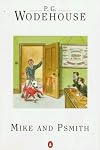
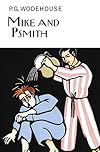
This classic novel, published under an array of different titles over the years, introduces readers to Rupert Psmith (the 'p' is silent), the charming bon vivant and man-about-town who would go on to feature in a series of Wodehouse's stories and novels. The tale focuses first on Mike Jackson, a mischievous college athlete whose propensity for partying often lands him in hot water. Later, Mike meets up with the singular Psmith and the two become fast friends. Wodehouse fans will delight in show more this funny, fast-paced tour de force from one of Britain's foremost novelists.. show less
Tags
Recommendations












Member Recommendations
by anonymous user
by anonymous user

MrsPlum In Mike and Psmith (previously serialised under different titles), Wodehouse perfects the School Story genre, which he began in The Pothunters.
Member Reviews
Originally published as the second half of Mike in 1909, this feels less like a second half and more like a sequel—which is why it makes perfect sense that the two halves were later published separately. (They had been serialized stories to begin with, so the whole idea of one or two novels is a little bit arbitrary anyway.)
Like Mike at Wrykyn (the republished name of the first half), this one isn't all that funny, but it does hang together. By far, the most interesting part is the introduction of Psmith (pronounced with a silent "P" as in "Pshrimp"), the first of Wodehouse's regular self-composed characters - and frankly an exaggeration of characters he'd already been noodling with in shorter stories. Psmith is a sort of Rubicon show more who, once crossed, signals a change of era. Can Wodehouse really make the audience believe in such a constantly unflappable character? Yes, he can. And thus the real Wodehouse is finally unleashed upon the world. show less
Like Mike at Wrykyn (the republished name of the first half), this one isn't all that funny, but it does hang together. By far, the most interesting part is the introduction of Psmith (pronounced with a silent "P" as in "Pshrimp"), the first of Wodehouse's regular self-composed characters - and frankly an exaggeration of characters he'd already been noodling with in shorter stories. Psmith is a sort of Rubicon show more who, once crossed, signals a change of era. Can Wodehouse really make the audience believe in such a constantly unflappable character? Yes, he can. And thus the real Wodehouse is finally unleashed upon the world. show less
Excellent. Wodehouse hadn't quite developed his style, but it is still laugh out loud funny in places. He clearly is making fun of the gung ho manly boys at school novels popular in the early 1900s. If only there wasn't quite so much about cricket. What is a wicket anyway, and how do you get one? And what would you do with it?
A humorous book full of cricket? I might actually be in love with P.G. Wodehouse. Aside from the occassional reference to bails in Hitchhiker's Guide, I have failed utterly to find any other books that are amusing, great reads that include a plethora of cricket. Until now.
I think it was Stephen Fry who first made me want to read P.G. Wodehouse. I had no clue that cricket was so prominent in these books, though if Mr. Fry liked them so much I should have guessed.
Anyway, my massive cricket fetish aside, this book was such a great read because it encapsulated a lot of very British things altogether, and simultaneously propelled them to the heightes of great tradition and also mocked them openly in a way that even Dickens would be impressed show more with. Possibly also a good reference book for knowing what little boys get up to at public schools, with certain things left out, of course. Like buggery for one. show less
I think it was Stephen Fry who first made me want to read P.G. Wodehouse. I had no clue that cricket was so prominent in these books, though if Mr. Fry liked them so much I should have guessed.
Anyway, my massive cricket fetish aside, this book was such a great read because it encapsulated a lot of very British things altogether, and simultaneously propelled them to the heightes of great tradition and also mocked them openly in a way that even Dickens would be impressed show more with. Possibly also a good reference book for knowing what little boys get up to at public schools, with certain things left out, of course. Like buggery for one. show less
Psmith is a delight, as always, but Mike is dull and the school stuff is kind of a mixed bag. One can really see how Harry Potter is a lightly updated version of one of these early 20th century school stories: school sports, mischief and hijinks after hours, and an unpleasant teacher with a grudge against our hero
As I'm reading Wodehouse's works in chronological sequence (first published), I would say that Psmith is the first truly memorable character Wodehouse developed. The story takes place three years after "Mike at Wrykyn" (why can't I italicize?). Mike's father has taken him out of Wrykyn after one-too-many bad academic reports and sent him to Sedleigh, a backwater in Mike's view. He immediately meets and rooms with Psmith, who has been similarly ejected from Eton. Both are nursing their wounded pride by pretending not to play cricket. This, naturally, cannot last. By the end they have become reconciled to Adair, the cricket team captain who oozes school spirit, and are playing matches together, including against Wrykyn. There is some show more hilarity with the hapless dorm-mate Jellicoe. Psmith runs circles around everyone, especially a particularly bad house master, Mr. Downing. show less
Very enjoyable: I have to confess that I am a Wodehouse addict. I read the predecessor to this book (Mike at Wrykyn) when I was fifteen and had always wanted to read Mike and Psmith. Re. this book, Wodehouse had me in stitches most of the time - the portions relating to Mr. Downing are hilarious. Cricket is also a focus of this novel. If you are like me and miss the game, this will bring those school time memories flooding back. For those who haven't read a Psmith novel before, I highly recommend them. It is said that Wodehouse created the Jeeves and Wooster characters as 2 spin-offs from Psmith and you can certainly see the connections! On the whole, another Wodehouse classic.
Not as laugh out loud as some of his better stuff. There are still moment of Wodehouse genius, but it gets bogged down in a lot of details about Cricket matches.
Members
- Recently Added By
Lists

Best Books Set in Boarding Schools
160 works; 56 members

Books Read in 2014
2,341 works; 86 members
Author Information

656+ Works 110,463 Members
P. G. Wodehouse was born in Guildford, United Kingdom on October 15, 1881. After completing school, he spent two years as a banker at the Hong Kong and Shanghai Bank in London and then took a job as a sports reporter and columnist for the Globe newspaper. His first novel, The Pothunters, was published in 1902. He wrote over 100 novels and short show more story collections during his lifetime including A Perfect Uncle, Love Among the Chickens, The Swoop, P. Smith in the City, Meet Mr. Milliner, Doctor Sally, Quick Service, The Old Reliable, Uneasy Money, A Damsel in Distress, Jill the Reckless, The Adventures of Sally, A Pelican at Blandings, The Girl in Blue, and Aunts Aren't Gentlemen. His most famous characters, Bertie Wooster and his manservant, Jeeves, appeared in books such as Much Obliged, Jeeves. He also wrote lyrics for musical comedies and worked as screenwriter in Hollywood in the 1930s. In 1939, he bought a villa in Le Touquet on the coast of France. He remained there when World War II started in 1939. The following year, the Germans appropriated the villa, confiscated property, and arrested him. He was detained in various German camps for almost one year before being released in 1941. He went to Berlin and spoke of his experience in five radio talks to be broadcast to America and England. The talks themselves were completely innocuous, but he was charged with treason in England. He was cleared, but settled permanently in the United States. He became a citizen in 1955. He was made a Knight Commander of the Order of the British Empire in 1975. He died from a heart attack after a long illness on February 14, 1975 at the age of 93. (Bowker Author Biography) show less
Some Editions
Series


Belongs to Publisher Series
Work Relationships
Common Knowledge
- Alternate titles
- Enter Psmith; Mike
- Original publication date
- 1909
- People/Characters
- Ronald Psmith; Mike Jackson; Adair
- Important places
- Sedleigh public school (Imaginary place); Wrykyn School, Wrykyn, England, UK
- First words
- If Mike had been in time for breakfast that fatal Easter morning he might have gathered from the expression on his father's face, as Mr. Jackson opened the envelope containing his school report and read the contents, that the... (show all) document was not exactly a paean of praise from beginning to end.
- Last words
- (Click to show. Warning: May contain spoilers.)They staggered.
- Disambiguation notice
- The novel Mike and Psmith (1953) was originally published as "Lost Lambs" in the magazine The Captain, April–September 1908. "The Lost Lambs" also forms the second half of the novel Mike (1909... (show all)), the first half of which republishes the serial "Jackson Junior", in which Psmith does not appear. [see: Psmith in Wikipedia; Mike in Wikipedia]
Classifications
Statistics
- Members
- 559
- Popularity
- 52,616
- Reviews
- 16
- Rating
- (3.92)
- Languages
- English, German, Hungarian
- Media
- Paper, Audiobook, Ebook
- ISBNs
- 65
- ASINs
- 21