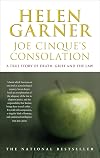
Joe Cinque's Consolation
by Helen Garner
On This Page
Description
In October 1997 a clever young law student at the Australian National University made a bizarre plan to murder her devoted boyfriend after a dinner party at their house. Some of the dinner guests, most of them students, had heard rumours of the plan. Nobody warned Joe Cinque. He died one Sunday, in his own bed, of a massive dose of Rohypnol and heroin. His girlfriend and her best friend were charged with murder. Helen Garner followed the trials in the ACT Supreme Court. Compassionate but show more unflinching, this is a book about how and why Joe Cinque died. It probes the gap between ethics and the law; examines the helplessness of the courts in the face of what we think of as 'evil,' and explores conscience, culpability, and the battered ideal of duty of care. show lessTags
Recommendations































Member Recommendations

tandah Australian criminal reportage, written by Australian female authors who also write fiction.
Member Reviews
"{I}t was all so fluid. Nothing ever settled or became simple and stable. Everything could be flipped over and turned inside out--looked at afresh or upside down or backwards. Yes it might logically have happened that way. And yet something in me rebelled against the deftness of the reasoning."
This started off as a true crime narrative. Law student Anu Singh drugged her live-in boyfriend/fiance Joe Cinque with a hefty dose of rohypnol, rendering him unconscious, and then injected him with a sufficient dose of heroin to kill him. She was successful in causing his death. More, she told many other people of her intent before actually doing the deed although she usually said she intended to commit suicide and take Joe with her. As far as show more anyone knows Joe was unaware of her plans for him.
On Monday of the week Joe died Anu (and Joe) held a dinner party. Guests had been told it was a prelude/sendoff to the planned murder/suicide. Anu was able to render Joe unconscious, but was unable to inject the heroin, so Joe's life was spared for a few more days. On Friday a second dinner party was held for the same purpose, and this time Anu was successful in killing Joe.
What was astonishing about this case is how many people knew of Anu's plans and did nothing. In particular, her good friend Madhavi Rao, who was also criminally tried, not only knew but actively assisted Anu. Madhavi obtained the rohypnol, helped obtain the heroin, and accompanied Anu to a drug dealer's to be instructed on what a lethal dose was and how to inject it. The heroin dealer and his girl friend knew the intended use of the heroin and did/said nothing. The dinner guests knew and did/said nothing. And in addition to Madhavi's active assistance, she also went to Anu and Joe's place and observed Joe unconscious and vomiting, yet did not even call for assistance.
The author, and Australian writer/journalist heard about the case after Anu's trial for murder was underway. She attended the rest of the trial, and also attended Madhavi's trial. Anu was convicted of manslaughter (on the basis of "diminished responsibility), and received a fairly light sentence. She was out of jail just four years after the deed (two years after her conviction). She even finished her law studies while in prison and qualified to be a lawyer. At her release she was not yet 30 years old, with her life ahead of her. Madhavi was acquitted--apparently due to the fact that "there was a big ragged hole between ethics and the law...."
I normally don't like in a book of this nature when the author interjects themselves into the story, and in this book Garner herself is a large part of the story. I really disliked this aspect at first, but as the book progressed it worked for me. Her intent for the book when beginning to follow the case was to present a journalistic account of the crime and trial. When she was unable to interview Anu or Madhavi, and became very close to Joe's family, she was at first going to abandon the project. However, I think ultimately she wrote the book for Joe's family. She wants us to "know" Joe and his family. She also explores and analyzes the purposes and effects of the criminal justice system for the criminals, the victims and for society. For Anu does remorse, repentance, redemption come into place? Does she feel she has atoned, made amends? Clearly Joe's family does not feel justice has been served. And what about Madhavi and all those who knew beforehand? There are huge differences between moral and ethical duties and legal duties. And the big question: "What is simple wickedness? Does such a thing exist? Was there ever such a thing, or did it die with the arrival of psychiatry?"
Recommended. show less
This started off as a true crime narrative. Law student Anu Singh drugged her live-in boyfriend/fiance Joe Cinque with a hefty dose of rohypnol, rendering him unconscious, and then injected him with a sufficient dose of heroin to kill him. She was successful in causing his death. More, she told many other people of her intent before actually doing the deed although she usually said she intended to commit suicide and take Joe with her. As far as show more anyone knows Joe was unaware of her plans for him.
On Monday of the week Joe died Anu (and Joe) held a dinner party. Guests had been told it was a prelude/sendoff to the planned murder/suicide. Anu was able to render Joe unconscious, but was unable to inject the heroin, so Joe's life was spared for a few more days. On Friday a second dinner party was held for the same purpose, and this time Anu was successful in killing Joe.
What was astonishing about this case is how many people knew of Anu's plans and did nothing. In particular, her good friend Madhavi Rao, who was also criminally tried, not only knew but actively assisted Anu. Madhavi obtained the rohypnol, helped obtain the heroin, and accompanied Anu to a drug dealer's to be instructed on what a lethal dose was and how to inject it. The heroin dealer and his girl friend knew the intended use of the heroin and did/said nothing. The dinner guests knew and did/said nothing. And in addition to Madhavi's active assistance, she also went to Anu and Joe's place and observed Joe unconscious and vomiting, yet did not even call for assistance.
The author, and Australian writer/journalist heard about the case after Anu's trial for murder was underway. She attended the rest of the trial, and also attended Madhavi's trial. Anu was convicted of manslaughter (on the basis of "diminished responsibility), and received a fairly light sentence. She was out of jail just four years after the deed (two years after her conviction). She even finished her law studies while in prison and qualified to be a lawyer. At her release she was not yet 30 years old, with her life ahead of her. Madhavi was acquitted--apparently due to the fact that "there was a big ragged hole between ethics and the law...."
I normally don't like in a book of this nature when the author interjects themselves into the story, and in this book Garner herself is a large part of the story. I really disliked this aspect at first, but as the book progressed it worked for me. Her intent for the book when beginning to follow the case was to present a journalistic account of the crime and trial. When she was unable to interview Anu or Madhavi, and became very close to Joe's family, she was at first going to abandon the project. However, I think ultimately she wrote the book for Joe's family. She wants us to "know" Joe and his family. She also explores and analyzes the purposes and effects of the criminal justice system for the criminals, the victims and for society. For Anu does remorse, repentance, redemption come into place? Does she feel she has atoned, made amends? Clearly Joe's family does not feel justice has been served. And what about Madhavi and all those who knew beforehand? There are huge differences between moral and ethical duties and legal duties. And the big question: "What is simple wickedness? Does such a thing exist? Was there ever such a thing, or did it die with the arrival of psychiatry?"
Recommended. show less
Many readers will be familiar with the tragic death of Joe Cinque in Canberra in 1997 and the subsequent trial of his killer Anu Singh who administered a lethal cocktail of drugs and then, as he lay dying, failed to call an ambulance in time to save his life.
After reading my review of The Widow of Walcha by Emma Partridge last year, and my astonishment at the despicable cruelty by one of the most cold and calculating females in Australia, a friend I trust recommended I read Joe Cinque's Consolation by Helen Garner. Another reader familiar with my reading tastes also recommended it after seeing my review of Everywhere I Look by Helen Garner in 2018 so I guess it was time.
Briefly familiar with the crime and subsequent court cases, my show more initial hesitancy grew from a concern I would struggle to come to terms with the legal outcome. At the same time I was curious to see how the great Helen Garner would approach the case and decided to listen to the audiobook read by the author in conjunction with the paperback.
The book begins with a transcript of Anu Singh's 000 call and it infuriated me so much I could barely listen. It took paramedics 20 minutes to get the correct address from the caller who gave a false name and false address and was fuelled by her own histrionics, sense of entitlement and selfish fears about what was going to happen to her. Beginning with the most harrowing material first was an inspired choice and immediately set the scene on the despicable type of person Anu Singh was on that night, and no doubt still is.
Garner tries to remain impartial and approaches people from both sides of the case for their input, but I enjoyed her writing most when she shared her frustrations and irritations, from the very minor - as in the quote to follow - right up to the soul destroying question of justice and duty of care.
When describing the first expert witness in the case for the Defence, Dr Byrne, a clinical and forensic psychologist from Melbourne, Garner observes:
"Something about him got up my nose. Was it his debonair and stagy demeanour, his habit of addressing the judge man-to-man, his didactic listing and numbering of points as if to a room full of freshers?" Page 37
When reflecting on the culpability of Madhavi Rao and her role in sourcing the drugs and failing to prevent Joe Cinque's death, Garner fears Rao will end up serving more time in jail than Singh because she didn't suffer from psychiatric delusions; she wasn't mad.
"Where does one person's influence end, and another's responsibility begin?" Page 177
A really poignant question and not one I found a satisfactory answer to. Singh's relationship dynamic with Joe was possessive and manipulative and displayed the hallmarks of a narcissistic cycle of abuse. It's these characteristics and sheer disregard for Joe's welfare that place Singh in the same category as another cold hearted and self motivated killer, Natasha Darcy. How did these women control and manipulate their partners while hiding their torturous and ultimately murderous intent?
To her immense credit, Helen Garner built a personable relationship with the Cinque family and Joe's mother Maria in particular. Garner continually questions her involvement with the family but I genuinely believe she was a source of comfort during the trial of both women right through to their individual verdicts and beyond.
"Nothing I could think of to say or do would ever be of any use to her. I was helpless, only a vessel into which she would pour forever this terrible low fast stream of anguish. The pressure of her pain was intolerable. I would give way under it. I too would fail her. I did not know how to bring the phone call to an end. But then she got a grip on herself. Once more she drew on her deep reserves of formal grace, and let me off the hook. We would see each other - yes, we would meet again in Canberra. I asked her to give Nino my best wishes, and offered the same to her. With dignity she accepted my timid crumbs. We said goodbye. I hung up, exhausted, in awe. I longed to know her, but I was afraid that I would not be strong enough." Page 194-195
Garner bears witness to the never ending depths of the grief suffered by Joe Cinque's family, but in sharing her vulnerability she also demonstrates the toll it can take on those standing close to that chasm of emotional torment and loss. Maria's grace is an inspiration to Garner, just as the author's strength became an inspiration to me.
At the end of reading Joe Cinque's Consolation - A True Story of Death, Grief and the Law I'm left feeling utterly bereft and bewildered. The complete lack of justice for Joe or consequences for his killer and the person who could have stopped his death took my breath away. There's no justice in this case, both women seem to have no remorse and are now free to live their lives while the Cinque family continue to grieve the loss of their son and brother.
Helen Garner isn't able to offer any hope here, but using the gift of her writing and drawing on her own fortitude, she has successfully managed to shine a light on this terrible case, give comfort to Joe's family and educate readers and that will have to be consolation enough. show less
After reading my review of The Widow of Walcha by Emma Partridge last year, and my astonishment at the despicable cruelty by one of the most cold and calculating females in Australia, a friend I trust recommended I read Joe Cinque's Consolation by Helen Garner. Another reader familiar with my reading tastes also recommended it after seeing my review of Everywhere I Look by Helen Garner in 2018 so I guess it was time.
Briefly familiar with the crime and subsequent court cases, my show more initial hesitancy grew from a concern I would struggle to come to terms with the legal outcome. At the same time I was curious to see how the great Helen Garner would approach the case and decided to listen to the audiobook read by the author in conjunction with the paperback.
The book begins with a transcript of Anu Singh's 000 call and it infuriated me so much I could barely listen. It took paramedics 20 minutes to get the correct address from the caller who gave a false name and false address and was fuelled by her own histrionics, sense of entitlement and selfish fears about what was going to happen to her. Beginning with the most harrowing material first was an inspired choice and immediately set the scene on the despicable type of person Anu Singh was on that night, and no doubt still is.
Garner tries to remain impartial and approaches people from both sides of the case for their input, but I enjoyed her writing most when she shared her frustrations and irritations, from the very minor - as in the quote to follow - right up to the soul destroying question of justice and duty of care.
When describing the first expert witness in the case for the Defence, Dr Byrne, a clinical and forensic psychologist from Melbourne, Garner observes:
"Something about him got up my nose. Was it his debonair and stagy demeanour, his habit of addressing the judge man-to-man, his didactic listing and numbering of points as if to a room full of freshers?" Page 37
When reflecting on the culpability of Madhavi Rao and her role in sourcing the drugs and failing to prevent Joe Cinque's death, Garner fears Rao will end up serving more time in jail than Singh because she didn't suffer from psychiatric delusions; she wasn't mad.
"Where does one person's influence end, and another's responsibility begin?" Page 177
A really poignant question and not one I found a satisfactory answer to. Singh's relationship dynamic with Joe was possessive and manipulative and displayed the hallmarks of a narcissistic cycle of abuse. It's these characteristics and sheer disregard for Joe's welfare that place Singh in the same category as another cold hearted and self motivated killer, Natasha Darcy. How did these women control and manipulate their partners while hiding their torturous and ultimately murderous intent?
To her immense credit, Helen Garner built a personable relationship with the Cinque family and Joe's mother Maria in particular. Garner continually questions her involvement with the family but I genuinely believe she was a source of comfort during the trial of both women right through to their individual verdicts and beyond.
"Nothing I could think of to say or do would ever be of any use to her. I was helpless, only a vessel into which she would pour forever this terrible low fast stream of anguish. The pressure of her pain was intolerable. I would give way under it. I too would fail her. I did not know how to bring the phone call to an end. But then she got a grip on herself. Once more she drew on her deep reserves of formal grace, and let me off the hook. We would see each other - yes, we would meet again in Canberra. I asked her to give Nino my best wishes, and offered the same to her. With dignity she accepted my timid crumbs. We said goodbye. I hung up, exhausted, in awe. I longed to know her, but I was afraid that I would not be strong enough." Page 194-195
Garner bears witness to the never ending depths of the grief suffered by Joe Cinque's family, but in sharing her vulnerability she also demonstrates the toll it can take on those standing close to that chasm of emotional torment and loss. Maria's grace is an inspiration to Garner, just as the author's strength became an inspiration to me.
At the end of reading Joe Cinque's Consolation - A True Story of Death, Grief and the Law I'm left feeling utterly bereft and bewildered. The complete lack of justice for Joe or consequences for his killer and the person who could have stopped his death took my breath away. There's no justice in this case, both women seem to have no remorse and are now free to live their lives while the Cinque family continue to grieve the loss of their son and brother.
Helen Garner isn't able to offer any hope here, but using the gift of her writing and drawing on her own fortitude, she has successfully managed to shine a light on this terrible case, give comfort to Joe's family and educate readers and that will have to be consolation enough. show less
Helen Garner is one of the best writers in Australia of course and her reportage is always empathetic. If you haven't read "This House of Grief" I recommended it. "Joe Cinque's Consolation" is really about ethics vs the law and the law vs justice.
Garner is shocked by the lack of ethics of Cinque's killer, enablers, and circle of friends in general. She is also shocked to find that lack of ethics isn't a criminal offence. Anu Singh and Madhavi Rao may have done bad things, but did they do so with criminal intent? Or does Singh's undoubtedly shaky mental health diminish her responsibility? But... as Garner repeatedly says ... Joe Cinque is dead. For what appears to be no reason. She is angered that there is little justice for the Cinque show more family. But perhaps even more so that his death was eminently preventable if only someone had had the courage, or perhaps the moral fibre, to intervene. But they didn't. At least not effectively. Its a miserable tale. show less
Garner is shocked by the lack of ethics of Cinque's killer, enablers, and circle of friends in general. She is also shocked to find that lack of ethics isn't a criminal offence. Anu Singh and Madhavi Rao may have done bad things, but did they do so with criminal intent? Or does Singh's undoubtedly shaky mental health diminish her responsibility? But... as Garner repeatedly says ... Joe Cinque is dead. For what appears to be no reason. She is angered that there is little justice for the Cinque show more family. But perhaps even more so that his death was eminently preventable if only someone had had the courage, or perhaps the moral fibre, to intervene. But they didn't. At least not effectively. Its a miserable tale. show less
Helen Garner tells the account of the trials of Anu Singh and Madhavi Rao for their involvement in the death of Joe Cinque. But it is more than just a true crime narrative. It is also the exploration of how a writer grapples with how to tell the story, and also her personal response to the issues of mental health and criminality, whether justice is possible, and how the victims of crime are inadequately supported by the legal system in Australia.
This is an unusual way of relating a murder, by arriving in the story at the trial stage, and then following trails forward and backwards from the courtroom. It is more than just about the trial, it gets the families involved, of both the victim and murderer. There are lost of interesting questions raised, the difference between justice and moral rights, and that the court can only address one of those. That the victim has such a small role in the case as played out in court and how someone can be presented in court in a way that doesn't necessarily match the person in life. It is as much a reaction to a case as about the case itself. Joe does come alive to the reader; I'm not sure that is much consolation
Such an interesting book about a terrifying event. Imagine a country where someone could openly plan your murder, commit the crime, and then be given the bare minimum sentence due to being judged as having "diminished responsibility" due to her mental illness. And then while in jail, they are able to complete their law degree and a masters degree in criminology, presumably at the expense of the tax payer. That is exactly what happened in Australia, and not very long ago.
Garner takes an interesting point of view in this book, and does not shy away from involving herself in the story, something some people have criticised. I liked that approach because it meant the book was not just a straight reportage style story, it lent a whole human show more element to a very sad event. Regardless of how you feel about the protagonists in the story, Garner has done a terrific job of getting the facts down on paper in a readable and compassionate way. show less
Garner takes an interesting point of view in this book, and does not shy away from involving herself in the story, something some people have criticised. I liked that approach because it meant the book was not just a straight reportage style story, it lent a whole human show more element to a very sad event. Regardless of how you feel about the protagonists in the story, Garner has done a terrific job of getting the facts down on paper in a readable and compassionate way. show less
This is the story behind the story of the murder of a young man, Joe Cinque, by his girlfriend, Anu
Singh, in Canberra, Australia. It took me a little while to figure out whether Garner was coming from a particular angle or not. Surprisingly, it seems, she is not. While she clearly deeply sympathises with Joe Cinque's family, the book is a reflection of one woman's attempt to understand what really happened. The more I read of this book, the more I became absorbed in it. Not only with Garner's quest to put the pieces of the puzzle together, but also with her own honest reflections about her reactions to the accused, the family members, the lawyers, and even the trial judge. As she does so, she highlights that law and truth are very show more different concepts, and how peripheral the victim is in the criminal justice system. I'm glad Joe Cinque's family pressured Garner into writing the book. I wonder what they thought of it. show less
Singh, in Canberra, Australia. It took me a little while to figure out whether Garner was coming from a particular angle or not. Surprisingly, it seems, she is not. While she clearly deeply sympathises with Joe Cinque's family, the book is a reflection of one woman's attempt to understand what really happened. The more I read of this book, the more I became absorbed in it. Not only with Garner's quest to put the pieces of the puzzle together, but also with her own honest reflections about her reactions to the accused, the family members, the lawyers, and even the trial judge. As she does so, she highlights that law and truth are very show more different concepts, and how peripheral the victim is in the criminal justice system. I'm glad Joe Cinque's family pressured Garner into writing the book. I wonder what they thought of it. show less
Members
- Recently Added By
Lists

Unread books
1,063 works; 87 members

Best Australian Books of the 21st Century
88 works; 2 members

Missing Books
46 works; 1 member

Fiction with Men's Given Names in the Title
302 works; 11 members

Books Read in 2026
1,881 works; 66 members
Author Information

27+ Works 5,215 Members
Helen Garner was born on November 7, 1942 in Geelong, Australia. She received a bachelor's degree with majors in English and French from the University of Melbourne. Throughout her career, she has written both fiction and non-fiction. Her first novel, Monkey Grip, was published in 1977. Her non-fiction books include The First Stone, Joe Cinque's show more Consolation, The Feel of Steel, True Stories and Everywhere I Look. She has also written for film and theatre. She has won numerous awards for her work including Victorian Premier's Literary Awards, the Vance Palmer Prize for Fiction for The Spare Room, For the This House of Grief, she won the Melbourne Prize for Literature, the Barbara Jefferis Award, and the Ned Kelly Award in 2015, and in 2016, the WA Premier's Book Award for nonfiction. She was one of three winners of the 2016 Windham-Campbell Prize for nonfiction. Everywhere I Look won the 2017 Indie Book Award for Nonfiction. (Bowker Author Biography) show less
Awards and Honors
Common Knowledge
- Original publication date
- 2005
- People/Characters
- Joe Cinque
- Important places
- Canberra, Australian Capital Territory, Australia
- Epigraph
- '. . . to place, consider, deplore and mourn . . .'
-- Gitta Sereny
'Suffering is not enough.'
-- Thich Nhat Hanh - First words
- The first time I saw Joe Cinque among his friends and family, the first time I ever heard his voice, was in the living room of his parents' house in Newcastle, in the winter of 1999.
- Last words
- (Click to show. Warning: May contain spoilers.)We gazed in silence on her undefended son.
- Original language
- English
Classifications
- Genres
- Politics and Government, Nonfiction, General Nonfiction, Biography & Memoir
- DDC/MDS
- 345.94702523 — Society, government, & culture Law Criminal Law Pacific Australia ACT
- LCC
- HV6535 .A83 .C35 — Social sciences Social pathology. Social and public welfare. Criminology Social pathology. Social and public welfare. Criminology Crimes and offenses
- BISAC
Statistics
- Members
- 486
- Popularity
- 62,187
- Reviews
- 18
- Rating
- (4.00)
- Languages
- English
- Media
- Paper, Audiobook, Ebook
- ISBNs
- 12
- ASINs
- 5