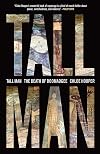
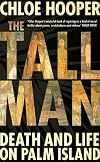
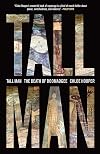
The Tall Man
by Chloe Hooper
On This Page
Description
In November 2004, in the small township of Palm Island in the far north of Queensland, Detective Hurley arrested Cameron Doomadgee for swearing at him. Doomadgee was drunk. A few hours later he was dead, his liver (according to the inquest) so badly damaged it was almost severed.Tags
Recommendations




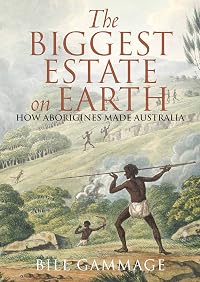
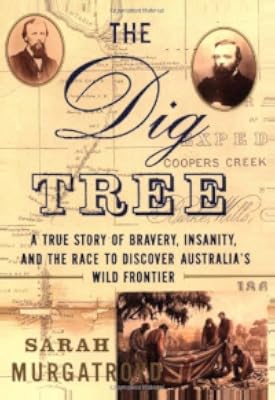


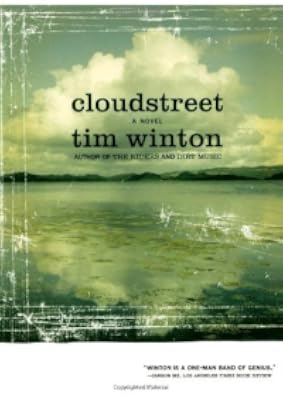

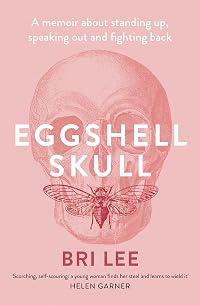






Member Recommendations

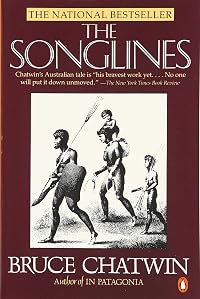
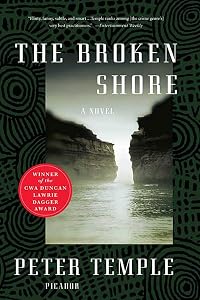
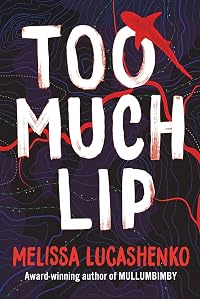
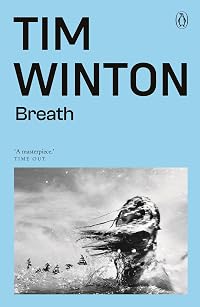
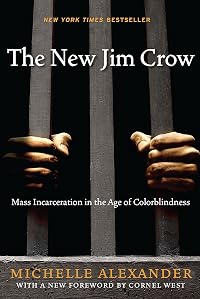
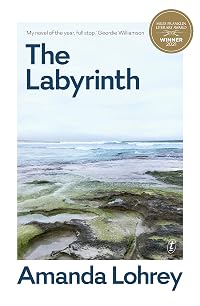
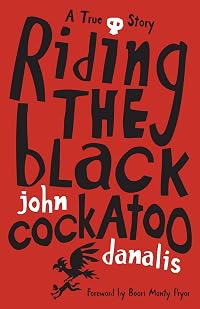
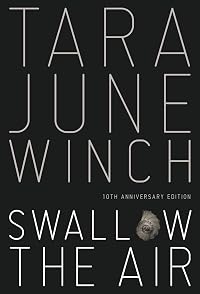
tandah Australian criminal reportage, written by Australian female authors who also write fiction.
Member Reviews
Powerful, insightful, disturbing, depressing and just plain hopeless. What have we done to the true Australians? Chloe Hooper's account of Palm Island and the death-in-custody of Cameron Doomadgee reveals the dystopian mess of race relations in Australia. But within, there is flickering hope. A few individuals who are beaten down, but keep getting up again. Women mostly.
Palm Island, November 2004. A 36 year old Aboriginal man, Cameron Doomadgee, is arrested for swearing at a police officer. He is drunk, and as they arrive at the station he strikes Senior Sergeant Christopher Hurley in the face.
45 minutes later Cameron Doomadgee is dead, his liver cleaved in two as you might see after a fatal car crash. The police say he fell on a step but others disagree. A week later there is a riot during which the police station is burnt to the ground and Hurley’s residence with it. A relief team is sent in and Hurley goes into hiding. But the case doesn’t go away. An inquest is launched, then a criminal trial. It’s the first time in Australian history that a police officer has been brought before the law to show more answer for the death of an Aboriginal prisoner in their care. In the process the trial comes to embody all of the hurt and guilt and prejudice that underline relations between native and white Australia. show less
45 minutes later Cameron Doomadgee is dead, his liver cleaved in two as you might see after a fatal car crash. The police say he fell on a step but others disagree. A week later there is a riot during which the police station is burnt to the ground and Hurley’s residence with it. A relief team is sent in and Hurley goes into hiding. But the case doesn’t go away. An inquest is launched, then a criminal trial. It’s the first time in Australian history that a police officer has been brought before the law to show more answer for the death of an Aboriginal prisoner in their care. In the process the trial comes to embody all of the hurt and guilt and prejudice that underline relations between native and white Australia. show less
The Tall Man is beautifully written, complex, passionate and about an important topic -- it was a perfect book to read aloud on a long car trip. I knew only the vague outline of the case: Aboriginal man dies in the cells of horrific injuries; the policeman who arrested him for swearing in the street was the only one alone with him between his arrest in good health and his death a couple of hours later; policeman almost wasn't even brought to trial, and then then was acquitted of any wrongdoing; Aboriginal people who rioted in protest were treated to the full force of the law. I've seen the book praised for its even-handedness, for not taking sides. In my view such praise is misplaced. Chloe Hooper combines a journalist's attention to show more evidence with a novelist's eye for the telling detail. She is careful to give the process of law its full due and at no stage makes an explicit judgement contrary to the jury's findings. Given that Senior Sergeant Hurley, the tall and bulky policeman at the centre of things, wouldn't talk to her, she does a very good job of conveying a sense of him as a human being -- a generous, thoughtful man under incredible pressure of many kinds. But it's very clear that her sympathies lie with the bereaved Doomadgee family, and it's very easy in the final pages for a reader to come to conclusions that are at odds with those of the jury.
We stopped reading fairly often to reflect on how the book illuminated or was illuminated by our own experiences, connections to Paula Shaw's recently pubished [Sev en Seasons in Aurukun], , the fabulous 'You can't handle the truth!' speech by the Jack Nicholson character in A Few Good Men. We noticed the preponderance of Catholics in the story. We ruminated on the validity or otherwise of the north-south divide (northerners dealing with harsh realities, southerners sitting comfortably in judgement) as a way of understanding the world. Terrible subject, terrific book. show less
We stopped reading fairly often to reflect on how the book illuminated or was illuminated by our own experiences, connections to Paula Shaw's recently pubished [Sev en Seasons in Aurukun], , the fabulous 'You can't handle the truth!' speech by the Jack Nicholson character in A Few Good Men. We noticed the preponderance of Catholics in the story. We ruminated on the validity or otherwise of the north-south divide (northerners dealing with harsh realities, southerners sitting comfortably in judgement) as a way of understanding the world. Terrible subject, terrific book. show less
From 1918 until the late 1960s, the Queensland government removed aboriginal people from their ancestral lands and sent them to the Palm Island mission, off the coast of Townsville. Children of mixed race were taken from their aboriginal families and put in dormitories. Aboriginal men were sent for being trouble makers, for reasons as trivial as asking for wages. The Aboriginal Protectorate sequestered wages, preventing people from spending their own earnings. On Palm Island people were punished for speaking their own language, participating in traditional ceremonies and even for failing to attend brass band practice.
By 2004, when this story starts, the aboriginal people of Palm Island were suffering from high rates of alcoholism, show more suicide, diabetes, blindness, deafness and glaucoma. Violence was extreme, with women and children the main victims.
Chris Hurley, six foot seven, was the policeman in charge of Palm Island, his job to quell the violence and protect the women and children. He had accompanied a bashed woman to her home to collect her diabetes medication when he came across the drunken, singing Cameron Doomadgee. Hurley arrested Doomadgee, apparently for swearing. By the next morning, Doomadgee was dead on the floor of his cell.
Hooper followed the case almost from the beginning, after meeting the lawyer Andrew Boe who represented the Palm Island Aboriginal Council. She gets to know the sisters and girlfriend of the dead man, talks to his brothers and visits the town where he was born. She traces Hurley's background, his childhood, education and police career. She presents the good and the bad sides of both men as she investigates the factors that led to Doomadgee's death. She attends the inquests and the subsequent court cases.
This is a devastating book. Life in Palm Island is nightmarish for the aboriginal people and brutalising for the police. Hooper has done a good job of presenting the many facets of a complex situation with restraint and fairness. show less
By 2004, when this story starts, the aboriginal people of Palm Island were suffering from high rates of alcoholism, show more suicide, diabetes, blindness, deafness and glaucoma. Violence was extreme, with women and children the main victims.
Chris Hurley, six foot seven, was the policeman in charge of Palm Island, his job to quell the violence and protect the women and children. He had accompanied a bashed woman to her home to collect her diabetes medication when he came across the drunken, singing Cameron Doomadgee. Hurley arrested Doomadgee, apparently for swearing. By the next morning, Doomadgee was dead on the floor of his cell.
Hooper followed the case almost from the beginning, after meeting the lawyer Andrew Boe who represented the Palm Island Aboriginal Council. She gets to know the sisters and girlfriend of the dead man, talks to his brothers and visits the town where he was born. She traces Hurley's background, his childhood, education and police career. She presents the good and the bad sides of both men as she investigates the factors that led to Doomadgee's death. She attends the inquests and the subsequent court cases.
This is a devastating book. Life in Palm Island is nightmarish for the aboriginal people and brutalising for the police. Hooper has done a good job of presenting the many facets of a complex situation with restraint and fairness. show less
The last thing THE TALL MAN needs is another review - the book is winning awards left right and centre at the moment. I must confess it wasn't a book I was particularly looking forward to reading, suspecting that the subject matter was going to be very very confronting. After it won the DAVITT AWARD from the Sisters in Crime, the judges comments on the night, were the little extra push required to make me stop dithering (well sooking really) and pick up the book.
Whilst I'm very very glad I finally did, reading THE TALL MAN was not a pleasant, easy or necessarily an ultimately satisfying task. Not, I hasten to add because of the standard of the writing, but because there's is no resolution to the mess that is Palm Island and the death of show more Cameron Doomadgee in particular, and white-Australia's relationship with the Indigenous People in general.
But then there are some very unpleasant, unbelievable and just flat out unsatisfactory and unacceptable aspects to the story of Palm Island and death of Doomadgee. (For some reason I still can't seem to get out of my head the fact that when Australia did the last census report - 2006 - Palm Island was "forgotten". How the hell do you "forget" an entire community? Just to add insult to injury it's a community that many many indigenous people were forcibly moved to.... it beggars belief).
There are aspects to the way that this community was setup, works and lives which are confrontational, and there are aspects to the death of Doomadgee and to the subsequent investigation, inquest and trials which just don't do a lot to give you much faith in justice, or even in the truth being paramount. THE TALL MAN delivers this story in a matter-of-fact, restrained, observant and respectful manner. There's no sensationalism of the events, it's up to the reader to draw their own conclusions.
It's a book that had to be written, and it really is a book that should be read. show less
Whilst I'm very very glad I finally did, reading THE TALL MAN was not a pleasant, easy or necessarily an ultimately satisfying task. Not, I hasten to add because of the standard of the writing, but because there's is no resolution to the mess that is Palm Island and the death of show more Cameron Doomadgee in particular, and white-Australia's relationship with the Indigenous People in general.
But then there are some very unpleasant, unbelievable and just flat out unsatisfactory and unacceptable aspects to the story of Palm Island and death of Doomadgee. (For some reason I still can't seem to get out of my head the fact that when Australia did the last census report - 2006 - Palm Island was "forgotten". How the hell do you "forget" an entire community? Just to add insult to injury it's a community that many many indigenous people were forcibly moved to.... it beggars belief).
There are aspects to the way that this community was setup, works and lives which are confrontational, and there are aspects to the death of Doomadgee and to the subsequent investigation, inquest and trials which just don't do a lot to give you much faith in justice, or even in the truth being paramount. THE TALL MAN delivers this story in a matter-of-fact, restrained, observant and respectful manner. There's no sensationalism of the events, it's up to the reader to draw their own conclusions.
It's a book that had to be written, and it really is a book that should be read. show less
In 2004, on Palm Island off the coast of Australia, Cameron Doomadgee was arrested. Palm Island is a settlement and home to many indigenous persons, and it is under the "protection" of the police. The police there are not Aboriginal people, they are regular, white Australians. Doomadgee was arrested by Sr. Sgt. Chris Hurley, ostensibly for swearing at the cops; it may well have been for singing "Who Let the Dogs Out." Either way, Doomadgee was arrested, then pushed into the police van, taken to the station, then later found dead in his cell. The question at the root of the story is what happened? Depending on who was telling the story, either Doomadgee died due to injuries sustained during a fall with Sgt. Hurley, or Sgt. Hurley show more brutally beat him prior to tossing him into the cell. If the latter was true, then Hurley committed murder. And if this were the sole focus of this book, you could label it a true-crime story. However, this event is just the focal point and a starting place for examining more underlying issues between Aboriginal peoples and whites, especially in the north of Australia. It's also a look at how the people of Palm Island took a stand and refused to let the whole matter get whitewashed in terms of the police & other officials closing ranks around Sgt. Hurley.
In trying to better understand the indigenous peoples, Hooper examines their mythologies & history as well as issues of race relations beginning with the first white settlers there. She interacts with members of the community on Palm Island, and also, in an attempt to better understand Chris Hurley (who never would agree to an interview with her), she travels to other places where he worked with indigenous peoples to get their stories. Hurley, it seemed, was well liked by these people, considering that he was a white man -- he was active in the local community, developing programs and overseeing their welfare in many cases, and was the only policeman that even the most vocal activist for Aboriginal peoples' rights would let into his home. So what happened? Hooper rightly wonders if Hurley is doing a Colonel Kurtz (Heart of Darkness) here -- in staving off "savagery," does he become a "savage" himself? At the same time, Hooper does understand that the police are often fighting an uphill battle, not only on Palm Island, but in other indigenous settlements against alcoholism, beatings, sex crimes, and other crimes.
Tall Man is a phenomenal book, very well written. It's not just cold, standoffish journalism, but a more personal story of two worlds, both of which she works hard to make the reader aware. Ultimately, the reader has to make up his or her mind as to what really happened, but you will not be able to stop reading once you start.
I can very highly recommend this book, especially to people who are interested in Australian indigenous peoples and their myths and history. It's also a very excellent look at the sad and tragic history of race relations between the indigenous people who've lived there for thousands of years and the white people who came after. Excellent book. show less
In trying to better understand the indigenous peoples, Hooper examines their mythologies & history as well as issues of race relations beginning with the first white settlers there. She interacts with members of the community on Palm Island, and also, in an attempt to better understand Chris Hurley (who never would agree to an interview with her), she travels to other places where he worked with indigenous peoples to get their stories. Hurley, it seemed, was well liked by these people, considering that he was a white man -- he was active in the local community, developing programs and overseeing their welfare in many cases, and was the only policeman that even the most vocal activist for Aboriginal peoples' rights would let into his home. So what happened? Hooper rightly wonders if Hurley is doing a Colonel Kurtz (Heart of Darkness) here -- in staving off "savagery," does he become a "savage" himself? At the same time, Hooper does understand that the police are often fighting an uphill battle, not only on Palm Island, but in other indigenous settlements against alcoholism, beatings, sex crimes, and other crimes.
Tall Man is a phenomenal book, very well written. It's not just cold, standoffish journalism, but a more personal story of two worlds, both of which she works hard to make the reader aware. Ultimately, the reader has to make up his or her mind as to what really happened, but you will not be able to stop reading once you start.
I can very highly recommend this book, especially to people who are interested in Australian indigenous peoples and their myths and history. It's also a very excellent look at the sad and tragic history of race relations between the indigenous people who've lived there for thousands of years and the white people who came after. Excellent book. show less
This was never going to be an easy book to write. It's about black deaths in custody. Well, one particular black death in custody - Cameron Doomadgee.
And without wishing to sound facile - I think the audience will tend to see things in black and white.
Probably the "white" audience won't even read this book unless they're already "converted".
Some would say that Chloe falls into the chardonnay sipping - bleeding hearts liberal mob of thought.
I think she does her very best to avoid that stereotype. But I think she would also recognise that it will inevitably be applied.
Many of the chardonnay mob (and I include myself in that number) will "pass" on reading the book - because, honestly - do I feel any better at the end of it than I did at show more the beginning? Do I understand the problems better? Do I have a sense of hope? No.
Some would say that Hooper, being white, could never begin to represent blackfellas point of view properly.
You're damned if you're white - you're damned if you're black.
I choose to be white damned.
Or do I? Do we have a choice?
Here is an example of Hooper's thoughts:
"Do the things that draw a missionary to savage places also attract a cop? Does the cop get the same rush from lawlessness that missionaries get from the Godless? Wild places prove who you are, slough off every comfort of a nice house on a nice strett with a nice God-fearing family. Maybe some cops use the blue inform the way the missionary does the crucifix."
So are police the new missionaries? I don't know many cops. Do they do it from a sense of social justice? Why do they valiantly leap into territory the rest of us would fear to tread? Because what would happen if no-one picked up the chalice perhaps???
Here's another thought Chloe quotes from Orwell :
" When a white man turns tyrant it is his own freedom that he destroys. He becomes a sort of hollow, posing dummy... For it is the condition of his rule that he shall spend his life in trying to impress the "natives", and so in very crisis he has got to do what the "natives" expect of him. He wears a mask, and his face grows to it."
I don't believe that Hurley was a tyrant but perhaps he was wearing a mask i.e we're not all perfect but you have to be perfect if you're a policeman.
Hooper believes that the "war between police and Indigenous Australians is a false battleground".
I'm not quite sure what she means by this and would like to explore these thoughts further.
Does she mean that the real battleground is the family? Alcohol abuse?
It is such a complex problem.
I certainly don't have the answers but I know I don't like what I see and I am ashamed that we haven't found a solution to these problems yet.
This book doesn't give any answers - but it doesn't let me forget. Perhaps that's the best we can do in some circumstances - bear witness. show less
And without wishing to sound facile - I think the audience will tend to see things in black and white.
Probably the "white" audience won't even read this book unless they're already "converted".
Some would say that Chloe falls into the chardonnay sipping - bleeding hearts liberal mob of thought.
I think she does her very best to avoid that stereotype. But I think she would also recognise that it will inevitably be applied.
Many of the chardonnay mob (and I include myself in that number) will "pass" on reading the book - because, honestly - do I feel any better at the end of it than I did at show more the beginning? Do I understand the problems better? Do I have a sense of hope? No.
Some would say that Hooper, being white, could never begin to represent blackfellas point of view properly.
You're damned if you're white - you're damned if you're black.
I choose to be white damned.
Or do I? Do we have a choice?
Here is an example of Hooper's thoughts:
"Do the things that draw a missionary to savage places also attract a cop? Does the cop get the same rush from lawlessness that missionaries get from the Godless? Wild places prove who you are, slough off every comfort of a nice house on a nice strett with a nice God-fearing family. Maybe some cops use the blue inform the way the missionary does the crucifix."
So are police the new missionaries? I don't know many cops. Do they do it from a sense of social justice? Why do they valiantly leap into territory the rest of us would fear to tread? Because what would happen if no-one picked up the chalice perhaps???
Here's another thought Chloe quotes from Orwell :
" When a white man turns tyrant it is his own freedom that he destroys. He becomes a sort of hollow, posing dummy... For it is the condition of his rule that he shall spend his life in trying to impress the "natives", and so in very crisis he has got to do what the "natives" expect of him. He wears a mask, and his face grows to it."
I don't believe that Hurley was a tyrant but perhaps he was wearing a mask i.e we're not all perfect but you have to be perfect if you're a policeman.
Hooper believes that the "war between police and Indigenous Australians is a false battleground".
I'm not quite sure what she means by this and would like to explore these thoughts further.
Does she mean that the real battleground is the family? Alcohol abuse?
It is such a complex problem.
I certainly don't have the answers but I know I don't like what I see and I am ashamed that we haven't found a solution to these problems yet.
This book doesn't give any answers - but it doesn't let me forget. Perhaps that's the best we can do in some circumstances - bear witness. show less
Members
- Recently Added By
Lists

Best Australian Books of the 21st Century
88 works; 2 members
Author Information

9+ Works 1,166 Members
Some Editions
Awards and Honors
Awards
Notable Lists
Series
Belongs to Publisher Series
Work Relationships
Is an expanded version of
Common Knowledge
- Canonical title
- The Tall Man
- Alternate titles
- The Tall Man: Death and life on Palm Island; The death of Doomadgee
- Original publication date
- 2009
- People/Characters
- Cameron Mulrunju Doomadgee; Senior Sergeant Christopher Hurley
- Important places
- Palm Island, Queensland, Australia
- Dedication
- For Justin and Nicholas
- First words
- Palm Island's grimy air terminal was decorated with a collection of the local fourth-graders' projects on safe and unsafe behaviour.
- Quotations
- The test of your government, the strength of a democracy is shown in how you treat the weakest citizens, the most fragile people. The police cannot be above the law. - Peter Beattie (then Premier of QLD) p. 191
...many lawyers felt that, as Doomadgee's death had primarily been investigated by the main suspect's friends, Hurley's civil liberties had to be balanced with the disregard shown for Doomadgee's. - Last words
- (Click to show. Warning: May contain spoilers.)It was as if he'd dissolved into a long stream of blue.
Classifications
- Genres
- Nonfiction, General Nonfiction, Politics and Government, History
- DDC/MDS
- 364.349915 — Society, government, & culture Social problems and social services Crime Criminals
- LCC
- HV8280 .Q4 .H66 — Social sciences Social pathology. Social and public welfare. Criminology Social pathology. Social and public welfare. Criminal justice administration Police. Detectves. Constabulary By region or country
- BISAC
Statistics
- Members
- 366
- Popularity
- 86,316
- Reviews
- 18
- Rating
- (4.16)
- Languages
- English, French, German, Norwegian
- Media
- Paper, Ebook
- ISBNs
- 16
- ASINs
- 4