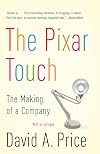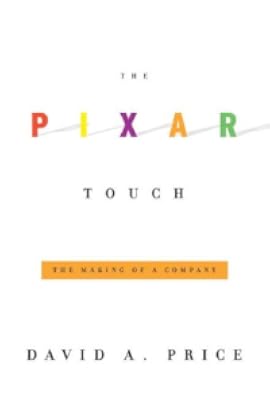
The Pixar Touch: The Making of a Company
by David A. Price
On This Page
Description
A look at the company that forever changed the film industry, "The Pixar Touch" is a story of technical innovation that revolutionized animation--and ended up a multibillion-dollar success.--From publisher description.Tags
Recommendations












Member Reviews
Perhaps no motion picture company has had a more successful beginning than Pixar, whose feature-length computer animated films have all been hugely popular box office success; of these, several have been honored with Oscars. This phenomenal success, however, was not easy or foreordained. David Price explores the struggles of the studio in “The Pixar Touch: The Making of a Company.”
Price uses his experience writing for prestigious financial publications, such as The Wall Street Journal and Forbes magazine, to examine the saga of the transformation of a computer hardware company into an entertainment juggernaut. Tracing the origins of the company to early advanced computer labs at the University of Utah and the New York Institute of show more Technology, he argues that Pixar was the stepchild nobody wanted – or at least nobody knew what to do with – including the likes of George Lucas and even, in his earliest involvement with the company, longtime owner Steve Jobs.
For as much as half of its existence, Pixar was focused on developing hardware and software rather than on computer animation. In fact, the animated shorts produced by Pixar over the years were officially intended to demonstrate the capabilities of their products, even though Price believes that creating a viable computer animation studio was the central focus of most of the key Pixar leaders, embodied by John Lasseter.
Even when Pixar was given the opportunity to make a feature-length animated movie, there were significant struggles and it was unclear if they would succeed. Through their association with Disney animation, particularly with assistance in story development, the team eventually produced "Toy Story." In some respects, the film would be a make-or-break moment for the company who owed its existence to significant financial support over the years from various benefactors, including Jobs, who was now ready to cut the lifeline.
In some respects, the phenomenal success of Pixar as an animation studio is due to three main things, without which it is unlikely the company would have survived. First, those involved with Pixar have benefited from the slow, expensive growth of the company, which received years of financial support without ever showing a profit. Second, the excitement over computer animation coincided with a period of time where there was abundant start up money and investment money for computer and Internet related companies – the now famous dot.com bubble – which not only encouraged some of Pixar's early support but also enabled its spectacular initial public offering. Third, the initial film distribution deal with Disney, which was negotiated totally to Disney's advantage, prevented the budding filmmakers at Pixar from making certain rookie mistakes and also provided an unparalleled media rollout for the first film.
Price offers a behind-the-scenes account of Pixar's development through its acquisition by Disney. Frequently, the fascinating and engaging narrative is driven by amazement at the audacity and drive of Pixar's leaders and astonishment that the money held out just long enough to support their dreams. Funny, insightful, and attentive to the artistic and business details of filmmaking, the book is an excellent history of Pixar which will interest both film buffs and those interested in modern computer-related business. show less
Price uses his experience writing for prestigious financial publications, such as The Wall Street Journal and Forbes magazine, to examine the saga of the transformation of a computer hardware company into an entertainment juggernaut. Tracing the origins of the company to early advanced computer labs at the University of Utah and the New York Institute of show more Technology, he argues that Pixar was the stepchild nobody wanted – or at least nobody knew what to do with – including the likes of George Lucas and even, in his earliest involvement with the company, longtime owner Steve Jobs.
For as much as half of its existence, Pixar was focused on developing hardware and software rather than on computer animation. In fact, the animated shorts produced by Pixar over the years were officially intended to demonstrate the capabilities of their products, even though Price believes that creating a viable computer animation studio was the central focus of most of the key Pixar leaders, embodied by John Lasseter.
Even when Pixar was given the opportunity to make a feature-length animated movie, there were significant struggles and it was unclear if they would succeed. Through their association with Disney animation, particularly with assistance in story development, the team eventually produced "Toy Story." In some respects, the film would be a make-or-break moment for the company who owed its existence to significant financial support over the years from various benefactors, including Jobs, who was now ready to cut the lifeline.
In some respects, the phenomenal success of Pixar as an animation studio is due to three main things, without which it is unlikely the company would have survived. First, those involved with Pixar have benefited from the slow, expensive growth of the company, which received years of financial support without ever showing a profit. Second, the excitement over computer animation coincided with a period of time where there was abundant start up money and investment money for computer and Internet related companies – the now famous dot.com bubble – which not only encouraged some of Pixar's early support but also enabled its spectacular initial public offering. Third, the initial film distribution deal with Disney, which was negotiated totally to Disney's advantage, prevented the budding filmmakers at Pixar from making certain rookie mistakes and also provided an unparalleled media rollout for the first film.
Price offers a behind-the-scenes account of Pixar's development through its acquisition by Disney. Frequently, the fascinating and engaging narrative is driven by amazement at the audacity and drive of Pixar's leaders and astonishment that the money held out just long enough to support their dreams. Funny, insightful, and attentive to the artistic and business details of filmmaking, the book is an excellent history of Pixar which will interest both film buffs and those interested in modern computer-related business. show less
Superb history of computer-animated films told through the leading lights of Pixar, with just the right amount of depth and background. I don't even like animated films (except for The Incredibles) and I was riveted. As a bonus, you'll finally understand all that executive back-and-forths that happened at Disney in the 1990s.
This book is a bit schizophrenic. But, considering the subject, it has to be. Describing the evolution of Pixar means delving into the origins of computer graphics on the one hand and the world of movie-making on the other. So, while the first half dwells on Ed Catmull and the group that came together to expand the horizons of what computers could do on their screens, the second half dwells on John Lassiter and his role in making movies – make that, making Pixar movies. Because, for anyone who doesn’t realize it, Pixar movies are more than animation, they are more than CGI, they are stories that use animation and CGI as a tool for sharing stories people really like.
This book moves at a nice clip and is a good overview of how Pixar show more reached its current supremacy. It provides insight into how the right alignment of talent and money came together to drive the technology beyond what could have been imagined. Yet, it is evident in the telling, that there were a core of people involved who didn’t care about the technology – that this was nothing but a way to tell the story. So the remainder of the book dwells on how Pixar got out of the technology business (a business that was failing), and into the story-telling business. Some chapters have a predictability when they are devoted to individual movies; they turn into “Here is how the story idea was generated, here is how the story developed, here were the hurdles, and here is how they were cleared to lead to another successful movie.” But, really, how can that not be the upshot of each chapter when you are talking about a group whose worst effort - Cars - would be considered a smash hit for anyone else. And, what is silently hidden in the weaving of this story is the instrumental role the small company (Pixar) eventually had in the overthrowing of a CEO (Eisner) and the effective takeover of a larger company (Disney). Good reading that is not too light to be considered superficial, but not so in-depth you want to shoot yourself. show less
This book moves at a nice clip and is a good overview of how Pixar show more reached its current supremacy. It provides insight into how the right alignment of talent and money came together to drive the technology beyond what could have been imagined. Yet, it is evident in the telling, that there were a core of people involved who didn’t care about the technology – that this was nothing but a way to tell the story. So the remainder of the book dwells on how Pixar got out of the technology business (a business that was failing), and into the story-telling business. Some chapters have a predictability when they are devoted to individual movies; they turn into “Here is how the story idea was generated, here is how the story developed, here were the hurdles, and here is how they were cleared to lead to another successful movie.” But, really, how can that not be the upshot of each chapter when you are talking about a group whose worst effort - Cars - would be considered a smash hit for anyone else. And, what is silently hidden in the weaving of this story is the instrumental role the small company (Pixar) eventually had in the overthrowing of a CEO (Eisner) and the effective takeover of a larger company (Disney). Good reading that is not too light to be considered superficial, but not so in-depth you want to shoot yourself. show less
Price's history of Pixar is engaging and thorough. I was more interested in the creative aspects of the company than I was in the business history, but the author did a good job of making potentially boring events interesting.
Good account of the Pixar company and long and fairly tortured journey. I think the Walter Isaacson Jobs book's chapters on Pixar were better, but they didn't cover as much of the story. There were a lot of parts of this which were new to me -- the NYIT, CalArts, etc. parts, and the massive cram-down. I'd definitely like to visit a Pixar Image Computer at CHM someday, and I remember running RenderMan to do some test images a long time ago (on Macs).
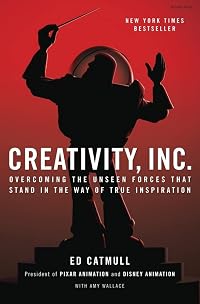
Overall, mostly a straightforward accounting of the company. Doesn't provide a lot of insight into novel creative process or personality, so it's more for people curious about Pixar itself, not as much lessons applicable outside. Creativity, Inc. (written by one of the founders of Pixar) is show more probably more worthwhile generally. The Jobs book is better for what it covered. show less
Overall, mostly a straightforward accounting of the company. Doesn't provide a lot of insight into novel creative process or personality, so it's more for people curious about Pixar itself, not as much lessons applicable outside. Creativity, Inc. (written by one of the founders of Pixar) is show more probably more worthwhile generally. The Jobs book is better for what it covered. show less
The story of how Pixar Animation Studios came into existence is remarkable not just for the movies they make, but because its own history is in itself a Cinderella story.
The Pixar Touch by David Price tells of how the company began as a dream of combining the love of animated films with computer graphics. This is the Pixar we now know, but what is less known is how industry wanted the company to be something else, something more profitable at the time. As ownership passed from noted technology shakers George Lucas to Steve Jobs, core members within the company remained committed to their goal of a creating the very first feature length animated film.
The Pixar Touch by David Price tells of how the company began as a dream of combining the love of animated films with computer graphics. This is the Pixar we now know, but what is less known is how industry wanted the company to be something else, something more profitable at the time. As ownership passed from noted technology shakers George Lucas to Steve Jobs, core members within the company remained committed to their goal of a creating the very first feature length animated film.
I'm a fan of the Pixar movies and I've read at least there books about it's background. The book provides the perspective of Disney and Steve Jobs as well those who worked at Pixar. The seminal role of the University of Utah is well presented. I briefly knew some people who had trained in computer graphics there and I presented at an early Siggraf meeting. My life has gone an entirely different direction. Steve Jobs had always been a fantasy for me.
Members
- Recently Added By
Published Reviews
ThingScore 93
Lists

Top Five Books of 2020
982 works; 348 members
Author Information

8 Works 1,151 Members
Common Knowledge
- People/Characters
- Brad Bird; Steve Jobs; George Lucas; Don Bluth; Tim Burton; Steve Wozniak (show all 9); Ed Catmull; John Lasseter; Dick Cook
- Important places
- Skywalker Ranch, California, USA; Pixar Animation Studios, Emeryville, California, USA; Emeryville, California, USA; California, USA
Classifications
- Genres
- Nonfiction, Business, General Nonfiction, Technology
- DDC/MDS
- 384.806573 — Society, government, & culture Commerce, communications & transportation regulations Communications Motion pictures Standard subdivisions
- LCC
- NC1766 .U52 .P75 — Fine Arts Drawing. Design. Illustration Drawing. Design. Illustration Pictorial humor, caricature, etc.
- BISAC
Statistics
- Members
- 417
- Popularity
- 74,566
- Reviews
- 12
- Rating
- (3.69)
- Languages
- Chinese, English, French
- Media
- Paper, Audiobook, Ebook
- ISBNs
- 11
- ASINs
- 4