
Steven Watts
Author of The People's Tycoon: Henry Ford and the American Century
About the Author
Steven Watts is a professor of history at the University of Missouri.
Disambiguation Notice:
Please do not combine Steven Watts and Steven M. Watts. They are different authors.
Image credit: Sherrie Goettsch
Works by Steven Watts
Tagged
Common Knowledge
- Birthdate
- 1952
- Gender
- male
- Education
- University of Missouri (PhD|History|1984)
- Occupations
- historian
university professor emeritus - Organizations
- University of Missouri
- Disambiguation notice
- Please do not combine Steven Watts and Steven M. Watts. They are different authors.
Members
Reviews
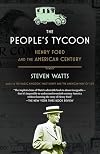
I finished The People’s Tycoon: Henry Ford and the American Century by Steven Watts.
Henry Ford is a dichotomy of a man who brought forth a new American Industrial Revolution while at the same time embracing a more old fashioned outlook on life. A man who often showed disdain for “book learning “ while at the same time embracing the need for education. A man who created a new system of consumerism and made commonplace the idea that every family should and would have an automobile, he show more perfected the assembly line for the manufacture of his beloved Model T while at the same time being wedded to an America centered on the farm.
Filled with anachronisms he loved technology but embraced a more traditional America. A progressive who wanted to raise the standard of living of his employees so the could take part in the new wave of consumerism while fighting the acceptance of unionization. A pacifist who ultimately allowed his company to be part of the World War II war effort. A man who did all he could to educate African Americans and help them participate and share in the American dream but also virulently Anti-Semitic and early on somewhat sympathetic to the Nazi movement and Hitler’s Germany.
He put more faith in others than his own son Edsel Ford in the running of the Ford Motor Company and as he grew older grew more autocratic and surrounded by sycophantic yes men.
A great American and 20th century industrialist filled with a multitude of weaknesses. A more complicated yet simple man will be hard to find. A fascinating book on a fascinating man which I would encourage those interested in Henry Ford to read. show less
Henry Ford is a dichotomy of a man who brought forth a new American Industrial Revolution while at the same time embracing a more old fashioned outlook on life. A man who often showed disdain for “book learning “ while at the same time embracing the need for education. A man who created a new system of consumerism and made commonplace the idea that every family should and would have an automobile, he show more perfected the assembly line for the manufacture of his beloved Model T while at the same time being wedded to an America centered on the farm.
Filled with anachronisms he loved technology but embraced a more traditional America. A progressive who wanted to raise the standard of living of his employees so the could take part in the new wave of consumerism while fighting the acceptance of unionization. A pacifist who ultimately allowed his company to be part of the World War II war effort. A man who did all he could to educate African Americans and help them participate and share in the American dream but also virulently Anti-Semitic and early on somewhat sympathetic to the Nazi movement and Hitler’s Germany.
He put more faith in others than his own son Edsel Ford in the running of the Ford Motor Company and as he grew older grew more autocratic and surrounded by sycophantic yes men.
A great American and 20th century industrialist filled with a multitude of weaknesses. A more complicated yet simple man will be hard to find. A fascinating book on a fascinating man which I would encourage those interested in Henry Ford to read. show less
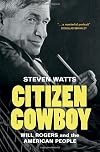
Though I have read other biographies of the national institution known as Will Rogers, Steven Watts’ new biography of him, called Citizen Cowboy, seems a little different. Rogers mastered every entertainment medium in existence, bringing his humor and insight to more people than anyone had ever before. And most of those media did not yet exist when he was born in 1879. The result was the biggest star the world had ever known: famous, beloved, rich and respected to the point where the whole show more country would have gladly voted him in as president in 1932 if he hadn’t continually discouraged it.
He started out in outdoor wild west shows, all over the world, from South America to Africa, paying his dues as a cowboy in show business. When he came back to the USA, he mastered vaudeville, which was a new medium enabled by the railway network that came into existence in the late 19th century. His success there got him into top billing at the Ziegfeld Follies, the apex of live variety shows. He got offered a newspaper column and then two – one weekly and one daily (but much shorter). They ran in 600 newspapers across the country. He collected his writings for books, and with all the material he had accumulated, took to public speaking at an exhausting pace. He got invited to make silent movies, then Broadway plays, then radio and talking pictures, all of which he mastered seemingly without effort. Had he not died in a plane crash in his prime, he most certainly would have been number one in TV, well ahead of Milton Berle. It was an amazing ride.
Rogers’ shtick was the bashful, humble, uneducated cowboy, totally unsophisticated, and a real man of the people. (Not to put too fine a point on it, but his polo-playing friend Walt Disney based his Bashful Dwarf on Rogers.) He came to this personality in fits and starts. He began with lasso tricks that wowed everywhere he went, even bringing his horse onstage in New York. It took years for him to ever say a word while performing, but he got a laugh the first time he did, and that changed everything. Soon, it was just him talking to the audience, and the horse stayed home.
What he told audiences was his simple view of life, politics and the USA. Absolutely everyone could relate to his simple takes, seemingly common sensical and relatable. So his star kept rising. As he set more and demands of himself in all the various media, he devoured more and more news all the time. Everywhere he spoke he bought the local papers and found local issues and politicians he could make fun of. No matter where he was, he typed up his columns on a tiny portable typewriter and telegraphed them to New York for distribution to his network. He repeatedly said all he knew was what he read in the papers, and nobody read as many as he did.
The Rogers shtick was typical for show business at the time. He had a number of ticks that made his act work. He would push his hat forward and scratch the back of his head, giving him a couple of seconds to find a comeback or wisecrack to make. He chewed gum, which drew attention away from waiting for his next joke. He put himself down all the time, reducing expectations that he was about to say something new, unique and brilliant. Finally, his languid western drawl allowed him to slow and control the pace, as compared to some of the many rapid fire comedians of the era. The package worked better for him than any other act in the world. Watts doesn’t see this as stage shtick, but rather as components of Rogers’ persona. He might be right, but students of show business know these ticks and how performers leverage them, from George Burns’ cigar to Henny Youngman’s violin to Chico Marx’s Italian accent. They are tools of the trade. And Rogers was hyper conscious of his trade.
The main thing he had going for him was stage presence. Few have it at all, and even fewer have it like Will Rogers did. Watts cites the veteran actor, dancer and voiceover star of 70 years in showbiz, Sterling Holloway. Holloway said no matter how Rogers was dressed or where he was in the scene, or what he was saying (if anything at all), he still totally dominated the shot. No matter what was going on, all attention was tightly focused on Will Rogers. He had an absolute lock on the audience.
It meant he could play himself no matter what role he was assigned. It meant he could get away with never learning a part, but improvising his way through his films. And it meant no matter how ordinary the film was, people remembered Will Rogers as being great in it. That, more than anything, at least to me, was the essence of Will Rogers. I was amazed that Watts did not see it this way, but rather seemed to remain in awe of Rogers’ abilities with different roles and different audiences in different media.
Watts examines Rogers by the media he worked in, roughly following his life. He reports the criticisms as well as the praise, which is very helpful. One “problem” is that Rogers’ life was largely a straight line, diagonally rising from nothing to new high after new high, with rarely even a pause. (And he was smart enough to know “Everything I have done has been by luck, no move was premeditated. I just stumbled from one thing to another.”) His setbacks were minor and brief. His health was almost always great. He got precisely the girl he wanted – for life. He was able to channel his huge reserve of energy (constantly chewing gum, rubber bands, string, or the rubber sealing ring from a storage jar) and nervous fidgeting into global travel. He always needed new stimuli, and the invention of the airplane in his lifetime was literally his ticket to the whole world. He could not relax or sit still. He needed to be learning and experiencing continuously. It brought him perspective that helped him relate and communicate even better to an ever wider audience.
It’s all a bit ironic, since he started out as an ignorant spoiled brat. He was a rich kid who hated school, refused to learn and take over the family ranching business, and ran off to join the circus. That’s when he realized what he really wanted was for people to pay him just for being Will Rogers. His stated goal was simply to avoid ever being a day laborer. Like so many others with little or no education, he grew hungry for learning, more and more every day. And all these factors played into the character he became when he finally broke the fourth wall and began talking to the audience.
One criticism I have of Watts’ way of organizing his book is that he finds it necessary to repeat stories because they fit different chapters. For example, if a story fit both his family life and his newspaper column efforts, he will tell it in both places. He did this with the day laborer story, among others. It got a little offputting when he told the same story of Rogers’ wife Betty claiming he was “running me ragged,” three times in the book. And there are several other such repeat stories.
Watts tries to nail down how Rogers was funny, citing endless reviewers and other experts. And as usual, this fails. Nothing definitive comes of it. But I did notice two elements that kept cropping up as I read his quips. One is that he used irony more and better than anyone I’ve admired. It was easy to show how dumb Congress could be, missing its own point, ruining its own achievements, and embarrassing itself with its wrongheaded assumptions and conclusions. One famous example (which Watts uses twice) is the business of Congress giving money to the rich so they could spend it and thereby have some of it trickle down to the poor (Sound familiar?). He expressed amazement that Congress thought money trickled down and that they “dident know that money trickled up. Give it to the people at the bottom and the people at the top will have it before night anyhow.” Or this great quip defending soldiers who came back from the war to end all wars, only to be refused service by US banks: “Thank goodness there will be no more wars. Now you tell one.” Rogers could develop irony and sarcasm out of every little weekly newspaper and the politicians he heard or read.
This relating took everyone’s mind off the fact that far from a humble cowboy, Rogers had become one of the richest people in the country – during the Great Depression. When he moved to LA for his silent movie contract, he purchased over 200 acres opposite the Beverly Hills Hotel on Sunset, followed by hundreds more north of Santa Monica in what is now Pacific Palisades. He had huge income streams from every medium, in the thousands of dollars every week, when millions of his fans couldn’t put a dollar together to buy groceries. He lived a contradiction, but he did it so well there was absolutely no one more loved than Will Rogers. At the depth of the depression, ticket sales for his films only dipped by about a third. He was a priority, a salvation.
The second factor I found is the overall method of his jokes. Rogers told what we now call dad jokes. Most everything was mild if not corny; eyerolling when not cringeworthy. That it came from this simple common man in cowboy chaps, speaking slowly and cautiously, made it heartwarming, funny and true for millions. But reading it now, a hundred years later, it’s mostly pathetic dad jokes.
Once again, delivery was everything. George Burns would not have gotten the laughs Rogers did with those jokes. Neither would Jerry Lewis or Eddie Cantor. It was the delivery Rogers hesitatingly developed over the decades that made him the biggest star the country had ever produced. Watts acknowledges in two different places that Rogers worked hard to consciously develop “natural” delivery and timing, but doesn’t pull it together into the package that Rogers made of it all. But for his fans, they could “hear” him performing this delivery if they read him in print. They could picture him scratching the back of his head as he stalled. And yet, they were mostly just terrible dad jokes. That is powerful and remarkable, and should have been elaborated in the book, since Watts seems to be all about his exploiting the media.
Unfortunately, my personal favorite Will Rogers story didn’t make it into Citizen Cowboy. On one of his visits to Italy, the Vatican invited Rogers to meet the pope. He was introduced: “Holiness, Mister William Rogers of the United States of America.“ Rogers approached and shook hands with the pope, but also leaned in and said softly into the pope’s ear: “Sorry. I didn’t catch the name.” A dad joke to end all dad jokes.
God bless you, Will Rogers.
David Wineberg show less
He started out in outdoor wild west shows, all over the world, from South America to Africa, paying his dues as a cowboy in show business. When he came back to the USA, he mastered vaudeville, which was a new medium enabled by the railway network that came into existence in the late 19th century. His success there got him into top billing at the Ziegfeld Follies, the apex of live variety shows. He got offered a newspaper column and then two – one weekly and one daily (but much shorter). They ran in 600 newspapers across the country. He collected his writings for books, and with all the material he had accumulated, took to public speaking at an exhausting pace. He got invited to make silent movies, then Broadway plays, then radio and talking pictures, all of which he mastered seemingly without effort. Had he not died in a plane crash in his prime, he most certainly would have been number one in TV, well ahead of Milton Berle. It was an amazing ride.
Rogers’ shtick was the bashful, humble, uneducated cowboy, totally unsophisticated, and a real man of the people. (Not to put too fine a point on it, but his polo-playing friend Walt Disney based his Bashful Dwarf on Rogers.) He came to this personality in fits and starts. He began with lasso tricks that wowed everywhere he went, even bringing his horse onstage in New York. It took years for him to ever say a word while performing, but he got a laugh the first time he did, and that changed everything. Soon, it was just him talking to the audience, and the horse stayed home.
What he told audiences was his simple view of life, politics and the USA. Absolutely everyone could relate to his simple takes, seemingly common sensical and relatable. So his star kept rising. As he set more and demands of himself in all the various media, he devoured more and more news all the time. Everywhere he spoke he bought the local papers and found local issues and politicians he could make fun of. No matter where he was, he typed up his columns on a tiny portable typewriter and telegraphed them to New York for distribution to his network. He repeatedly said all he knew was what he read in the papers, and nobody read as many as he did.
The Rogers shtick was typical for show business at the time. He had a number of ticks that made his act work. He would push his hat forward and scratch the back of his head, giving him a couple of seconds to find a comeback or wisecrack to make. He chewed gum, which drew attention away from waiting for his next joke. He put himself down all the time, reducing expectations that he was about to say something new, unique and brilliant. Finally, his languid western drawl allowed him to slow and control the pace, as compared to some of the many rapid fire comedians of the era. The package worked better for him than any other act in the world. Watts doesn’t see this as stage shtick, but rather as components of Rogers’ persona. He might be right, but students of show business know these ticks and how performers leverage them, from George Burns’ cigar to Henny Youngman’s violin to Chico Marx’s Italian accent. They are tools of the trade. And Rogers was hyper conscious of his trade.
The main thing he had going for him was stage presence. Few have it at all, and even fewer have it like Will Rogers did. Watts cites the veteran actor, dancer and voiceover star of 70 years in showbiz, Sterling Holloway. Holloway said no matter how Rogers was dressed or where he was in the scene, or what he was saying (if anything at all), he still totally dominated the shot. No matter what was going on, all attention was tightly focused on Will Rogers. He had an absolute lock on the audience.
It meant he could play himself no matter what role he was assigned. It meant he could get away with never learning a part, but improvising his way through his films. And it meant no matter how ordinary the film was, people remembered Will Rogers as being great in it. That, more than anything, at least to me, was the essence of Will Rogers. I was amazed that Watts did not see it this way, but rather seemed to remain in awe of Rogers’ abilities with different roles and different audiences in different media.
Watts examines Rogers by the media he worked in, roughly following his life. He reports the criticisms as well as the praise, which is very helpful. One “problem” is that Rogers’ life was largely a straight line, diagonally rising from nothing to new high after new high, with rarely even a pause. (And he was smart enough to know “Everything I have done has been by luck, no move was premeditated. I just stumbled from one thing to another.”) His setbacks were minor and brief. His health was almost always great. He got precisely the girl he wanted – for life. He was able to channel his huge reserve of energy (constantly chewing gum, rubber bands, string, or the rubber sealing ring from a storage jar) and nervous fidgeting into global travel. He always needed new stimuli, and the invention of the airplane in his lifetime was literally his ticket to the whole world. He could not relax or sit still. He needed to be learning and experiencing continuously. It brought him perspective that helped him relate and communicate even better to an ever wider audience.
It’s all a bit ironic, since he started out as an ignorant spoiled brat. He was a rich kid who hated school, refused to learn and take over the family ranching business, and ran off to join the circus. That’s when he realized what he really wanted was for people to pay him just for being Will Rogers. His stated goal was simply to avoid ever being a day laborer. Like so many others with little or no education, he grew hungry for learning, more and more every day. And all these factors played into the character he became when he finally broke the fourth wall and began talking to the audience.
One criticism I have of Watts’ way of organizing his book is that he finds it necessary to repeat stories because they fit different chapters. For example, if a story fit both his family life and his newspaper column efforts, he will tell it in both places. He did this with the day laborer story, among others. It got a little offputting when he told the same story of Rogers’ wife Betty claiming he was “running me ragged,” three times in the book. And there are several other such repeat stories.
Watts tries to nail down how Rogers was funny, citing endless reviewers and other experts. And as usual, this fails. Nothing definitive comes of it. But I did notice two elements that kept cropping up as I read his quips. One is that he used irony more and better than anyone I’ve admired. It was easy to show how dumb Congress could be, missing its own point, ruining its own achievements, and embarrassing itself with its wrongheaded assumptions and conclusions. One famous example (which Watts uses twice) is the business of Congress giving money to the rich so they could spend it and thereby have some of it trickle down to the poor (Sound familiar?). He expressed amazement that Congress thought money trickled down and that they “dident know that money trickled up. Give it to the people at the bottom and the people at the top will have it before night anyhow.” Or this great quip defending soldiers who came back from the war to end all wars, only to be refused service by US banks: “Thank goodness there will be no more wars. Now you tell one.” Rogers could develop irony and sarcasm out of every little weekly newspaper and the politicians he heard or read.
This relating took everyone’s mind off the fact that far from a humble cowboy, Rogers had become one of the richest people in the country – during the Great Depression. When he moved to LA for his silent movie contract, he purchased over 200 acres opposite the Beverly Hills Hotel on Sunset, followed by hundreds more north of Santa Monica in what is now Pacific Palisades. He had huge income streams from every medium, in the thousands of dollars every week, when millions of his fans couldn’t put a dollar together to buy groceries. He lived a contradiction, but he did it so well there was absolutely no one more loved than Will Rogers. At the depth of the depression, ticket sales for his films only dipped by about a third. He was a priority, a salvation.
The second factor I found is the overall method of his jokes. Rogers told what we now call dad jokes. Most everything was mild if not corny; eyerolling when not cringeworthy. That it came from this simple common man in cowboy chaps, speaking slowly and cautiously, made it heartwarming, funny and true for millions. But reading it now, a hundred years later, it’s mostly pathetic dad jokes.
Once again, delivery was everything. George Burns would not have gotten the laughs Rogers did with those jokes. Neither would Jerry Lewis or Eddie Cantor. It was the delivery Rogers hesitatingly developed over the decades that made him the biggest star the country had ever produced. Watts acknowledges in two different places that Rogers worked hard to consciously develop “natural” delivery and timing, but doesn’t pull it together into the package that Rogers made of it all. But for his fans, they could “hear” him performing this delivery if they read him in print. They could picture him scratching the back of his head as he stalled. And yet, they were mostly just terrible dad jokes. That is powerful and remarkable, and should have been elaborated in the book, since Watts seems to be all about his exploiting the media.
Unfortunately, my personal favorite Will Rogers story didn’t make it into Citizen Cowboy. On one of his visits to Italy, the Vatican invited Rogers to meet the pope. He was introduced: “Holiness, Mister William Rogers of the United States of America.“ Rogers approached and shook hands with the pope, but also leaned in and said softly into the pope’s ear: “Sorry. I didn’t catch the name.” A dad joke to end all dad jokes.
God bless you, Will Rogers.
David Wineberg show less
Biographies are my favorite and Steven Watt's bio on Henry Ford is one of my favorites. This book delves into not only what this man accomplished in his life but also the character that drove him. Watt does an excellent job of uncovering the his motivations, and contrasting strengths and weaknesses that made Ford one of the most notable figures of the early twentieth century.
Ford is portrayed as both genius of mechanics and marketing right along side his tendencies toward domineering and show more bigotry traits. Ford was as doer and early on saw his mission to develop a vehicle that would be affordable to the masses and also build an industry that would deliver well paying jobs that in turn would fuel demand for his car. Generally he had this right but this focused vision also led him astray as he refused to change with the times and demands of consumers.
A man of many contradictions he portrayed himself as a simple man of the people and behind the scenes took care in promoting this image in marketing his products. After achieving initial success in the manufacturing process, setting new standards of efficiency, he crossed over in an attempt at social engineering which he tried to shape to his standards. He would repeatedly resort to such tactics throughout his life and it would take its toll as his critics pointed out Ford's rigid views on how one should conduct their life. In his personal life Ford saw fit to conduct a secret life of infidelity and rode his son Edsel essentially to an early grave.
Watt delivers a complete picture of Henry Ford as every aspect of his life is shown for what was in his era, both good and bad. show less
Ford is portrayed as both genius of mechanics and marketing right along side his tendencies toward domineering and show more bigotry traits. Ford was as doer and early on saw his mission to develop a vehicle that would be affordable to the masses and also build an industry that would deliver well paying jobs that in turn would fuel demand for his car. Generally he had this right but this focused vision also led him astray as he refused to change with the times and demands of consumers.
A man of many contradictions he portrayed himself as a simple man of the people and behind the scenes took care in promoting this image in marketing his products. After achieving initial success in the manufacturing process, setting new standards of efficiency, he crossed over in an attempt at social engineering which he tried to shape to his standards. He would repeatedly resort to such tactics throughout his life and it would take its toll as his critics pointed out Ford's rigid views on how one should conduct their life. In his personal life Ford saw fit to conduct a secret life of infidelity and rode his son Edsel essentially to an early grave.
Watt delivers a complete picture of Henry Ford as every aspect of his life is shown for what was in his era, both good and bad. show less
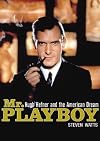
It is easy to criticize Hugh Hefner for sometimes having poor judgment or questionable taste (though compared to his many imitators and competitors, he's a veritable paragon of these virtues). But in this book, equal parts business biography, intellectual history, and sensationalism/scandalmongering (but in the best sense of the terms, only in that he honestly tells about the more shocking aspects of his subject's life when they are relevant to the bigger picture), Steven Watts gives a show more fuller, more nuanced account of the man and his life, and his place in and influence on American culture.
He begins with with the background leading up to the creation of Playboy magazine during the Eisenhower era, and follows Hefner's personal life and the development of the company through the succeeding decades. from early support for equal rights for blacks (the Playboy Clubs in New Orleans and Miami were the first such establishments in the South to be integrated) and women (the Playboy Foundation, the company's charitable/activist arm, assisted in the Roe v. Wade case), to battles against radical feminists in the late '70s and anti-obscenity zealots during the Reagan administration, and beyond.
Interestingly, Watts discusses Ayn Rand's influence on Hefner---The Fountainhead was one of his favorite books during the period of Playboy's founding, and she was later interviewed in the magazine---but incorrectly labels her a conservative based on her support of the Barry Goldwater presidential campaign (failing to mention, for instance, her opposition to Ronald Reagan because of his association with religious conservatism and the so-called "Moral Majority"). Indeed, Hefner's twenty-five installment "The Playboy Philosophy" which ran in the magazine during the early '60s was obviously inspired by her ideas---in it, he advocated individualism, enlightened self-interest, and capitalism. Unfortunately, however, his grasp of Rand's philosophy was somewhat superficial---he had a much clearer idea of what he was against than what he was for. If he had understood and practiced these ideas more consistently, he might not have been so baffled when he came under attack from both sides of the political spectrum during the late '70s and throughout the '80s. Still, when Gloria Steinem, Andrea Dworkin, Catharine MacKinnon, and Barbara Ehrenreich ally themselves with Jerry Falwell, Pat Robertson, and James Dobson against you, you know you must be doing something right.
On the whole, Watts paints a portrait of a man who is surprisingly intellectual and principled, even ethical. He of course shows Hefner's influence on the sexual revolution ("Part of the sexual revolution is bringing rationality to sexuality," according to Hefner, but here again he was more clear on what he was against than what he was for), but more broadly on postwar American culture, with his emphasis on personal freedom, political freedom, and economic freedom. As Watts demonstrates, Playboy is not just about sex and crass materialism---it is about romance, class, and living well in general, with world-class literature and journalism in addition to (usually relatively) tasteful nude pictures of beautiful women. It might seem counterintuitive at first to think of Hefner as a representative of the American dream, when his own lifestyle is so far outside the norm of American life---but he, through his business enterprises, really did a lot to shape what the American dream has come to mean, and Watts places him in the tradition of the subjects of his two previous biographies, Henry Ford and Walt Disney, in tracing the development of American culture through the twentieth century. show less
He begins with with the background leading up to the creation of Playboy magazine during the Eisenhower era, and follows Hefner's personal life and the development of the company through the succeeding decades. from early support for equal rights for blacks (the Playboy Clubs in New Orleans and Miami were the first such establishments in the South to be integrated) and women (the Playboy Foundation, the company's charitable/activist arm, assisted in the Roe v. Wade case), to battles against radical feminists in the late '70s and anti-obscenity zealots during the Reagan administration, and beyond.
Interestingly, Watts discusses Ayn Rand's influence on Hefner---The Fountainhead was one of his favorite books during the period of Playboy's founding, and she was later interviewed in the magazine---but incorrectly labels her a conservative based on her support of the Barry Goldwater presidential campaign (failing to mention, for instance, her opposition to Ronald Reagan because of his association with religious conservatism and the so-called "Moral Majority"). Indeed, Hefner's twenty-five installment "The Playboy Philosophy" which ran in the magazine during the early '60s was obviously inspired by her ideas---in it, he advocated individualism, enlightened self-interest, and capitalism. Unfortunately, however, his grasp of Rand's philosophy was somewhat superficial---he had a much clearer idea of what he was against than what he was for. If he had understood and practiced these ideas more consistently, he might not have been so baffled when he came under attack from both sides of the political spectrum during the late '70s and throughout the '80s. Still, when Gloria Steinem, Andrea Dworkin, Catharine MacKinnon, and Barbara Ehrenreich ally themselves with Jerry Falwell, Pat Robertson, and James Dobson against you, you know you must be doing something right.
On the whole, Watts paints a portrait of a man who is surprisingly intellectual and principled, even ethical. He of course shows Hefner's influence on the sexual revolution ("Part of the sexual revolution is bringing rationality to sexuality," according to Hefner, but here again he was more clear on what he was against than what he was for), but more broadly on postwar American culture, with his emphasis on personal freedom, political freedom, and economic freedom. As Watts demonstrates, Playboy is not just about sex and crass materialism---it is about romance, class, and living well in general, with world-class literature and journalism in addition to (usually relatively) tasteful nude pictures of beautiful women. It might seem counterintuitive at first to think of Hefner as a representative of the American dream, when his own lifestyle is so far outside the norm of American life---but he, through his business enterprises, really did a lot to shape what the American dream has come to mean, and Watts places him in the tradition of the subjects of his two previous biographies, Henry Ford and Walt Disney, in tracing the development of American culture through the twentieth century. show less
Awards

You May Also Like


Statistics
- Works
- 8
- Members
- 546
- Popularity
- #45,668
- Rating
- 3.7
- Reviews
- 10
- ISBNs
- 42
- Languages
- 3