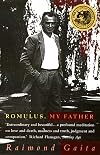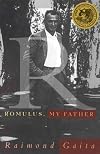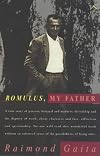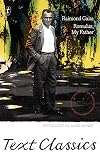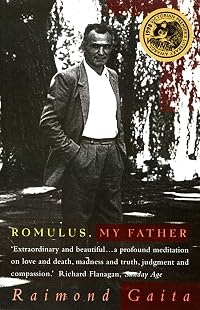
Romulus, My Father
by Raimond Gaita
On This Page
Description
"Romulus Gaita fled his home in his native Yugoslavia at the age of thirteen, and came to Australia with his young wife Christina and their infant son Raimond soon after the end of World War II. Tragic events were to overtake the boys life, but Raimond Gaita has an extraordinary story to tell about growing up with his father amid the stony paddocks and flowing grasses of country Australia. Written simply and movingly, Romulus, My Father is about how a compassionate and honest man taught his show more son the meaning of living a decent life. It is about passion, betrayal and madness, about friendship and the joy and dignity of work, about character and fate, affliction and spirituality. No one will read this wonderful book without an enhanced sense of the possibilities of being alive."--Provided by publisher. show lessTags
Recommendations
















Member Reviews
It's a complete mystery why Gaita's two Romulus books are so little read. Perhaps if he'd called them #1 and #2, with the hope for people that there would be a #7 and a #34.
I cannot do justice to this book, an elegant but simple, sorrowful but not, self-contained whilst being wide open to the world, recollection of his father. I guess the general unknown of this outside Australia is a spurning of the edge of the world in part. But most problematic is that people only want to read biography of Important People. The Importance can be the way of utter triviality, but it has to be public. Big.
Romulus, however, isn't Important. He is only important. And apparently that doesn't cut it. I'm not going to write about the book, I could not show more possibly do justice to it, a point on which I have brooded over the past months since reading it. So, to resort to vulgarity, it's a fucking amazing book and anybody who reads it must come out the other end a better person. If enough people read it, at the end the world would be a better world.
Update: 1 February 2017 I return to Gaita thinking if there is something in the world to neutralise that evil we see playing out around the world now, it is surely his works.
Update: 26 March 2011 walking around London. The Westminster city council has decided that homeless people should find somewhere else to be. So, as well as declaring that the homeless will no longer make the city their home, the Council has told charities that they aren't allowed to feed the homeless any more. My friend S-L who told me this said that the Council did that to get rid of pigeons, now they are doing it with human beings. Attention Londoners, no feeding the homeless.
Lady Di is quickly forgotten. I don't they they would have dared do this if she were alive.
------------------------
Lost on the way to the theatre this evening, a chap stopped to direct us. After we moved on, Henrietta said how nervous she was, the guy was a drug addict. He looked like a perfectly ordinary chap to me, but she insisted. Maybe because I’ve shared my life intimately with drug addicts from time to time, I see them differently. If a drug addict wants to rob you, which was her fear, it is only because society for no good reason cripples these people financially. If drugs were ‘free’ or thereabouts, nobody would be robbed to pay for them. It seems to me a reason to be outraged on their behalf, rather than scared of them.
As we were walking along I talked to her about my experiences on Grey St, St Kilda. It was a street I travelled up and down daily for six months or so while I was living at one end of it, my PO Box at the other. It is a strip full of crazy people, mostly men, and to begin with I felt as nervous as she did. It didn’t take long for me to realise, however, these were human beings. Ordinary human beings. Strange to think that we fear people simply because they are powerless, that we somehow invest power into their powerlessness. Strange to think we are scared of people because they have nothing and live on the street. So, before long, these were people I knew, not in any intimate way, but in that sense you do people you see every day. We’d smile, nod, say hello. I might add that these people were empathetic. They were quite capable of ignoring you if they felt that is what you wanted.
As I’m telling all this to Henrietta, who believes not one word of it, I was regretting not walking along there anymore. I’m now torn between thinking that would be a lovely thing to do, but wishing to stay away from a place that has memories that are sometimes painful to evoke. I seem to be scared of making the trip.
Back from the theatre, I continue something I’ve been doing the last couple of days: reading what I can of Gaita online, having watched the film Romulus, My Father over a couple of nights. I come to this point. The Sacred Heart Mission is in the heart of Grey Street and accounts for the nature of the street’s inhabitants:
I hope you all now understand that you must see this movie, read this book. And take a walk down Grey St if you can. show less
I cannot do justice to this book, an elegant but simple, sorrowful but not, self-contained whilst being wide open to the world, recollection of his father. I guess the general unknown of this outside Australia is a spurning of the edge of the world in part. But most problematic is that people only want to read biography of Important People. The Importance can be the way of utter triviality, but it has to be public. Big.
Romulus, however, isn't Important. He is only important. And apparently that doesn't cut it. I'm not going to write about the book, I could not show more possibly do justice to it, a point on which I have brooded over the past months since reading it. So, to resort to vulgarity, it's a fucking amazing book and anybody who reads it must come out the other end a better person. If enough people read it, at the end the world would be a better world.
Update: 1 February 2017 I return to Gaita thinking if there is something in the world to neutralise that evil we see playing out around the world now, it is surely his works.
Update: 26 March 2011 walking around London. The Westminster city council has decided that homeless people should find somewhere else to be. So, as well as declaring that the homeless will no longer make the city their home, the Council has told charities that they aren't allowed to feed the homeless any more. My friend S-L who told me this said that the Council did that to get rid of pigeons, now they are doing it with human beings. Attention Londoners, no feeding the homeless.
Lady Di is quickly forgotten. I don't they they would have dared do this if she were alive.
------------------------
Lost on the way to the theatre this evening, a chap stopped to direct us. After we moved on, Henrietta said how nervous she was, the guy was a drug addict. He looked like a perfectly ordinary chap to me, but she insisted. Maybe because I’ve shared my life intimately with drug addicts from time to time, I see them differently. If a drug addict wants to rob you, which was her fear, it is only because society for no good reason cripples these people financially. If drugs were ‘free’ or thereabouts, nobody would be robbed to pay for them. It seems to me a reason to be outraged on their behalf, rather than scared of them.
As we were walking along I talked to her about my experiences on Grey St, St Kilda. It was a street I travelled up and down daily for six months or so while I was living at one end of it, my PO Box at the other. It is a strip full of crazy people, mostly men, and to begin with I felt as nervous as she did. It didn’t take long for me to realise, however, these were human beings. Ordinary human beings. Strange to think that we fear people simply because they are powerless, that we somehow invest power into their powerlessness. Strange to think we are scared of people because they have nothing and live on the street. So, before long, these were people I knew, not in any intimate way, but in that sense you do people you see every day. We’d smile, nod, say hello. I might add that these people were empathetic. They were quite capable of ignoring you if they felt that is what you wanted.
As I’m telling all this to Henrietta, who believes not one word of it, I was regretting not walking along there anymore. I’m now torn between thinking that would be a lovely thing to do, but wishing to stay away from a place that has memories that are sometimes painful to evoke. I seem to be scared of making the trip.
Back from the theatre, I continue something I’ve been doing the last couple of days: reading what I can of Gaita online, having watched the film Romulus, My Father over a couple of nights. I come to this point. The Sacred Heart Mission is in the heart of Grey Street and accounts for the nature of the street’s inhabitants:
In the same week that Romulus, My Father received a literary award, with all the glamour attached to such ceremonies, I read from it at the Sacred Heart Mission, in St. Kilda, reluctantly, for I was aware that people came for lunch, not for literature. At one stage a man, obviously mentally ill, called for me to stop. He raised his head, which he had held in his hands and exclaimed "God is in this book!" Remembering the times I had worked in mental hospitals, I was anxious about what he would say next. "I mean, that it's filled with love", he explained. His words moved me deeply. I remembered the day when my father and Vacek visited me at school. That tribute, by a man destitute of all worldly goods and achievements, quite without status or prestige and also quite mad, moved me, gratified me and convinced me of the worth of what I had done more than all the accolades the book has received.
I hope you all now understand that you must see this movie, read this book. And take a walk down Grey St if you can. show less
A very thoughtful and moving account by philosopher Ramond Gaita of his father's struggles with poverty, migration and mental illness (both his own and his first wife's). The narrative style is very simple and matter-of-fact, but the depth of thought shines through. Not quite a conventional biography, more an account of a moral life, a son's homage to his father's great compassion and integrity of character in the face of adversity. Also a vivid picture of migrant life in post-war Victoria.
" [...] tragedy, with its calm pity for the affliction it depicts, was the genre that first attracted my passionate allegiance: I recognised in it the concepts that had illuminated the events of my childhood. They enabled me to see Mitru, my mother, show more my father and Vacek, living among his boulders, as the victims of misfortune, in their different ways broken by it, but never thereby diminished." (p.124)
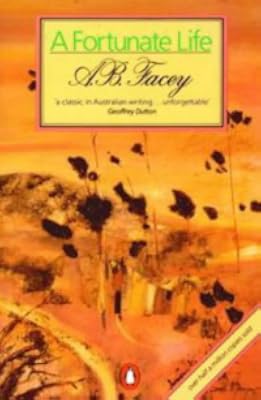
This book deserves to sit alongside other Australian classics of biography like A. B. Facey's A Fortunate Life show less
" [...] tragedy, with its calm pity for the affliction it depicts, was the genre that first attracted my passionate allegiance: I recognised in it the concepts that had illuminated the events of my childhood. They enabled me to see Mitru, my mother, show more my father and Vacek, living among his boulders, as the victims of misfortune, in their different ways broken by it, but never thereby diminished." (p.124)
This book deserves to sit alongside other Australian classics of biography like A. B. Facey's A Fortunate Life show less
I read this book because it was suggested to me by an internet 'friend' (we've never met face-to-face, she lives in America and I live in Australia). I found it somewhat amusing that it would take the recommendation of an American to get me reading what many would describe as an Australian 'classic'. Certainly I did find it interesting, partly because it covered a lot of territory that I have experienced myself - growing up in Australia post WWII. On the other hand, as a 'new Australian', living mostly in regional Victoria and often in extreme hardship, there were many aspects of Gaita's life that were very, very different to mine. Of course the most significant point of commonality is that we're both sons who've had significant show more relationships with our fathers. My own father has been dead 17 years now, but his impact on my life remains and is clearly identifiable, just as for Gaita. Indeed, I found a substantial resonance with the respect that Gaita held for his father arising out of his father's determination to do a good job, and to not denigrate others unfairly. In contradistinction to Gaita's experience, my father was not a highly educated or cultured man. Further, I don't know how well my father might have managed relationships in which his trust was betrayed. In terms of my relationships with my own children (especially my sons) this story has given me much food for thought. The book is essentially a biography of Romulus (despite one reviewer describing it as autobiography) and as such it omits much of the detail of the son's life, so we're only reading half the story here. In that sense, it is hard to find very much to take as an example for father-son relationships in general. The book left me with more ideas about how to be a good person, than how to be a good father. show less
It's a complete mystery why Gaita's two Romulus books are so little read. Perhaps if he'd called them #1 and #2, with the hope for people that there would be a #7 and a #34.
I cannot do justice to this book, an elegant but simple, sorrowful but not, self-contained whilst being wide open to the world, recollection of his father. I guess the general unknown of this outside Australia is a spurning of the edge of the world in part. But most problematic is that people only want to read biography of Important People. The Importance can be the way of utter triviality, but it has to be public. Big.
Romulus, however, isn't Important. He is only important. And apparently that doesn't cut it. I'm not going to write about the book, I could not show more possibly do justice to it, a point on which I have brooded over the past months since reading it. So, to resort to vulgarity, it's a fucking amazing book and anybody who reads it must come out the other end a better person. If enough people read it, at the end the world would be a better world.
Update: 1 February 2017 I return to Gaita thinking if there is something in the world to neutralise that evil we see playing out around the world now, it is surely his works.
Update: 26 March 2011 walking around London. The Westminster city council has decided that homeless people should find somewhere else to be. So, as well as declaring that the homeless will no longer make the city their home, the Council has told charities that they aren't allowed to feed the homeless any more. My friend S-L who told me this said that the Council did that to get rid of pigeons, now they are doing it with human beings. Attention Londoners, no feeding the homeless.
Lady Di is quickly forgotten. I don't they they would have dared do this if she were alive.
------------------------
Lost on the way to the theatre this evening, a chap stopped to direct us. After we moved on, Henrietta said how nervous she was, the guy was a drug addict. He looked like a perfectly ordinary chap to me, but she insisted. Maybe because I’ve shared my life intimately with drug addicts from time to time, I see them differently. If a drug addict wants to rob you, which was her fear, it is only because society for no good reason cripples these people financially. If drugs were ‘free’ or thereabouts, nobody would be robbed to pay for them. It seems to me a reason to be outraged on their behalf, rather than scared of them.
As we were walking along I talked to her about my experiences on Grey St, St Kilda. It was a street I travelled up and down daily for six months or so while I was living at one end of it, my PO Box at the other. It is a strip full of crazy people, mostly men, and to begin with I felt as nervous as she did. It didn’t take long for me to realise, however, these were human beings. Ordinary human beings. Strange to think that we fear people simply because they are powerless, that we somehow invest power into their powerlessness. Strange to think we are scared of people because they have nothing and live on the street. So, before long, these were people I knew, not in any intimate way, but in that sense you do people you see every day. We’d smile, nod, say hello. I might add that these people were empathetic. They were quite capable of ignoring you if they felt that is what you wanted.
As I’m telling all this to Henrietta, who believes not one word of it, I was regretting not walking along there anymore. I’m now torn between thinking that would be a lovely thing to do, but wishing to stay away from a place that has memories that are sometimes painful to evoke. I seem to be scared of making the trip.
Back from the theatre, I continue something I’ve been doing the last couple of days: reading what I can of Gaita online, having watched the film Romulus, My Father over a couple of nights. I come to this point. The Sacred Heart Mission is in the heart of Grey Street and accounts for the nature of the street’s inhabitants:
I hope you all now understand that you must see this movie, read this book. And take a walk down Grey St if you can. show less
I cannot do justice to this book, an elegant but simple, sorrowful but not, self-contained whilst being wide open to the world, recollection of his father. I guess the general unknown of this outside Australia is a spurning of the edge of the world in part. But most problematic is that people only want to read biography of Important People. The Importance can be the way of utter triviality, but it has to be public. Big.
Romulus, however, isn't Important. He is only important. And apparently that doesn't cut it. I'm not going to write about the book, I could not show more possibly do justice to it, a point on which I have brooded over the past months since reading it. So, to resort to vulgarity, it's a fucking amazing book and anybody who reads it must come out the other end a better person. If enough people read it, at the end the world would be a better world.
Update: 1 February 2017 I return to Gaita thinking if there is something in the world to neutralise that evil we see playing out around the world now, it is surely his works.
Update: 26 March 2011 walking around London. The Westminster city council has decided that homeless people should find somewhere else to be. So, as well as declaring that the homeless will no longer make the city their home, the Council has told charities that they aren't allowed to feed the homeless any more. My friend S-L who told me this said that the Council did that to get rid of pigeons, now they are doing it with human beings. Attention Londoners, no feeding the homeless.
Lady Di is quickly forgotten. I don't they they would have dared do this if she were alive.
------------------------
Lost on the way to the theatre this evening, a chap stopped to direct us. After we moved on, Henrietta said how nervous she was, the guy was a drug addict. He looked like a perfectly ordinary chap to me, but she insisted. Maybe because I’ve shared my life intimately with drug addicts from time to time, I see them differently. If a drug addict wants to rob you, which was her fear, it is only because society for no good reason cripples these people financially. If drugs were ‘free’ or thereabouts, nobody would be robbed to pay for them. It seems to me a reason to be outraged on their behalf, rather than scared of them.
As we were walking along I talked to her about my experiences on Grey St, St Kilda. It was a street I travelled up and down daily for six months or so while I was living at one end of it, my PO Box at the other. It is a strip full of crazy people, mostly men, and to begin with I felt as nervous as she did. It didn’t take long for me to realise, however, these were human beings. Ordinary human beings. Strange to think that we fear people simply because they are powerless, that we somehow invest power into their powerlessness. Strange to think we are scared of people because they have nothing and live on the street. So, before long, these were people I knew, not in any intimate way, but in that sense you do people you see every day. We’d smile, nod, say hello. I might add that these people were empathetic. They were quite capable of ignoring you if they felt that is what you wanted.
As I’m telling all this to Henrietta, who believes not one word of it, I was regretting not walking along there anymore. I’m now torn between thinking that would be a lovely thing to do, but wishing to stay away from a place that has memories that are sometimes painful to evoke. I seem to be scared of making the trip.
Back from the theatre, I continue something I’ve been doing the last couple of days: reading what I can of Gaita online, having watched the film Romulus, My Father over a couple of nights. I come to this point. The Sacred Heart Mission is in the heart of Grey Street and accounts for the nature of the street’s inhabitants:
In the same week that Romulus, My Father received a literary award, with all the glamour attached to such ceremonies, I read from it at the Sacred Heart Mission, in St. Kilda, reluctantly, for I was aware that people came for lunch, not for literature. At one stage a man, obviously mentally ill, called for me to stop. He raised his head, which he had held in his hands and exclaimed "God is in this book!" Remembering the times I had worked in mental hospitals, I was anxious about what he would say next. "I mean, that it's filled with love", he explained. His words moved me deeply. I remembered the day when my father and Vacek visited me at school. That tribute, by a man destitute of all worldly goods and achievements, quite without status or prestige and also quite mad, moved me, gratified me and convinced me of the worth of what I had done more than all the accolades the book has received.
I hope you all now understand that you must see this movie, read this book. And take a walk down Grey St if you can. show less
It's a complete mystery why Gaita's two Romulus books are so little read. Perhaps if he'd called them #1 and #2, with the hope for people that there would be a #7 and a #34.
I cannot do justice to this book, an elegant but simple, sorrowful but not, self-contained whilst being wide open to the world, recollection of his father. I guess the general unknown of this outside Australia is a spurning of the edge of the world in part. But most problematic is that people only want to read biography of Important People. The Importance can be the way of utter triviality, but it has to be public. Big.
Romulus, however, isn't Important. He is only important. And apparently that doesn't cut it. I'm not going to write about the book, I could not show more possibly do justice to it, a point on which I have brooded over the past months since reading it. So, to resort to vulgarity, it's a fucking amazing book and anybody who reads it must come out the other end a better person. If enough people read it, at the end the world would be a better world.
Update: 1 February 2017 I return to Gaita thinking if there is something in the world to neutralise that evil we see playing out around the world now, it is surely his works.
Update: 26 March 2011 walking around London. The Westminster city council has decided that homeless people should find somewhere else to be. So, as well as declaring that the homeless will no longer make the city their home, the Council has told charities that they aren't allowed to feed the homeless any more. My friend S-L who told me this said that the Council did that to get rid of pigeons, now they are doing it with human beings. Attention Londoners, no feeding the homeless.
Lady Di is quickly forgotten. I don't they they would have dared do this if she were alive.
------------------------
Lost on the way to the theatre this evening, a chap stopped to direct us. After we moved on, Henrietta said how nervous she was, the guy was a drug addict. He looked like a perfectly ordinary chap to me, but she insisted. Maybe because I’ve shared my life intimately with drug addicts from time to time, I see them differently. If a drug addict wants to rob you, which was her fear, it is only because society for no good reason cripples these people financially. If drugs were ‘free’ or thereabouts, nobody would be robbed to pay for them. It seems to me a reason to be outraged on their behalf, rather than scared of them.
As we were walking along I talked to her about my experiences on Grey St, St Kilda. It was a street I travelled up and down daily for six months or so while I was living at one end of it, my PO Box at the other. It is a strip full of crazy people, mostly men, and to begin with I felt as nervous as she did. It didn’t take long for me to realise, however, these were human beings. Ordinary human beings. Strange to think that we fear people simply because they are powerless, that we somehow invest power into their powerlessness. Strange to think we are scared of people because they have nothing and live on the street. So, before long, these were people I knew, not in any intimate way, but in that sense you do people you see every day. We’d smile, nod, say hello. I might add that these people were empathetic. They were quite capable of ignoring you if they felt that is what you wanted.
As I’m telling all this to Henrietta, who believes not one word of it, I was regretting not walking along there anymore. I’m now torn between thinking that would be a lovely thing to do, but wishing to stay away from a place that has memories that are sometimes painful to evoke. I seem to be scared of making the trip.
Back from the theatre, I continue something I’ve been doing the last couple of days: reading what I can of Gaita online, having watched the film Romulus, My Father over a couple of nights. I come to this point. The Sacred Heart Mission is in the heart of Grey Street and accounts for the nature of the street’s inhabitants:
I hope you all now understand that you must see this movie, read this book. And take a walk down Grey St if you can. show less
I cannot do justice to this book, an elegant but simple, sorrowful but not, self-contained whilst being wide open to the world, recollection of his father. I guess the general unknown of this outside Australia is a spurning of the edge of the world in part. But most problematic is that people only want to read biography of Important People. The Importance can be the way of utter triviality, but it has to be public. Big.
Romulus, however, isn't Important. He is only important. And apparently that doesn't cut it. I'm not going to write about the book, I could not show more possibly do justice to it, a point on which I have brooded over the past months since reading it. So, to resort to vulgarity, it's a fucking amazing book and anybody who reads it must come out the other end a better person. If enough people read it, at the end the world would be a better world.
Update: 1 February 2017 I return to Gaita thinking if there is something in the world to neutralise that evil we see playing out around the world now, it is surely his works.
Update: 26 March 2011 walking around London. The Westminster city council has decided that homeless people should find somewhere else to be. So, as well as declaring that the homeless will no longer make the city their home, the Council has told charities that they aren't allowed to feed the homeless any more. My friend S-L who told me this said that the Council did that to get rid of pigeons, now they are doing it with human beings. Attention Londoners, no feeding the homeless.
Lady Di is quickly forgotten. I don't they they would have dared do this if she were alive.
------------------------
Lost on the way to the theatre this evening, a chap stopped to direct us. After we moved on, Henrietta said how nervous she was, the guy was a drug addict. He looked like a perfectly ordinary chap to me, but she insisted. Maybe because I’ve shared my life intimately with drug addicts from time to time, I see them differently. If a drug addict wants to rob you, which was her fear, it is only because society for no good reason cripples these people financially. If drugs were ‘free’ or thereabouts, nobody would be robbed to pay for them. It seems to me a reason to be outraged on their behalf, rather than scared of them.
As we were walking along I talked to her about my experiences on Grey St, St Kilda. It was a street I travelled up and down daily for six months or so while I was living at one end of it, my PO Box at the other. It is a strip full of crazy people, mostly men, and to begin with I felt as nervous as she did. It didn’t take long for me to realise, however, these were human beings. Ordinary human beings. Strange to think that we fear people simply because they are powerless, that we somehow invest power into their powerlessness. Strange to think we are scared of people because they have nothing and live on the street. So, before long, these were people I knew, not in any intimate way, but in that sense you do people you see every day. We’d smile, nod, say hello. I might add that these people were empathetic. They were quite capable of ignoring you if they felt that is what you wanted.
As I’m telling all this to Henrietta, who believes not one word of it, I was regretting not walking along there anymore. I’m now torn between thinking that would be a lovely thing to do, but wishing to stay away from a place that has memories that are sometimes painful to evoke. I seem to be scared of making the trip.
Back from the theatre, I continue something I’ve been doing the last couple of days: reading what I can of Gaita online, having watched the film Romulus, My Father over a couple of nights. I come to this point. The Sacred Heart Mission is in the heart of Grey Street and accounts for the nature of the street’s inhabitants:
In the same week that Romulus, My Father received a literary award, with all the glamour attached to such ceremonies, I read from it at the Sacred Heart Mission, in St. Kilda, reluctantly, for I was aware that people came for lunch, not for literature. At one stage a man, obviously mentally ill, called for me to stop. He raised his head, which he had held in his hands and exclaimed "God is in this book!" Remembering the times I had worked in mental hospitals, I was anxious about what he would say next. "I mean, that it's filled with love", he explained. His words moved me deeply. I remembered the day when my father and Vacek visited me at school. That tribute, by a man destitute of all worldly goods and achievements, quite without status or prestige and also quite mad, moved me, gratified me and convinced me of the worth of what I had done more than all the accolades the book has received.
I hope you all now understand that you must see this movie, read this book. And take a walk down Grey St if you can. show less
A searing account of the life of the father of the author - from poverty in Yugoslavia before WW2, to the migrant existence in rural Victoria. It's all there: infidelity, suicides, child neglect, poverty, but told in a calm, reflective, non-judgmental tone that is incredibly compelling. The author survived the childhood to become an academic at University of London, but the focus is the father, and we don't get a lot of detail of the author past his teens. I couldn't put it down, and read it in a day. Simply wonderful. Read November 2011.
I initially thought, "not another difficult childhood" but ultimately found it a satisfying and fast read. Immigration to Australia of Romulus; deals with father son relationship with subtlety and forgiving understanding from much later in life.
Members
- Recently Added By
Author Information

14+ Works 869 Members
Raimond Gaita is Professor of Moral Philosophy at Kings College London and Professor of Philosophy at Australian Catholic University.
Some Editions
Awards and Honors
Series
Belongs to Publisher Series
Common Knowledge
- People/Characters
- Raimond Gaita; Romulus Gaita
- Important places
- Frogmore, Victoria, Australia
- Related movies
- Romulus, My Father (2007 | IMDb)
- Dedication
- For Katie and Eva
- First words
- He stood behind the front door of his grandfather's house, with a pitchfork held tightly in both hands, knowing that he would probably kill his uncle if he forced his way into the room.
- Last words
- (Click to show. Warning: May contain spoilers.)My father was buried in the Maryborough cemetery, close to my mother.
Classifications
Statistics
- Members
- 389
- Popularity
- 79,995
- Reviews
- 15
- Rating
- (3.73)
- Languages
- 5 — Dutch, English, Italian, Polish, Spanish
- Media
- Paper, Audiobook, Ebook
- ISBNs
- 18
- ASINs
- 4