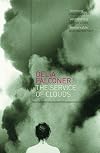
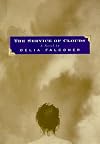
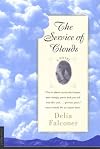
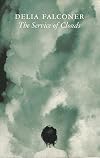
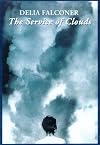
The Service of Clouds
by Delia Falconer
On This Page
Description
What were we in love with? It is 1907 and the Blue Mountains are filled with the grand dreams of elsewhere. Eureka Jones, a young pharmacist's assistant with historical eyes, falls in love with Harry Kitchings, a man who takes pictures of clouds and succumbs to the "madness of photography". Their love turns the mountains sapphire blue.Tags
Recommendations


























Member Reviews
Strangely The Service of Clouds is one of few books on my shelves for which I have no record of purchase, no time or space by which to identify my interest in it. Somewhere, sometime, it drifted into my life, sat on my shelves, and even gained a massive coffee stain, yet remained disconnected from any narrative but its own. And that ethereality is appropriate, really. Falconer - I've read nothing else, though I've listened to her being interviewed (or was it that I read a transcript?) - writes beautifully, creating atmosphere, whimsicality, a disconnected slice of a life, evoking a world long gone. Like a previous reviewer I'm not quite sure about her creation of character. Like a previous reviewer I wonder if that's the point. Eureka show more is the narrator, Kitchings and Curtain and a pair of aunts are there, but ... but the mists, the clouds in whose service someone is, the ash, and, oh, the camera and the negatives and tuberculosis, these are the characters.
I think.
Or are the words that Eureka forms the central character? For though the mountains and the photographic equipment star and the clouds and the ash, I am left as I walk away with a deep sense primarily of words. Falconer loves words. Or maybe Eureka does. The words flow and flow like the waterfalls of the valley beneath the Blue Mountains. And that word "like": if I had the book in digital form I would like to know the numerics. Does "like" make its appearance as many times as there are pages, if not actually on every page? By page 54-57 I was distracted (I was surprised on that page by the use of "periods" for a "full stop,' but Falconer would know better than I do which was the more typical usage in the Blue Mountains early last century) by similes: "as if she had vomited a cloud", "as if they had been scrawled, "as if each crack in their surface...", "stares out across the void as if ...", "at the cliff's edge like a beautiful accident ...", "like a jellyfish."
An adjective count would be more revealing. There were times I felt I was swimming in an adjectival thesaurus, gasping for air no less than the victims of tuberculosis whose fate Falconer traces so dexterously: "relentless shutter," "railed edge," "filling skirt," "lazy tentacles,"(55), "dull shells," "little hills,", "shimmering drifts," "viny curls" ("like moths' feet"), "like a purple mist" (249-250, though 249 is worth its weight in gold dust for the acerbic observation that pie slits are "as thin as men's promises").
Yet I sound too negative. Falconer teaches creative writing, and has a fine reputation for it. Perhaps in this novel she was too determined to demonstrate the craft? Her skills are considerable. But, cruelly perhaps, I felt they were being showcased. On the other hand the 1900s-1920s were an era of expansive and sometimes florid prose. Perhaps Eureka, rather than her creator, was the guilty party, and I am responding only to Falconer's skilled creation of an ambivalent character.
So what of the characterizations? As in much of the 1920s (when, ostensibly, Eureka is reminiscing about the 19-noughties) there is a sense of spiritualist whimsy throughout the novel and its characters. Gold dust as a cure for TB, for example, was as much a whimsy as a science, and much that Falconer depicts falls into that category. The Blue Mountains were a place for whimsy (though, presciently, Eureka detects that the whimsy is giving way to voyeuristic tourism towards the end of the novel).
An eccentric mother, two eccentric sisters: there's a hint that these echo the famous Three Sisters of Katoomba, but the human ones are flightier, and (it may be me) only late in the novel do I sense differentiation of character between old aunt and younger aunt (mother long gone, almost parenthetically). Les Curtain, with his bulbs and a pipe and his feel for the earth: I'm not sure I really get to know him. Harry Kitchings, careless of Eureka and her pining heart, Eureka who learned to climb mountains for him (250), something of a narcissist ultimately, rather dis-likeable, who pointedly marries a weaker woman. And Eureka? A solipsist more than a narcissist, but she is the novel's narrator, the seer, so perhaps her domination is inevitable. So naive, so self-absorbed, so vulnerable.
Yet The Service of Clouds is beautiful. Falconer has produced a novel that will stay in my mind far longer than many less substantial works. Perhaps she, as it were, over-writes, but she writes beautifully. In the interview that I encountered observation is made of Falconer's uncanny ability, almost the hypersthaesia she mentions late in the novel, to capture scent and sight in prose. For that alone she deserves accolades (and a teaching position!).
The Service of Clouds is not a can't put down novel, but a "never regret reading through" novel. For that I'm thankful. show less
I think.
Or are the words that Eureka forms the central character? For though the mountains and the photographic equipment star and the clouds and the ash, I am left as I walk away with a deep sense primarily of words. Falconer loves words. Or maybe Eureka does. The words flow and flow like the waterfalls of the valley beneath the Blue Mountains. And that word "like": if I had the book in digital form I would like to know the numerics. Does "like" make its appearance as many times as there are pages, if not actually on every page? By page 54-57 I was distracted (I was surprised on that page by the use of "periods" for a "full stop,' but Falconer would know better than I do which was the more typical usage in the Blue Mountains early last century) by similes: "as if she had vomited a cloud", "as if they had been scrawled, "as if each crack in their surface...", "stares out across the void as if ...", "at the cliff's edge like a beautiful accident ...", "like a jellyfish."
An adjective count would be more revealing. There were times I felt I was swimming in an adjectival thesaurus, gasping for air no less than the victims of tuberculosis whose fate Falconer traces so dexterously: "relentless shutter," "railed edge," "filling skirt," "lazy tentacles,"(55), "dull shells," "little hills,", "shimmering drifts," "viny curls" ("like moths' feet"), "like a purple mist" (249-250, though 249 is worth its weight in gold dust for the acerbic observation that pie slits are "as thin as men's promises").
Yet I sound too negative. Falconer teaches creative writing, and has a fine reputation for it. Perhaps in this novel she was too determined to demonstrate the craft? Her skills are considerable. But, cruelly perhaps, I felt they were being showcased. On the other hand the 1900s-1920s were an era of expansive and sometimes florid prose. Perhaps Eureka, rather than her creator, was the guilty party, and I am responding only to Falconer's skilled creation of an ambivalent character.
So what of the characterizations? As in much of the 1920s (when, ostensibly, Eureka is reminiscing about the 19-noughties) there is a sense of spiritualist whimsy throughout the novel and its characters. Gold dust as a cure for TB, for example, was as much a whimsy as a science, and much that Falconer depicts falls into that category. The Blue Mountains were a place for whimsy (though, presciently, Eureka detects that the whimsy is giving way to voyeuristic tourism towards the end of the novel).
An eccentric mother, two eccentric sisters: there's a hint that these echo the famous Three Sisters of Katoomba, but the human ones are flightier, and (it may be me) only late in the novel do I sense differentiation of character between old aunt and younger aunt (mother long gone, almost parenthetically). Les Curtain, with his bulbs and a pipe and his feel for the earth: I'm not sure I really get to know him. Harry Kitchings, careless of Eureka and her pining heart, Eureka who learned to climb mountains for him (250), something of a narcissist ultimately, rather dis-likeable, who pointedly marries a weaker woman. And Eureka? A solipsist more than a narcissist, but she is the novel's narrator, the seer, so perhaps her domination is inevitable. So naive, so self-absorbed, so vulnerable.
Yet The Service of Clouds is beautiful. Falconer has produced a novel that will stay in my mind far longer than many less substantial works. Perhaps she, as it were, over-writes, but she writes beautifully. In the interview that I encountered observation is made of Falconer's uncanny ability, almost the hypersthaesia she mentions late in the novel, to capture scent and sight in prose. For that alone she deserves accolades (and a teaching position!).
The Service of Clouds is not a can't put down novel, but a "never regret reading through" novel. For that I'm thankful. show less
There are not too many novels that I want to re-read and not too many novels that I have chanced upon about photographers. This one I have read time and again. I am besotted with Harry's photographic quest; the misty Blue Mountains; it's hidden history of being the place for the cure of TB, the madness of the air filled with eucalyptus fumes, and the sad faded romance. Harry climbs through the mountain trails with his tripod and camera ~ some I have climbed others now I will never get to, but I feel like I am there with him, and feel his obsessions with the mists and clouds and his darkroom printing."
The year the Hydro Majestic Hotel failed as a hydropathic institute Harry Kitchings fell in love with the air and stayed. Les Curtain show more began to feel the dusk in his lungs. It was a romantic year. Men carried thermometers and dreamed of women struck by lightning. Postmen hauled packets filled with love and human hair. Women carried notebooks and pressed storms in them like flowers. You could feel our love rising from the mountaintops. At least that is how Harry Kitchings might tell it.
What were we in love with?
It is 1907 and the Blue Mountains are filled with the grand dreams of elsewhere. Eureka Jones, a young pharmacist's assistant with historical eyes, falls in love with Harry Kitchings, a man who takes pictures of clouds and succumbs to the 'madness of photography'. Their love turns the mountains sapphire blue.
Set in a vast landscape haunted by sadness and the stories of romance which drift across it, The Service of Clouds combines the lushness of Marquez and the tenderness of Ondaatje to explore passion, illness, and the secret desires men and women bring to mountains.
It has to be 4 stars for me, but I imagine not everyone will like it. I've just remembered to add it to my read list after seeing this review of her new book "Sydney" the other day.
http://www.theaustralian.com.au/news/arts/florid-intoxicating-hymn-to-the-harbou... show less
The year the Hydro Majestic Hotel failed as a hydropathic institute Harry Kitchings fell in love with the air and stayed. Les Curtain show more began to feel the dusk in his lungs. It was a romantic year. Men carried thermometers and dreamed of women struck by lightning. Postmen hauled packets filled with love and human hair. Women carried notebooks and pressed storms in them like flowers. You could feel our love rising from the mountaintops. At least that is how Harry Kitchings might tell it.
What were we in love with?
It is 1907 and the Blue Mountains are filled with the grand dreams of elsewhere. Eureka Jones, a young pharmacist's assistant with historical eyes, falls in love with Harry Kitchings, a man who takes pictures of clouds and succumbs to the 'madness of photography'. Their love turns the mountains sapphire blue.
Set in a vast landscape haunted by sadness and the stories of romance which drift across it, The Service of Clouds combines the lushness of Marquez and the tenderness of Ondaatje to explore passion, illness, and the secret desires men and women bring to mountains.
It has to be 4 stars for me, but I imagine not everyone will like it. I've just remembered to add it to my read list after seeing this review of her new book "Sydney" the other day.
http://www.theaustralian.com.au/news/arts/florid-intoxicating-hymn-to-the-harbou... show less
I love the Blue Mountains just west of Sydney, and in many ways this is a book in which those mountains are the main character. It is a love letter to those mountains, or at least to how they were before they were tamed/altered by their popularity as a tourist attraction. The smell of them, the sounds of the bush, the landscapes, the crisp, cool, beauty of their valleys are things that I've carried with me from childhood visits, and whenever I revisit I'm filled with a sense of peace and joy. As a result, I really expected, and wanted, to love this book. It's not that this is poorly-written, indeed the actual words and phrasing are beautiful, hence the four stars. But. It's too... nebulous, insubstantial. Maybe that's part of the thing, show more maybe it's on purpose, this cloudiness, but I found it impossible as a result to connect with the narrative and the characters. Even the "main" character, Eureka, (technically--although as I have said I believe the landscape of the mountains is the star of the story) is patchy in depiction to my mind. A pity. show less
Trying too hard to have flowery language, instead becomes difficult to follow. Read half way and still didn’t have a story line.
Ratings
Members
- Recently Added By
Lists

Photography in Fiction
16 works; 4 members

Australia, New Zealand and Oceania
88 works; 20 members
Author Information

11+ Works 413 Members
Some Editions
Awards and Honors
Common Knowledge
- Original publication date
- 1997
- People/Characters
- Eureka Jones; Harry Kitchings
- Important places
- Australia; Blue Mountains, New South Wales, Australia; New South Wales, Australia
- Dedication
- For my mother and father,
and Richard Harling. - First words
- The year the Hydro Majestic Hotel failed as a hydropathic institute Harry Kitchings fell in love with the air and stayed.
- Last words
- (Click to show. Warning: May contain spoilers.)Or a blue lantern slide, shot through by light, aglow and waiting for an image.
-- Eureka Jones, 1926
Classifications
Statistics
- Members
- 189
- Popularity
- 173,124
- Reviews
- 4
- Rating
- (3.17)
- Languages
- English
- Media
- Paper, Audiobook
- ISBNs
- 6
- ASINs
- 3