On This Page
Description
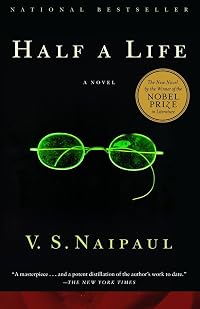
In a narrative that moves with dreamlike swiftness from India to England to Africa, Nobel Laureate V. S. Naipaul has produced his finest novel to date, a bleakly resonant study of the fraudulent bargains that make up an identity. The son of a Brahmin ascetic and his lower-caste wife, Willie Chandran grows up sensing the hollowness at the core of his father's self-denial and vowing to live more authentically. That search takes him to the immigrant and literary bohemias of 1950s London, to a show more facile and unsatisfying career as a writer, and at last to a decaying Portuguese colony in East Africa, where he finds a happiness he will then be compelled to betray. Brilliantly orchestrated, at once elegiac and devastating in its portraits of colonial grandeur and pretension, Half a Life represents the pinnacle of Naipaul's career. show lessTags
Recommendations















Member Reviews
"Is 'Half a Life' is good book or a bad book?" might not be the right question to ask. It's typical, really, of a late-period book — by this time, the author is a practiced hand and is elaborating on the themes that have carried him though a long, fruitful career. Is "Half a Life" up there with Naipaul's best? No: it's no "A House for Mr. Biswas". But I'm not sure that it's a bad book, either, if you happen to like Naipaul and have read a good deal of his other stuff. Other writers might feel blessed to be able to write a book this good almost on autopilot just as death himself was getting off at their tube stop and heading for their flat.
As for the book himself, we've got a family history of renunciations and reinventions stretching show more back generations before we get to difficult, unhappy Willie Chandran, a perpetually unhappy, very much displaced Indian who's difficult to like on the page. I rather enjoyed the swinging, slightly seedy nineteen fifties immigrant milieu that Naipaul puts Willie in during his London years. I could almost feel old Sir Vidya softening here a little bit: a younger version of the author might have been much harder on the rootless colonials, thrill-seekers, and fake and genuine bohemians that moved with this crowd.
Then, one not-terribly-impressive work of literature and a quick marriage later, we're off to what used to be known as Portuguese West Africa and is called Mozambique today. "Half a Life" is, for better or worse, the only book I've ever read set in Mozambique, though I'm sure there'll be another if I ever get my Portuguese reading comprehension up to snuff. I thought that Naipaul did a good job describing both Willie's sense of utter alienation in his new environment and the standoffish but obliquely loving relationship that exists between he and Ana, whose parents belonged to the rapidly fading Portuguese planter class. That might not be particularly surprising: if there's anything that Naipaul knew, it was the painful emotional awkwardness that cultural distance could create. While passive, repressed Ana and perpetually paralyzed Willie are unlikely to strike readers as particularly admirable or even likable, as a child of an expat marriage, I can tell you that they're not at all implausible. I've known so many mixed marriages that stayed together out of comfort, or thanks to shared memories collected in out-of-the-way places. Sometimes, the distance between you and others can bind you to someone else, and it seems to bind Willie and Ana together until the end of this novel.
Willie, perhaps surprisingly, blames much of his trouble on his repressed libido: a culture full of arranged marriages does not make the art of seduction a priority. Depending on how much sympathy you've accumulated for him, it might be difficult to determine whether his late-in-life sexual awakening is an example of personal growth or mere degradation. But so much of "Half a Life" rings true to me: life abroad — or life as a member of a minority that seems a mere accident of history — has its own hidden stressors. Naipaul, love him or hate him as a person or as a writer, describes these as sensitively as he always does. It turns out that I'm interested enough in poor, inert Willie Chandran to read "Magic Seeds", if just to see what becomes of him. show less
As for the book himself, we've got a family history of renunciations and reinventions stretching show more back generations before we get to difficult, unhappy Willie Chandran, a perpetually unhappy, very much displaced Indian who's difficult to like on the page. I rather enjoyed the swinging, slightly seedy nineteen fifties immigrant milieu that Naipaul puts Willie in during his London years. I could almost feel old Sir Vidya softening here a little bit: a younger version of the author might have been much harder on the rootless colonials, thrill-seekers, and fake and genuine bohemians that moved with this crowd.
Then, one not-terribly-impressive work of literature and a quick marriage later, we're off to what used to be known as Portuguese West Africa and is called Mozambique today. "Half a Life" is, for better or worse, the only book I've ever read set in Mozambique, though I'm sure there'll be another if I ever get my Portuguese reading comprehension up to snuff. I thought that Naipaul did a good job describing both Willie's sense of utter alienation in his new environment and the standoffish but obliquely loving relationship that exists between he and Ana, whose parents belonged to the rapidly fading Portuguese planter class. That might not be particularly surprising: if there's anything that Naipaul knew, it was the painful emotional awkwardness that cultural distance could create. While passive, repressed Ana and perpetually paralyzed Willie are unlikely to strike readers as particularly admirable or even likable, as a child of an expat marriage, I can tell you that they're not at all implausible. I've known so many mixed marriages that stayed together out of comfort, or thanks to shared memories collected in out-of-the-way places. Sometimes, the distance between you and others can bind you to someone else, and it seems to bind Willie and Ana together until the end of this novel.
Willie, perhaps surprisingly, blames much of his trouble on his repressed libido: a culture full of arranged marriages does not make the art of seduction a priority. Depending on how much sympathy you've accumulated for him, it might be difficult to determine whether his late-in-life sexual awakening is an example of personal growth or mere degradation. But so much of "Half a Life" rings true to me: life abroad — or life as a member of a minority that seems a mere accident of history — has its own hidden stressors. Naipaul, love him or hate him as a person or as a writer, describes these as sensitively as he always does. It turns out that I'm interested enough in poor, inert Willie Chandran to read "Magic Seeds", if just to see what becomes of him. show less
'Half a Life' is an extraordinary novel, packing in more events and locations than one would think possible in something only 240 pages long, and yet there is no sense of the story ever being rushed.
Willy Chandran, named in honour of W. Somerset Maugham, grows up in unusual circumstances in India. His father married a low-caste woman in protest to his own life and situation, and lived ever to regret his decision. His children too must regret the lives they have had forced upon them; Willy at least is able to escape to university in London on a scholarship, though even here he cannot escape his half-and-half background. He writes a novel that soon disappears from view, though not before it has attracted the attention of biracial Ana, who show more he marries and lives with in Africa in the years leading up to the independence of the former Portuguese colony.
The title of this novel works in different respects. Willy always feels like no more than half of what he should, thanks to his father's earlier approach to life. He is mixed caste - half of one, and half of another. He meets others whose predicaments are similar, including Ana, but their relationship doesn't last, and, having lived half of his life, he escapes to stay with his sister in Berlin, then only half a city, divided by the wall.
The characters are all well-drawn and endlessly fascinating. Indeed, you could argue that there is a lot of Maugham in this novel. Not only does the story open with the great writer meeting Willy's father at his temple, looking for material for the book that would become The Razor's Edge, the tone of the book and its exploration of the psychology of sex has many Maughamesque overtones. The appearance of the real-life writer in this fictionalised setting is handled with sensitivity by Naipaul, just as he handles well those characters of disparate background that we meet along the way.
All in all, a triumph of a book. I've now read several books of Naipaul's, and loved each and every one of them. show less
Willy Chandran, named in honour of W. Somerset Maugham, grows up in unusual circumstances in India. His father married a low-caste woman in protest to his own life and situation, and lived ever to regret his decision. His children too must regret the lives they have had forced upon them; Willy at least is able to escape to university in London on a scholarship, though even here he cannot escape his half-and-half background. He writes a novel that soon disappears from view, though not before it has attracted the attention of biracial Ana, who show more he marries and lives with in Africa in the years leading up to the independence of the former Portuguese colony.
The title of this novel works in different respects. Willy always feels like no more than half of what he should, thanks to his father's earlier approach to life. He is mixed caste - half of one, and half of another. He meets others whose predicaments are similar, including Ana, but their relationship doesn't last, and, having lived half of his life, he escapes to stay with his sister in Berlin, then only half a city, divided by the wall.
The characters are all well-drawn and endlessly fascinating. Indeed, you could argue that there is a lot of Maugham in this novel. Not only does the story open with the great writer meeting Willy's father at his temple, looking for material for the book that would become The Razor's Edge, the tone of the book and its exploration of the psychology of sex has many Maughamesque overtones. The appearance of the real-life writer in this fictionalised setting is handled with sensitivity by Naipaul, just as he handles well those characters of disparate background that we meet along the way.
All in all, a triumph of a book. I've now read several books of Naipaul's, and loved each and every one of them. show less
I feel dirty for having read this book. Dirtier for having read a little about the author afterwards and come to realise that the more unpleasant things in it--the apologia for colonialism, the obsession with race and each race's place, and the strangely dismissive-and-worshipping attitude about women that implies a deep misogyny--appear to be confessional.
I feel dirty for having read this book. Dirtier for having read a little about the author afterwards and come to realise that the more unpleasant things in it--the apologia for colonialism, the obsession with race and each race's place, and the strangely dismissive-and-worshipping attitude about women that implies a deep misogyny--appear to be confessional.
It's nearly impossible to really write a review of Naipaul's Half a Life without including a gut reaction. The multi-layered threading of ideas presented in the novel are mind-numbing, to say the least. Every possible view and corner of race, social class, empire, colonization, education, and sexual politics are explored through the main character's life. Just as you get the sense that you are nailing down a "point" being made, the narrative snakes its way in a different direction.
Although I feel like I have read many books centered on these themes of identity, colonization, etc., I have to admit to feeling side-swiped by Naipaul's narrative style and message. Maybe I wanted a more neatly, discoverable message. Maybe it was the show more startling jump in 18 years in the narration that finally put the nail in the coffin for me. Or, maybe it was the oddly callous approach to sex (not graphically described in any way) that left me concerned by the main character's mechanical way of life. I wasn't so much shocked or appalled by Willie's life as I was concerned by his oddly disconnected, yet heightened existence. On one hand he was disconnected from every social group or culture he lived among, and yet on the other, he blended in and had insights into the hypocrisies of every group in which he mingled. It could be that this seeming "observation" mode taken by the main character is just the point? Willie really was as the title says, always living "half a life" because he was always an observer in every culture, position, circle, or relationship that he was engaged.
Strangely, I'm glad that I tackled Half a Life. In comparison to Naipaul's A House for Mr. Biswas, which I was familiar from a paper I wrote in graduate school, this later novel has a deeper sense of tension than I remember in his earlier piece. In Half a Life, the narration is linear in one sense, but splintered and fractured in a very deconstructionist sort of way that forces the reader to feel the instability of the main character. The concept of "still waters run deep" is a great way of describing the novel, in that the surface language and story feel smooth and uninterrupted, while the deep underpinnings of it are stirred and tumultuous beyond recognition. show less
Although I feel like I have read many books centered on these themes of identity, colonization, etc., I have to admit to feeling side-swiped by Naipaul's narrative style and message. Maybe I wanted a more neatly, discoverable message. Maybe it was the show more startling jump in 18 years in the narration that finally put the nail in the coffin for me. Or, maybe it was the oddly callous approach to sex (not graphically described in any way) that left me concerned by the main character's mechanical way of life. I wasn't so much shocked or appalled by Willie's life as I was concerned by his oddly disconnected, yet heightened existence. On one hand he was disconnected from every social group or culture he lived among, and yet on the other, he blended in and had insights into the hypocrisies of every group in which he mingled. It could be that this seeming "observation" mode taken by the main character is just the point? Willie really was as the title says, always living "half a life" because he was always an observer in every culture, position, circle, or relationship that he was engaged.
Strangely, I'm glad that I tackled Half a Life. In comparison to Naipaul's A House for Mr. Biswas, which I was familiar from a paper I wrote in graduate school, this later novel has a deeper sense of tension than I remember in his earlier piece. In Half a Life, the narration is linear in one sense, but splintered and fractured in a very deconstructionist sort of way that forces the reader to feel the instability of the main character. The concept of "still waters run deep" is a great way of describing the novel, in that the surface language and story feel smooth and uninterrupted, while the deep underpinnings of it are stirred and tumultuous beyond recognition. show less
Trying to determine the worth of this book is like trying to figure out which turd smells the sweetest. Dry, dead, painful, and none of these in the good way which literature can sometimes afford.
A theme that carries through several of Naipaul's novels is that of living an unsatisfactory life. This happens to Willie Chandran the main character in this story and in mid life, half a life?, he decides to do something about it. While living this less than full life Willie passes through India, London, and colonial Portuguese Africa all of which are knowingly and intimately portrayed. The alienation that Willie experiences of time, place, and people is portrayed well. He is not comfortable with the world. This is not a masterpiece but with Naipaul's steady clear eye and capable guidance it makes for a satisfactory worthy read.
Quotes: (page 56) “Willie was living in the college as in a daze. The learning he was being given was like show more the food he was eating, without savor. The two were inseparable in his mind. Just as he ate without pleasure,so, with a kind of blindness, he did what the lecturers and tutors asked of him, read the books and articles and did the essays. He was unanchored, with no idea of what lay ahead. He still had no idea of the scale of things, no idea of historical time or even of distance. When he had seen Buckingham Palace he had thought that the kings and queens were imposters, and the country a sham, and he continued to live that idea of make-believe.
At the college he had to re-learn everything that he knew. He had to learn how to eat in public. He had to learn how to greet people...”
(page 150) “In the beginning I wished to be taken int this rich and safe life, so beyond anything I had imagined for myself and I could be full of nerves when I met new people. I didn't want to see doubt in anyone's eyes. I didn't want questions I wouldn't be able to handle with Ana listening. But the questions were not asked; people kept whatever thoughts they might have had to themselves; among these estate people Ana had authority. And, very quickly, I shed my nerves. But then after a year or so I began to understand---and I was helped to this understanding by my own background---that the world I had entered was only a half-and-half world, that many of the people who were our friends considered themselves, deep down, people of second rank. They were not fully Portuguese, and that was where their own ambition lay.”
(page 173) “Immediately as these girls began to dance they were touched by a kind of grace. The gestures were not extravagant; they could be very small. When a girl danced she incorporated everything into her dance---her conversation with her partner, a word spoken over her shoulder to a friend, a laugh. This was more than pleasure; it was as though some deeper spirit was coming out in the dance. This spirit was locked up in every girl, whatever her appearance; and it was possible to feel that is was part of something much larger. Of course, with my background, I had thought a lot about Africans in a political way. In the warehouse I began to have an idea that there was something in the African heart that was shut away from the rest of us, and beyond politics.”
(page 190) “Graca's need matched my own. That was new to me. Everything I had known before---the furtiveness in London, the awful provincial prostitute, the paid black girls of the places of pleasure here, who had yet satisfied me for so long, and for whom almost a year I had felt such gratitude, and poor Ana, still in my mind the trusting girl who who had sat in the settee in my college room in London and allowed herself to be kissed, Ana still so gentle and generous---over the next half hour everything fell away, and I thought how terrible it would have been if, as could so easily have happened, I had died without knowing this depth of satisfaction, this other person that I had just discovered within myself. It was worth any price, any consequence.” show less
Quotes: (page 56) “Willie was living in the college as in a daze. The learning he was being given was like show more the food he was eating, without savor. The two were inseparable in his mind. Just as he ate without pleasure,so, with a kind of blindness, he did what the lecturers and tutors asked of him, read the books and articles and did the essays. He was unanchored, with no idea of what lay ahead. He still had no idea of the scale of things, no idea of historical time or even of distance. When he had seen Buckingham Palace he had thought that the kings and queens were imposters, and the country a sham, and he continued to live that idea of make-believe.
At the college he had to re-learn everything that he knew. He had to learn how to eat in public. He had to learn how to greet people...”
(page 150) “In the beginning I wished to be taken int this rich and safe life, so beyond anything I had imagined for myself and I could be full of nerves when I met new people. I didn't want to see doubt in anyone's eyes. I didn't want questions I wouldn't be able to handle with Ana listening. But the questions were not asked; people kept whatever thoughts they might have had to themselves; among these estate people Ana had authority. And, very quickly, I shed my nerves. But then after a year or so I began to understand---and I was helped to this understanding by my own background---that the world I had entered was only a half-and-half world, that many of the people who were our friends considered themselves, deep down, people of second rank. They were not fully Portuguese, and that was where their own ambition lay.”
(page 173) “Immediately as these girls began to dance they were touched by a kind of grace. The gestures were not extravagant; they could be very small. When a girl danced she incorporated everything into her dance---her conversation with her partner, a word spoken over her shoulder to a friend, a laugh. This was more than pleasure; it was as though some deeper spirit was coming out in the dance. This spirit was locked up in every girl, whatever her appearance; and it was possible to feel that is was part of something much larger. Of course, with my background, I had thought a lot about Africans in a political way. In the warehouse I began to have an idea that there was something in the African heart that was shut away from the rest of us, and beyond politics.”
(page 190) “Graca's need matched my own. That was new to me. Everything I had known before---the furtiveness in London, the awful provincial prostitute, the paid black girls of the places of pleasure here, who had yet satisfied me for so long, and for whom almost a year I had felt such gratitude, and poor Ana, still in my mind the trusting girl who who had sat in the settee in my college room in London and allowed herself to be kissed, Ana still so gentle and generous---over the next half hour everything fell away, and I thought how terrible it would have been if, as could so easily have happened, I had died without knowing this depth of satisfaction, this other person that I had just discovered within myself. It was worth any price, any consequence.” show less
Members
- Recently Added By
Published Reviews
ThingScore 100
''Half a Life,'' the fierce new novel by V. S. Naipaul, the new Nobel laureate, is one of those rare books that stands as both a small masterpiece in its own right and as a potent distillation of the author's work to date, a book that recapitulates all his themes of exile, postcolonial confusion, third world angst, and filial love and rebellion while recounting with uncommon elegance and show more acerbity the story of the coming of age of its hero, Willie Chandran. show less
added by jlelliott
Lists

Booker Prize
491 works; 62 members

Man Booker Prize Longlist 2001
24 works; 2 members

SHOULD Read Books!
354 works; 9 members
Author Information

97+ Works 25,783 Members
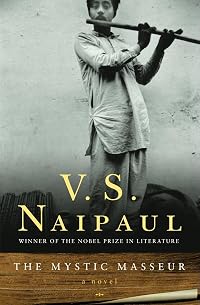
Vidiadhar Surajprasad Naipaul was born of Indian ancestry in Chaguanas, Trinidad on August 17, 1932. He was educated at University College, Oxford and lived in Great Britain since 1950. From 1954 to 1956, he edited a radio program on literature for the British Broadcasting Corporation's Caribbean Service. His first novel, The Mystic Masseur, was show more published in 1957. His other novels included A House for Mr. Biswas, A Bend in the River, Guerrillas, and Half a Life. In a Free State won the Booker Prize in 1971. He started writing nonfiction in the 1960s. His first nonfiction book, The Middle Passage, was published in 1962. His other nonfiction works included An Area of Darkness, Among the Believers, Beyond Belief, and A Turn in the South. He was knighted in 1990 and received the Nobel Prize in Literature in 2001. He died on August 11, 2018 at the age of 85. (Bowker Author Biography) show less
Some Editions
Awards and Honors
Awards
Distinctions
Series

Belongs to Publisher Series
Work Relationships
Has as a student's study guide
Common Knowledge
- Canonical title
- Half a Life
- Original title
- Half a life
- Alternate titles*
- Een half leven : roman
- Original publication date
- 2001
- People/Characters
- Willie Chandran
- Important places
- London, England, UK; Mozambique
- Dedication
- N.K.N.
- First words
- Willie Chandran asked his father one day, "Why is my middle name Somerset?"
- Last words
- (Click to show. Warning: May contain spoilers.)Ana said, "Perhaps it wasn't really my life either."
- Original language
- English
*Some information comes from Common Knowledge in other languages. Click "Edit" for more information.
Classifications
Statistics
- Members
- 1,659
- Popularity
- 13,470
- Reviews
- 28
- Rating
- (3.17)
- Languages
- 16 — Catalan, Danish, Dutch, English, Finnish, French, German, Greek, Italian, Japanese, Norwegian (Bokmål), Portuguese, Russian, Spanish, Swedish, Turkish
- Media
- Paper, Audiobook, Ebook
- ISBNs
- 60
- ASINs
- 6