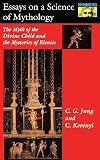
Essays on a Science of Mythology
by C. G. Jung, Carl Kerenyi
On This Page
Description
When Carl Jung and Carl Kerenyi got together to collaborate on this book, their aim was to elevate the study of mythology to a science. Kerenyi wrote on two of the most ubiquitous myths, the Divine Child and The Maiden, supporting the core 'stories' with both an introduction and a conclusion. Jung then provided a psychological analysis of both myths. He defined myth as a story about heroes interacting with the gods. Having long studied dreams and the subconscious, Jung identified certain show more dream patterns common to everyone. These 'archetypes' have developed through the centuries, and enable modern people to react to situations in much the same way as our ancestors. From nuclear annihilation to AIDS and Ebola, we continue to engage the gods in battle. Science of Mythology provides an account of the meaning and the purpose of mythic themes that is linked to modern life: the heroic battles between good and evil of yore are still played out, reflected in contemporary fears. show lessTags
Recommendations



















Member Reviews
Book Review: "Introduction to a Science of Mythology" by C.G. Jung and C. Kerenyi
"Introduction to a Science of Mythology" by C.G. Jung and C. Kerenyi is a profound exploration of mythology from a psychological and cultural perspective. The authors delve into the symbolic meanings of myths, providing a deep understanding of their relevance in ancient and modern contexts. Jung's psychoanalytic approach complements Kerenyi's classical scholarship, creating a comprehensive framework combining psychology, anthropology, and mythology. This book is a treasure trove for those studying mythology, as it presents myths not merely as old stories but as living, dynamic symbols that influence human consciousness and culture.
For writers of fantasy show more novels, this book is invaluable. It offers rich insights into archetypal themes and characters, making it a perfect source for constructing deeper, resonant narratives. By understanding myths' underlying psychological and symbolic structures, authors can create stories that speak to universal human experiences. The depth of analysis and the interdisciplinary approach make it a scholarly read and an inspiring one for creative minds. Overall, "Introduction to a Science of Mythology" is essential for anyone interested in the intersection of mythology, psychology, and storytelling. show less
"Introduction to a Science of Mythology" by C.G. Jung and C. Kerenyi is a profound exploration of mythology from a psychological and cultural perspective. The authors delve into the symbolic meanings of myths, providing a deep understanding of their relevance in ancient and modern contexts. Jung's psychoanalytic approach complements Kerenyi's classical scholarship, creating a comprehensive framework combining psychology, anthropology, and mythology. This book is a treasure trove for those studying mythology, as it presents myths not merely as old stories but as living, dynamic symbols that influence human consciousness and culture.
For writers of fantasy show more novels, this book is invaluable. It offers rich insights into archetypal themes and characters, making it a perfect source for constructing deeper, resonant narratives. By understanding myths' underlying psychological and symbolic structures, authors can create stories that speak to universal human experiences. The depth of analysis and the interdisciplinary approach make it a scholarly read and an inspiring one for creative minds. Overall, "Introduction to a Science of Mythology" is essential for anyone interested in the intersection of mythology, psychology, and storytelling. show less
The Demeter/Kore/Persephone triad was fascinating. Linking Artemis, Hecate, Athena and Demeter/Kore/Persephone all together into plausible theories sound like one huge muck-around in the grass...but it's not, thankfully. The patient's dreams are incredibly detailed and read like mini works of Surrealism.
Don't have any comments on the Divine Child section unfortunately, because it went over my head.
Don't have any comments on the Divine Child section unfortunately, because it went over my head.
Jaspers, Stekel, Adler, Freud, Jung...???: Certainly not to "praise great men," which is anathema to me, but to trace and track the "development of psychology." That is why I have observed its serpentine journey throughout history, slinking as far back as Heraclitus, now rising up into the Aquarian Age, right through Pisces, which brings us to the next development in psychology, Archetypal Psychology, as presented by James Hillman, Jung's worthy successor, which leads the "pupil" for "dominating spirit" to "receptive soul" and beyond, or below, to an ultimately gracious union of the two. At the end of this book by the two Carls, Kerenyi says, "Miracle DO happen in Eleusis," and Eleusis, like Utopia, like the Realm of the Mothers, like show more the Spirit Realm, is DOWN, the very direction in which Hillman points, always, as does Joseph Campbell, e.g., "If you are falling...DIVE!" show less
Ratings
Members
- Recently Added By
Author Information

902+ Works 42,880 Members
Carl Gustav Jung was born in Switzerland on July 26, 1875. He originally set out to study archaeology, but switched to medicine and began practicing psychiatry in Basel after receiving his degree from the University of Basel in 1902. He became one of the most famous of modern psychologists and psychiatrists. Jung first met Sigmund Freud in 1907 show more when he became his foremost associate and disciple. The break came with the publication of Jung's Psychology of the Unconscious (1912), which did not follow Freud's theories of the libido and the unconscious. Jung eventually rejected Freud's system of psychoanalysis for his own "analytic psychology." This emphasizes present conflicts rather than those from childhood; it also takes into account the conflict arising from what Jung called the "collective unconscious"---evolutionary and cultural factors determining individual development. Jung invented the association word test and contributed the word complex to psychology, and first described the "introvert" and "extrovert" types. His interest in the human psyche, past and present, led him to study mythology, alchemy, oriental religions and philosophies, and traditional peoples. Later he became interested in parapsychology and the occult. He thought that unidentified flying objects (UFOs) might be a psychological projection of modern people's anxieties. He wrote several books including Studies in Word Association, Flying Saucers: A Modern Myth of Things Seen in the Skies, and Psychology and Alchemy. He died on June 6, 1961 after a short illness. (Bowker Author Biography) show less
6 Works 1,130 Members
Some Editions
Series
Belongs to Publisher Series
Common Knowledge
- Canonical title*
- Prolegomeni allo studio scientifico della mitologia
- Original title
- Einführung in das Wesen der Mythologie: Der Mythos vom göttlichen Kind und Eleusinische Mysterien
- Original publication date
- 1941
- First words
- What is music? What is poetry? What is mythology?
- Last words
- (Click to show. Warning: May contain spoilers.)In this sense, miracles and epiphanies probably were witnessed in Eleusis: the miracle of origination seen in those figures where it revealed itself at a certain period in the world's history.
- Original language
- German
*Some information comes from Common Knowledge in other languages. Click "Edit" for more information.
Classifications
- Genres
- Nonfiction, General Nonfiction, Religion & Spirituality
- DDC/MDS
- 291.13 — Religion Other religions [Formerly: General Religious Topics] [formerly: Religious mythology, general classes of religion, interreligious relations and attitudes, social theology. Relocated to 201] Archetypal Mythology
- LCC
- BL313 .J83 — Philosophy, Psychology and Religion Religions. Mythology. Rationalism Religions. Mythology. Rationalism The myth. Comparative mythology
- BISAC
Statistics
- Members
- 465
- Popularity
- 65,797
- Reviews
- 3
- Rating
- (3.82)
- Languages
- 5 — English, French, German, Italian, Serbian
- Media
- Paper
- ISBNs
- 14
- ASINs
- 13