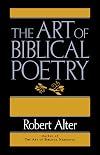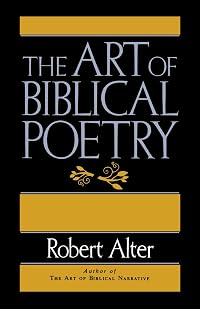
The Art of Biblical Poetry
by Robert Alter
On This Page
Description
Three decades ago, renowned literary expert Robert Alter radically expanded the horizons of biblical scholarship by recasting the Bible as not only a human creation but a work of literary art deserving studied criticism. In The Art of Biblical Poetry, his companion to the seminal The Art of Biblical Narrative, Alter takes his analysis beyond narrative craft to investigate the use of Hebrew poetry in the Bible. Updated with a new preface, myriad revisions, and passages from Alter's own show more critically acclaimed biblical translations, The Art of Biblical Poetry is an indispensable tool for understanding the Bible and its poetry. Robert Alter is Professor of Hebrew and Comparative Literature at the University of California at Berkeley. A member of the American Academy of Arts and Sciences and a recipient of the Robert Kirsch Award for lifetime contributions to American letters, he lives in Berkeley, California. show lessTags
Recommendations



Member Reviews
In this sequel to his Art of Biblical Narrative (1981), Robert Alter examines the use of poetry in the Hebrew Bible. He begins with three chapters in which he discusses certain chief characteristics of its poetry: the various forms of parallelism, the operation of consecutive lines to introduce a narrative effect, and strategies of intensification. Alter then treats in turn the poetry of Job, the Psalms, the Prophets, Proverbs, and the Song of Songs. In a final chapter, he examines the continuing influence of the poetry of the Hebrew Bible from ancient times to our day.
Throughout the book, Alter stresses that the employment of poetry is not an aesthetic add-on, or, as he puts it in his closing chapter, “there is an essential show more connection between poetic form and meaning. . . . The choice of the poetic medium . . . was not merely a matter of giving weight and verbal dignity to a preconceived message but of uncovering or discovering meaning through the resources of poetry.”
The Prophets abound in prose sections as well as poetic. In discussing what may have dictated the employment of one or the other, Alter makes a provocative suggestion that poetry is the most appropriate medium for how God would speak: “Since poetry is our best human model of intricately rich communication, not only solemn, weighty, and forceful but also densely woven with complex internal connections, meanings, and implications, it makes sense that divine speech should be represented as poetry.”
Alter is a scholar, and his writing is not particularly accessible, but I found the book well worth my time. I learned a great deal from his analyses and took away insights that will help me in my own reading. show less
Throughout the book, Alter stresses that the employment of poetry is not an aesthetic add-on, or, as he puts it in his closing chapter, “there is an essential show more connection between poetic form and meaning. . . . The choice of the poetic medium . . . was not merely a matter of giving weight and verbal dignity to a preconceived message but of uncovering or discovering meaning through the resources of poetry.”
The Prophets abound in prose sections as well as poetic. In discussing what may have dictated the employment of one or the other, Alter makes a provocative suggestion that poetry is the most appropriate medium for how God would speak: “Since poetry is our best human model of intricately rich communication, not only solemn, weighty, and forceful but also densely woven with complex internal connections, meanings, and implications, it makes sense that divine speech should be represented as poetry.”
Alter is a scholar, and his writing is not particularly accessible, but I found the book well worth my time. I learned a great deal from his analyses and took away insights that will help me in my own reading. show less
For me the best part of this book is its treatment of the Book of Job, in the two chapters, "Structures of Intensification" and "Truth and Poetry In the Book of Job." The Book of Job is a poem, of course, and Alter, taking it as poetry and not just as a story that could have been told in prose, finds meanings in God's answer to Job that I had never quite heard before -- had never quite felt or visualized before. Poetry is, among many things, a language of images, and the images used by God are direct answers to those used by Job, to summarize Alter's argument perhaps too simply.
As Alter puts it, there is a "nice match of meaning and imagery" between Job's famous death-wish poem and God's answer.
The first chapters of Alter's book are show more the hardest going, as he lays the groundwork. He explains the particular structure of Biblical poetry -- how one line of poetry consists of two "versets," the second usually intensifying or specifying the meaning expressed in the first.
Once that ground is explained, the book takes off with close readings of poems like Job, Psalms, Proverbs. And once you've been alerted that meaning is tied into form, you can never read these texts the same way again.
Here Alter gets into questions such as:
- why poetry should be the best way to imagine the voice of God
- how the intensification in each line of poetry was ideally suited for the social and ethical criticisms of the Prophets, for Jobian complaints or Psalmodic pleas for help, as distinct from the kind of themes expressed in sonnets or in Whitman's verse
- how the author of the Book of Job compares to Shakespeare in his use of language
I also liked the chapter on Proverbs, which is the Bible book that can be seen as containing the most simplistic theology; Alter, reading it as poetry, finds subtlety and even riddles, not just in the surface language but in the theology.
Interesting and helpful all around. show less
As Alter puts it, there is a "nice match of meaning and imagery" between Job's famous death-wish poem and God's answer.
The first chapters of Alter's book are show more the hardest going, as he lays the groundwork. He explains the particular structure of Biblical poetry -- how one line of poetry consists of two "versets," the second usually intensifying or specifying the meaning expressed in the first.
Once that ground is explained, the book takes off with close readings of poems like Job, Psalms, Proverbs. And once you've been alerted that meaning is tied into form, you can never read these texts the same way again.
Here Alter gets into questions such as:
- why poetry should be the best way to imagine the voice of God
- how the intensification in each line of poetry was ideally suited for the social and ethical criticisms of the Prophets, for Jobian complaints or Psalmodic pleas for help, as distinct from the kind of themes expressed in sonnets or in Whitman's verse
- how the author of the Book of Job compares to Shakespeare in his use of language
I also liked the chapter on Proverbs, which is the Bible book that can be seen as containing the most simplistic theology; Alter, reading it as poetry, finds subtlety and even riddles, not just in the surface language but in the theology.
Interesting and helpful all around. show less
An excellent analysis of the poetics of verse in the Hebrew Bible. The author first demonstrates the existence of Hebrew poetry and then speaks in general of its basic elements, including parallelism and intensification/specification/consquentiality, etc. within the parallel lines and passages. The author then looks at the specific nature of the various types of poetry: that which is expressed in the book of Job, the Psalms, the Prophets, Proverbs, and finally, the Song of Solomon.
The author does well at re-establishing the integrity of Biblical verse as poetry and demonstrates the value of more holistic readings of the texts at hand. His attention to detail helps the reader to better understand at least some of the nuances and subtle show more forms of communication used within Biblical poetry.
This is a critical resource for properly reading Biblical poetry. show less
The author does well at re-establishing the integrity of Biblical verse as poetry and demonstrates the value of more holistic readings of the texts at hand. His attention to detail helps the reader to better understand at least some of the nuances and subtle show more forms of communication used within Biblical poetry.
This is a critical resource for properly reading Biblical poetry. show less
Difficult to get into for an amateur's review.
First half is a review of poetic techniques identifiable in the biblical writings. Second half is an exploration of ways to look at the writing with fresh perspective.
All in all, a helpful book, but not to be read without direction dedication.
First half is a review of poetic techniques identifiable in the biblical writings. Second half is an exploration of ways to look at the writing with fresh perspective.
All in all, a helpful book, but not to be read without direction dedication.
A stunning work, opening up new understandings about biblical poetry on almost every page.
Masterful
NO OF PAGES: 228 SUB CAT I: Torah Commentary SUB CAT II: Art SUB CAT III: DESCRIPTION: The author of "The Art of Biblical Poetry" provides a fresh interpretation of the poetry of the Old Testament and a lucid, original account of how biblical poetry works.NOTES: SUBTITLE:
Members
- Recently Added By
Lists

Reading list
170 works; 1 member
Author Information

40+ Works 10,010 Members
Robert Alter is Class of 1937 Professor of Hebrew & Comparative Literature at the University of California, Berkeley. (Bowker Author Biography)
Classifications
- Genres
- Religion & Spirituality, Literature Studies and Criticism, Nonfiction, Fiction and Literature
- DDC/MDS
- 809.93522144 — Literature & rhetoric Literature, rhetoric & criticism History, description, critical appraisal of more than two literatures Literature displaying specific features, miscellaneous writings Literature displaying other aspects Literature emphasizing subjects Bible As Literature
- LCC
- BS1405.2 .A48 — Philosophy, Psychology and Religion The Bible The Bible Old Testament Special parts of the Old Testament
- BISAC
Statistics
- Members
- 815
- Popularity
- 33,885
- Reviews
- 7
- Rating
- (3.97)
- Languages
- English, French
- Media
- Paper, Ebook
- ISBNs
- 7
- UPCs
- 1
- ASINs
- 4