On This Page
Description
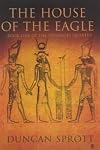
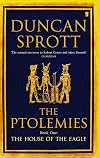
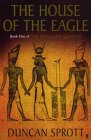
The first volume of The Ptolemies Quartet, 'House of the Eagle', is a triumph of historical salvage that brings back to life a bizarre family.Tags
Recommendations
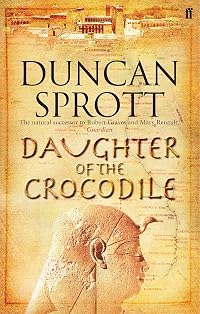







Member Reviews
I consider myself a fully documented citizen of the new millennium and a dedicated reader of twentieth century fiction, so "The House of the Eagle" isn't the sort of book I'd usually pick up. Still, when I learned that it was actually narrated by Thoth, the ibis-headed Egyptian god of writing, well, curiosity got the best of me. While I can't say that it converted me to the cause of historical fiction, it is, in certain ways, a rewarding read. Sprott's research on the period is, as you might expect, exhaustive, and he's particularly good with the small stuff: he knows what his characters ate, how they dressed, the gods they worshipped, the spells they cast and the music, literature, history they knew. He knows, in other words, how his show more royal protagonists saw the world, and the picture he paints, filled with magic, intrigue, and genuinely weird folk beliefs, belies the popular conception of Greek culture as supremely logical and level-headed. Most importantly of all, from a reader's point of view, he's a skilled enough writer to translate this vast store of knowledge about the period into a necessary sense of immediacy, of "being there." I can't think of a better reason to read this sort of book than to be transported in exactly this way.
Sprott also knows that he's got some good material to work with. Save for Cleopatra, who arrived much later, I don't think that the Greek royals of Egypt have gotten the sort of publicity that their Egyptian counterparts have, and the book jacket isn't lying when it describes the Ptolomies as one of the strangest families that have ever existed. The book is filled with entertaining, outsize personalities like the vengeful, intelligent Arsinoë Beta and the impulsive, violent Keraunos. Sprott does, however, overplay his hand in a few places: the book is probably longer than it needs to be, and it's a bit heavy on the foreshadowing, even if the book's final acts are as shocking and bloody as anything available on cable television today. His prose is, as mentioned earlier, detailed and, in places, appropriately purple, but it sometimes borders on bombastic. Still, I suppose that I knew what I was getting into: a slightly puffed-up narrative voice might be unavoidable when the narrator in question is an Egyptian god. show less
Sprott also knows that he's got some good material to work with. Save for Cleopatra, who arrived much later, I don't think that the Greek royals of Egypt have gotten the sort of publicity that their Egyptian counterparts have, and the book jacket isn't lying when it describes the Ptolomies as one of the strangest families that have ever existed. The book is filled with entertaining, outsize personalities like the vengeful, intelligent Arsinoë Beta and the impulsive, violent Keraunos. Sprott does, however, overplay his hand in a few places: the book is probably longer than it needs to be, and it's a bit heavy on the foreshadowing, even if the book's final acts are as shocking and bloody as anything available on cable television today. His prose is, as mentioned earlier, detailed and, in places, appropriately purple, but it sometimes borders on bombastic. Still, I suppose that I knew what I was getting into: a slightly puffed-up narrative voice might be unavoidable when the narrator in question is an Egyptian god. show less
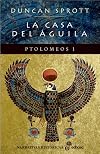
La casa del águila
Duncan Sprott
Publicado: 2005 | 578 páginas
Novela Histórico
Serie: Ptolomeos #1
La dinastía de los faraones Ptolomeos arranca con Ptolomeos Soter (macedinia h.367 a.C Egipto 283 a.C.), que había sido general de Alejandro Magno. Como sátrapa de Egipto conquistó Corintio y Megara y creó el museo y la biblioteca de Alejandría. Sin embargo, sus sucesores (Ptolomeo Filadelfio, Ptolomeo Evergetes y Ptolomeo Filopator) iniciaron pronto una etapa de decadencia política, social y cultural. En estos primeros cuatro faraones tolomaicos se centra Sprott en "La casa del Águila", poniendo de manifiesto un arduo y completísimo trabajo de documentación, puesto sin embargo al servicio de la descripción y narración sobre show more todo de los entresijos de la corte, en una novela de alta tensión narrativa y con un planteamiento muy original. Una novela rigurosa, muy amplia de miras y que aborda una dinastía poco o nada tratada en la narrativa histórica. Esta primera novela del ciclo narrativo de los Ptolomeos ha sido muy bien acogida por la crítica de todo el mundo como la aparición de un digno sucesor de la narrativas histórica de calidad, comparándolo con autores de la talla de Robert Graves y Mary Renault. show less
Duncan Sprott
Publicado: 2005 | 578 páginas
Novela Histórico
Serie: Ptolomeos #1
La dinastía de los faraones Ptolomeos arranca con Ptolomeos Soter (macedinia h.367 a.C Egipto 283 a.C.), que había sido general de Alejandro Magno. Como sátrapa de Egipto conquistó Corintio y Megara y creó el museo y la biblioteca de Alejandría. Sin embargo, sus sucesores (Ptolomeo Filadelfio, Ptolomeo Evergetes y Ptolomeo Filopator) iniciaron pronto una etapa de decadencia política, social y cultural. En estos primeros cuatro faraones tolomaicos se centra Sprott en "La casa del Águila", poniendo de manifiesto un arduo y completísimo trabajo de documentación, puesto sin embargo al servicio de la descripción y narración sobre show more todo de los entresijos de la corte, en una novela de alta tensión narrativa y con un planteamiento muy original. Una novela rigurosa, muy amplia de miras y que aborda una dinastía poco o nada tratada en la narrativa histórica. Esta primera novela del ciclo narrativo de los Ptolomeos ha sido muy bien acogida por la crítica de todo el mundo como la aparición de un digno sucesor de la narrativas histórica de calidad, comparándolo con autores de la talla de Robert Graves y Mary Renault. show less
beginnings of Ptolemic dynasty, tedious writing style
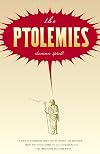
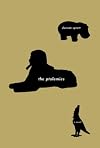
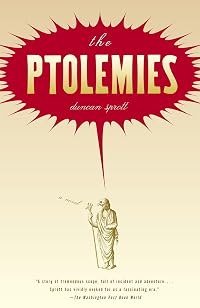
A wildly imaginative yet historically accurate, intensely dramatic yet often hilarious, re-creation of the early years of the House of Ptolemy (323—30 B.C.)–the forgotten ten-generation dynasty of Greek Pharaohs of Egypt.
And what a dynasty . . .
The Ptolemies is a story so layered, so dark and glittering and disastrous, that perhaps only Thoth the Ibis–the irreverent, riotously pompous narrator who is also the god of Wisdom...
And what a dynasty . . .
The Ptolemies is a story so layered, so dark and glittering and disastrous, that perhaps only Thoth the Ibis–the irreverent, riotously pompous narrator who is also the god of Wisdom...
Ratings
Members
- Recently Added By
Lists

Best historical fiction set in the ancient world
126 works; 40 members
Author Information
9 Works 281 Members
Series

Common Knowledge
- People/Characters
- Ptolemy I Soter; Alexander the Great; Eurydike; Ptolemy Keraunos; Berenice I; Arsinoë Beta (show all 9); Ptolemy II "Mikros" Philadelphos; Anemhor, high priest; Thoth (Deity)
- Important places
- Memphis, Egypt; Alexandria, Egypt
Classifications
Statistics
- Members
- 183
- Popularity
- 179,005
- Reviews
- 4
- Rating
- (3.68)
- Languages
- English, German, Spanish
- Media
- Paper
- ISBNs
- 9
- ASINs
- 2