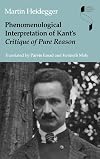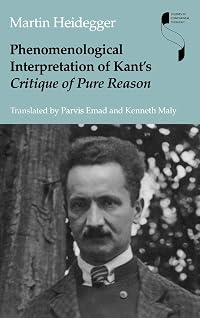
Phenomenological Interpretation of Kant's Critique of Pure Reason
by Martin Heidegger
66 Members (4.50)
On This Page
Description
The text of Martin Heidegger's 1927-28 university lecture course on Emmanuel Kant's Critique of Pure Reason presents a close interpretive reading of the first two parts of this masterpiece of modern philosophy. In this course Heidegger continues the task he enunciated in Being and Time as the problem of dismantling the history of ontology, using temporality as a clue. Within this context the relation between philosophy, ontology, and fundamental ontology is shown to be rooted in the genesis show more of the modern mathematical sciences. Heidegger demonstrates that objectification of beings as beings is inseparable from knowledge a priori, the central problem of Kant's Critique. He concludes that objectification rests on the productive power of imagination, a process that involves temporality as the basic constitution of humans as beings. This is an essential work for students of Heidegger, Kant, modern philosophy, and contemporary phenomenology. show lessTags
Recommendations


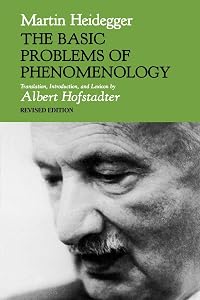











Member Reviews
Members
- Recently Added By
Author Information

Martin Heidegger was born in Messkirch, Baden, Germany on September 22, 1889. He studied Roman Catholic theology and philosophy at the University of Frieburg before joining the faculty at Frieburg as a teacher in 1915. Eight years later Heidegger took a teaching position at Marburg. He taught there until 1928 and then went back to Frieburg as a show more professor of philosophy. As a philosopher, Heidegger developed existential phenomenology. He is still widely regarded as one of the most original philosophers of the 20th century. Influenced by other philosophers of his time, Heidegger wrote the book, Being in Time, in 1927. In this work, which is considered one of the most important philosophical works of our time, Heidegger asks and answers the question "What is it, to be?" Other books written by Heidegger include Basic Writings, a collection of Heidegger's most popular writings; Nietzsche, an inquiry into the central issues of Friedrich Nietzsche's philosophy; On the Way to Language, Heidegger's central ideas on the origin, nature and significance of language; and What is Called Thinking, a systematic presentation of Heidegger's later philosophy. Since the 1960s, Heidegger's influence has spread beyond continental Europe and into a number of English-speaking countries. Heidegger died in Messkirch on May 26, 1976. (Bowker Author Biography) show less
Some Editions
Series
Belongs to Publisher Series
Work Relationships
Is a study of
Common Knowledge
- Canonical title
- Phenomenological Interpretation of Kant's Critique of Pure Reason
- Original title
- Phänomenologische Interpretation von Kants Kritik der reinen Vernunft
Classifications
Statistics
- Members
- 66
- Popularity
- 473,488
- Rating
- (4.50)
- Languages
- Czech, English, French, German
- Media
- Paper, Ebook
- ISBNs
- 5
- ASINs
- 1