On This Page
Description
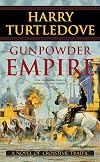
In the late twenty-first century, Jeremy Solter travels into alternate timelines in order to work alongside his family at the frontier of the Roman Empire, and is separated from his parents when the time gateways stop working.Tags
Recommendations




Member Reviews
This young adult story of crosstime travel to an alternate world where the Roman Empire still flourished into the Medieval era, where primitive firearms and cannons formed part of the military arsenal, was a total waste of time. The premise of crosstime travel was silly and full of holes, and nothing happened in the dull plot which produced any level of drama unless you find encounters with nosy bureaucrats suspenseful. Particularly annoying was the tedious moralizing on issues of slavery and fur clothing. There were a few interesting insights for young readers regarding some of the unpleasant features of Medieval day-to-day life compared to modern living but not nearly enough to redeem this woeful literary effort by the man who is show more considered by many as the master of alternate history. show less
Wow, that's bad. OK, some of the stupidity can be excused because cross-timing it is clearly pretty new - but not all of it. Are they really trying not to be noticed - not to be suspicious? Maybe the people who go out should be trained not to audibly and visibly sneer at or shrink from customs that are normal to that world - fur is not really optional, and looking sick at the sight of it is likely to puzzle people, for instance. That's a problem with the world - there are others, like that they don't dare (because their house is full of gadgets) have servants or slaves although again that's normal. There are also problems with the writing, mostly having to do with firsts. They've been going to Polisso for years - yet the father is show more pleased with himself for being able to find the house; Jeremy has to go out and wander the streets so that he'll look like the other boys, but he won't do any of the things they do - how will this help him not stand out? Not to mention, why has he never before run afoul of some bullies - why is this the first 'dicker for his skin'? And then - minor medical problem is ignored and glossed over until it's a medical emergency, and the way to handle it is to have both adults leave and the two high-school kids stay on their own. No one can be blamed for not anticipating the two crises, but those two could have gotten themselves and the company into plenty of trouble without any crises. And finally, it resolves without any climax - the besiegers leave and the gates reopen, without any particular action on the 'heroes' part, they just waited and worried. It's very much a setup for a story - an introduction to a new universe and possibly a set of characters. Awkward story, clumsy setup, rather pointless - interesting concepts but that's all. I have a later Crosstime Traffic book, I'll see if matters improve. If they don't, I think I'll go back and reread some of my older Turtledoves and see if he's (or he was) really as good as I thought he was. show less
I had never read any of Harry Turtledove's previous novels, so I had no expectations at the start of Gunpowder Empire. What I found was a very enjoyable alternate history, time travel novel. Set in the late twenty first century where time travel is possible, society has used this to improve the world by eliminating pollution and gathering additional resources. In Gunpowder Empire, the Solter family is part of the time travel program. They are there to trade gadgets such as Swiss Army knives for grain. When the Solter parents have to go back to modern times because the mom is suffering from appendicitis, the kids are on their own at a time where things are getting a bit dicey in ancient Rome. The kids have to survive when beaurocrats show more start asking many questions of them, and Rome is in the brink of war with invaders.
Turtledove is clearly a skilled writer who is able to navigate what can often be the treacherous waters of time travel. His writing is technically competent, yet simple and easy to read. The story flows well and there is sufficient tension throughout. Although I never got the impression that the Solter children were in serious danger, they still had to work through some tricky situations, which Turtledove does with expert precision. This was a fun novel that I would recommend to all readers.
Carl Alves - author of Blood Street show less
Turtledove is clearly a skilled writer who is able to navigate what can often be the treacherous waters of time travel. His writing is technically competent, yet simple and easy to read. The story flows well and there is sufficient tension throughout. Although I never got the impression that the Solter children were in serious danger, they still had to work through some tricky situations, which Turtledove does with expert precision. This was a fun novel that I would recommend to all readers.
Carl Alves - author of Blood Street show less
I'd always heard of Turtledove as a good writer of alternate history, but hadn't read anything by him until this book, which I picked up at random. Although nothing on the cover marks this as a YA novel, it definitely is - moreover, it's a YA novel written in an infuriatingly condescending, didactic style which assumes the reader knows nothing of the most basic concepts of history, and is incapable of looking things up or even understanding anything that isn't stated in simple, short words. Reading it, I felt like I had been stuck in some kind of remedial class!
The premise is that, in the near future, travel into alternate worlds has been discovered, and is being used for commerce - products are brought from the "alternates" by show more merchants who pose as local people. Due to a technical glitch (?) two teenage siblings are stranded without their merchant parents in a medieval-style Eastern European country (which, for some reason, hasn't progressed or changed since the days of the Roman Empire). and have to get through the situation on their own. Unfortunately, there's not really all that much to "get through." Some bureaucrats ask some questions, there's some suspicion - but nothing really happens. The two teenagers act and think in a ridiculously immature manner, and there wasn't really much of anything interesting or different about the world that they're stuck in.
Not at all recommended. show less
The premise is that, in the near future, travel into alternate worlds has been discovered, and is being used for commerce - products are brought from the "alternates" by show more merchants who pose as local people. Due to a technical glitch (?) two teenage siblings are stranded without their merchant parents in a medieval-style Eastern European country (which, for some reason, hasn't progressed or changed since the days of the Roman Empire). and have to get through the situation on their own. Unfortunately, there's not really all that much to "get through." Some bureaucrats ask some questions, there's some suspicion - but nothing really happens. The two teenagers act and think in a ridiculously immature manner, and there wasn't really much of anything interesting or different about the world that they're stuck in.
Not at all recommended. show less
For a young readership. There's a lot of repetition, nothing much really happens in the story, and the tone is often annoyingly paternalistic, even when that's really not approriate.
For example, first the Lietuvvan empire is described as barbarian in comparison with Rome, then we readers are reminded that we should not judge the Lietuvans since they are not much different from the Romans.
For a story on such wildly imaginary premises, it could do with more imagination. 2000 years of Roman empire, and supposedly nothin really changed. Right.
But the skill of the author is as always very appreciable, and the genre underused.
For example, first the Lietuvvan empire is described as barbarian in comparison with Rome, then we readers are reminded that we should not judge the Lietuvans since they are not much different from the Romans.
For a story on such wildly imaginary premises, it could do with more imagination. 2000 years of Roman empire, and supposedly nothin really changed. Right.
But the skill of the author is as always very appreciable, and the genre underused.
I'm not that taken with the young adult novels that HT put out starting with this one. Agrippa's Rome is not very interesting with matchlocks, and the research wasn't all that Great. Harry's best period is later in time.
Wow. I don't know where to start. The book was just so bad. Well, it's dated. It's only 10 years old, but being set so far into the future (he didnt give an exact year, but I estimate about 80 years) ages a book extremely quickly. The tech in this book is actually less advanced than what we have now. I know.
I should probably backtrack. The premise of this book is that at some time (Turtledove doesn't like to use exact years) people in our world learned how to dimension travel. So, like the greedy people we are, we traveled to other worlds, took their supplies (most notably oil, cause we're still using that 80 years in the future *sarcasm*) and returned with it to our world.
The plot revolves around the Solters family (did anyone else show more notice the typo on the back of the book) who travel to a world in which the Roman Empire never fell. Interesting. I take a Latin class so I thought this could be pretty cool. Wrong.
In this strange world (which Turtledove claims came about by the nondeath of some random general) the Roman Empire is still around 2,000 years later but, incredibly, has changed very little. With the exceptions of guns, watches, and neoLatin (their strange new language); their culture is essentially exactly the same. Turtledove tries to explain, but honestly it's half-assed and pretty weak.
You should keep in mind that I couldn't finish this book. I didn't even get to the main plot point, which you can read about on the book or here on GoodReads. Just keep in mind that I cut a lot from this review, cause there was just so much I had to say (none of it good) and I couldn't fit it all. show less
I should probably backtrack. The premise of this book is that at some time (Turtledove doesn't like to use exact years) people in our world learned how to dimension travel. So, like the greedy people we are, we traveled to other worlds, took their supplies (most notably oil, cause we're still using that 80 years in the future *sarcasm*) and returned with it to our world.
The plot revolves around the Solters family (did anyone else show more notice the typo on the back of the book) who travel to a world in which the Roman Empire never fell. Interesting. I take a Latin class so I thought this could be pretty cool. Wrong.
In this strange world (which Turtledove claims came about by the nondeath of some random general) the Roman Empire is still around 2,000 years later but, incredibly, has changed very little. With the exceptions of guns, watches, and neoLatin (their strange new language); their culture is essentially exactly the same. Turtledove tries to explain, but honestly it's half-assed and pretty weak.
You should keep in mind that I couldn't finish this book. I didn't even get to the main plot point, which you can read about on the book or here on GoodReads. Just keep in mind that I cut a lot from this review, cause there was just so much I had to say (none of it good) and I couldn't fit it all. show less
Members
- Recently Added By
Lists

KayStJ's to-read list
1,616 works; 11 members
Author Information

279+ Works 43,267 Members
Harry Turtledove was born in Los Angeles, California on June 14, 1949. He received a Ph.D. in Byzantine history from UCLA in 1977. From the late 1970's to the early 1980's, he worked as a technical writer for the Los Angeles County Office of Education. He left in 1991 to become full-time writer. His first two novels, Wereblood and Werenight, were show more published in 1979 under the pseudonym Eric G. Iverson because his editor did not think people would believe that Turtledove was his real name. He used this name until 1985 when he published Herbig-Haro and And So to Bed under his real name. He has received numerous awards including the Homer Award for Short Story for Designated Hitter in 1990, the John Esthen Cook Award for Southern Fiction for Guns of the Southand in 1993, and the Hugo Award for Novella for Down in the Bottomlands in 1994. (Bowker Author Biography) show less
Some Editions
Awards and Honors
Series

Common Knowledge
- Canonical title
- Gunpowder Empire
- Original publication date
- 2003
- People/Characters
- Jeremy Solters; Amanda Solters; Michael Fujikawa
- Dedication
- To Robert A. Heinlein, Andre Norton, and H. Beam Piper
- Publisher's editor
- Nielsen Hayden, Patrick
Classifications
Statistics
- Members
- 431
- Popularity
- 71,873
- Reviews
- 9
- Rating
- (3.02)
- Languages
- English, Italian
- Media
- Paper, Ebook
- ISBNs
- 6
- ASINs
- 5