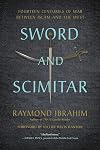
Although this was a difficult book to read given the savage cruelty often perpetrated, it was very well written and researched. We ignore its message to our own peril.
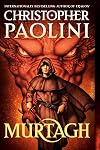
Christopher Paolini's "Murtagh" exceeded my expectations. Beyond the impressive world building ( set in a world developed over four previous volumes ), populated with all sorts of fascinating creatures such as werecats, dragons and urgals, the story of Murtagh and his dragon mate, Thorn, progresses at a relentless pace. There are no wasted chapters or story arcs as which undermine so many other epic fantasy novels.
What I most liked about this novel was the character of Murtagh and his relationship, forged in suffering, with the dragon, Thorn. The bond between these two protagonists represents the highest form of friendship -- the mutual compassion and willingness to risk all for the well-being of the other. We also see Murtagh repeatedly confronted with the choice of self-preservation over "love for the neighbour" as he risks his life for innocent and helpless victims of evil. Ultimately, Murtagh presents a Christ figure when faced with the temptation to achieve supreme glory for himself if only he forsakes his own suffering by choosing to submit to the allegiance of evil incarnate. Readers familiar with Luke's account of the temptations of Jesus in the wilderness will recognise this parallel.
I look forward to future instalments of the Murtagh story and to see the resolution to the various story threads left unfinished in this novel.
What I most liked about this novel was the character of Murtagh and his relationship, forged in suffering, with the dragon, Thorn. The bond between these two protagonists represents the highest form of friendship -- the mutual compassion and willingness to risk all for the well-being of the other. We also see Murtagh repeatedly confronted with the choice of self-preservation over "love for the neighbour" as he risks his life for innocent and helpless victims of evil. Ultimately, Murtagh presents a Christ figure when faced with the temptation to achieve supreme glory for himself if only he forsakes his own suffering by choosing to submit to the allegiance of evil incarnate. Readers familiar with Luke's account of the temptations of Jesus in the wilderness will recognise this parallel.
I look forward to future instalments of the Murtagh story and to see the resolution to the various story threads left unfinished in this novel.
 This review was written for LibraryThing Early Reviewers.
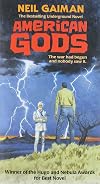
I could not finish this trash. For starters, the protagonist ( Shadow ) was the most boring cardboard character I've ever seen. Maybe, if I had the stomach to read further, I would have discovered that he was not actually human which would account for his robotic personality. Added to this weakness were scenes so gross that no further sacrifice of my time was worth searching for anything redeemable in this book, no matter how popular or how many awards it has won.
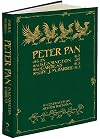
Under no circumstances will I ever read this "children's classic" to my grand children unless I want to drive them into deep despair. Children forever separated from their parents, some by early death, some by other circumstances, feature prominently in this story of Peter Pan's beginnings and sets a dark tone which overrides scenes of whimsy and imagination.
On the other hand, Calla Editions' pleasantly crafted volume of "Peter Pan In Kengsinton Gardens" is worth keeping for the beauty of its presentation, especially for the illustrations that are those of the original artist and king of Edwardian children's illustrations, Arthur Rackham. For Rackham fans, it is a must have.
On the other hand, Calla Editions' pleasantly crafted volume of "Peter Pan In Kengsinton Gardens" is worth keeping for the beauty of its presentation, especially for the illustrations that are those of the original artist and king of Edwardian children's illustrations, Arthur Rackham. For Rackham fans, it is a must have.
Waves by P.J. Thomas
As a relative neophyte to reading poetry, I feel somewhat unqualified to review a book such as this. Nevertheless, in fulfilment of my obligation, I reluctantly add my negative comment to the mostly appreciative reviews submitted by others who are probably more qualified than I. With few exceptions most of the poems in this collection failed to resonate with me. One of the exceptions which I particularly enjoyed towards the end was "Goodnight Lullaby" which conjured images well matched with its title.
This review was written for LibraryThing Early Reviewers.
It seems that the fun has been restored to the Wheel Of Time series after a brief hiatus of a volume or two. To my satisfaction, some long-awaited conclusions to some of the side-stories finally saw resolution and one also gets the feeling that we are finally ramping up to the conclusion of the Wheel Of Time story.
A fun read, with believable and likeable characters, I was pleasantly surprised how much I enjoyed this book. The plot provides enough suspense and mystery to keep the reader turning the page while avoiding the annoying tropes that populate so many novels of this type. I would gladly read more of this author's works.
This review was written for LibraryThing Early Reviewers.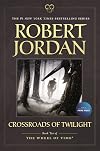
Without a doubt, the weakest book in the series thus far. Endless accounts of bickering and tedious negotiations seemed to account for most of the word count with almost nothing resolved by the end of six hundred pages of tedium. Thankfully, most readers claim that the rest of the series really picks up from here; otherwise I would be tempted to quit.

If one is seeking a source to provide a healthy understanding of Abraham Kuyper's contributions to Reformed theology and to the political developments of late 19th century Holland, James McGolderick may have written just the right book. I came away from the book with a much better grasp of the cultural and political roots of my own denomination and others that flow downstream from the mind and tireless efforts of this great Calvinist genius. However, for a full-orbed biography of Abraham Kuyper, the man, one will have to look elsewhere. Very little attention is paid to his personal life outside of church and state matters, almost nothing about his married and family life and I found it grievously frustrating that the author barely teased the reader about the nature of Kuyper's mental breakdown which led to his retreat from public office for a number of years. Nevertheless, I found the book quite helpfull as a guide to understanding one of the greatest influences on modern Reformed faith and practise.

So many others have written excellent reviews of Dickens' classic that I will only comment on a couple of Christian themes that beautifully adorn this classic. First of all is the Redemption motif -- Redemption offered and rejected, as well as Redemption finally received. Some of the scoundrels of whom Oliver's early life in London is associated reveal this double-sided coin both beautifully and tragically. Secondly, the concept of Sovereign Grace is abundantly displayed in the life of Oliver Twist. Writing this hours after turning the last page, I still cannot take my mind off of my favourite character in the novel -- the prostitute Nancy. She, above all, pictures both sides of the Redemption theme. As for Oliver, whose life was once mired in the same slime as that of his earliest compatriots, we see him through a series of "coincidences", rescued from his hopeless condition.
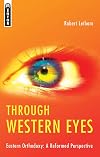
Searching for information that would brush away the misty vale that has always obscured my understanding of Eastern Orthodoxy, I came upon Robert Letham's "Through Western Eyes" which exceeded my expectations. Not only highly informative, but also very fair and irenic, the author opened my eyes to issues where the Eastern church has much to contribute to a fuller understanding of the faith as well as areas where they could learn from adherents to Reformed theology.
Rediscovering the Church Fathers: Who They Were and How They Shaped the Church by Michael A. G. Haykin
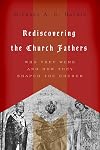
This is truly a delightful and very helpful book. I witnessed Dr. Haykin captivate the audience of the Calgary Reformed Conference in 2017 as he addressed the theme of the English Reformation through biographical sketches of a few significant figures. At this conference I purchased his book on the Early Church Fathers which adopts a similar methodology by introducing the reader to a handful of notable men from the early church period. Among them, he writes of Ignatius, Origen, Cyprian, Ambrose, Basil of Caesarea, and Patrick of Ireland. He also includes a chapter from The Letter to Diognetus. Dr. Haykin successfully clears away the mists of the Patristic period and assists the reader to obtain a clearer perspective on this mysterious chapter of Church history. I found it helpful and encouraging to learn how these men glorified the Lord as they contended for the truth and faced similar cultural challenges as the church in our day.
Recently there have been a number of attacks on Christian orthodoxy in which critics set their sights on the formative years of the church. This little book is a valuable help in answering these false charges, thereby cementing the believer's hope in historical certainty. For all of the benefits to be achieved through Rediscovering the Church Fathers, I believe that my casual acquaintance with Church History at the survey level helped me to glean the most from this book, having a better appreciation for the greater context in which these show more biographies take place. I recommend this little book to all who are curious about this fascinating and important period of Church history. show less
Recently there have been a number of attacks on Christian orthodoxy in which critics set their sights on the formative years of the church. This little book is a valuable help in answering these false charges, thereby cementing the believer's hope in historical certainty. For all of the benefits to be achieved through Rediscovering the Church Fathers, I believe that my casual acquaintance with Church History at the survey level helped me to glean the most from this book, having a better appreciation for the greater context in which these show more biographies take place. I recommend this little book to all who are curious about this fascinating and important period of Church history. show less
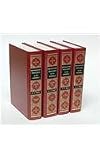
Without a doubt, this set represents some of the very best devotional reading one could find and for that reason alone, it should have a place of prominence on the shelf of every Christian home. Following each devotional section, Ryle adds further material which contributes to the value of the set for the purpose of study. My only reservation is the poor quality of print in my edition published by Baker Books. Such a rich spiritual resource deserves better.
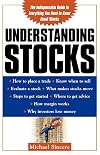
It seems that my intention to find a good entry level primer on investing in the stock market was successfully fulfilled with my purchase of Michael Sincere's Understanding Stocks. He begins with the basics and the early history of the stock market in America, then moves on to strategies and tools which are used by investors. I appreciate the author's candour as he advises that investing in the stock market may not be right for everyone and that there are other areas of personal finance which should be taken care of first. Easy to read and accessible, I highly recommend Understanding Stocks to anyone curious about investing.
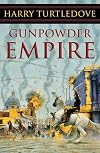
This young adult story of crosstime travel to an alternate world where the Roman Empire still flourished into the Medieval era, where primitive firearms and cannons formed part of the military arsenal, was a total waste of time. The premise of crosstime travel was silly and full of holes, and nothing happened in the dull plot which produced any level of drama unless you find encounters with nosy bureaucrats suspenseful. Particularly annoying was the tedious moralizing on issues of slavery and fur clothing. There were a few interesting insights for young readers regarding some of the unpleasant features of Medieval day-to-day life compared to modern living but not nearly enough to redeem this woeful literary effort by the man who is considered by many as the master of alternate history.
Where the Right Went Wrong: How Neoconservatives Subverted the Reagan Revolution and Hijacked the Bush Presidency by Patrick J. Buchanan
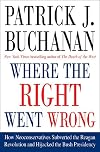
Despite a few minor disagreements and Mr. Buchanan's tendency to wander far afield from his main subject matter, I found this book to be a very helpful explanation of the current state of affairs within the Republican party and of the country as a whole. Even though written in 2004, the issues are still current and Buchanan gives much valuable historical insight to help understand the present. Even Buchanan's main weakness of over-explaining the history of Islam and terrorism, as well as the rise of Chinese power, were interesting, just not completely relevant to his subject. I learned much and enjoyed reading wise words from a man who should have been in the White House.
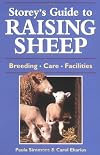
In Raising Sheep, this neophyte has a valuable resource to help me begin a small flock with a measure of confidence that makes up for my lack of experience with this type of livestock. Pretty much all aspects of managing a flock of sheep are covered in a thorough, but accessible way. After having read it straight through, I know that I will be consulting it often the farther I sink myself into this hobby and as new challenges arise. One suggested improvement would be to update the photographs to colour illustrations, especially in the chapter on breeds of sheep. This is one of the few areas where other books that cover raising sheep may surpass the Storey's Guide contribution on the subject. Otherwise I have not yet seen a better resource.
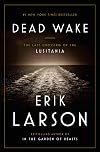
This is a very well-written and engaging account of the great maritime tragedy that was the World War I sinking of the Lusitania by a German U-boat off the coast of Ireland. Even though I knew the outcome, I was held in a state of suspense as if reading a novel. Part of this had to do with the accounts of the individuals, both crew and passengers, whose fates were not known until the completion of the story. The events unfold in the book from the perspectives of both the prey -- the Lusitania, and the predator -- the German submarine and its commander.
As well, from the broader picture, Larson examines the tragedy within the scope of the wartime policies of the belligerent nations and the neutral United States. Particular attention is given to President Wilson, perhaps to an unnecessary degree. In the end, Larson dispels the theory that behind the sinking was a nefarious conspiracy to draw the Americans into the war. Even so, he leaves open the possibility of some elements of allied culpability -- either ineptitude or conspiracy, or a combination of both. Larson's verdict seems to implicate a combination of diplomatic and strategic decisions, personalities, and a large pot of coincidental factors ranging from weather, delays of various sorts, traveling speed, and other matters. A change in any one of these would have almost certainly meant the safe arrival of the Lusitania in the port of Liverpool.
If there be one major flaw in the book, it would be the lack of show more photographs, even though there are many available. One should not have to rely on Google to supply something which ought to be accessible in a book on the subject. Apart from this weakness, I rate Dead Wake as a completely satisfying read. show less
As well, from the broader picture, Larson examines the tragedy within the scope of the wartime policies of the belligerent nations and the neutral United States. Particular attention is given to President Wilson, perhaps to an unnecessary degree. In the end, Larson dispels the theory that behind the sinking was a nefarious conspiracy to draw the Americans into the war. Even so, he leaves open the possibility of some elements of allied culpability -- either ineptitude or conspiracy, or a combination of both. Larson's verdict seems to implicate a combination of diplomatic and strategic decisions, personalities, and a large pot of coincidental factors ranging from weather, delays of various sorts, traveling speed, and other matters. A change in any one of these would have almost certainly meant the safe arrival of the Lusitania in the port of Liverpool.
If there be one major flaw in the book, it would be the lack of show more photographs, even though there are many available. One should not have to rely on Google to supply something which ought to be accessible in a book on the subject. Apart from this weakness, I rate Dead Wake as a completely satisfying read. show less
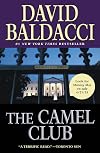
Here is a book with so much wasted potential. I loved the idea that a group of eccentric conspiracy theorists -- The Camel Club -- had stumbled upon a true conspiracy which involved the highest levels of the American Intelligence community and Islamic terrorists. So much fun could have been made of this situation but, Baldacci let this one get away from him to the point of absurdity. For one, the chief villain was so unbelievably invincible that not even Batman could have taken him on in a fight. Baldacci also seemed to feel it important, throughout the story, to present the Islamic world as superior to America, and to justify its terrorism on the basis of their victimization by the West. Not even the interesting cast of characters -- including the Camel Club members -- could save this lousy effort.

The book consists of four lectures by John Scott presented "on the John C. Shaffer Foundation at Northwestern University for promotion of the appreciation of the life, character, teachings, and influence of Jesus." The four lectures are: 1. Our Knowledge of Jesus From Non-Biblical Sources; 2. Preservation of the Gospels; 3. Luke the Great Physician; 4. Socrates and Jesus. The material covered in each lecture was easy to read and comprehend while containing sufficient information to provide a solid understanding of the subject matter. Quite often writings on these subjects can be dry and difficult to digest, but not so here. I enjoyed each lecture while learning enough to fortify my faith against skeptical arguments which have become so popular today. Da Vinci Code fans ought to read this little old book, published in 1936, and then reevaluate their enthusiasm for Dan Brown's claims.
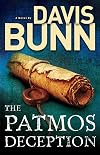
I had no idea what to expect from this book, having no previous experience with the author, Davis Bunn. Now, as a result of reading this story about three young people caught up in a plot involving the theft of antiquities in Greece, in particular, the island of Patmos, I'll be looking forward to reading more of Mr. Bunn's works. I liked the characters; I loved the setting, and the plot held enough intrigue and personal crisis to keep me thoroughly engrossed. Had the resolution to the story been more satisfying, I would have given The Patmos Deception a higher rating.

This may well be one of the most depressing books that I've read in a long time as it sheds light on one of the great blights of our day -- the enslavement of some 27 million souls worldwide in various forms of degrading and dehumanizing servitude. The authors focus on Sudan, Uganda, Burma, and also India where even young children are captured or given over to serve the base desires and greed of foul examples of the human race. Although it may be impossible to entirely eradicate this great evil, the authors do give heartening examples of individual rescues and hold out hope that significant gains may be accomplished if international awareness and outrage combine as in the campaign against apartheid. It also stands out clearly by implication that as the West abandons the Christian worldview which motivated William Wilberforce and other abolitionists, the problem will grow along with the ascendancy of Islam and other foreign ideologies within our own borders.
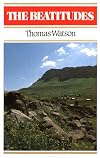
Watson's exposition of Mathew 5:1-12 is a very thorough, spiritually edifying work which has stood the test of time for good reason. There is not a single superfluous sentence to be found but Watson instead has approached his subject with the view of extracting every bit of meaning for the benefit of the soul. The book is densely packed and not to be read over quickly. Now that I have read it through, I hope to read it periodically in short chunks in order to meditate upon and savor the author's words so eloquently written.

Overall, an enjoyable read, even though the plot offered little in the way of a captivating crisis. Would Charlie Trumper succeed in fulfilling his dreams of building a bigger department store? Hardly compelling on the surface. Yet I still enjoyed the rags-to-riches story of the young entrepreneur from London's east end who overcomes early socio-economic disadvantages and survives the Western Front in order to build Trumper's -- a thriving publicly owned shopping centre which rivaled the world's best, despite the attempts of his bitter rival to thwart his aspirations. In Charlie Trumper, author Jeffrey Archer creates a main character who I could root for. A rather long, but easy read, worth the time invested.
Like almost everyone who has reviewed this book, I add my own words of praise. The amazing story of Olympic athlete, war hero and prisoner of war survivor Louis Zamperini is presented through the skilled writing of Laura Hillenbrand whose perfect pacing made me resent every moment in which I was compelled to put this book down before finishing it. Exhilarating, heart-breaking, and informative throughout, Zamperini's victory over hate and suffering through the gospel provided the perfect ending to this incredible story. Even though there were some minor mistakes -- B-24's do not dive bomb -- and at times I had a difficult time believing some of the action, I cannot imagine a more engaging account of a life which deserved to be so well told and so well received by so many.
For family worship, In The Presence Of God proved ideal for us. Each daily reading guided us through important teachings about God and what it implies for the Christian living in His presence. The readings were of just the right length and generated many profitable discussions with our children. Not that Dr. Sproul writes with children as his main audience -- I often had to interrupt my reading to explain his ideas and terminology -- but through discussion everyone in the family enjoyed and was edified. At the end of each reading, Sproul challenges and encourages the reader to live Corum Deo with a statement or question that applies the topic to the believer's daily life. Sproul also concludes the end of each meditation with one to three Scripture passages which our children were assigned to read aloud. Everyone was thus able to participate for each other's mutual edification. Give this book serious consideration as a very good option for family devotions.

I found it funny and original at first, but soon after all the main characters were introduced I gradually grew tired of it. After a while it seemed like a lot of tedious silly nonsense, and at worst, silly, irreverent nonsense.
Overall I rate Heroes Proved as average, maybe slightly better than that. Even though the plot lacked energy and the central characters failed to engage my interest, Oliver North sends an important message that needs to be taken seriously by all who treasure liberty and Western Civilization.
A terrorist attack in Houston in 2032 sees prominent scientist and retired Admiral Martin Cohen kidnapped by Islamist jihadists. Thankfully for Dr. Cohen, he has friends (particularly the Newman family and Senator Mack Caperton) who are more than adequately equipped and motivated to bring him back and do battle against America's enemies -- foreign and domestic.
Oliver North shows his expertise in national security and military operations throughout this story. The firefights involving the principle hero, James Newman, pulsated with tension and realism, made credible by the author's personal heroic background under fire.
North paints a frightening picture of what America and the world may look like in the near future if the Progressive agenda holds power in the White House. His message needs to be taken seriously as Americans choose leaders who will either continue on the path set by Progressive elites or patriots who will strengthen their country against external threats and enemies of liberty.
A terrorist attack in Houston in 2032 sees prominent scientist and retired Admiral Martin Cohen kidnapped by Islamist jihadists. Thankfully for Dr. Cohen, he has friends (particularly the Newman family and Senator Mack Caperton) who are more than adequately equipped and motivated to bring him back and do battle against America's enemies -- foreign and domestic.
Oliver North shows his expertise in national security and military operations throughout this story. The firefights involving the principle hero, James Newman, pulsated with tension and realism, made credible by the author's personal heroic background under fire.
North paints a frightening picture of what America and the world may look like in the near future if the Progressive agenda holds power in the White House. His message needs to be taken seriously as Americans choose leaders who will either continue on the path set by Progressive elites or patriots who will strengthen their country against external threats and enemies of liberty.
Pure Poultry is not simply a "how-to" book about raising poultry, but more of an account of the author's life with her birds and how they fit into her chosen life-style of sustainable living off the land. Mrs. Redhed Miller provides a wealth of insights regarding the raising of heritage breeds of poultry and by the end of the book, the reader should have a fairly clear idea as to whether such a venture would be suitable for his own plot of land. Many of the rewards as well as the challenges of sustainable poultry farming are brought to life through her experiences in a manner that makes for a pleasurable reading experience. The colour photographs provided by Mrs. Redhed Miller's own camera are also of exceptional quality which adds to the book's charm. I have decided to make this book mandatory reading for those in my family who are wanting to introduce chickens to our farm, confident that in the end a realistic decision may result.