
The Soloist: A Lost Dream, an Unlikely Friendship, and the Redemptive Power of Music
by Steve Lopez
On This Page
Description
The true story of Nathaniel Ayers, a musician who becomes schizophrenic and homeless, and his friendship with Steve Lopez, the Los Angeles columnist who discovers and writes about him in the newspaper.Tags
Recommendations




































Member Reviews
I'm a skeptic. Also familiar with people who struggle with schizophrenia. Therefore, this story just didn't jive with me and my experiences. It also triggered some of the mild PTSD that I have from dealing with individuals that have the disease... and that just wasn't explored enough. His trauma is more the "I can't believe someone so talented is living in an area like this" instead of the sometimes real trauma of abuse (he does touch on the verbal aspect), fear of unpredictability, etc that is normal for others.
López doesn't sell me on the fact that he can't just walk away, on the fact that he's really doing it for Mr. Ayers and not the publicity, on the fact that he gets so caught up in his project. He mentions his need for new show more ideas, for retirement funding, etc. too often. He tries to end it on a hopeful note but I didn't really find it all that hopeful. He mentions that he's talked to many, many people who have jobs and "normal" lives in spite of the disease and with the help of their meds but he never really features them.
Also, I may have the benefit/curse of hindsight. It's been more than ten years since they implemented a ten-year master plan and, if newspaper articles are to be believed, the homeless population in LA definitely hasn't improved. Not sure what the answer is, probably because it is so individualized. *
Last week my husband and I went to Portland and, through a planning oversight, ended up walking through one of the homeless areas of that city. It wasn't as bad as LA, for sure, but I've never before wondered if a body was living or dead because it was so covered with flies. The easy congeniality between the homeless that I observed, the crowds outside a mission, and the casualness with which non-tourists walked by was distracting. In some ways it seemed like an easy life. No cares, responsibilities, or pressure. The greatest genius often creates pressure which can lead to a breakdown. I think the book really underscores the need that we have for stability (in some way or another), the need we have to be able to ask for help, and the abnormality in all of us. But that was my interpretation. López's interpretation of life, his or the others, I found depressing.
* Fun fact, though. There are more schizophrenics in big cities like NYC, LA, etc than others(ratio of them, that is. See [b:Lost Connections: Uncovering the Real Causes of Depression - and the Unexpected Solutions|34921573|Lost Connections Uncovering the Real Causes of Depression - and the Unexpected Solutions|Johann Hari|https://i.gr-assets.com/images/S/compressed.photo.goodreads.com/books/1500785858l/34921573._SY75_.jpg|56184854]). Why is that? Can't be just the dense population. Why do they gravitate to larger cities and to homeless areas? show less
López doesn't sell me on the fact that he can't just walk away, on the fact that he's really doing it for Mr. Ayers and not the publicity, on the fact that he gets so caught up in his project. He mentions his need for new show more ideas, for retirement funding, etc. too often. He tries to end it on a hopeful note but I didn't really find it all that hopeful. He mentions that he's talked to many, many people who have jobs and "normal" lives in spite of the disease and with the help of their meds but he never really features them.
Also, I may have the benefit/curse of hindsight. It's been more than ten years since they implemented a ten-year master plan and, if newspaper articles are to be believed, the homeless population in LA definitely hasn't improved. Not sure what the answer is, probably because it is so individualized. *
Last week my husband and I went to Portland and, through a planning oversight, ended up walking through one of the homeless areas of that city. It wasn't as bad as LA, for sure, but I've never before wondered if a body was living or dead because it was so covered with flies. The easy congeniality between the homeless that I observed, the crowds outside a mission, and the casualness with which non-tourists walked by was distracting. In some ways it seemed like an easy life. No cares, responsibilities, or pressure. The greatest genius often creates pressure which can lead to a breakdown. I think the book really underscores the need that we have for stability (in some way or another), the need we have to be able to ask for help, and the abnormality in all of us. But that was my interpretation. López's interpretation of life, his or the others, I found depressing.
* Fun fact, though. There are more schizophrenics in big cities like NYC, LA, etc than others(ratio of them, that is. See [b:Lost Connections: Uncovering the Real Causes of Depression - and the Unexpected Solutions|34921573|Lost Connections Uncovering the Real Causes of Depression - and the Unexpected Solutions|Johann Hari|https://i.gr-assets.com/images/S/compressed.photo.goodreads.com/books/1500785858l/34921573._SY75_.jpg|56184854]). Why is that? Can't be just the dense population. Why do they gravitate to larger cities and to homeless areas? show less
In the early 2000s, Steve Lopez was a columnist for the L.A. Times walking the city looking for inspiration for his columns. One day, he meets a street musician who has obvious talent but is living on Skid Row and playing a violin with two strings. Intrigued, he starts talking to the man and meets Nathaniel Anthony Ayers, a former Juilliard student who dropped out and eventually became homeless due to his struggles with schizophrenia. Lopez wrote the column, but also became friends with Nathaniel and invested in getting him good care and a home.
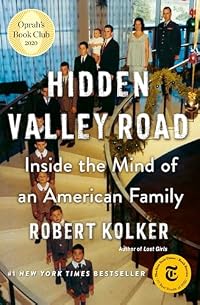
I didn't really have plans to read this book until my book club voted it as one of our 2024 reads. And because it was for book club, it was hard not to compare it to two books we've also read for show more book club, Rough Sleepers and Hidden Valley Road, the former about homeless people in Boston and the latter about a family in which half of the twelve kids were eventually diagnosed with schizophrenia. But Lopez's book is different, more a personal story about how he became friends with Nathaniel Ayers and started learning about mental health and homelessness, and less about the systemic causes of homelessness or a diagnostic of Ayers' particular malady. I kind of found Lopez himself annoying at times, as he's impatient about getting Ayers connected to services or into a home when it's clear that Ayers isn't ready yet. He does learn and grow as the story goes on, but I almost wanted to sit down and lecture him instead of relating. The book follows about two years of their friendship, really shows how music was a constant in Ayers' life, and ends on a positive note. show less
I didn't really have plans to read this book until my book club voted it as one of our 2024 reads. And because it was for book club, it was hard not to compare it to two books we've also read for show more book club, Rough Sleepers and Hidden Valley Road, the former about homeless people in Boston and the latter about a family in which half of the twelve kids were eventually diagnosed with schizophrenia. But Lopez's book is different, more a personal story about how he became friends with Nathaniel Ayers and started learning about mental health and homelessness, and less about the systemic causes of homelessness or a diagnostic of Ayers' particular malady. I kind of found Lopez himself annoying at times, as he's impatient about getting Ayers connected to services or into a home when it's clear that Ayers isn't ready yet. He does learn and grow as the story goes on, but I almost wanted to sit down and lecture him instead of relating. The book follows about two years of their friendship, really shows how music was a constant in Ayers' life, and ends on a positive note. show less
It took me four days to finish reading this book because it was easy to read. That's among the first things that I appreciate about this book: its modern English. A lot of times I chase after books that are classics, because they appear on somebody's top book list, and find their English out-dated and awkward to read. This is a nice change of pace (and language) for me.
I am a music fan and so I could relate to all the musical references in the book. Mr. Lopez has done his research because those are all accurate. There are also some lines that strike a chord in me. '"I try to treat everyone the way I'd want to be treated," he tells me.' (117) Agreed! Too many people don't do that and turn the world upside down. 'I don't know if I've ever show more been a very good friend to anyone, maybe because friendship is too much about the past...Who has time to look back? Friendship is easier when it has no history, no time for broken promises and all the little piques that fill a running tally sheet. To Nathaniel, as well, the past is irrelevant. Life is all about the next phrase, about feeding the monster, about finding a definition of himself that makes sense for at least one day.' (196) That's just something that a lot of us don't think about when it comes to relationships. What it means to be friends. All too often we selfishly try to change someone else in a relationship to suit ourselves. People don't change (that easily), first of all, but Mr. Lopez here seems to suggest that both himself and Mr. Nathaniel Anthony Ayers were able to change for each other because, as he testifies here, they look forward to the future. Maybe 'change' is the wrong word. They merely look ahead to finding a way to renew friendship when a new day comes.
One thing that's interesting about this book is that it reads very much like what a narrator in a documentary film would sound like. I appreciate the moments when Mr. Lopez reflects upon his own undertaking of this project and makes attempts to justify his purpose. I enjoy this book because it is thought-provoking. I am not sure if it has as much a profound impact on me as it does Mr. Lopez, but like he says, 'Everything I've written about Nathaniel is extremely personal...' (217) and I applaud his effort in searching for answers in a unique situation that requires a kind of patience that may not be so evident within 300 pages of words. show less
I am a music fan and so I could relate to all the musical references in the book. Mr. Lopez has done his research because those are all accurate. There are also some lines that strike a chord in me. '"I try to treat everyone the way I'd want to be treated," he tells me.' (117) Agreed! Too many people don't do that and turn the world upside down. 'I don't know if I've ever show more been a very good friend to anyone, maybe because friendship is too much about the past...Who has time to look back? Friendship is easier when it has no history, no time for broken promises and all the little piques that fill a running tally sheet. To Nathaniel, as well, the past is irrelevant. Life is all about the next phrase, about feeding the monster, about finding a definition of himself that makes sense for at least one day.' (196) That's just something that a lot of us don't think about when it comes to relationships. What it means to be friends. All too often we selfishly try to change someone else in a relationship to suit ourselves. People don't change (that easily), first of all, but Mr. Lopez here seems to suggest that both himself and Mr. Nathaniel Anthony Ayers were able to change for each other because, as he testifies here, they look forward to the future. Maybe 'change' is the wrong word. They merely look ahead to finding a way to renew friendship when a new day comes.
One thing that's interesting about this book is that it reads very much like what a narrator in a documentary film would sound like. I appreciate the moments when Mr. Lopez reflects upon his own undertaking of this project and makes attempts to justify his purpose. I enjoy this book because it is thought-provoking. I am not sure if it has as much a profound impact on me as it does Mr. Lopez, but like he says, 'Everything I've written about Nathaniel is extremely personal...' (217) and I applaud his effort in searching for answers in a unique situation that requires a kind of patience that may not be so evident within 300 pages of words. show less
Steve Lopez' real life portrayal and realistic glimpse into the world of one homeless and heartbreaking life, is story telling at it's finest. Never have I enjoyed a non-fiction book so much. I read The Soloist in about 10 hours, totally immersed, entranced and in awe of Lopez's poignant writing and in Nathaniel Ayers centrifugal life.
Nathaniel Anthony Ayers, a 55-year old homeless black man living on Skid Row, is found one day playing a dilapidated 2-string violin on an impoverished street in the poorest part of Los Angeles, by Steve Lopez, one of L.A.'s finest newspaper reporters. Just 12 miles from Hollywood, where celebrities live like kings, is Skid Row. The land of drug addicts, alcoholics, prostitutes and homeless; a destitute show more world where souls struggle to survive day after day without hope of ever crawling up from the gutter they landed in. But there is one man who although dwells amongst this sad and desperate heap, and sleeps in his own midnight doorway with a shopping cart of wonders, stands tall with pride and integrity and uses the sound of music to keep his soul from the devils that surround him.
Passing by Nathaniel one day while out scooping for a story, Lopez strolls by hearing what he feels is better than average music from a down-on-his-luck street performer. Striking up a conversation with Nathaniel and complimenting him on his music, Lopez walks away thinking there could be a story for his column hidden in the strings of this man's violin. Returning to Nathaniel's special spot under a tunnel day after day, the two men become fast friends and Nathaniel becomes the star of Steve's daily news column that will fast and furiously endear the world to not only the life of this intriguing musician, but to the chaotic and calamitous world of the American homeless.
Digging deeper into Nathaniel's life through fellow vagrants, and through long chats with Nathaniel, Lopez reveals that Nathaniel was not always a street warrior. He was brought up by in a good home, was very bright, and shockingly had a career of music on the rise as a student at New York's Juilliard Conservatory of Music. What happened then to this beautiful soul with talent and a gift of music? He broke down under pressure as a black man amidst white, when expected to perform and become a genius of sound. His world fell apart when Schizophrenia blew a hole in his life and smashed his career to pieces. Hospitalized, medicated, evicted from family and society, Nathaniel's life to follow finds him pulling a shopping cart around the streets of L.A., one minute paying homage to Beethoven for the world passing by, while the next minute has him screaming obscenities as the reality of his mental health disorder pulls the demon twin within him and frightens society around him.
This is an amazing, breathtaking story of the friendship and love Steve and Nathaniel find in each other and a tale of how one reporter reaches out and tries to save Nathaniel from drowning in the sewers of despair. Lopez's articles bring forth the decency in American hearts when people band together to help Nathaniel find a better world. Gifts of cellos and violins drop from the sky to give this lonely Music Man a chance to crawl away from his concert hall of cement one step at a time. Steve patiently and frustratingly, spends two years finding answers and assistance to provide his friend with a home, mental health care, and a life of music, slowly gaining trust from Nathaniel inch by inch.
Reading The Soloist will have you laughing, yet finding your heart saddened. You will at times be in shock, and at times find yourself cheering. While turning the pages I experienced a rollercoaster ride of emotions from the intensity of this profound and poignant tale. It can be exhausting, mind-bending, and thought provoking. I had to take breaks here and there, feeling wrung out from the depth of feelings this book can bring out. At one point near the end of the story, I broke down and cried because of the horrors this man's life endured, because I felt I was there on the streets of LA side by side in hell with Nathaniel screaming for help, for the beauty and kindness of strangers in a world gone mad, and because this book is so beautiful I didn't want it to end.
At 53 years old, with the thousands of books I've read in my life, I'll put The Soloist in my top 5 favorites of all time. Journalism does not get any better than this. show less
Nathaniel Anthony Ayers, a 55-year old homeless black man living on Skid Row, is found one day playing a dilapidated 2-string violin on an impoverished street in the poorest part of Los Angeles, by Steve Lopez, one of L.A.'s finest newspaper reporters. Just 12 miles from Hollywood, where celebrities live like kings, is Skid Row. The land of drug addicts, alcoholics, prostitutes and homeless; a destitute show more world where souls struggle to survive day after day without hope of ever crawling up from the gutter they landed in. But there is one man who although dwells amongst this sad and desperate heap, and sleeps in his own midnight doorway with a shopping cart of wonders, stands tall with pride and integrity and uses the sound of music to keep his soul from the devils that surround him.
Passing by Nathaniel one day while out scooping for a story, Lopez strolls by hearing what he feels is better than average music from a down-on-his-luck street performer. Striking up a conversation with Nathaniel and complimenting him on his music, Lopez walks away thinking there could be a story for his column hidden in the strings of this man's violin. Returning to Nathaniel's special spot under a tunnel day after day, the two men become fast friends and Nathaniel becomes the star of Steve's daily news column that will fast and furiously endear the world to not only the life of this intriguing musician, but to the chaotic and calamitous world of the American homeless.
Digging deeper into Nathaniel's life through fellow vagrants, and through long chats with Nathaniel, Lopez reveals that Nathaniel was not always a street warrior. He was brought up by in a good home, was very bright, and shockingly had a career of music on the rise as a student at New York's Juilliard Conservatory of Music. What happened then to this beautiful soul with talent and a gift of music? He broke down under pressure as a black man amidst white, when expected to perform and become a genius of sound. His world fell apart when Schizophrenia blew a hole in his life and smashed his career to pieces. Hospitalized, medicated, evicted from family and society, Nathaniel's life to follow finds him pulling a shopping cart around the streets of L.A., one minute paying homage to Beethoven for the world passing by, while the next minute has him screaming obscenities as the reality of his mental health disorder pulls the demon twin within him and frightens society around him.
This is an amazing, breathtaking story of the friendship and love Steve and Nathaniel find in each other and a tale of how one reporter reaches out and tries to save Nathaniel from drowning in the sewers of despair. Lopez's articles bring forth the decency in American hearts when people band together to help Nathaniel find a better world. Gifts of cellos and violins drop from the sky to give this lonely Music Man a chance to crawl away from his concert hall of cement one step at a time. Steve patiently and frustratingly, spends two years finding answers and assistance to provide his friend with a home, mental health care, and a life of music, slowly gaining trust from Nathaniel inch by inch.
Reading The Soloist will have you laughing, yet finding your heart saddened. You will at times be in shock, and at times find yourself cheering. While turning the pages I experienced a rollercoaster ride of emotions from the intensity of this profound and poignant tale. It can be exhausting, mind-bending, and thought provoking. I had to take breaks here and there, feeling wrung out from the depth of feelings this book can bring out. At one point near the end of the story, I broke down and cried because of the horrors this man's life endured, because I felt I was there on the streets of LA side by side in hell with Nathaniel screaming for help, for the beauty and kindness of strangers in a world gone mad, and because this book is so beautiful I didn't want it to end.
At 53 years old, with the thousands of books I've read in my life, I'll put The Soloist in my top 5 favorites of all time. Journalism does not get any better than this. show less
The Soloist is one of those books that I want to give to everyone I know (and maybe even those I don't) just so we can talk about it later. On his way to work one day LA Times journalist Steve Lopez meets Nathaniel Ayers, a Julliard-trained homeless paranoid schizophrenic playing a broken and battered violin. The book chronicles their resulting relationship through all its complexities, challenges, and rewards. Though the title might lead you to believe that music redeems Ayers, I think it might ultimately be Lopez who finds redemption.
The Soloist challenges what most of us believe about the homeless, the mentally ill, and what's "best" for them. For example, finding Ayers a place to live is the easy part - getting him to want to live show more there is a complex dance of trust, safety, and shared responsibility. Lopez gives Ayers assistance, time, money, friendship, family, and access to countless resources, but ultimately the friendship is defined by what Ayers is able to accept more than by what Lopez is willing to give.
In the end, this is an amazing story of about humanism, commitment, community, courage, love, and acceptance. show less
The Soloist challenges what most of us believe about the homeless, the mentally ill, and what's "best" for them. For example, finding Ayers a place to live is the easy part - getting him to want to live show more there is a complex dance of trust, safety, and shared responsibility. Lopez gives Ayers assistance, time, money, friendship, family, and access to countless resources, but ultimately the friendship is defined by what Ayers is able to accept more than by what Lopez is willing to give.
In the end, this is an amazing story of about humanism, commitment, community, courage, love, and acceptance. show less
Steve Lopez is a columnist for The Los Angeles Times. While he was searching for a story one day, he encountered Nathaniel Anthony Ayers, a homeless man playing a violin that was missing some strings. After talking to Nathanial for a while he discovered that he attended Juilliard and a column was born. Nathaniel struck a chord with Steve and the column struck a chord with the public. Several people offered instruments to Nathaniel and Steve delivered them to him with the condition that he store them at LAMP – the Los Angeles Men’s Project – so they won’t be stolen.
Steve Lopez developed a fondness for Nathaniel and worked hard to help him by contacting his sister, doctors and social workers. He pieced together Nathaniel’s show more background and discovered that schizophrenia destroyed Nathaniel’s dreams while he was studying at Juilliard. The two men develop a deep bond and Steve spends a lot of time with Nathaniel. He comes to realize that music is the best medicine for Nathaniel – it’s when he feels the most peaceful and calm. Steve is a wonderful advocate for Nathaniel and arranged music lessons, concerts and a visit from Nathaniel’s sister. Steve comes to think of Nathaniel almost like family and includes him in some family activities and dinners.
The Soloist by Steve Lopez is a wonderful book about the relationship between Steve Lopez and Nathaniel Ayers. In it, Steve chronicles the ups and downs of their relationship and even questions his motives behind helping Anthony. The writing is crisp, yet Steve’s affection for Nathaniel is abundantly clear. Even though parts of this book are sad, I found it joyful and uplifting. I’ve always thought of myself as being pretty open-minded, but this book made me think about my attitudes toward homelessness and mental illness. Steve has done a tremendous amount of work to improve the quality of Nathaniel’s life, but he is quick to admit that their relationship means as much to him as it does to Nathaniel. In case you couldn’t tell, I loved this book. show less
Steve Lopez developed a fondness for Nathaniel and worked hard to help him by contacting his sister, doctors and social workers. He pieced together Nathaniel’s show more background and discovered that schizophrenia destroyed Nathaniel’s dreams while he was studying at Juilliard. The two men develop a deep bond and Steve spends a lot of time with Nathaniel. He comes to realize that music is the best medicine for Nathaniel – it’s when he feels the most peaceful and calm. Steve is a wonderful advocate for Nathaniel and arranged music lessons, concerts and a visit from Nathaniel’s sister. Steve comes to think of Nathaniel almost like family and includes him in some family activities and dinners.
The Soloist by Steve Lopez is a wonderful book about the relationship between Steve Lopez and Nathaniel Ayers. In it, Steve chronicles the ups and downs of their relationship and even questions his motives behind helping Anthony. The writing is crisp, yet Steve’s affection for Nathaniel is abundantly clear. Even though parts of this book are sad, I found it joyful and uplifting. I’ve always thought of myself as being pretty open-minded, but this book made me think about my attitudes toward homelessness and mental illness. Steve has done a tremendous amount of work to improve the quality of Nathaniel’s life, but he is quick to admit that their relationship means as much to him as it does to Nathaniel. In case you couldn’t tell, I loved this book. show less
After hearing the author speak (at the American Library Association conference in Chicago), I had to read the book, and it was as riveting as the speech. While searching for material for his column for the LA Times, Steve Lopez meets Nathaniel Anthony Ayers. Nathaniel is a paranoid-schizophrenic on Skid Row. He spends his days playing Beethoven on a violin with only two strings and sleeps on the street. As Lopez gets acquainted with the former Julliard student, what starts out as just material for a column turns into a friendship which will change both men. There are many disappointments among the small triumphs as Lopez tries to help his talented friend. This true story will force the reader to face the reality of mental illness and show more its effect on society as well as the difference one individual can make in another's life. show less
Members
- Recently Added By
Lists

Best Biographies, Autobiographies and Memoirs
464 works; 156 members

Biographies of Little Known People
39 works; 2 members
Author Information

7 Works 1,656 Members
Steve Lopez is a California native who has written for seven newspapers and Time magazine. He is the author of three novels and Land of Giants, his observations on life in Philadelphia. His book The Soloist won the Pen USA Literary Award and was the basis for a Dream Works film starring Jamine Foxx and Robert Downey Jr.
Awards and Honors
Awards
Distinctions
Notable Lists
Common Knowledge
- Canonical title
- The Soloist: A Lost Dream, an Unlikely Friendship, and the Redemptive Power of Music
- People/Characters
- Steve Lopez; Nathaniel Ayers
- Important places
- Los Angeles, California, USA; Juilliard School of Music, New York, New York, USA
- Related movies
- The Soloist (2009 | IMDb)
- Dedication
- For Alison and Caroline, who made Nathaniel part of our extended family. And for Nathaniel's mother, the late Floria Boone, whose love never wavered.
- First words
- I'm on foot in downtown Los Angeles, hustling back to the office with another deadline looming.
- Last words
- (Click to show. Warning: May contain spoilers.)"I don't want the concert to ever end."
- Disambiguation notice
- This is the book, not the film.
Classifications
- Genres
- Music, Biography & Memoir, Nonfiction, General Nonfiction
- DDC/MDS
- 787.2092 — Arts & recreation Music Stringed instruments (Chordophones) Violin; general violin family modified standard subdivisions History, geographic treatment, biography Biography; violinists
- LCC
- ML418 .A96 .L66 — Music Literature on music Literature on music History and criticism Biography
- BISAC
Statistics
- Members
- 1,373
- Popularity
- 17,236
- Reviews
- 62
- Rating
- (3.95)
- Languages
- 6 — Chinese, English, German, Indonesian, Portuguese, Spanish
- Media
- Paper, Audiobook, Ebook
- ISBNs
- 31
- ASINs
- 12