
Alexander Masters
Author of Stuart: A Life Backwards
Works by Alexander Masters
Out of the Blue 1 copy
Associated Works
Tagged
Common Knowledge
- Gender
- male
- Education
- Kings College London, UK
Bedales School
St Edmund's College, Cambridge - Occupations
- screenwriter
- Relationships
- Masters, Dexter (father)
Brady, Joan (Mother) - Nationality
- UK
- Places of residence
- Cambridge, Cambridgeshire, England, UK
- Associated Place (for map)
- England, UK
Members
Reviews
Simply Mind blowing.
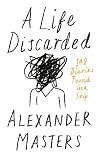
I mean: how do you classify this? It is, as it happens, a biography, yet there were many times when I wondered if I was being drawn into an elaborate philosophico-literary hoax, sort of Ern Malley meet Jostein Gaarder. But it isn’t. It is a biography, based on 148 diaries found in a skip.
Or it's a musing, on the biographer’s art. Or is it a science? No, clearly it’s an art, but then: so is science. Or physics is. Maths is just dull. Masters provides us both show more insights. The subject of the biography, on the other hand, isn’t dull. She is “I” for a long time, leaving a sort of Dylanesque “I and I” love triangle between Masters and Me and Her. Well in fact she isn’t ever “her” for a while, until she gets her menstrual period. That tends to indicate that she is. But nothing is certain in this perichoretic dance of truth. I becomes Not-Mary, then Laura, and eventually becomes Laura Francis – Laura Penrose Francis, in fact. She certainly isn’t dull. Or she is, if degrees of dull are measured by headlines and column inches and pixels. But they aren’t. Perhaps, as Masters suggests (303) she is “deafened by solipsism.” But she isn’t, and Masters tells us that to, yet again, demonstrate how conjectural the biographer’s art is. And he should know, because this is his third biography. So what does this say about his first and second biographies?
Indeed does it say anything? Does it simply admit that we are all solipsistic, subjective, centres of our own universe? If it does, then Laura Penrose Francis is a hero, because, inadvertently, she tells us something about ourselves. I say that not merely because I too am a diarist, trapped in Sisyphean self-importance, desperately hoping there is some purpose to my self-absorption or even my life, but because while Laura tells us of her own self-importance it transpires that, in the end, she is rather modest and unpretentious, far, far removed from the narcissism of a Johnny Depp or a Justin Bieber.
In any case, is this about Laura at all? Certainly it’s not about Alexander Masters, except insofar as it is about his utter fallibility. Perhaps it’s a tribute to Richard Grove, who mooched around Cambridge with his shirt hanging out, but whose life becomes restricted to a wheelchair? Or is it about Dido Davies, whose life is restricted by neuroendocrine cancer of the pancreas until she becomes not alive, not about at all? None of us see around the next corner, after all … but Laura told us about the most recent corner, and summonsed Haydn, Beethoven, Mussolini, Archbishop of Canterbury Michael Ramsey and a myriad ghosts and chimera along the way. show less
I mean: how do you classify this? It is, as it happens, a biography, yet there were many times when I wondered if I was being drawn into an elaborate philosophico-literary hoax, sort of Ern Malley meet Jostein Gaarder. But it isn’t. It is a biography, based on 148 diaries found in a skip.
Or it's a musing, on the biographer’s art. Or is it a science? No, clearly it’s an art, but then: so is science. Or physics is. Maths is just dull. Masters provides us both show more insights. The subject of the biography, on the other hand, isn’t dull. She is “I” for a long time, leaving a sort of Dylanesque “I and I” love triangle between Masters and Me and Her. Well in fact she isn’t ever “her” for a while, until she gets her menstrual period. That tends to indicate that she is. But nothing is certain in this perichoretic dance of truth. I becomes Not-Mary, then Laura, and eventually becomes Laura Francis – Laura Penrose Francis, in fact. She certainly isn’t dull. Or she is, if degrees of dull are measured by headlines and column inches and pixels. But they aren’t. Perhaps, as Masters suggests (303) she is “deafened by solipsism.” But she isn’t, and Masters tells us that to, yet again, demonstrate how conjectural the biographer’s art is. And he should know, because this is his third biography. So what does this say about his first and second biographies?
Indeed does it say anything? Does it simply admit that we are all solipsistic, subjective, centres of our own universe? If it does, then Laura Penrose Francis is a hero, because, inadvertently, she tells us something about ourselves. I say that not merely because I too am a diarist, trapped in Sisyphean self-importance, desperately hoping there is some purpose to my self-absorption or even my life, but because while Laura tells us of her own self-importance it transpires that, in the end, she is rather modest and unpretentious, far, far removed from the narcissism of a Johnny Depp or a Justin Bieber.
In any case, is this about Laura at all? Certainly it’s not about Alexander Masters, except insofar as it is about his utter fallibility. Perhaps it’s a tribute to Richard Grove, who mooched around Cambridge with his shirt hanging out, but whose life becomes restricted to a wheelchair? Or is it about Dido Davies, whose life is restricted by neuroendocrine cancer of the pancreas until she becomes not alive, not about at all? None of us see around the next corner, after all … but Laura told us about the most recent corner, and summonsed Haydn, Beethoven, Mussolini, Archbishop of Canterbury Michael Ramsey and a myriad ghosts and chimera along the way. show less
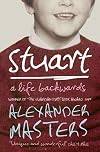
As Alexander Masters says at the beginning of this book, there are many different types of homeless people:
'There are those who where doing all right beforehand, but have suffered a temporary setback because their wife has run off with another man (or surprisingly often, another woman). Their business may have collapsed. Their daughter has been killed in a car crash or both....
Then there are the ones who suffer from chronic poverty brought on by illiteracy or social ineptness or what are show more politely called 'learning disabilities'. Perhaps they are dyslexic, autistic, shy to the point of inanity, never went to school ....
The youngsters who have fallen out with their parents, or have come out of care and don't know what to do next or even make their own breakfast, they're a third homeless category ....
Ex-convicts and ex-army - take away the format of their lives and all they can do is crumple downwards ....
Right at the bottom of this abnormal heap are the people such as Stuart, the 'chaotic' homeless. The chaotic ('Kai-yo-ic'), as Stuart calls them, are beyond repair.'
Alexander Masters first discovers Stuart begging in a doorway around the corner from Sidney Sussex College in Cambridge. From these inauspicious beginnings, when Stuart announced 'As soon as I get the opportunity I'm going to top meself', Alexander and Stuart develop a somewhat unlikely friendship. Alexander is working for a homeless charity and when the directors of the charity are convicted and imprisoned for allowing drugs to be supplied on the charity's premises, both men are key members of the action group that is trying to get the conviction overturned. The development of Alexander's friendship, and frequent utter frustration, with Stuart forms the foreground of the book. Alongside this Alexander looks backwards over Stuart's adult life and childhood to try and discover what went wrong with his life. And a lot has gone wrong with Stuart's life, from glue-sniffing, to drug addiction and alcoholism, from minor crime to car theft, robbery, violence and possible charges of attempted murder. There are reasons why Stuart is known as 'Knife Man Dan' and 'that mad bastard on Level D' to the other homeless of Cambridge city centre. And yet Stuart is also seen as a success story by the social workers and homeless charities that deal with him, and is extraordinarily convincing in his work for the action group.
This is a fascinating, if not very cheerful book, that throws light on a lot of the issues faced by homeless people. Stuart never lived to see the book published, stepping in front of the 11.15 London to King's Lynn train. Recommended. show less
'There are those who where doing all right beforehand, but have suffered a temporary setback because their wife has run off with another man (or surprisingly often, another woman). Their business may have collapsed. Their daughter has been killed in a car crash or both....
Then there are the ones who suffer from chronic poverty brought on by illiteracy or social ineptness or what are show more politely called 'learning disabilities'. Perhaps they are dyslexic, autistic, shy to the point of inanity, never went to school ....
The youngsters who have fallen out with their parents, or have come out of care and don't know what to do next or even make their own breakfast, they're a third homeless category ....
Ex-convicts and ex-army - take away the format of their lives and all they can do is crumple downwards ....
Right at the bottom of this abnormal heap are the people such as Stuart, the 'chaotic' homeless. The chaotic ('Kai-yo-ic'), as Stuart calls them, are beyond repair.'
Alexander Masters first discovers Stuart begging in a doorway around the corner from Sidney Sussex College in Cambridge. From these inauspicious beginnings, when Stuart announced 'As soon as I get the opportunity I'm going to top meself', Alexander and Stuart develop a somewhat unlikely friendship. Alexander is working for a homeless charity and when the directors of the charity are convicted and imprisoned for allowing drugs to be supplied on the charity's premises, both men are key members of the action group that is trying to get the conviction overturned. The development of Alexander's friendship, and frequent utter frustration, with Stuart forms the foreground of the book. Alongside this Alexander looks backwards over Stuart's adult life and childhood to try and discover what went wrong with his life. And a lot has gone wrong with Stuart's life, from glue-sniffing, to drug addiction and alcoholism, from minor crime to car theft, robbery, violence and possible charges of attempted murder. There are reasons why Stuart is known as 'Knife Man Dan' and 'that mad bastard on Level D' to the other homeless of Cambridge city centre. And yet Stuart is also seen as a success story by the social workers and homeless charities that deal with him, and is extraordinarily convincing in his work for the action group.
This is a fascinating, if not very cheerful book, that throws light on a lot of the issues faced by homeless people. Stuart never lived to see the book published, stepping in front of the 11.15 London to King's Lynn train. Recommended. show less

This is the last of the 25 World Book Night 2011 books I had to read. A workmate picked up a WBN copy of it in Cambridge and gave it to me, the last book I needed to pick up and set in the Cambridge area. What a stroke of luck!
Masters met the titular Stuart begging in Cambridge, a moment which changed his life. As suggested by the subtitle, Stuart's story is told in reverse. In this way, we see how Stuart ends up on the streets, a combination of many factors. Through his interaction with show more Stuart, Masters brings us the inside story of the people we pass every day, showing us how easy it is to fall down the rabbit hole, and how hard it is to get back out. Stuart opens up to Masters, letting us in to the darker details of life, and the incidents that caused him to become homeless in the first place.
What makes the book so readable, though, is the relationship between Stuart and his biographer, making both more 3-dimensional. The result is a book that is readable, thought-provoking and so very sad. show less
Masters met the titular Stuart begging in Cambridge, a moment which changed his life. As suggested by the subtitle, Stuart's story is told in reverse. In this way, we see how Stuart ends up on the streets, a combination of many factors. Through his interaction with show more Stuart, Masters brings us the inside story of the people we pass every day, showing us how easy it is to fall down the rabbit hole, and how hard it is to get back out. Stuart opens up to Masters, letting us in to the darker details of life, and the incidents that caused him to become homeless in the first place.
What makes the book so readable, though, is the relationship between Stuart and his biographer, making both more 3-dimensional. The result is a book that is readable, thought-provoking and so very sad. show less
Finished this brilliant book today. It is the story of a man who probably shares a lot in common with other homeless men but who has a unique voice and ability to share and contemplate his experiences. The narrative is quite disjointed, switching from the present (the story of the author's relationship with Stuart as they work together on behalf of two shelter workers who have been unjustly imprisoned) to the past and back again, with the chapters on Stuart's past working chronologically show more backward to his childhood. It was difficult for me to follow at first but I soon found the rhythm of it and came to see it as another way to illustrate just how unstructured and disjointed Stuart's life was.
Stuart is a delightful yet concurrently alarming character, swinging from personable and witty to out-of-his-mind violent. His story illustrates the near futility of trying to solve the problem of crime and the homeless. According to the author, Stuart is part of the "chaotic homeless...[who] are beyond repair...What unites the chaotic is the confusion of their days. Cause and effect are not connected in the usual way. Beyond their own governance, let alone within grasp of ours, they are constantly on the brink of raring up or breaking down. Charity staff fuss especially hard over these people because they are the worst face of homeless and, when not the most hateful, the most pitiable extremity of street life."
When asked how long he lived in a particular place, Stuart replies, "To be honest, that sort of question don't mean nothing to a person like me. That's what you're going to find difficult to understand. You grew up with order so you're going to want order to explain things. Where, me, anything ordered was wrong. It weren't a part of my days. My life is so complicated it's hard for me to actually say what happened in them days let alone in what order." So Stuart lives a chaotic life but has the intellect to recognize why it is difficult to understand.
When Masters met Stuart, the homeless man was living in a flat and receiving medical care. He was off drugs and considered a success story by the government workers who had helped him. After spending a couple of years with Stuart, Masters comments in frustration, "If Stuart is a success story, then it is pointless to imagine that we can ever really help these people without breaking the national budget...The chaotic? It isn't a bedsit and employment that they need; it is a new brain."
The actual story of Stuart's life could probably belong to any one of a thousand homeless men. He had violence in his genes from his father, he suffered sexual abuse at the hands of those he should have been able to trust, he was teased and bullied until he "discovered" violence, he sought escape in drugs and drink, he raged at the world. In that brief synopsis, he's almost a cliche. But at the hands of Alexander Masters, who became his friend and who genuinely tried to understand Stuart, his life, and the way of life of the homeless, Stuart becomes a tragic and poetic character.
The power of Stuart's story is in the telling and in putting a single unique face to the homeless. It is heartbreaking and hopeless but has flashes of great hope and humor. I highly recommend it. show less
Stuart is a delightful yet concurrently alarming character, swinging from personable and witty to out-of-his-mind violent. His story illustrates the near futility of trying to solve the problem of crime and the homeless. According to the author, Stuart is part of the "chaotic homeless...[who] are beyond repair...What unites the chaotic is the confusion of their days. Cause and effect are not connected in the usual way. Beyond their own governance, let alone within grasp of ours, they are constantly on the brink of raring up or breaking down. Charity staff fuss especially hard over these people because they are the worst face of homeless and, when not the most hateful, the most pitiable extremity of street life."
When asked how long he lived in a particular place, Stuart replies, "To be honest, that sort of question don't mean nothing to a person like me. That's what you're going to find difficult to understand. You grew up with order so you're going to want order to explain things. Where, me, anything ordered was wrong. It weren't a part of my days. My life is so complicated it's hard for me to actually say what happened in them days let alone in what order." So Stuart lives a chaotic life but has the intellect to recognize why it is difficult to understand.
When Masters met Stuart, the homeless man was living in a flat and receiving medical care. He was off drugs and considered a success story by the government workers who had helped him. After spending a couple of years with Stuart, Masters comments in frustration, "If Stuart is a success story, then it is pointless to imagine that we can ever really help these people without breaking the national budget...The chaotic? It isn't a bedsit and employment that they need; it is a new brain."
The actual story of Stuart's life could probably belong to any one of a thousand homeless men. He had violence in his genes from his father, he suffered sexual abuse at the hands of those he should have been able to trust, he was teased and bullied until he "discovered" violence, he sought escape in drugs and drink, he raged at the world. In that brief synopsis, he's almost a cliche. But at the hands of Alexander Masters, who became his friend and who genuinely tried to understand Stuart, his life, and the way of life of the homeless, Stuart becomes a tragic and poetic character.
The power of Stuart's story is in the telling and in putting a single unique face to the homeless. It is heartbreaking and hopeless but has flashes of great hope and humor. I highly recommend it. show less
Awards


You May Also Like


Associated Authors
Statistics
- Works
- 8
- Also by
- 3
- Members
- 1,286
- Popularity
- #19,935
- Rating
- 3.9
- Reviews
- 51
- ISBNs
- 43
- Languages
- 3
