
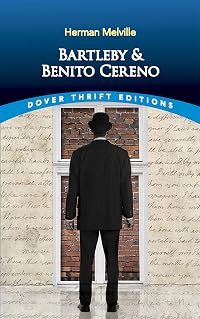
Bartleby / Benito Cereno
by Herman Melville 
On This Page
Description
Herman Melville towers among American writers not only for his powerful novels, but also for the stirring novellas and short stories that flowed from his pen. Two of the most admired of these -- "Bartleby" and "Benito Cereno" -- first appeared as magazine pieces and were then published in 1856 as part of a collection of short stories entitled The Piazza Tales."Bartleby" (also known as "Bartleby the Scrivener") is an intriguing moral allegory set in the business world of mid-19th-century New show more York. A strange, enigmatic man employed as a clerk in a legal office, Bartleby forces his employer to come to grips with the most basic questions of human responsibility, and haunts the latter's conscience, even after Bartleby's dismissal."Benito Cereno," considered one of Melville's best short stories, deals with a bloody slave revolt on a Spanish vessel. A splendid parable of man's struggle against the forces of evil, the carefully developed and mysteriously guarded plot builds to a dramatic climax while revealing the horror and depravity of which man is capable.Reprinted here from standard texts in a finely made, yet inexpensive new edition, these stories offer the general reader and students of Melville and American literature sterling examples of a literary giant at his story-telling best. show lessTags
Recommendations









Member Recommendations

Member Reviews
This book, with its two stories, Bartleby and Benito Cereno, is not what I expected. What a dense read! For a book just barely making it over the 100-page mark, it took me forever to will myself through it! Look at the difference between the start date and the finish for this one! Every time I picked it up I felt like I was being forced to swallow lead, or to walk a mile in a pool of TAR. I felt like I was getting nowhere, anywhere, and fast. And, to my frustrated and wry surprise, I got exactly that.
Herman Melville... I don't know what was his issue, but the man took things that could be explosive, and instead turned them into dust. If I were to choose a handful of words to describe this book, it'd be: "Dense. Gathering dust. Slowly show more sinking. Numbness." There was barely even the sensation of my frustrations until I reached the end of the book! It's so LOUDLY EMPTY. It's like having a block shoved through the side of your skull, one millimeter at a time, and every moment it sinks further and deeper in, you stop reacting... you lose your emotions... you stop thinking... you're just reading... you're just reading... you're just reading... you're just reading... you're ju--
You see where I'm going here?
The concepts were intriguing, I guess... *Seems a little reluctant to even give the book that* But GOD. With the way this man writes, I want to SHOOT myself to just get it over with! It's WORSE than watching paint dry! Or a snail cross the entire desert! Or having a staring contest for WEEKS ON END with a WALL. A perfectly BLANK... WHITE... WALL!!! *Flails a bit as her irritation abruptly gets the better of her* It's POINTLESS to read these books! POINTLESS! MELVILLE, HOW DARE YOU WRITE SUCH ABSTRACT INSANITY!! *Points a finger accusingly at him, breathing hard and one eye twitching uncontrollably for a moment*
Okay. That aside, this review is highly unprofessional. I cannot stand the man's writing. It's the type of book where you read it, and your brain just shuts down. Completely. There are no thoughts, no care or concern for the story or its characters: you're just dead afterwards. My friend Rain Misoa said she read Moby Dick, and after struggling through TWO of Melville's short stories, I want to whirl on her incredulously and SHAKE her, DEMANDING how she sat through that MONSTER BOOK without ending up throwing herself off of a building!! Maybe only people who enjoy the morbid "Questions about the universe" penned in the underlying tones of these stories will care, but even a philosophy dork like me can't take stuff like this. -3-;; I just refuse to.
If you want to give it a shot because it's a classic example of Melville's works, then go right ahead and be my guest, but there's no way I'm recommending this to anyone. =_e ...it hurts the brain too much. show less
Herman Melville... I don't know what was his issue, but the man took things that could be explosive, and instead turned them into dust. If I were to choose a handful of words to describe this book, it'd be: "Dense. Gathering dust. Slowly show more sinking. Numbness." There was barely even the sensation of my frustrations until I reached the end of the book! It's so LOUDLY EMPTY. It's like having a block shoved through the side of your skull, one millimeter at a time, and every moment it sinks further and deeper in, you stop reacting... you lose your emotions... you stop thinking... you're just reading... you're just reading... you're just reading... you're just reading... you're ju--
You see where I'm going here?
The concepts were intriguing, I guess... *Seems a little reluctant to even give the book that* But GOD. With the way this man writes, I want to SHOOT myself to just get it over with! It's WORSE than watching paint dry! Or a snail cross the entire desert! Or having a staring contest for WEEKS ON END with a WALL. A perfectly BLANK... WHITE... WALL!!! *Flails a bit as her irritation abruptly gets the better of her* It's POINTLESS to read these books! POINTLESS! MELVILLE, HOW DARE YOU WRITE SUCH ABSTRACT INSANITY!! *Points a finger accusingly at him, breathing hard and one eye twitching uncontrollably for a moment*
Okay. That aside, this review is highly unprofessional. I cannot stand the man's writing. It's the type of book where you read it, and your brain just shuts down. Completely. There are no thoughts, no care or concern for the story or its characters: you're just dead afterwards. My friend Rain Misoa said she read Moby Dick, and after struggling through TWO of Melville's short stories, I want to whirl on her incredulously and SHAKE her, DEMANDING how she sat through that MONSTER BOOK without ending up throwing herself off of a building!! Maybe only people who enjoy the morbid "Questions about the universe" penned in the underlying tones of these stories will care, but even a philosophy dork like me can't take stuff like this. -3-;; I just refuse to.
If you want to give it a shot because it's a classic example of Melville's works, then go right ahead and be my guest, but there's no way I'm recommending this to anyone. =_e ...it hurts the brain too much. show less
"Bartelby, the Scriviner" is, of course, a classic. And I've read it before, so it was good to read it again. As you age and re-read things you find new things and new spins. It was good to do so. Bartleby's case saddens. But also, Bartleby needs a psychiatrist. And they don't exist in the early 1800s. I had not read "Benito Cereno." It was eye-opening. First, on the surface it may seem Melville views the slaves one way, but then you think about it and he may be having you think about the slaves another way. Second, Melville builds the mysterious tension so skillfully and for so long he makes Lovecraft or Poe seem like amateurs. You know what is coming but it keeps getting delayed delayed delayed and dismissed away dismissed away show more dismissed away so that as you get further into the story you're hooked. A good work, which works as a simple story and on deeper levels. This Dover Edition is easy to look at, has a mere half page of introduction, and is priced nice. show less
To a sensitive being, pity is not seldom pain. And when at last it is perceived that such pity cannot lead to effectual succor, common sense bids the soul be rid of it. Bartleby, the Scrivener
Life glues us together in ways we can’t anticipate, obliging us to broaden our individual frames of reference in order to imagine the other, overcoming our self-centered blindness.
That inevitable interconnectedness is most plausible in Melville’s most enduring and intriguing short novellas Bartleby, the Scrivever and Benito Cereno.
When a New York lawyer needs to hire another copyist, it is Bartleby who responds to his advertisement, and arrives "pallidly neat, pitiably respectable, incurably forlorn."At first a diligent employee, he soon begins show more to refuse work, saying only "I would prefer not to." . So begins the story of Bartleby—passive to the point of absurdity yet extremely disturbing—which rapidly turns from farce to inexplicable tragedy.
The employer being a first person, conscious narrator who uses the piece of literature he composes as a means of contemplating his situation in life. It becomes clear that his use of Christian and classical imagery hints at an understanding of what is right and wrong and some –partial- awareness of his own moral deficiency.
I have to admit I was more than puzzled by this eccentric clerk, I couldn’t understand his passive refusal to work and I changed my view upon him several times along with the biased narrator, sometimes seeing him as a sort of Christ-figure or an exploited worker, others as a Thoreau-like practitioner of passive resistance.
It wasn’t until I read the last lines of the tale that the setting of the story, this business world symbolized by omnipresent Wall Street buildings surrounding the office, pinpointing the growing division between employer and employee and between the capitalist and working classes, took full force, making me ponder how the choice of one particular perspective determine the responsibility of our actions. In short, who is to blame?
In Benito Cereno we come across a naïve American sea captain who stumbles upon the remnants of a violent rebellion in a merchant Spanish vessel called San Dominick which carried black slaves, but fails to recognize the horrors that have occurred on board. Overflowing with symbolic richness and narrative complexity Melville manages to depict human depravity and moral relativism in little more than fifty pages.
"Shadows present, foreshadowing deeper shadows to come." Benito Cereno
Spanish or American. Captain or slave. Black or white. How disastrous the consequences are in the way we fill out those categories. And whereas I have read some opinions emphasizing the racist stereotypes of this short story, I can advocate in saying that the patronizing and limited views of the American sea captain are all proved wrong, one by one. Also in pointing out that although the African slaves can be seen as representatives of pure evil in the brutal way they kill his white masters, Melville also shows both how the mutineers of the San Dominick abide by America’s founding principles –“Live Free or Die” – and also how the barbarism of slavery gives way to other barbaric acts. And how the use of Christian imagery adds to the indictment of European Colonization in particular and Western arrogance and racism in general.
In both stories we encounter a confident person who is unexpectedly confronted with the mysterious “other” that challenges his snug and comfortable outlook on life, testing his goodness in presenting him with morally ambiguous situations. His reactions, our reactions, need to derive far from beyond our individual self so we can embrace the different, who is starving for understanding, and become one in this richly atomized world we live in.
”But the past is passed; why moralize upon it? Forget it. See, yon bright sun has forgotten it all, and the blue sea, and the blue sky; these have turned over new leaves.”
“Because they have no memory,” he dejectedly replied; “because they are not human.” Benito Cereno show less
Life glues us together in ways we can’t anticipate, obliging us to broaden our individual frames of reference in order to imagine the other, overcoming our self-centered blindness.
That inevitable interconnectedness is most plausible in Melville’s most enduring and intriguing short novellas Bartleby, the Scrivever and Benito Cereno.
When a New York lawyer needs to hire another copyist, it is Bartleby who responds to his advertisement, and arrives "pallidly neat, pitiably respectable, incurably forlorn."At first a diligent employee, he soon begins show more to refuse work, saying only "I would prefer not to." . So begins the story of Bartleby—passive to the point of absurdity yet extremely disturbing—which rapidly turns from farce to inexplicable tragedy.
The employer being a first person, conscious narrator who uses the piece of literature he composes as a means of contemplating his situation in life. It becomes clear that his use of Christian and classical imagery hints at an understanding of what is right and wrong and some –partial- awareness of his own moral deficiency.
I have to admit I was more than puzzled by this eccentric clerk, I couldn’t understand his passive refusal to work and I changed my view upon him several times along with the biased narrator, sometimes seeing him as a sort of Christ-figure or an exploited worker, others as a Thoreau-like practitioner of passive resistance.
It wasn’t until I read the last lines of the tale that the setting of the story, this business world symbolized by omnipresent Wall Street buildings surrounding the office, pinpointing the growing division between employer and employee and between the capitalist and working classes, took full force, making me ponder how the choice of one particular perspective determine the responsibility of our actions. In short, who is to blame?
In Benito Cereno we come across a naïve American sea captain who stumbles upon the remnants of a violent rebellion in a merchant Spanish vessel called San Dominick which carried black slaves, but fails to recognize the horrors that have occurred on board. Overflowing with symbolic richness and narrative complexity Melville manages to depict human depravity and moral relativism in little more than fifty pages.
"Shadows present, foreshadowing deeper shadows to come." Benito Cereno
Spanish or American. Captain or slave. Black or white. How disastrous the consequences are in the way we fill out those categories. And whereas I have read some opinions emphasizing the racist stereotypes of this short story, I can advocate in saying that the patronizing and limited views of the American sea captain are all proved wrong, one by one. Also in pointing out that although the African slaves can be seen as representatives of pure evil in the brutal way they kill his white masters, Melville also shows both how the mutineers of the San Dominick abide by America’s founding principles –“Live Free or Die” – and also how the barbarism of slavery gives way to other barbaric acts. And how the use of Christian imagery adds to the indictment of European Colonization in particular and Western arrogance and racism in general.
In both stories we encounter a confident person who is unexpectedly confronted with the mysterious “other” that challenges his snug and comfortable outlook on life, testing his goodness in presenting him with morally ambiguous situations. His reactions, our reactions, need to derive far from beyond our individual self so we can embrace the different, who is starving for understanding, and become one in this richly atomized world we live in.
”But the past is passed; why moralize upon it? Forget it. See, yon bright sun has forgotten it all, and the blue sea, and the blue sky; these have turned over new leaves.”
“Because they have no memory,” he dejectedly replied; “because they are not human.” Benito Cereno show less
I hated Melville when I read him in high school, but after reading these two stories, I've decided that he doesn't totally suck. I enjoyed parts of them, although at times it seems like he went on longer than he really needed to.
Bartleby - the eponymous character is the central enigma here. Obviously an allegory, but of what? Interpretations abound. My opinion - the narrator's ambition. These conflicting opinions make it, to my mind, the better of the two novellas here and one of Melville's better pieces with prose much less intractable than that he normally employs. A four star work.
Benito Cerino - much admired and considered a complicated allegory by some. The story is told from the vantage of Amasa Delano - a real person, and is based on an account of an incident from that person's memoirs. Memorable only for the literary conceit that forces a "what's going on?" mindset in the reader, this somewhat plodding narrative showcases Melville's linguistic excesses. show more Hailed recently thus "In our own time of terror and torture, Benito Cereno has emerged as the most salient of Melville's works" on which opinion I call bullshit . For those who feel it a seminal piece exposing colonial excess I call "Go read Heart of Darkness". Two stars.
Overall then three stars - just about VFM if you buy the Thrift edition. show less
Benito Cerino - much admired and considered a complicated allegory by some. The story is told from the vantage of Amasa Delano - a real person, and is based on an account of an incident from that person's memoirs. Memorable only for the literary conceit that forces a "what's going on?" mindset in the reader, this somewhat plodding narrative showcases Melville's linguistic excesses. show more Hailed recently thus "In our own time of terror and torture, Benito Cereno has emerged as the most salient of Melville's works" on which opinion I call bullshit . For those who feel it a seminal piece exposing colonial excess I call "Go read Heart of Darkness". Two stars.
Overall then three stars - just about VFM if you buy the Thrift edition. show less
Who, or I suppose better yet, what exactly is Bartleby. The story's main character may represent some characteristic of society that Melville was disenchanted with. Readers interested in paradoxes or absurdity rendered in the humanities may regard the 20 or so pages of Meliville's story with special interest. The humble scrivener's job is akin to the copy and paste function on a modern computer. That along with the details of his past job helps to paint a picture of this sorrowful character who's clandestine life style support his mantra, "I'd prefer not to." Concepts of Christian charity are touched upon through the narrative musings of Bartleby's employer. At least two interesting film adaptations exist of this story, one of which show more features Crispen Glover (Back to the Future, Willard) as Bartleby. show less
After falling in love with Moby Dick last year, I decided that I would work slowly through the rest of his work. These stories are both beautifully written and engage the reader in dilemmas of the time.
The first story is an allegory about the capitalist exploitation of workers. Bartleby 'prefers not to' perform an increasing number of tasks in his occupation as a scrivener, and 'opts out' of society, paying the ultimate price.
The second story deals with the slave trade and oppression/heroism/racism. It reflects the vocation of Melville and his seafaring occupation. It is strangely unsettling to read the word 'Negro' used as a commonplace word and realize the strongly ingrained acceptance of racism and human domination in that era. It show more must be remembered that these stories were written over 150 years ago.
Heartily recommended for all you Melville lovers out there!! show less
The first story is an allegory about the capitalist exploitation of workers. Bartleby 'prefers not to' perform an increasing number of tasks in his occupation as a scrivener, and 'opts out' of society, paying the ultimate price.
The second story deals with the slave trade and oppression/heroism/racism. It reflects the vocation of Melville and his seafaring occupation. It is strangely unsettling to read the word 'Negro' used as a commonplace word and realize the strongly ingrained acceptance of racism and human domination in that era. It show more must be remembered that these stories were written over 150 years ago.
Heartily recommended for all you Melville lovers out there!! show less
Members
- Recently Added By
Author Information

657+ Works 78,259 Members
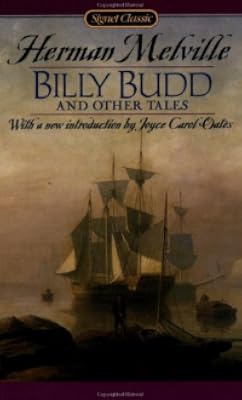
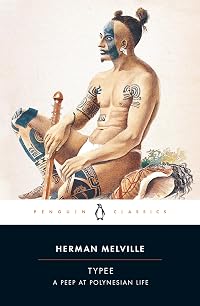
Herman Melville (August 1, 1819 - September 28, 1891) was born into a seemingly secure, prosperous world, a descendant of prominent Dutch and English families long established in New York State. That security vanished when first, the family business failed, and then, two years later, in young Melville's thirteenth year, his father died. Without show more enough money to gain the formal education that professions required, Melville was thrown on his own resources and in 1841 sailed off on a whaling ship bound for the South Seas. His experiences at sea during the next four years were to form in part the basis of his best fiction. Melville's first two books, Typee (1846) and Omoo (1847), were partly romance and partly autobiographical travel books set in the South Seas. Both were popular successes, particularly Typee, which included a stay among cannibals and a romance with a South Sea maiden. During the next several years, Melville published three more romances that drew upon his experiences at sea: Redburn (1849) and White-Jacket (1850), both fairly realistic accounts of the sailor's life and depicting the loss of innocence of central characters; and Mardi (1849), which, like the other two books, began as a romance of adventure but turned into an allegorical critique of contemporary American civilization. Moby Dick (1851) also began as an adventure story, based on Melville's experiences aboard the whaling ship. However, in the writing of it inspired in part by conversations with his friend and neighbor Hawthorne and partly by his own irrepressible imagination and reading of Shakespeare and other Renaissance dramatists Melville turned the book into something so strange that, when it appeared in print, many of his readers and critics were dumbfounded, even outraged. By the mid-1850s, Melville's literary reputation was all but destroyed, and he was obliged to live the rest of his life taking whatever jobs he could find and borrowing money from relatives, who fortunately were always in a position to help him. He continued to write, however, and published some marvelous short fiction pieces Benito Cereno" (1855) and "Bartleby, the Scrivener" (1853) are the best. He also published several volumes of poetry, the most important of which was Battle Pieces and Aspects of the War (1866), poems of occasionally great power that were written in response to the moral challenge of the Civil War. His posthumously published work, Billy Budd (1924), on which he worked up until the time of his death, became Melville's last significant literary work, a brilliant short novel that movingly describes a young sailor's imprisonment and death. Melville's reputation, however, rests most solidly on his great epic romance, Moby Dick. It is a difficult as well as a brilliant book, and many critics have offered interpretations of its complicated ambiguous symbolism. Darrel Abel briefly summed up Moby Dick as "the story of an attempt to search the unsearchable ways of God," although the book has historical, political, and moral implications as well. Melville died at his home in New York City early on the morning of September 28, 1891, at age 72. The doctor listed "cardiac dilation" on the death certificate. He was interred in the Woodlawn Cemetery in The Bronx, New York, along with his wife, Elizabeth Shaw Melville. (Bowker Author Biography) show less
Herman Melville has a Legacy Library. Legacy libraries are the personal libraries of famous readers, entered by LibraryThing members from the Legacy Libraries group.
Series
Belongs to Publisher Series
Work Relationships
Common Knowledge
- Canonical title
- Bartleby / Benito Cereno
- Original title
- Bartleby / Benito Cereno
- Original publication date
- 1853: Bartleby; 1855: Benito Cereno
- People/Characters
- Bartleby
- Original language*
- Inglese
*Some information comes from Common Knowledge in other languages. Click "Edit" for more information.
Classifications
Statistics
- Members
- 1,022
- Popularity
- 25,332
- Reviews
- 11
- Rating
- (3.70)
- Languages
- 6 — English, German, Italian, Spanish, Swedish, Turkish
- Media
- Paper, Ebook
- ISBNs
- 21
- UPCs
- 2
- ASINs
- 8