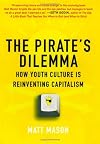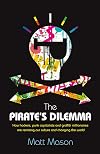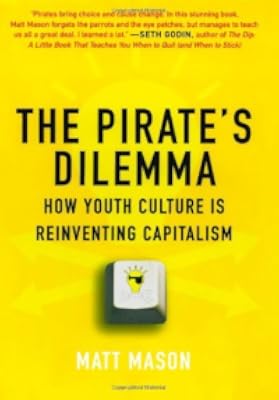
The Pirate's Dilemma: How Youth Culture Is Reinventing Capitalism
by Matt Mason
On This Page
Description
It started with punk. Hip-hop, rave, graffiti, and gaming took it to another level, and now modern technology has made the ideas and innovations of youth culture increasingly intimate and increasingly global at the same time." "In The Pirate's Dilemma, VICE magazine's Matt Mason - poised to become the Malcolm Gladwell of the iPod Generation - brings the exuberance of a passionate music fan and the technological savvy of an IT wizard to the task of sorting through the changes brought about by show more the interface of pop culture and innovation. He charts the rise of various youth movements - from pirate radio to remix culture - and tracks their ripple effect throughout larger society." "With a cast of characters that includes such icons as the Ramones, Andy Warhol, Madonna, Russell Simmons, and 50 Cent - Mason uncovers the trends that have transformed counter cultural scenes into burgeoning global industries and movements, ultimately changing our way of life. show lessTags
Recommendations















Member Recommendations
Member Reviews
The Pirate's Dilemma is the up-in-the-air question of how to deal with society's trend toward free media and disregard for traditional intellectual property. What emerges is "punk capitalism," an alternative for artists to put products directly in fans' hands, rejecting the traditional modes of advertisement and distribution and thereby restructuring the economics of mass media.
While the main 'art form' discussed was music, primarily hip-hop, Mason's text also spans graffiti, publishing, video, software, and flash mobs, among others. Some of these examples went astray of having a really tight thesis detailing punk capitalism, as several of them just seemed like good innovation rather than a badass political statement (for example, show more Steve Jobs's open source development of computer programs was not especially sticking it to the man). And sometimes the book failed to differentiate between progressive and destructive methods of "pushing the boundaries." So the actual execution turned out to be less impressive than the premise, but there's a ton of good anecdotes and detailing of the shifts in youth culture nonetheless. show less
While the main 'art form' discussed was music, primarily hip-hop, Mason's text also spans graffiti, publishing, video, software, and flash mobs, among others. Some of these examples went astray of having a really tight thesis detailing punk capitalism, as several of them just seemed like good innovation rather than a badass political statement (for example, show more Steve Jobs's open source development of computer programs was not especially sticking it to the man). And sometimes the book failed to differentiate between progressive and destructive methods of "pushing the boundaries." So the actual execution turned out to be less impressive than the premise, but there's a ton of good anecdotes and detailing of the shifts in youth culture nonetheless. show less
I found this book more and more obnoxious the more I read, mostly because of the writing style and continual use of 'hip lingo'. I also find the argument that 'punk capitalism' will save the world to be fairly unexciting. The case studies do make for interesting reading, however.
The Long Tail, Wikinomics and The Tipping Point are coming together in a great reading. One point of criticism is I think that even though the examples are lively and strong, this book won't convince the critics. Simply because they can't relate to the examples being given.
Finally, suggestion to Matt Mason: Why not add a section of your blog on your book, to the examples you use. You could make a list of websites and youtube movies. Ofcourse, anyone could find them using google but it could also lead readers normally less inclined to use these media to have a go.
Finally, suggestion to Matt Mason: Why not add a section of your blog on your book, to the examples you use. You could make a list of websites and youtube movies. Ofcourse, anyone could find them using google but it could also lead readers normally less inclined to use these media to have a go.
This is a history, really, of inventions and ideas by the youth culture since Steve Job invented the Apple computer and forward. At first it seems to be the history of hip hop music and illegal downloading of music from the Internet, but it really is a history of all kinds of entrepreneurs who developed ways of making a living by starting with a music idea, forming a band maybe, then selling shoes and the rest of a wardrobe type products. The point the author makes is he supports the youth culture because it is inventive. He thinks that copying from someone is not such a bad thing because this leads to creatiing something new. The history is wonderful...what I did not know about hip hop, raves, rock and the like! Terrible writing show more however, as bad as mine. But it is worth struggling through for the content. show less
Matt Mason traces the current web 2.0 movement back to the 1970’s punk rock culture. He starts with focus on a quote from punk fanzine Sniffin’ Glue with a diagram showing three finger positions on the neck of a guitar with the caption:
“Here’s one chord, here’s two more, now form your own band.”
In a 2.0 world, doing-it-yourself does not seem that radical anymore. Anyone can be published author on the web. You can jump onto Blogger and in a few minutes have a powerful web publishing platform up and running in a few minutes.
Mason looks to some early punk bands who played for themselves and your buddies. Then maybe a few friends come along. If other people come then great, but it does not matter that much because you are show more doing for yourself and few people close to you.
Mason focuses mostly on music, but in the background I was thinking more about blogging. It does not make much sense to put together and a print a book that only a few hundred people will read. That is a big deployment of capital with an improbable return on investment. With web 2.0 the capital for distribution and publishing is minimal. A blog with only a few hundred readers is successful.
Mason labels the new business as “punk capitalism.” The businesses often are not in it for the money. They would like to cover their costs and have few dollars of profit. But they are not in it for the money.
Seth Godin in Unleashing the Ideavirus: “It took 40 years for radio to have 10 million users. . . 15 years for TV to have 10 million users, and it took Hotmail and Napster less than year. . . The time it takes for an idea to circulate is approaching zero.”
Web 2.0 movement is allowing a bigger audience of creators, a more rapid efficient distribution of information at less cost. It seems a little strange to be reading these concepts in a book.
Thanks to the delightful Connie Crosby of Crosby Group Consulting for giving me the book. show less
“Here’s one chord, here’s two more, now form your own band.”
In a 2.0 world, doing-it-yourself does not seem that radical anymore. Anyone can be published author on the web. You can jump onto Blogger and in a few minutes have a powerful web publishing platform up and running in a few minutes.
Mason looks to some early punk bands who played for themselves and your buddies. Then maybe a few friends come along. If other people come then great, but it does not matter that much because you are show more doing for yourself and few people close to you.
Mason focuses mostly on music, but in the background I was thinking more about blogging. It does not make much sense to put together and a print a book that only a few hundred people will read. That is a big deployment of capital with an improbable return on investment. With web 2.0 the capital for distribution and publishing is minimal. A blog with only a few hundred readers is successful.
Mason labels the new business as “punk capitalism.” The businesses often are not in it for the money. They would like to cover their costs and have few dollars of profit. But they are not in it for the money.
Seth Godin in Unleashing the Ideavirus: “It took 40 years for radio to have 10 million users. . . 15 years for TV to have 10 million users, and it took Hotmail and Napster less than year. . . The time it takes for an idea to circulate is approaching zero.”
Web 2.0 movement is allowing a bigger audience of creators, a more rapid efficient distribution of information at less cost. It seems a little strange to be reading these concepts in a book.
Thanks to the delightful Connie Crosby of Crosby Group Consulting for giving me the book. show less
Something I think I should read more than something I want to read ...
Members
- Recently Added By
Lists

culture
320 works; 1 member

Ryan Holiday's Books To Base Your Life On
97 works; 2 members
Author Information
1 Work 277 Members
Classifications
- Genres
- Nonfiction, General Nonfiction, Business, Technology
- DDC/MDS
- 305.24209045 — Society, government, & culture Social sciences, sociology & anthropology Social group - Age, Gender, Ethnicity Age groups Early adulthood
- LCC
- HQ799.5 .M393 — Social sciences The family. Marriage, Women and Sexuality The Family. Marriage. Women The family. Marriage. Home Young men and women
- BISAC
Statistics
- Members
- 277
- Popularity
- 116,729
- Reviews
- 10
- Rating
- (3.59)
- Languages
- Dutch, English, Italian
- Media
- Paper, Ebook
- ISBNs
- 6
- ASINs
- 3