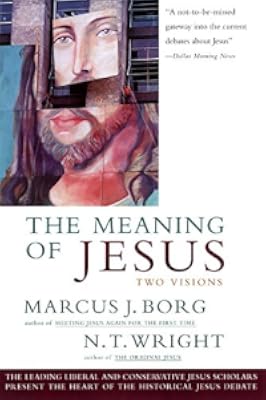
The Meaning of Jesus: Two Visions
by Marcus J. Borg, N.T. Wright
On This Page
Description
Was Jesus born of a virgin? Did he know he was the Messiah? Was he bodily resurrected from the dead? Did he intentionally die to redeem humankind? Was Jesus God? Two leading Jesus scholars with widely divergent views go right to the heart of these questions and others, presenting the opposing visions of Jesus that shape our faith today.Tags
Recommendations

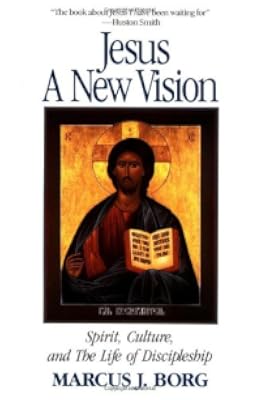

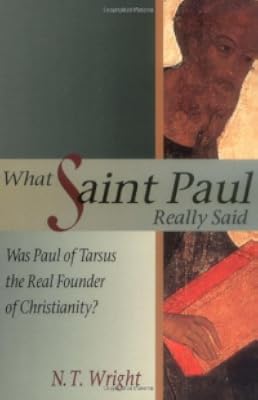

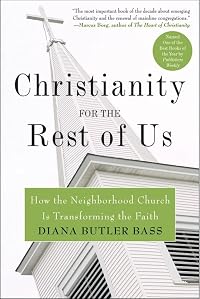

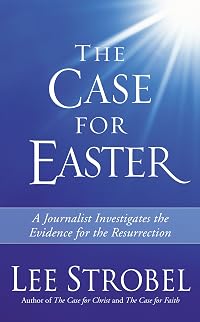
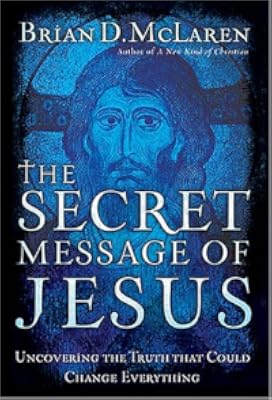

Member Reviews
Two of my favorite scholars, Marcus Borg and N. T. Wright, debate the meaning of Jesus. One is decidedly more conservative, but both are thoughtful and well-studied. And, raising hope for the future of Christianity, I would venture a guess that they are best friends despite their differences.
Wright believes the gospels are what they are “because their authors thought the events they were recording—all of them, not just some—actually happened.” This may sound self-evident to conservative Christians, but it is not the way Borg sees it. Two terms he uses to describe gospel writing are “metaphor historicized,” and its complement, “history metaphorized.” Borg just can’t jump on board with a literal reading of the gospels; show more he describes this outdated way of reading the Bible with five adjectives: literalistic, doctrinal, moralistic, exclusivistic, and afterlife oriented. This view, he says, has ceased to work for a large number of people, who find that if they must take the Bible literally, they cannot take it at all.
According to Borg, the “single most important difference” between these two scholars is their opinion about whether or not Jesus saw himself as the messiah. Wright says yes, Jesus understood his role as central to the salvation of the Jewish nation and, by extension, the world. Borg says no, Jesus’ role as messiah grew after his death and resurrection, as the understanding of his followers evolved.
In my opinion, the single most important difference in the thinking of these two scholars is not Jesus’ self-understanding, but the manner of his resurrection. Wright says Jesus rose in body, and showed himself physically to his disciples. Never mind that this new body could somehow walk through walls and disappear at will. “Resurrection,” to a Jew, meant a physical rising in body. Wright argues that only an event of this magnitude could have triggered the devotion and dedication of the Jesus movement that continued on after his death. In contrast, Borg seems unconcerned with the empty tomb, and interprets the resurrection in a more spiritual manner. I’m oversimplifying his position, but Borg sees Jesus being “raised to God’s right hand” as simply meaning Jesus has captured the position of Lord in the lives in his disciples. He is “raised up” by his followers after his death.
As I said, these are two of my favorite Jesus scholars. I believe Borg and Wright encapsulate liberal and conservative Christianity at their basic levels, and studying the two in tandem helps us appreciate the arguments of both sides. Great book! show less
Wright believes the gospels are what they are “because their authors thought the events they were recording—all of them, not just some—actually happened.” This may sound self-evident to conservative Christians, but it is not the way Borg sees it. Two terms he uses to describe gospel writing are “metaphor historicized,” and its complement, “history metaphorized.” Borg just can’t jump on board with a literal reading of the gospels; show more he describes this outdated way of reading the Bible with five adjectives: literalistic, doctrinal, moralistic, exclusivistic, and afterlife oriented. This view, he says, has ceased to work for a large number of people, who find that if they must take the Bible literally, they cannot take it at all.
According to Borg, the “single most important difference” between these two scholars is their opinion about whether or not Jesus saw himself as the messiah. Wright says yes, Jesus understood his role as central to the salvation of the Jewish nation and, by extension, the world. Borg says no, Jesus’ role as messiah grew after his death and resurrection, as the understanding of his followers evolved.
In my opinion, the single most important difference in the thinking of these two scholars is not Jesus’ self-understanding, but the manner of his resurrection. Wright says Jesus rose in body, and showed himself physically to his disciples. Never mind that this new body could somehow walk through walls and disappear at will. “Resurrection,” to a Jew, meant a physical rising in body. Wright argues that only an event of this magnitude could have triggered the devotion and dedication of the Jesus movement that continued on after his death. In contrast, Borg seems unconcerned with the empty tomb, and interprets the resurrection in a more spiritual manner. I’m oversimplifying his position, but Borg sees Jesus being “raised to God’s right hand” as simply meaning Jesus has captured the position of Lord in the lives in his disciples. He is “raised up” by his followers after his death.
As I said, these are two of my favorite Jesus scholars. I believe Borg and Wright encapsulate liberal and conservative Christianity at their basic levels, and studying the two in tandem helps us appreciate the arguments of both sides. Great book! show less
Borg and Wright are an odd pair because they represent distinctly different sides of the debate within Christianity about Jesus’s nature and identity. Borg’s perspective is commonly described as revisionist, while Wright has a more traditional view. In this book, the two scholars take turns sharing their thoughts on Jesus’s divinity, his life, his death, his resurrection, and so on.
What really stands out about this book is how the two men can argue so passionately, but respectfully about things that they take very seriously. The two men argue with firmness and conviction, occasionally making digs at the other’s arguments, but they never get personal or seem angry. In a day when theological discussions about trivial matters show more quickly disintegrate into back-biting and name-calling, it’s refreshing to see civil discourse about something that, to the Christian, must be of the utmost importance.
So does this book have anything to offer someone who isn’t a theology geek, or even a Christian? I think the best thing that it offers is balance. I know Christians and non-Christians alike who are interested in these questions, but it’s extremely difficult to find literature that takes an unbiased look at what Christians believe about Jesus. By joining forces, Borg and Wright have given readers a good overview of the debate, from the horses’ own mouths. show less
What really stands out about this book is how the two men can argue so passionately, but respectfully about things that they take very seriously. The two men argue with firmness and conviction, occasionally making digs at the other’s arguments, but they never get personal or seem angry. In a day when theological discussions about trivial matters show more quickly disintegrate into back-biting and name-calling, it’s refreshing to see civil discourse about something that, to the Christian, must be of the utmost importance.
So does this book have anything to offer someone who isn’t a theology geek, or even a Christian? I think the best thing that it offers is balance. I know Christians and non-Christians alike who are interested in these questions, but it’s extremely difficult to find literature that takes an unbiased look at what Christians believe about Jesus. By joining forces, Borg and Wright have given readers a good overview of the debate, from the horses’ own mouths. show less
This is an interesting book by two scholars who sit across the divide in their work on the historical Jesus. Loved the interaction but both scholars have written better books elsewhere.
Relating to yesterdays post about The Promise of Jesus, and my previous review of a great multi-perspective book on the Historical Jesus, today I'm reviewing this excellent book by two world-renowned Jesus Scholars. "The Meaning of Jesus: Two Visions" is a collaborative effort from N.T.Wright and Marcus J. Borg, looking deep into the heart of the debate over the Historical Jesus. Both are professing Christians, yet come to very different views about the Historical Jesus Question. By necessity, it will be a briefer review than the previous book, because here are just two perspectives, and I'd rather you read the book than I poorly summarised it!
The book is effectively a conversation, in the form of alternate and multiple chapters (on the show more various issues involved) between N.T.Wright and Marcus Borg. Those of you who read this blog regularly will know that I have a bit of a soft spot for Wright, and am a big fan of his recent book on Jesus and the Gospel, "How God Became King", which I reviewed when it came out. Marcus Borg is less well known to me - though I have read and enjoyed his most well-known book, "Jesus: Uncovering the Life, Teachings and Relevance of a Religious Revolutionary". Bluntly, you can tell from the outside that I am more favourable to Wright's position, as I am more on the 'conservative' end of things in many ways, and particularly this debate. Borg, however, writes very well and is a readable and whimsical thinker.
Throughout, the difference in approach between the two scholars is very obvious. Both are scholarly, academic and reasoned, but Wright comes across as more thorough, and ultimately more convincing. This may well be because I'm more familiar with his work and conclusions, but I hope its not just that. The starting point, and indeed the opening pair of chapters, is the method, "How do we know about Jesus?". Borg's method focuses, rightly, on authenticity and context, "method: early layers plus context", whereas Wright boldly opens his riposte with something interesting; "We know about Jesus in two ways: history and faith". In case you worry that Wright has lost his edge, his follow-up sentence is bolder still; "People regularly try to eliminate one on the basis of the other, dismissing combinations as compromise". This is a point that Wright really makes superbly in an essay in a festschrift for him, "Jesus Paul and the People of God", in his essay on Jesus studies and the church. It is from this different but fascinating methods that this book builds, in friendly discussion, towards its two very different conclusions.
The second pair of chapters relates to a crucial question, "What did Jesus Do and Teach", which is answered very differently by the two contributors. The third pair, that evangelical cornerstone, "The Death of Jesus" is expertly engaged with, and the two chapter headings give a hint as to the two views; "Why was Jesus Killed?", asks Borg, whilst Wright makes a clear statement, "The Crux of Faith". The book then proceeds logically to the fourth pair, "God Raised Jesus from the Dead". This is an interesting discussion, one I am very interested in. Unfortunately Borg's 'liberal' views don't stack up, as is often the case. We then move on to a fundamental question, relating to Jesus' self understanding, "Was Jesus God?". Again, chapter titles give the game away, Borg writes about "Jesus and God", whilst Wright's bold orthodoxy is clear in "The Divinity of Jesus". The sixth part, looking at "The Birth of Jesus" is particularly interesting, because whilst it is a point of orthodoxy, in the Protestant and evangelical wing of the church we rarely hear about it other than at Christmas. The penultimate pairing of chapters focuses on the creedal line "He Will Come Again in Glory", which is fascinating stuff. The final pairing relates to a crucial and eteranlly current question, "Jesus and the Christian Life". Here we see the outworking of the two different perspectives.
This is a helpful book. It stacks an orthodox view alongside a more progressive view, with interaction. The two contributors are both well known and well read, and their different perspectives and styles combine well to make a good 'book'. Personally, I found Borg's method and conclusions weaker than those of Wright, but the personal insights into his life are refreshing and challenging. I would recommend this book as additional reading on the historical Jesus (if you've read "Five Views"!), and a great introduction into looking at Jesus through different the show less
The book is effectively a conversation, in the form of alternate and multiple chapters (on the show more various issues involved) between N.T.Wright and Marcus Borg. Those of you who read this blog regularly will know that I have a bit of a soft spot for Wright, and am a big fan of his recent book on Jesus and the Gospel, "How God Became King", which I reviewed when it came out. Marcus Borg is less well known to me - though I have read and enjoyed his most well-known book, "Jesus: Uncovering the Life, Teachings and Relevance of a Religious Revolutionary". Bluntly, you can tell from the outside that I am more favourable to Wright's position, as I am more on the 'conservative' end of things in many ways, and particularly this debate. Borg, however, writes very well and is a readable and whimsical thinker.
Throughout, the difference in approach between the two scholars is very obvious. Both are scholarly, academic and reasoned, but Wright comes across as more thorough, and ultimately more convincing. This may well be because I'm more familiar with his work and conclusions, but I hope its not just that. The starting point, and indeed the opening pair of chapters, is the method, "How do we know about Jesus?". Borg's method focuses, rightly, on authenticity and context, "method: early layers plus context", whereas Wright boldly opens his riposte with something interesting; "We know about Jesus in two ways: history and faith". In case you worry that Wright has lost his edge, his follow-up sentence is bolder still; "People regularly try to eliminate one on the basis of the other, dismissing combinations as compromise". This is a point that Wright really makes superbly in an essay in a festschrift for him, "Jesus Paul and the People of God", in his essay on Jesus studies and the church. It is from this different but fascinating methods that this book builds, in friendly discussion, towards its two very different conclusions.
The second pair of chapters relates to a crucial question, "What did Jesus Do and Teach", which is answered very differently by the two contributors. The third pair, that evangelical cornerstone, "The Death of Jesus" is expertly engaged with, and the two chapter headings give a hint as to the two views; "Why was Jesus Killed?", asks Borg, whilst Wright makes a clear statement, "The Crux of Faith". The book then proceeds logically to the fourth pair, "God Raised Jesus from the Dead". This is an interesting discussion, one I am very interested in. Unfortunately Borg's 'liberal' views don't stack up, as is often the case. We then move on to a fundamental question, relating to Jesus' self understanding, "Was Jesus God?". Again, chapter titles give the game away, Borg writes about "Jesus and God", whilst Wright's bold orthodoxy is clear in "The Divinity of Jesus". The sixth part, looking at "The Birth of Jesus" is particularly interesting, because whilst it is a point of orthodoxy, in the Protestant and evangelical wing of the church we rarely hear about it other than at Christmas. The penultimate pairing of chapters focuses on the creedal line "He Will Come Again in Glory", which is fascinating stuff. The final pairing relates to a crucial and eteranlly current question, "Jesus and the Christian Life". Here we see the outworking of the two different perspectives.
This is a helpful book. It stacks an orthodox view alongside a more progressive view, with interaction. The two contributors are both well known and well read, and their different perspectives and styles combine well to make a good 'book'. Personally, I found Borg's method and conclusions weaker than those of Wright, but the personal insights into his life are refreshing and challenging. I would recommend this book as additional reading on the historical Jesus (if you've read "Five Views"!), and a great introduction into looking at Jesus through different the show less
I thought both men did a good job of explaining why they believe what they believe in regards to Jesus and Christianity. But the thing I enjoyed the mose was the spirit of respect that each had for the other. I found that quite refreshing.
This was a wonderful book that showcased two wonderful minds that can truly get the message of Christ while disagreeing on several theological issues. They handle this really well, letting the reader know that they fully disagree at times, but can remain friends and still respect each other. I wish this spirit was more prevalent among other Christian writers and that more would have the willingness to take on projects like this.
This was surprisingly interesting. I really appreciated the disctinctively different opinions from two noted, believing Bible scholars.
Members
- Recently Added By
Lists

Mike's Theology Books
74 works; 2 members
Author Information

65+ Works 14,216 Members
Marcus J. Borg was born on March 11, 1942 in Minnesota. He majored in philosophy and political science at Concordia College. He did graduate work at Union Theological Seminary in New York City and at Oxford University. He taught at various Midwest universities before joining the faculty at Oregon State University in 1979. He taught religion there show more until his retirement in 2007. During his lifetime, he wrote or co-wrote 21 books including Jesus: A New Vision, The Meaning of Jesus: Two Visions with N. T. Wright, and Convictions: How I Learned What Matters Most. He died after a prolonged illness on January 21, 2015 at the age of 72. (Bowker Author Biography) show less

291+ Works 56,524 Members
N. T. Wright serves as Senior Research Fellow at Wycliffe Hall, Oxford University, as well professor emeritus of New Testament and Early Christianity at the School of Divinity at the University of St. Andrews. He is the award-winning author of many books, including Broken Signposts, Paul: A Biography, Surprised by Hope, and many more.
Some Editions
Common Knowledge
- Canonical title
- The Meaning of Jesus: Two Visions
- Original publication date
- 1999
- People/Characters
- Jesus Christ
- Blurbers
- Johnson, Elizabeth; Spong, John Shelby
- Disambiguation notice
- The (plus) edition came out in 2007. However, it retains the exact same material and the same copyright. The plus material consists of excerpts from new titles by each Borg and Wright, not additional discussion of the mat... (show all)erial in the original.
Classifications
Statistics
- Members
- 1,526
- Popularity
- 15,126
- Reviews
- 10
- Rating
- (3.86)
- Languages
- English
- Media
- Paper, Ebook
- ISBNs
- 7
- ASINs
- 12