Ice Land
by Betsy Tobin
On This Page
Description
Unabridged ? 10 hoursA beautiful epic of love, longing, redemption, and enchantment in the tradition of Marion Zimmer Bradley?s The Mists of Avalon.
Tags
Recommendations







Member Recommendations
Member Reviews
Pros: Beautiful, emotionally nuanced setting and characters.
Cons: I didn’t always feel like I had enough context to fully understand what was going on.
Review book courtesy of Penguin Group
Text from back cover:
"Warned by the fates of an impending disaster, Freya embarks on a dangerous journey deep into the mountains to find a magnificent gold necklace said to have the power to alter the course of history. Meanwhile, the country is on the brink of war as the new world order of Christianity threatens the old ways of Iceland’s people,and tangled amid it all are two star-crossed lovers whose destiny draws them together – even as their families are determined to tear them apart."
Betsy Tobin’s Ice Land: A Novel blew me away. The plot, show more the characters, the setting, all blended together in a rich and complex tale that I simply devoured. The whole book is underpinned by emotional undercurrents that help layer and add depth, without taking the spotlight away from the plot. From the first few pages, I could feel disaster looming and it didn’t let up until the end of the book. It wasn’t edge of your seat drama but rather a quiet unease, and I was amazed at how deftly Ms. Tobin was able to keep that sensation flowing throughout the entire book.
The story is told from multiple viewpoints, but the transitions are smooth once the reader enters into the flow of the story. There were one or two in the beginning of the book that were slightly confusing because I didn’t have all of the story’s threads straight in my head yet. That being said, each of the characters has a distinct voice. Freya’s quiet strength stands in contrast to Fulla’s teenage uncertainty, caught as she is between duty and love. Indeed, much of the book revolves around the idea of what happens when duty comes in conflict with love, and each of the characters struggle with that conflict in their own ways.
Ms. Tobin has created a world where the magic and mysticism seem to grow from the interactions between the people and the land. Central to this is the way that geography is used; Iceland’s volcanic identity plays a large factor, from the hot springs that are a part of everyday life, to the idea that the land is undergoing change just as its inhabitants are changing with the influx of Christianity. There are so many layers to the entire book, and each is reflected and magnified by other elements of the book. It was like the book version of phyllo dough; each layer has an individual identity but combined they make up something even more wonderful for the harmony of all of the layers.
The only thing that gave me a little bit of trouble with this book is that I am relatively unfamiliar with Norse mythology. As I read, I could see that I was missing connections and elements that someone more versed in it would have understood better. In the author’s note at the end, Ms. Tobin explains where she got much of her inspiration, and I am tempted to look up those sources so that I can try to see more. That being said, I could still follow the plot of the book without too much trouble, but I suspect that connections between characters such as Freya and Odin would have made more sense to me if I had had more prior knowledge.
What I loved the most about this book was that as I read I realized that I wasn’t just reading to see what happened next; I wanted to see where the characters’ emotional journeys would take me. Would they choose love over family duty? What happens when one does something distasteful in order to try and do the right thing? And even through the emotional journeys, you can still feel the bleakness of trying to survive in a land so harsh that the values have had to become just as hard so that people can survive. The geography, the land, the people and the religion are so interwoven that the book feels as if it comes from a time when the world really was like that, sitting at a crossroads between the old and the new, while people fought simply to survive. This book was absolutely beautiful. show less
Cons: I didn’t always feel like I had enough context to fully understand what was going on.
Review book courtesy of Penguin Group
Text from back cover:
"Warned by the fates of an impending disaster, Freya embarks on a dangerous journey deep into the mountains to find a magnificent gold necklace said to have the power to alter the course of history. Meanwhile, the country is on the brink of war as the new world order of Christianity threatens the old ways of Iceland’s people,and tangled amid it all are two star-crossed lovers whose destiny draws them together – even as their families are determined to tear them apart."
Betsy Tobin’s Ice Land: A Novel blew me away. The plot, show more the characters, the setting, all blended together in a rich and complex tale that I simply devoured. The whole book is underpinned by emotional undercurrents that help layer and add depth, without taking the spotlight away from the plot. From the first few pages, I could feel disaster looming and it didn’t let up until the end of the book. It wasn’t edge of your seat drama but rather a quiet unease, and I was amazed at how deftly Ms. Tobin was able to keep that sensation flowing throughout the entire book.
The story is told from multiple viewpoints, but the transitions are smooth once the reader enters into the flow of the story. There were one or two in the beginning of the book that were slightly confusing because I didn’t have all of the story’s threads straight in my head yet. That being said, each of the characters has a distinct voice. Freya’s quiet strength stands in contrast to Fulla’s teenage uncertainty, caught as she is between duty and love. Indeed, much of the book revolves around the idea of what happens when duty comes in conflict with love, and each of the characters struggle with that conflict in their own ways.
Ms. Tobin has created a world where the magic and mysticism seem to grow from the interactions between the people and the land. Central to this is the way that geography is used; Iceland’s volcanic identity plays a large factor, from the hot springs that are a part of everyday life, to the idea that the land is undergoing change just as its inhabitants are changing with the influx of Christianity. There are so many layers to the entire book, and each is reflected and magnified by other elements of the book. It was like the book version of phyllo dough; each layer has an individual identity but combined they make up something even more wonderful for the harmony of all of the layers.
The only thing that gave me a little bit of trouble with this book is that I am relatively unfamiliar with Norse mythology. As I read, I could see that I was missing connections and elements that someone more versed in it would have understood better. In the author’s note at the end, Ms. Tobin explains where she got much of her inspiration, and I am tempted to look up those sources so that I can try to see more. That being said, I could still follow the plot of the book without too much trouble, but I suspect that connections between characters such as Freya and Odin would have made more sense to me if I had had more prior knowledge.
What I loved the most about this book was that as I read I realized that I wasn’t just reading to see what happened next; I wanted to see where the characters’ emotional journeys would take me. Would they choose love over family duty? What happens when one does something distasteful in order to try and do the right thing? And even through the emotional journeys, you can still feel the bleakness of trying to survive in a land so harsh that the values have had to become just as hard so that people can survive. The geography, the land, the people and the religion are so interwoven that the book feels as if it comes from a time when the world really was like that, sitting at a crossroads between the old and the new, while people fought simply to survive. This book was absolutely beautiful. show less
Fulfilling the wishes of the Fates, the Norse goddess Freya becomes enchanted by a necklace crafted by four dwarves. The price they set for the necklace is high: Freya must spend a night with each of them. From this myth grows Betsy Tobin’s Ice Land.
Tobin weaves Freya’s quest for the necklace with that of a young Icelandic girl’s for love. Fulla lives with her grandfather in an Iceland at the turn of the first millennium. It is time for her betrothal, and, as in all good love stories, Fulla finds herself drawn to a man from a family who opposes her own.
Connecting the tales of the two women is Dvalin, a half-dwarf who was one of the creators of Freya’s necklace and who is on his own quest to heal his sister. Away from his home show more when Freya strikes her bargain with his brothers, he changes the terms for his part of the necklace and uses Freya to guarantee safe passage through the land of the giants.
At first glance, Tobin’s novel may seem like yet another in a long line of Tolkien-wanna-be fantasy novels. However, it is anything but. The goddess Freya is nothing more than a woman with access to certain powers and a benefactor of myths and legends told about her people. Although she owns a cloak that lets her change into a falcon, her story and the others don’t depend on magic.
The half-dwarf is viewed as a short man, and the giants are only a few heads taller than normal men. Asgard isn’t located across a rainbow bridge but through a crevasse in a mountain. Human emotions and deeds are what drive Ice Land.
The strength of Tobin’s writing lies in her handling of daily life. When Fulla and her grandfather attend an annual festival, the reader gets a look at how early Icelanders likely lived. Christianity is beginning to alter the religious landscape of Iceland; a new law demands everyone be baptized and follow Christ publicly, although they are allowed to practice the old religion in private.
The world around the characters is changing and the three main characters find themselves caught up in the transition. The success of Fulla and Freya’s quests depends on their ability to adapt to the changing world, even when the changes are heralded by natural disasters.
Ice Land changes viewpoints with every chapter, focusing on a different character’s experiences and outlooks. Freya’s chapter is written in the first-person point of view, with the others in the more removed third-person point of view.
Although changing viewpoints from character to character works, the change from first- to third-person can be confusing and doesn’t seem to serve a purpose for the novel. Fulla and Dvalin’s stories hold the reader’s interest just as much as Freya’s, and the three characters work as equal protagonists.
However, that may be the only drawback of Ice Land. Otherwise, Tobin’s writing shines. The novel is paced slowly, allowing the reader to absorb early Iceland and know the characters fully. Even minor characters like Sky, the mute giant boy, and Gerdling, Dvalin’s youngest brother, shine in the novel.
Ice Land does not adhere strictly to any of the Norse legends about Freya and her necklace or Fulla’s grandfather, Hogni. Instead, Tobin takes the best of the legends and of the Icelandic Sagas and creates a detailed, interesting world of her own that is well worth reading. show less
Tobin weaves Freya’s quest for the necklace with that of a young Icelandic girl’s for love. Fulla lives with her grandfather in an Iceland at the turn of the first millennium. It is time for her betrothal, and, as in all good love stories, Fulla finds herself drawn to a man from a family who opposes her own.
Connecting the tales of the two women is Dvalin, a half-dwarf who was one of the creators of Freya’s necklace and who is on his own quest to heal his sister. Away from his home show more when Freya strikes her bargain with his brothers, he changes the terms for his part of the necklace and uses Freya to guarantee safe passage through the land of the giants.
At first glance, Tobin’s novel may seem like yet another in a long line of Tolkien-wanna-be fantasy novels. However, it is anything but. The goddess Freya is nothing more than a woman with access to certain powers and a benefactor of myths and legends told about her people. Although she owns a cloak that lets her change into a falcon, her story and the others don’t depend on magic.
The half-dwarf is viewed as a short man, and the giants are only a few heads taller than normal men. Asgard isn’t located across a rainbow bridge but through a crevasse in a mountain. Human emotions and deeds are what drive Ice Land.
The strength of Tobin’s writing lies in her handling of daily life. When Fulla and her grandfather attend an annual festival, the reader gets a look at how early Icelanders likely lived. Christianity is beginning to alter the religious landscape of Iceland; a new law demands everyone be baptized and follow Christ publicly, although they are allowed to practice the old religion in private.
The world around the characters is changing and the three main characters find themselves caught up in the transition. The success of Fulla and Freya’s quests depends on their ability to adapt to the changing world, even when the changes are heralded by natural disasters.
Ice Land changes viewpoints with every chapter, focusing on a different character’s experiences and outlooks. Freya’s chapter is written in the first-person point of view, with the others in the more removed third-person point of view.
Although changing viewpoints from character to character works, the change from first- to third-person can be confusing and doesn’t seem to serve a purpose for the novel. Fulla and Dvalin’s stories hold the reader’s interest just as much as Freya’s, and the three characters work as equal protagonists.
However, that may be the only drawback of Ice Land. Otherwise, Tobin’s writing shines. The novel is paced slowly, allowing the reader to absorb early Iceland and know the characters fully. Even minor characters like Sky, the mute giant boy, and Gerdling, Dvalin’s youngest brother, shine in the novel.
Ice Land does not adhere strictly to any of the Norse legends about Freya and her necklace or Fulla’s grandfather, Hogni. Instead, Tobin takes the best of the legends and of the Icelandic Sagas and creates a detailed, interesting world of her own that is well worth reading. show less
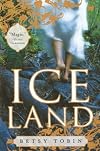
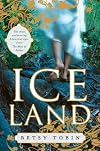
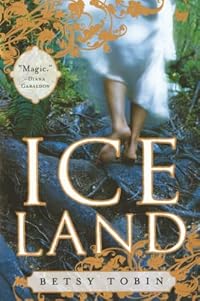
Oh. My. I fell in love with the cover a year or so ago, and when I found out it was about Norse myth, knew I simply had to read it. When I finally got my hands on it, it was definitely worth the wait.
I knew the story dealt with Freya (Norse goddess of love), and somehow the country of Iceland. What I didn't realize was that there were two separate storylines that were going to be presented -- stories that were overlapped and interwoven with an intricacy I did not expect. I was quickly immersed in the story - excuse me, stories - I was reading, and then when everything came together I was surprised. But also delighted.
I'm not sure exactly what I was expecting - probably a novel just about the Aesir and Asgard. Instead I got a beautifully show more descriptive novel that examined the humanity of the gods, and their undeniable connections to the 'earthlings' (humans, dwarves, giants, animals ...). It's a novel about life, and chances, and most of all: Love. show less
I knew the story dealt with Freya (Norse goddess of love), and somehow the country of Iceland. What I didn't realize was that there were two separate storylines that were going to be presented -- stories that were overlapped and interwoven with an intricacy I did not expect. I was quickly immersed in the story - excuse me, stories - I was reading, and then when everything came together I was surprised. But also delighted.
I'm not sure exactly what I was expecting - probably a novel just about the Aesir and Asgard. Instead I got a beautifully show more descriptive novel that examined the humanity of the gods, and their undeniable connections to the 'earthlings' (humans, dwarves, giants, animals ...). It's a novel about life, and chances, and most of all: Love. show less
I read Betsy Tobin's Bone House earlier this year and really didn't care for it. Luckily for me I decided to give her another chance - Ice Land was fantastic! Tobin's writing is clear with beautiful phrasing. The story alternates seamlessly between Freya (the Norse goddess of love,) and Fulla, a young woman struggling to find her place in a frightening and ever-changing world.
I loved the historical tidbits - especially the information about King Olaf of Norway - and the sprinkling of Norse mythology throughout was delicious! This is just the kind of book that makes me want to go back to the library and check out everything they have on the mythology and history of Iceland.
Ice Land is a superior piece of historical fiction, well-crafted show more and beautiful. There is something for everyone here: adventure, history, romance, mythology and ideology - all entwined in one novel. Definitely a winner! show less
I loved the historical tidbits - especially the information about King Olaf of Norway - and the sprinkling of Norse mythology throughout was delicious! This is just the kind of book that makes me want to go back to the library and check out everything they have on the mythology and history of Iceland.
Ice Land is a superior piece of historical fiction, well-crafted show more and beautiful. There is something for everyone here: adventure, history, romance, mythology and ideology - all entwined in one novel. Definitely a winner! show less
Summary: Ice Land involves two intertwining stories set amidst the turbulent backdrop of Iceland in the eleventh century. Fulla is a young woman who has been raised by her grandfather since her father was killed in a border dispute. Her grandfather is anxious for her to marry someone wealthy and respectable, but her heart is set on someone else... a young man that her family will never accept. Freya is a young goddess, who has been warned by the Norns that catastrophe is coming. They send her to find the Brisingamen, a dwarf-made necklace with the power to influence destiny. But the dwarf brothers who made the necklace are not willing to part with it easily, both Freya and Fulla will find themselves caught up in a quest that is tied to show more the necklace, to their fates, to the gods, and to the deep forces stirring in the land itself.
Review: Ice Land bills itself as a story of myth and saga, a story of love and jealousy and magic and passion and destiny. All of these things are true. It also bills itself as being in the tradition of The Mists of Avalon, and while I can see where they're drawing the comparison, Ice Land doesn't quite measure up.
The problem for me was that while Tobin is very good at evoking a mythological atmosphere, giving her work a feeling of being contained within an Icelandic saga, and drawing on the power of her setting to create a real sense of turmoil in the world and in her character's lives, the story itself just didn't go particularly deep. The story was compelling, no doubt, but it didn't deal with many of the themes it set up in any particular detail, and that ultimately made it somewhat unsatisfying.
For example, much is made in the early parts of the book of the tensions between pagans and Christians. This should have been an area with a lot of fertile ground to explore, especially given that the rest of the book dealt with the ending of the time of the Norse gods. However, Christianity is barely mentioned after about the halfway point of the novel, and the two themes, despite their obvious connection, aren't really tied together as well as they should have been.
Similarly, it took a very long time for me to realize that Fulla's and Freya's stories were actually interconnected, rather than running in parallel. While both stories are interesting, they're very disparate for much of the book, making the shifting focus distracting, and when they finally directly intersect, it's too late to make the book fully cohesive.
All of this is sounding more negative than I mean it to; while the book did have some structural problems, I enjoyed reading it very much. Tobin's language is lofty and lovely, and the individual elements to each story are well written and very compelling reading. Mostly, I think my main issue with this book is that, in all its sweeping scope and mythic background, it sets itself up for bigger and more grander things than it actually achieves. 3.5 out of 5 stars.
Recommendation: I think historical fiction fans as well as people interested in Norse mythology will enjoy this book, as long as they go in expecting a good story rather than a Grand Epic Saga. show less
Review: Ice Land bills itself as a story of myth and saga, a story of love and jealousy and magic and passion and destiny. All of these things are true. It also bills itself as being in the tradition of The Mists of Avalon, and while I can see where they're drawing the comparison, Ice Land doesn't quite measure up.
The problem for me was that while Tobin is very good at evoking a mythological atmosphere, giving her work a feeling of being contained within an Icelandic saga, and drawing on the power of her setting to create a real sense of turmoil in the world and in her character's lives, the story itself just didn't go particularly deep. The story was compelling, no doubt, but it didn't deal with many of the themes it set up in any particular detail, and that ultimately made it somewhat unsatisfying.
For example, much is made in the early parts of the book of the tensions between pagans and Christians. This should have been an area with a lot of fertile ground to explore, especially given that the rest of the book dealt with the ending of the time of the Norse gods. However, Christianity is barely mentioned after about the halfway point of the novel, and the two themes, despite their obvious connection, aren't really tied together as well as they should have been.
Similarly, it took a very long time for me to realize that Fulla's and Freya's stories were actually interconnected, rather than running in parallel. While both stories are interesting, they're very disparate for much of the book, making the shifting focus distracting, and when they finally directly intersect, it's too late to make the book fully cohesive.
All of this is sounding more negative than I mean it to; while the book did have some structural problems, I enjoyed reading it very much. Tobin's language is lofty and lovely, and the individual elements to each story are well written and very compelling reading. Mostly, I think my main issue with this book is that, in all its sweeping scope and mythic background, it sets itself up for bigger and more grander things than it actually achieves. 3.5 out of 5 stars.
Recommendation: I think historical fiction fans as well as people interested in Norse mythology will enjoy this book, as long as they go in expecting a good story rather than a Grand Epic Saga. show less
Though I didn't totally fall in love with the story, I fell even more in love with Iceland through this book.
Set around AD 1000, there are a few narratives weaved together to form this book. First, we meet Freya, the Norse goddess of love. In Tobin's vision, Asgard is located behind a mountain in an unreachable part of Iceland. Freya learns from an old seer that it is her destiny to find a powerful and precious necklace, the Brisingamen, crafted by the dwarves that live in the extended reaches of the volcano Hekla. Then we join Fulla, an orphaned girl living with her grandfather. She is soon coming to the age of marriage just as her grandfather is considering the end of his way of life as Christianity spreads on the island. The final show more main character that we follow is Dvalin, son of the Dwarf King and a swan goddess. He is one of the four makers of the Brisingamen and he was also the best friend of Fulla's father.
The narrative switches chapter by chapter between these three characters and intersects where their journeys cross paths. This is one of the shortcomings of this book. The narrative switches too frequently at first to let the reader engage with any of the characters. It is like a soap opera with one short scene at a time. Yet once the stories are better established, the movement is not as noticeable. I've read some complaints about the terseness of the writing but I think it's meant to have the same cadence as the old stories, the Icelandic Myths and Norse mythologies. It definitely reads more like an oral history written down. Again, it takes a bit of getting used to but then it fades away into the background.
I think the main strength of the book is the author's love for Iceland. It comes through in every description of the land and the people. I have seen many photos and videos of the country and I feel that Tobin really succeeded in confirming my mental picture of the landscape. If you enjoy mythology and a bit of fantasy, this could be a good fit.
http://webereading.com/2009/08/new-release-ice-land.html show less
Set around AD 1000, there are a few narratives weaved together to form this book. First, we meet Freya, the Norse goddess of love. In Tobin's vision, Asgard is located behind a mountain in an unreachable part of Iceland. Freya learns from an old seer that it is her destiny to find a powerful and precious necklace, the Brisingamen, crafted by the dwarves that live in the extended reaches of the volcano Hekla. Then we join Fulla, an orphaned girl living with her grandfather. She is soon coming to the age of marriage just as her grandfather is considering the end of his way of life as Christianity spreads on the island. The final show more main character that we follow is Dvalin, son of the Dwarf King and a swan goddess. He is one of the four makers of the Brisingamen and he was also the best friend of Fulla's father.
The narrative switches chapter by chapter between these three characters and intersects where their journeys cross paths. This is one of the shortcomings of this book. The narrative switches too frequently at first to let the reader engage with any of the characters. It is like a soap opera with one short scene at a time. Yet once the stories are better established, the movement is not as noticeable. I've read some complaints about the terseness of the writing but I think it's meant to have the same cadence as the old stories, the Icelandic Myths and Norse mythologies. It definitely reads more like an oral history written down. Again, it takes a bit of getting used to but then it fades away into the background.
I think the main strength of the book is the author's love for Iceland. It comes through in every description of the land and the people. I have seen many photos and videos of the country and I feel that Tobin really succeeded in confirming my mental picture of the landscape. If you enjoy mythology and a bit of fantasy, this could be a good fit.
http://webereading.com/2009/08/new-release-ice-land.html show less
Definitely not what I was expecting. With ICE LAND by Betsy Tobin I expected a fantastically magical and lighthearted adventure. ICE LAND was certainly full of magic and there were many lighthearted moments, but I think that the story was a little more epic than I had originally expected. That was a wonderful surprise and I quickly found myself engrossed in the story. If you are looking for a great fantasy, something that pushes the bounds of adventure and romance, I would highly suggest taking a look at ICE LAND.ICE LAND brings to life the old tales of Norse mythology. With the help of her falcon cloak, Freya can soar above the clouds and become one with the sky. Her domain is love and she often watches those praying to her to solve show more their problems of the heart. When she gets word that a darkness is about to fall over mankind, Freya travels to uncover a gold necklace that might be the only hope to keep the darkness at bay.Alternating between the chapters, we continue to learn the story of Fulla and Vili who display a typical Romeo and Juliet story and Dvalin who, as a half-dwarf cannot seem to find his place in the world. The love story between Fulla and Vili is wonderful and full of drama. Vili father’s killed Fulla’s father, and even though he was banished, its’ secret that Fulla’s grandfather wants her to have nothing to do with the youth. Despite the wishes of their families, the pair fall in love and find the answer to themselves in each other. ICE LAND was beautiful in the way that Tobin developed the romance between Fulla and Vili. This pair could have commanded the story all on their own and I would have been pleased. Adding in Freya and Dvalin was icing on the cake although I believe that most of the story was supposed to revolve around Freya. Tobin has a wonderful way of creating strong female characters and this is part of what appealed to me in ICE LAND. I don’t mind an authentically meek character, but if an author wants to make an independent female in a time when females weren’t typically so independent, I need it to be believable. Tobin did this quite well; she allowed modern women to fall in love with Freya and Fulla while keeping that authentic feel to the story.Tobin doesn’t just put the Norse gods and goddesses into the ICE LAND; instead, she makes them a part of the story. They play an integral role in the plot of ICE LAND as we learn more about their history, their wants and desires and even their dreams. I found this to be a nice addition to the story as it incorporated a more realistic set of characters (Fulla and Vili) with more fanciful characters (Freya) while still making the story feel believable. Tobin incorporated the elements of magic and reality so well that the story flowed along nicely and made it easy for the reader to suspend his or her disbelief.Huge kudos to Tobin for great character development and a captivating plot. To top it all off, her writing was easy to read and translated wonderfully from the page to my imagination. One aspect that really helped this was Tobin’s ability to describe the landscape. Her imagery was just gorgeous and there were times when I almost felt sad that I couldn’t experience the lands that she was describing. With Tobin’s writing, the characters came to life and brought with them the gorgeous lands that Tobin creates for us. ICE LAND has to receive top marks here. While there were times that the alternating chapters made it a little difficult to follow along in the story, if you paid attention and gave in to the urge to flip back a page and reread what had just happened, the story went along nicely. I certainly didn’t let this detract from this story and am glad that I was able to experience the journey with this great set of characters. If you like Romance, I think you are absolutely going to love ICE LAND. The romantic elements are superb and passionate without really earning a high sensuality rating. I think I would give this a sensuality rating of 3, which it will share with Wicked Lovely by Melissa Marr. In addition, the action and drama in the book are wonderfully sculpted. If you’re a fan of Fantasy in any form, I think you’ll find something to love in ICE LAND. show less
Members
- Recently Added By
Lists

Historical Fantasy
93 works; 14 members

Recommended Viking historical fiction
135 works; 8 members
Author Information

6 Works 559 Members
Betsy Tobin was born in Columbus, Ohio, and moved to England in 1989. A journalist and playwright, she lives in London with her husband and four children.
Common Knowledge
- Canonical title
- Ice Land
- Original publication date
- 2008-01 (UK) (UK); 2009-08-25 (USA) (USA)
- People/Characters
- Freya; Fulla; Vili; Dvalin; Hogni; Skallagrim (show all 18); Thorstein; Grerr; Alfrigg; Berling; Menglad; Idun; Bragi; Freyr; Skuld; Odin; Od; Sky
- Important places
- Laxardal; Asgard; Nidavellir; Jotenheim; Hekla; Iceland
- Epigraph
- For this is an island and therefore Unreal.
--W. H. Auden & Louis MacNeice
Letters from Iceland
And there where the glacier touches the sky,
the land ceases to be earthly.
--Halldor Laxness
Under the Gla... (show all)cier - Dedication
- For Bruce, with love
- First words
- When I was sixteen, I was given a cloak made entirely of feathers.
- Blurbers
- Willig, Lauren; Koen, Karleen; Britain, Kristen; Livesey, Margot; Chevalier, Tracy; Gabaldon, Diana
Classifications
- Genres
- Fiction and Literature, General Fiction, Fantasy, Historical Fiction, Romance
- DDC/MDS
- 813.54 — Literature & rhetoric American literature in English American fiction in English 1900-1999 1945-1999
- LCC
- PS3570 .O287 .I24 — Language and Literature American literature American literature Individual authors 1961-
- BISAC
Statistics
- Members
- 289
- Popularity
- 110,942
- Reviews
- 17
- Rating
- (3.49)
- Languages
- English, French, Korean
- Media
- Paper, Audiobook, Ebook
- ISBNs
- 10
- ASINs
- 4