Imre: A Memorandum
by Edward Prime-Stevenson
On This Page
Description
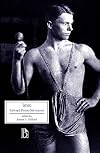
Winner of the 2003 Silver Medal for Gay/Lesbian Fiction, ForeWord Magazine Imre is one of the first openly gay American novels without a tragic ending. Described by the author as "a little psychological romance," the narrative follows two men who meet by chance in a café; in Budapest, where they forge a friendship that leads to a series of mutual revelations and gradual disclosures. With its sympathetic characterizations of homosexual men, Imre's 1906 publication marked a turning point in show more English literature. This edition includes material relating to the novels origins, contemporary writings on homosexuality, other writings by Prime-Stevenson, and a contemporary review. show lessTags
Recommendations






















Member Reviews
A gay novella from 1906 mostly remarkable for having a happy ending. The frequent monologuing is heavy going, but the story is pretty good. Some of the views the characters express are likely to provoke a bit of eye rolling from modern audiences, but it's not so bad when you remember those views are a response to the contemporary social and medical attitudes toward homosexuality.
 This review was written for LibraryThing Early Reviewers.
I find this a rather challenging text to review. I greatly appreciate the overarching theme and tone, but most readers will be put off by the stilted if erudite language. This short book felt, in my mind at least, as a mix between an early Gordon Merrick novel with an ending evocative of Maurice [written just a few years later].This is a story full of lengthy ruminations about unrequited longing, fears of discovery, and the long road to self-acceptance.
The characters don't dialogue so much as monologue, which gives a plodding feel to the modern reader. That said, the delayed gratification seemed to make it all the more worthwhile, so I'm ultimately ambivalent whether this is a work of fiction or philosophy. Given that the author's show more other significant work is much the latter, perhaps it is best approached as a kind of Socratic dialogue rather than a gripping narrative.
A moving disquisition on friendship, the work is nonetheless definitely dated. While an early positive defense and characterization of male desire, the characters speak at length about the fact that they are real men in all ways except this one, and disparagingly of anyone who displays womanish or effeminate qualities. This is a tale defending the "butch" homosexuals, rather than every other one.
The edition had several minor editorial errors, but not enough to be distracting. show less
The characters don't dialogue so much as monologue, which gives a plodding feel to the modern reader. That said, the delayed gratification seemed to make it all the more worthwhile, so I'm ultimately ambivalent whether this is a work of fiction or philosophy. Given that the author's show more other significant work is much the latter, perhaps it is best approached as a kind of Socratic dialogue rather than a gripping narrative.
A moving disquisition on friendship, the work is nonetheless definitely dated. While an early positive defense and characterization of male desire, the characters speak at length about the fact that they are real men in all ways except this one, and disparagingly of anyone who displays womanish or effeminate qualities. This is a tale defending the "butch" homosexuals, rather than every other one.
The edition had several minor editorial errors, but not enough to be distracting. show less
This review was written for LibraryThing Early Reviewers.Presented as something of a memoir written at the request of, and addressed to, Xavier Mayne (the pseudonym under which this work was originally published), this short work paints an elaborately detailed picture of the rapidly developing relationship between two men. Oswald, the nominal author,and an older British aristocrat living casually in Szent-Istvánhely, meets young Imre, a Magyar soldier in the Hungarian Army, in a café, and strikes up a conversation. We are them pr.esented with details about their conversions annotated in great detail by Oswald’s alternating analysis and rhapsody about the wonder of Imre.
For a work published in 1906, the book is remarkably frank about (and ultimately proud of) homosexuality. Of course, in show more keeping with the rejection of “the Uranian Race” by society, the pair keep up “the Mask” hiding their true selves. This “Mask” is Prime-Stevenson’s metaphor throughout the book, with the chapter titles reinforcing the continual dropping of boundaries as their friendship progresses.hiding Eventually Oswald can’t keep his feelings from Imre any longe and in a long, excitingly written coming-out speech, he tells Imre his story of subverted love, pain, and psychiatric treatment that led to his ultimate acceptance of and comfort with his “condition”, even if society doesn’t agree.
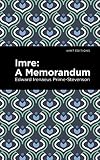
This edition is a print-on-demand republication of what is now a public domain work. The print quality is good, and the cover design is strong (a simple pattern with a bold title, characteristic of all this publishers works). This model is excellent for resurrecting forgotten and low-demand works that are still relevant. However, the typesetting seems denser than necessary; larger margins would make reading easier. Having title on the spine would be nice as well. The bigger issue is the large number of typos in the text - mostly “of”s turned to “or”s, “life”s to “like”s, and similar likely OCR errors. A proofreading pass by the publisher would be well recommended. show less
For a work published in 1906, the book is remarkably frank about (and ultimately proud of) homosexuality. Of course, in show more keeping with the rejection of “the Uranian Race” by society, the pair keep up “the Mask” hiding their true selves. This “Mask” is Prime-Stevenson’s metaphor throughout the book, with the chapter titles reinforcing the continual dropping of boundaries as their friendship progresses.hiding Eventually Oswald can’t keep his feelings from Imre any longe and in a long, excitingly written coming-out speech, he tells Imre his story of subverted love, pain, and psychiatric treatment that led to his ultimate acceptance of and comfort with his “condition”, even if society doesn’t agree.
This edition is a print-on-demand republication of what is now a public domain work. The print quality is good, and the cover design is strong (a simple pattern with a bold title, characteristic of all this publishers works). This model is excellent for resurrecting forgotten and low-demand works that are still relevant. However, the typesetting seems denser than necessary; larger margins would make reading easier. Having title on the spine would be nice as well. The bigger issue is the large number of typos in the text - mostly “of”s turned to “or”s, “life”s to “like”s, and similar likely OCR errors. A proofreading pass by the publisher would be well recommended. show less
This review was written for LibraryThing Early Reviewers.Fascinating book ... almost unbelievable that it was written in 1906 ... over 115 years ago, but what is most astonishing is how well read the author was ... That may not be entirely evident from this book, but his THE INTERSEXES,, published two years later, in 1908 .. clearly demonstrates the truth of the matter. A reference on page 82 to Imre consulting "The great Viennese psychiater" ... can the man be anyone but Freud? It seems fairly apparent that Prime-Stevenson based much of the two characters in the book on his own life and struggles.
And now we learn that this wasn't Prime-Stevenson's first novel .. that honour goes to a book published in 1891 New York ... entitled: "LEFT TO THEMSELVES: being the ordeal of Philip and Gerald".
And now we learn that this wasn't Prime-Stevenson's first novel .. that honour goes to a book published in 1891 New York ... entitled: "LEFT TO THEMSELVES: being the ordeal of Philip and Gerald".
This review was written for LibraryThing Early Reviewers.The subtitle is key: this book is a fictionalized "memorandum," not really a novel, though it does possess qualities of a Jamesian novel.
Ratings
Members
- Recently Added By
Lists

Pre-1969 LGBTQ Literature
182 works; 69 members
Author Information
15+ Works 140 Members
Series
Belongs to Publisher Series
Work Relationships
Has the adaptation
Common Knowledge
- Canonical title
- Imre: A Memorandum
- Original title
- Imre: A Memorandum
- Alternate titles
- Imre
- Original publication date
- 1906
- People/Characters
- Oswald [Imre]; Imre von N.
- Important places
- Budapest, Hungary; Austria-Hungary
- Epigraph
- "There is a war, a chaos of the mind,
When all its elements convulsed, combined,
Like dark and jarring..."
["The Corsair" by Lord Byron]
"The whole heart exhaled into One Want,
I found the thing I sought, and that was - thee."
["The Lament of Tasso' by Lord Byron]
"The Friendship which is Love - the Love which is Friendship"
[Derived from Marc-Andre Raffalovich's "The World Well Lost" Sonnet XVII. & "A Willing Exile: A Novel" Vol. II] - First words
- It was about four o'clock that summer afternoon, that I sauntered across a street in the cheerful Hungarian city of Szent-Istvánhely, and turned aimlessly into the café-garden of the Erzsébet-tér, where the usual vehement... (show all) military-band concert was in progress.
- Quotations
- Life isn't at all a plaything for a good lot of us, more's the pity! We've got to suffer and be strong; or else learn not to suffer.
Could one really believe in God as making man to live at all, and to love at all, and yet at the same time believe that this love is not created, too, by God? is not of God's own divinest Nature, rightfully, eternally—in mi... (show all)llions of hearts?
I must be taken as I am, pardoned for what I am; or neither pardoned nor taken.
I respect thee wholly—I respect myself—certain, too, of that coming time, however far away now, when no man shall ever meet any intelligent civilization's disrespect simply because he is similisexual, Uranian! But—oh, I... (show all)mre, Imre!—I love thee, as can love only the Uranian.... once more helpless, and therewith hopeless! —but this time no longer silent, before the Friendship which is Love, the Love which is Friendship. - Last words
- (Click to show. Warning: May contain spoilers.)For us two it surely is . . . Rest!
Classifications
Statistics
- Members
- 81
- Popularity
- 390,609
- Reviews
- 5
- Rating
- (3.63)
- Languages
- English, German, Spanish
- Media
- Paper, Ebook
- ISBNs
- 8
- ASINs
- 1