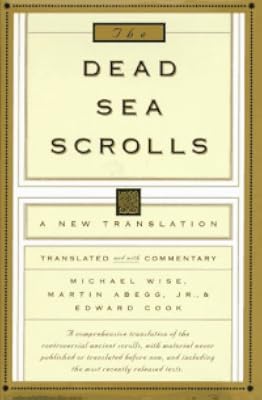
The Dead Sea Scrolls
by Michael O. Wise, Martin G. Abegg, Jr., Edward M. Cook
On This Page
Description
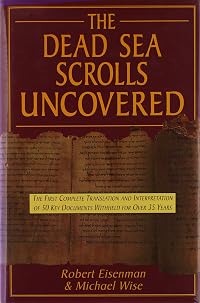
This landmark work comes from a new generation of Dead Sea Scrolls scholars. Wise, Abegg and Cook bring the long-inaccessible ancient scrolls of Qumran to life, translating and deciphering virtually every legible portion of the fragmented scrolls. This book contains: intriguing revelations about biblical history and the roots of Christianity; new stories about Abraham, Jacob, and Enoch--including a text explaining why God demanded the sacrifice of Isaac; twelve texts not included in the show more Bible that claim Moses as their author; new psalms attributed to King David and to Joshua; texts illuminating ancient doctrines about angels and writings claiming to be revelations of angels themselves -- including the Archangel Michael. The translators provide commentary throughout placing the scrolls in their true historical context, while the introduction discusses what is perhaps their greatest mystery--who authored them and why. -- show lessTags
Recommendations










Member Reviews
In 1946, the world of biblical studies was rocked by the discovery of several scrolls in caves around the Dead Sea. The Dead Sea Scrolls contained translations of portions of the books of the Hebrew scriptures, a manual of discipline for the community responsible for producing the scrolls and a scroll that narrated an apocalyptic battle between the sons of light, led by a figure called the Teacher of Righteousness, and the sons of darkness. These documents gave biblical scholars a tantalizing glimpse of the then relatively unknown period of first-century Judaism and of the theology of at least one of its sects. Very quickly, though, the ownership of the scrolls became a point of great political contention between the Israeli government show more and American scholars like Frank Moore Cross at Harvard, and, consequently, translations of the scrolls appeared very slowly, if at all. Finally, in 1991, author Martin Abegg, then a graduate student at the University of Cincinnati, published a volume of previously unreleased scrolls. Following this publication, the Huntington Library announced that it had photographs of all the unreleased scrolls and that it would allow unrestricted access to the photos. Wise, Abegg and Cook's collection is now the most complete collection of the Dead Sea Scrolls available. The authors' English translations capture the nuances of the Hebrew, and sometimes the Greek, of the scrolls, many of which are merely fragments. Also contained here is a thorough introduction to the history of the discovery of the scrolls and a theory about the community that produced the scrolls: the authors convincingly argue that the Essenes, to whom the scrolls are traditionally attributed, were likely not the community responsible for writing the scrolls. For all interested in learning from primary texts about the development of first-century Judaism, this is an essential volume
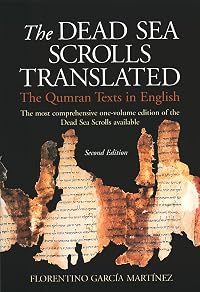
Wise and his team of scholars and writers occupy what might be called the minority position in scrolls scholarship: The Qumran group cannot be identified simply as "Essenes," the site itself was not a headquarters, and few if any of the scrolls were written at Qumran. The position of Wise et al., in contrast with the "Standard Model" (as they call it), is set forth in a brief introduction along with the usual information about the discovery and publication of the scrolls. One of the most helpful things these translators do for nonspecialist readers is to explain the process of manuscript reconstruction and the use of brackets and parentheses to indicate missing portions of text and the like. The translations themselves are generally more idiomatic and less stiff than those in Florentino G. Martinez's The Dead Sea Scrolls Translated (Eerdmans, 1996. 2d ed.). As the fruit of an alternative approach to the origins and significance of the scrolls, and as a smooth translation, this work should be in collections where there is scholarly and popular interest. show less
Wise and his team of scholars and writers occupy what might be called the minority position in scrolls scholarship: The Qumran group cannot be identified simply as "Essenes," the site itself was not a headquarters, and few if any of the scrolls were written at Qumran. The position of Wise et al., in contrast with the "Standard Model" (as they call it), is set forth in a brief introduction along with the usual information about the discovery and publication of the scrolls. One of the most helpful things these translators do for nonspecialist readers is to explain the process of manuscript reconstruction and the use of brackets and parentheses to indicate missing portions of text and the like. The translations themselves are generally more idiomatic and less stiff than those in Florentino G. Martinez's The Dead Sea Scrolls Translated (Eerdmans, 1996. 2d ed.). As the fruit of an alternative approach to the origins and significance of the scrolls, and as a smooth translation, this work should be in collections where there is scholarly and popular interest. show less
I've become somewhat of an expert - as to a reader, that is - on the Dead Sea Scrolls. This summary is not as captivating as that by Millar Burrows - one of the first archaeologists involved with the Bedouin, Kando and Shaia when scraps of velum were offered for sale to the world in 1946/47. The reader is introduced to the Essenes one of three branches of Judaism in the first century - along with the Pharisees and Sadducees. See similarities to the early Christians. You'll wonder if John the Baptist had been an Essene.
Divided into chapters as subjects.
topics listed and briefly explained within those chapters.
the scrolls are printed as they were deciphered including the blank spaces. This is an awesome accomplishment.
topics listed and briefly explained within those chapters.
the scrolls are printed as they were deciphered including the blank spaces. This is an awesome accomplishment.
Fragments of 56 texts translated into English. Many non-biblical or extra-biblical. Included are commentaries of portions of Habakkuk, Isaiah, Hosea, Nahum, Psalms, and Genesis. Several reworkings including parts of Genesis, Exodus, Samuel, and Daniel.
NO OF PAGES: 513 SUB CAT I: Dead Sea Scrolls SUB CAT II: SUB CAT III: DESCRIPTION: From a new generation of Dead Sea Scrolls scholars comes this landmark work. Michael Wise, Martin Abegg Jr., and Edward Cook bring the long-accessible ancient scrolls of Qumran vividly to life, translating and deciphering virtually every legible portion of the fragmented scrolls, with startling results. For the first time since their discovery, this historic volume: Intriguing revelations about biblical history and the roots of Christianity, Never-before-seen stories about Abraham, Jacob, and Enoch-including a text explaining why God demanded the sacrifice of Isaac, Twelve texts not included in the Bible that claim Moses as their author, New psalms show more attributed to King David and to Joshua, Texts illuminating ancient doctrines about angels and writings claiming to be revelations of angels themselves-including the Archangel Michael. The translators provide pointed commentary throughout that places the scrolls in their true historical context. Their compelling, insightful introduction not only presents an overview of the often surprising contents o f the scrolls, it discusses what are perhaps their greatest mysteries-who authored them and why.NOTES: Purchased at the Dead Sea Scrolls Seminar April 30, 2001 SUBTITLE: A New Translation show less
A fully revised and updated edition of the complete Dead Sea Scrolls, making it the definitive translation of the Scrolls in English. (With new texts, updated introductions, a glossary of terms, and other new additions.)
9.78006E 12
Members
- Recently Added By
Author Information

7+ Works 2,759 Members
3+ Works 1,690 Members
5+ Works 1,722 Members
Common Knowledge
- Canonical title
- The Dead Sea Scrolls
- Original publication date
- 1996 (original edition) (original edition); 2005 (revised edition) (revised edition)
- People/Characters
- Alcimus, High Priest of Judea (162 to 159 BC/BCE); Alexandra, Queen Salome, of Israel (76-67); Amram; Antiochus IV Epiphanes (175-164 BC/BCE); Antiochus VII Sidetes (or Antiochus VII Euergetes, or Antiochus the Pius, 164/160 BC/BCE | to 129 BC/BCE); Archelaus (show all 31); Aristobulus II; Bagasraw; Demetrius I, Seleucid Emperor; Demetrius III Eucerus; Eukairos, Demetrius, king of Syria (95-78); Herod Agrippa I, King of Judea (Agrippa the Great, Marcus Julius Agrippa, 11 BC/BCE? to 44?); Herod Antipas; Herod the Great; Hyrcanus I, John, Judean king; Hyrcanus II, John (63-40, King); Alexander Jannaeus, King and High Priest of Judea; Jason, Palestinian ruler (174-171); Joseph, son of Jacob and Rachel; Flavius Josephus (37-c.100); Judas Maccabeus; Melchizedek, king of Salem; Menelaus; Nabonidus, King of Babylon; Onias III, High Priest of Judea; Philip, the Apostle; Pontius Pilate; Scaurus, Aemilius, Roman general (65-63); Seleucus IV, Seleucid Emperor; Simon the Zealot; Vespasian
- Important places
- Qumran, West Bank
- Important events
- Antiochus IV desecrates the Temple (167); Jews throw off Syrian rule (165); rededication of the Temple (164); death of Judas Maccabeus (160); Samaritan temple destroyed by Hyrcanus I (113); Demetrius III Eukairos invades Palestine (88) (show all 17); civil war between Aristobulus II and Hyrcanus II (67); Aemilius Scaurus leads Pompey's armies into Judea (63); Birth of Jesus (6 | Luke 2:4-7); Paul wrote letter to Galatians (50); First Jewish-Roman War (66 | 73); Romans destroy Qumran (68); Romans destroy Herod's Temple (70); Pliny wrote Natural History (77); Romans destroy Masada (73-74); Josephus wrote Wars (78); Josephus wrote Antiquities (95)
- Dedication
- To my wife, Cathy
M.O.W.
To my wife, Sue, and our girls, Stephanie and Jennifer
M.G.A.
To Elizabeth and Tristan
E.M.C. - First words
- PREFACE
The authors of this book, on the completion of their work, are acutely conscious of being part of a larger academic enterprise and wish to acknowledge not only their debt to each other, but also to... (show all) the greater world of Dead Sea Scrolls scholarship.
INTRODUCTION
Like Shangri-la, the term "Dead Sea Scrolls" has the power to evoke images and emotions even in those who have only a vague idea of what they are. - Last words
- (Click to show. Warning: May contain spoilers.)No man is to marry his father's ex-wife, for that would violate his father's rights. No man is to marry his brother's ex-wife, for that would violate his brother's rights, even if the brother shares only the same father or only the same mother. Surely that would be unclean.
(Click to show. Warning: May contain spoilers.)No man may marry his stepsister, whether his stepfather's daughter or his stepmother's daughter, that would be abhorrent. No man may marry his aunt, whether paternal or maternal; that is immoral. No man is to marry his brother's daughter or his sister's daughter, that is abhorrent. No man may marry [...]
Classifications
Statistics
- Members
- 1,696
- Popularity
- 13,141
- Reviews
- 9
- Rating
- (3.80)
- Languages
- Chinese, English, French, German
- Media
- Paper
- ISBNs
- 12
- ASINs
- 9
