On This Page
Description
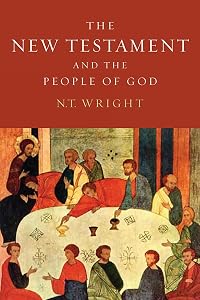
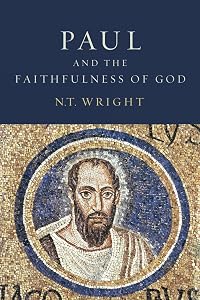
Volume 1: This first volume in the series Christian Origins and the Question of God provides a historical, theological, and literary study of first-century Judaism and Christianity. Wright offers a preliminary discussion of the meaning of the word god within those cultures, as he explores the ways in which developing an understanding of those first-century cultures are of relevance for the modern world. Volume 2: In this highly anticipated volume, N.T. Wright focuses directly on the show more historical Jesus: Who was he? What did he say? And what did he mean by it? Wright begins by showing how the questions posed by Albert Schweitzer a century ago remain central today. Then he sketches a profile of Jesus in terms of his prophetic praxis, his subversive stories, the symbols by which he reordered his world, and the answers he gave to the key questions that any world view must address. The examination of Jesus' aims and beliefs, argued on the basis of Jesus' actions and their accompanying riddles, is sure to stimulate heated response. Wright offers a provocative portrait of Jesus as Israel's Messiah who would share and bear the fate of the nation and would embody the long-promised return of Israel's God to Zion. Volume 3: Why did Christianity begin, and why did it take the shape it did? To answer this question, which any historian must face, renowned New Testament scholar N.T. Wright focuses on the key question: what precisely happened at Easter? What did the early Christians mean when they said that Jesus of Nazareth had been raised from the dead? What can be said today about this belief? This book ... sketches a map of ancient beliefs about life after death, in both the Greco-Roman and Jewish worlds. It then highlights the fact that the early Christians' belief about the afterlife belonged firmly on the Jewish spectrum, while introducing several new mutations and sharper definitions. This, together with other features of early Christianity, forces the historian to read the Easter narratives in the gospels, not simply as late rationalizations of early Christian spirituality, but as accounts of two actual events: the empty tomb of Jesus and his 'appearances.' How do we explain these phenomena? The early Christians' answer was that Jesus had indeed been bodily raised from the dead; that was why they hailed him as the messianic 'son of God.' No modern historian has come up with a more convincing explanation. Facing this question, we are confronted to this day with the most central issues of worldview and theology. Volume 4: This highly anticipated two-book ... volume in N.T. Wright's magisterial series ... is destined to become the standard reference point on the subject for all serious students of the Bible and theology. The mature summation of a lifetime's study, this landmark book pays a rich tribute to the breadth and depth of the apostle's vision, and offers an unparalleled wealth of detailed insights into his life, times, and enduring impact. Wright carefully explores the whole context of Paul's thought and activity Jewish, Greek and Roman, cultural, philosophical, religious, and imperial and shows how the apostle's worldview and theology enabled him to engage with the many-sided complexities of first-century life that his churches were facing. Wright also provides close and illuminating readings of the letters and other primary sources, along with critical insights into the major twists and turns of exegetical and theological debate in the vast secondary literature. The result is a rounded and profoundly compelling account of the man who became the world's first, and greatest, Christian theologian."--Publisher descriptions. show lessTags
Recommendations



Member Reviews
A very clearly written, well-argued, but sometimes repetitive book. The first methodological section is embarrassing for anyone who has read literary criticism or philosophy of the last forty years--as ever, the other humanistic disciplines take a while to catch up (viz, classics). But Wright's approach is fair. You might even call it common-sensical, except that it's couched in such high-flown concepts: to understand what people meant by their texts, you should try to find out how they saw the world. Very good. Not sure why we need Greimas for that.
His criticisms of other theologians or hermeneuts are good (basically, they all have an agenda, and so does Wright, but his is usually less obtrusive than theirs). His questions are good show more (e.g., what exactly did these people mean by 'God', anyway?). His answers are interesting ("works" are signs of Jewish identity, not good deeds; the 'kingdom of God' was always an allegorical claim about the end of the present world order, never a factual claim about the end of the world itself; Christians believed, from the start, that Jesus was the Messiah).
I just hope the volumes on Jesus and Paul are less repetitive. show less
His criticisms of other theologians or hermeneuts are good (basically, they all have an agenda, and so does Wright, but his is usually less obtrusive than theirs). His questions are good show more (e.g., what exactly did these people mean by 'God', anyway?). His answers are interesting ("works" are signs of Jewish identity, not good deeds; the 'kingdom of God' was always an allegorical claim about the end of the present world order, never a factual claim about the end of the world itself; Christians believed, from the start, that Jesus was the Messiah).
I just hope the volumes on Jesus and Paul are less repetitive. show less
Wright has been justifiably criticised for his understanding of justification by faith, particularly in Paul. But Wright is a far better historian than he is a theologian, and his insistence (against a great deal of non-evangelical biblical study) that the New Testament is to be taken seriously from a historical perspective is much-needed in the academy. Rather like Karl Barth, Wright unnecessarily challenges vital evangelical doctrines, whilst at the same time driving a nail into the coffin of overly critical or liberal scholarship. And unlike Barth, Wright does so with a vibrant writing-style that belies the academic nature of his arguments. I can’t recommend Wright unequivocally, but for those who understand his weaknesses and read show more him critically, this is a wonderfully stimulating read. show less
The beginning of Wright's Christian Origins and the Question of God series, laying the foundation of all that will come to pass.
In this first volume Wright attempts to clear the air and set forth both the fundamental basis upon which further investigation can proceed and to provide a coherent historical background for the study of Jesus and early Christianity. He explores in great detail the types of criticism to which the New Testament is subjected, the philosophies of history to which the NT has been subjected, and makes the case for critical historical realism. He points out the strengths of various approaches as well as their limitations. He attempts to make sense of Jesus and early Christianity in terms of Second Temple Judaism, show more and does well at exploring the life, beliefs, and praxis of Jewish people in the first century.
In so many ways Wright's work is important to obtain a strong grounding in the historical realities surrounding the New Testament. An extremely impressive work. show less
In this first volume Wright attempts to clear the air and set forth both the fundamental basis upon which further investigation can proceed and to provide a coherent historical background for the study of Jesus and early Christianity. He explores in great detail the types of criticism to which the New Testament is subjected, the philosophies of history to which the NT has been subjected, and makes the case for critical historical realism. He points out the strengths of various approaches as well as their limitations. He attempts to make sense of Jesus and early Christianity in terms of Second Temple Judaism, show more and does well at exploring the life, beliefs, and praxis of Jewish people in the first century.
In so many ways Wright's work is important to obtain a strong grounding in the historical realities surrounding the New Testament. An extremely impressive work. show less
A review and critique of previous critical work on the New Testament, with special emphasis upon the NT in it's first century Judaic context. He focuses upon the "worldviews" of Judaism and Christianity, with a refreshing interaction with hard data. Christianity's "story" is an answer/fulfillment/subversion of the "story" of Judaism.
Finally! A critical approach to the NT with something constructive to say!
Finally! A critical approach to the NT with something constructive to say!
This is the first Volume of Wright's multi-volume set. He tacks a new course, taking into account literary criticism, historical background, and the text itself, all laces with heavy doses of scholastic credibility and common sense. Unlike a lot of NT scholarship, where the writer spends a lot of time telling you that the text does not say what you think it its, Wright tells us that the text say MORE than what we think it says. He is an excellent writer (rare for this field), and a creative thinker (also rare for this field).
I think this book might be of more limited interest than the other books I’ve read so far this year. I won’t be offended by people skipping my rather wordy review!
Background:
N. T. Wright is a New Testament scholar and currently the Bishop of Durham in the UK. The New Testament and the People of God is the first book in Wright’s multi-volume work, Christian Origins and the Question of God. The purpose of this series is to answer two questions:
1) How did Christianity begin, and why did it take the shape it did?
2) What does Christianity believe and does it make sense?
This volume serves as an introduction to the series, an exploration of the methodology Wright will use and a brief study of the historical context of the first century show more AD. Volume 2, Jesus and the Victory of God focuses on Jesus, Volume 3, The Resurrection of the Son of God focuses on the resurrection and later volumes are planned to look at Paul, the gospels and then a final volume for a conclusion.
Review:
I actually read the second volume in this series first and I’m now trying to read through the series in order. Because this volume was more of an introduction and methodology I thought I would struggle more to read and understand it but I think Wright is very good at giving enough background to the subjects he’s discussing to allow a novice to understand it and I found the book much more readable than I feared. It is a read that requires some concentration though and I did have to switch to lighter books when it all got a bit much for my poor brain!
On the methodology side Wright looks at the problems of how we read a text, how we ‘do’ history and whether history and theology can be separated. The he moves on to a study of Judaism in the first century and finally to a brief study of the early Christian church up to AD 150. All this is laying the groundwork for his later in-depth studies of Jesus, Paul and the gospels. I would love to be able to summarise his arguments here but I would need to read the book several more times before I could do that.
Rating:
I find it very difficult to rate non-fiction books. I simply do not know enough about this subject to know whether Wright is drawing the correct conclusions on his subject. However, the fact that he has been able to write a work aimed at scholars which is also accessible to a non-theology graduate lay person is, I think, wonderful. Although I probably didn’t understand everything in this book I enjoyed reading it immensely and feel so much more aware of how much more there is to know and understand on this subject and keen to read more. Because of this, I’ve given the book five stars. show less
Background:
N. T. Wright is a New Testament scholar and currently the Bishop of Durham in the UK. The New Testament and the People of God is the first book in Wright’s multi-volume work, Christian Origins and the Question of God. The purpose of this series is to answer two questions:
1) How did Christianity begin, and why did it take the shape it did?
2) What does Christianity believe and does it make sense?
This volume serves as an introduction to the series, an exploration of the methodology Wright will use and a brief study of the historical context of the first century show more AD. Volume 2, Jesus and the Victory of God focuses on Jesus, Volume 3, The Resurrection of the Son of God focuses on the resurrection and later volumes are planned to look at Paul, the gospels and then a final volume for a conclusion.
Review:
I actually read the second volume in this series first and I’m now trying to read through the series in order. Because this volume was more of an introduction and methodology I thought I would struggle more to read and understand it but I think Wright is very good at giving enough background to the subjects he’s discussing to allow a novice to understand it and I found the book much more readable than I feared. It is a read that requires some concentration though and I did have to switch to lighter books when it all got a bit much for my poor brain!
On the methodology side Wright looks at the problems of how we read a text, how we ‘do’ history and whether history and theology can be separated. The he moves on to a study of Judaism in the first century and finally to a brief study of the early Christian church up to AD 150. All this is laying the groundwork for his later in-depth studies of Jesus, Paul and the gospels. I would love to be able to summarise his arguments here but I would need to read the book several more times before I could do that.
Rating:
I find it very difficult to rate non-fiction books. I simply do not know enough about this subject to know whether Wright is drawing the correct conclusions on his subject. However, the fact that he has been able to write a work aimed at scholars which is also accessible to a non-theology graduate lay person is, I think, wonderful. Although I probably didn’t understand everything in this book I enjoyed reading it immensely and feel so much more aware of how much more there is to know and understand on this subject and keen to read more. Because of this, I’ve given the book five stars. show less
This book is the first of the trilogy on Christ by N.T.Wright, Bishop of Durham. In this book he carefully and methodically paints the background for the cultural and religious milieu into which Jesus was born. At times it can be a bit dry, but it is readable and I am sure I will re-read it again. I particularly liked his dealing with Roman writings around the time of the early church, also his comments on Josephus.
Members
- Recently Added By
Talk Discussions
Past Discussions
N T Wright's Christian Origin Series in 2014 Category Challenge (December 2014)
Author Information

292+ Works 56,542 Members
N. T. Wright serves as Senior Research Fellow at Wycliffe Hall, Oxford University, as well professor emeritus of New Testament and Early Christianity at the School of Divinity at the University of St. Andrews. He is the award-winning author of many books, including Broken Signposts, Paul: A Biography, Surprised by Hope, and many more.
Series

Common Knowledge
- Canonical title
- The New Testament and the People of God
- Original publication date
- 1992
- Dedication
- For Brian Walsh
- First words
- For some years I tried to write two books side by side: one about Paul and his theology, the other about Jesus within his historical context.
- Quotations
- If we read the New Testament as it stands, it claims on every page to be speaking of things which are true in the public domain. It is not simply, like so many books, a guide for private spiritual advancement.
The christological question, as to whether the statement 'Jesus is God' is true, and if so in what sense, is often asked as if God were the known and Jesus were the unknown; This, I suggest, is manifestly mistaken. If anythin... (show all)g, the matter stands the other way around. - Last words
- (Click to show. Warning: May contain spoilers.)It revised the Jewish evidence: the claim is made good, not in national liberation, but in the events concerning Jesus.
- Blurbers
- Hays, Richard B.; Kingsbury, Jack Dean
Classifications
Statistics
- Members
- 1,955
- Popularity
- 10,898
- Reviews
- 13
- Rating
- (4.47)
- Languages
- English, German, Portuguese (Portugal)
- Media
- Paper, Ebook
- ISBNs
- 9
- ASINs
- 6