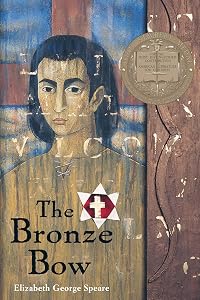
The Bronze Bow
by Elizabeth George Speare
On This Page
Description
He trains my hands for war, so that my arms can bend a bow of bronze. —from the Song of David (2 Samuel 22:35)The Bronze Bow, written by Elizabeth George Speare (author of The Witch of Blackbird Pond) won the Newbery Medal in 1962. This gripping, action-packed novel tells the story of eighteen-year-old Daniel bar Jamin—a fierce, hotheaded young man bent on revenging his father's death by forcing the Romans from his land of Israel. Daniel's palpable hatred for Romans wanes only when he show more starts to hear the gentle lessons of the traveling carpenter, Jesus of Nazareth. A fast-paced, suspenseful, vividly wrought tale of friendship, loyalty, the idea of home, community...and ultimately, as Jesus says to Daniel on page 224: "Can't you see, Daniel, it is hate that is the enemy? Not men. Hate does not die with killing. It only springs up a hundredfold. The only thing stronger than hate is love." A powerful, relevant read in turbulent times.
. show less
Tags
Recommendations






Member Reviews
Daniel has nothing but hatred for the Romans. They occupy his native land, with soldiers everywhere, and Daniel feels that they are to blame for his parents' death. Though he is only 15, Daniel considers himself a zealot, has taken a vow to avenge his parents, and has run away from his apprenticeship to a cruel blacksmith. He now makes his home in the mountain caves with a band of thieves led by Rosh, a hard but charismatic man who promises to lead the fight against the Roman oppressors. When word comes to Daniel that his grandmother is dying, he returns to the village where he grew up. He finds his grandmother at death's door, and his sister Leah, who is mentally ill and refuses to leave the house, in a pitiable state. Daniel longs to show more return to the mountain, but when his grandmother dies, he is the only person who can care for Leah. The old smith has died, and the new smith Simon, a friend of Daniel's, has left his forge to follow a new teacher named Jesus whose words are inspiring many in the area. Daniel occasionally goes to hear this Jesus but finds his teachings confusing. Daniel is determined to continue working for Rosh from his position in the village, and even recruits Joel, a friend from the nearby city of Capernaum. Daniel also gathers together a group of village boys who feel the same way he does about the Romans. But when one of Rosh's plans results in Joel being captured and Rosh does nothing to help, Daniel's faith in his leader is shaken. And when Daniel's sister is taken ill with a fever, there is only one person Daniel can turn to -- but will Jesus demand that Daniel give up the one thing he's always clung to: his hatred of the Romans?
I found the pacing and characterization in this book very good, though it is a product of its time and contains a few historical inaccuracies. This book will be best appreciated by readers who approach it from a Christian worldview, as it dovetails neatly with Biblical accounts of Jesus' teachings in Galilee during the early part of his ministry. This book is not without bias, and has been criticized for portraying some aspects of Judaism harshly, so that's something some readers may want to keep in mind. As inspirational historical fiction, this book works pretty well -- and since I believe the author originally wrote it for her Sunday School class, that makes perfect sense. I doubt that it will appeal to a broader audience, though. show less
I found the pacing and characterization in this book very good, though it is a product of its time and contains a few historical inaccuracies. This book will be best appreciated by readers who approach it from a Christian worldview, as it dovetails neatly with Biblical accounts of Jesus' teachings in Galilee during the early part of his ministry. This book is not without bias, and has been criticized for portraying some aspects of Judaism harshly, so that's something some readers may want to keep in mind. As inspirational historical fiction, this book works pretty well -- and since I believe the author originally wrote it for her Sunday School class, that makes perfect sense. I doubt that it will appeal to a broader audience, though. show less
Tightly-plotted, beautifully-written, and exciting story about Daniel bar Jamin from Galilee who longs for revenge against the Romans after his parents’ deaths.
Daniel forges weapons for a band of rebels in the hills, training for war against the oppressors. He and his reclusive sister befriend Joel, in training to be a Jewish scholar, and twin sister, Thace. Together these new friends take a vow of resistance against the Romans based on 2 Samuel 22:35 “He trains my hands for war, so that my arms can bend a bow of bronze.”
A trained blacksmith, Daniel knows just how strong a bronze bow would be, but his brief encounters with the carpenter from Nazareth, and with those who have met him, are gradually changing Daniel’s mind and show more heart.
The descriptions of the historical world feel convincing and Jesus is described in a very low-key, realistic way that is both compelling and natural.
On the other hand, the way “Samson”, the huge, Black, slave character, was portrayed made me uncomfortable, but maybe it was supposed to? He’s mute; it’s not clear if he understands what the others say to him, and the rebels pick his name. He later saves Daniel’s life—an action that wakes Daniel to the consequences of violent rebellion--but Samson is almost not a person, because he never speaks.
On the other hand, Samson’s death is a key turning point for Daniel. He thinks he has to revenge Samson’s death too, until Jesus suggests that Samson would probably prefer love to revenge.
Daniel says: “It’s too late to love Samson. He is probably dead.” Then, as Jesus waited, “Should I love the Romans who killed him?” he asked with bitterness.
Jesus smiled,”You think that is impossible, don’t you? Can’t you see, Daniel, it is hate that is the enemy?”
This book won the Newbery Medal in 1962, but the theme is unfortunately just as relevant today. I really enjoyed it, especially how Jesus was portrayed as a poser of questions with an inner vitality who could also be worn down by human behavior.
The book’s ending is an elegant plot twist and resolution in single line.
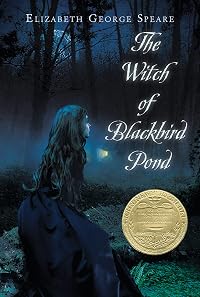
Elisabeth George Speare is probably best-known for The Witch of Blackbird Pond about a girl in 17th century America who is suspected of being a witch because she can swim. show less
Daniel forges weapons for a band of rebels in the hills, training for war against the oppressors. He and his reclusive sister befriend Joel, in training to be a Jewish scholar, and twin sister, Thace. Together these new friends take a vow of resistance against the Romans based on 2 Samuel 22:35 “He trains my hands for war, so that my arms can bend a bow of bronze.”
A trained blacksmith, Daniel knows just how strong a bronze bow would be, but his brief encounters with the carpenter from Nazareth, and with those who have met him, are gradually changing Daniel’s mind and show more heart.
The descriptions of the historical world feel convincing and Jesus is described in a very low-key, realistic way that is both compelling and natural.
On the other hand, the way “Samson”, the huge, Black, slave character, was portrayed made me uncomfortable, but maybe it was supposed to? He’s mute; it’s not clear if he understands what the others say to him, and the rebels pick his name. He later saves Daniel’s life—an action that wakes Daniel to the consequences of violent rebellion--but Samson is almost not a person, because he never speaks.
On the other hand, Samson’s death is a key turning point for Daniel. He thinks he has to revenge Samson’s death too, until Jesus suggests that Samson would probably prefer love to revenge.
Daniel says: “It’s too late to love Samson. He is probably dead.” Then, as Jesus waited, “Should I love the Romans who killed him?” he asked with bitterness.
Jesus smiled,”You think that is impossible, don’t you? Can’t you see, Daniel, it is hate that is the enemy?”
This book won the Newbery Medal in 1962, but the theme is unfortunately just as relevant today. I really enjoyed it, especially how Jesus was portrayed as a poser of questions with an inner vitality who could also be worn down by human behavior.
The book’s ending is an elegant plot twist and resolution in single line.
Elisabeth George Speare is probably best-known for The Witch of Blackbird Pond about a girl in 17th century America who is suspected of being a witch because she can swim. show less
Honestly, I wasn't looking forward to reading this book... I'm working my way back through all the Newbery winners, and past the 1960s, I don't have much hope. I should have realized, though, that Elizabeth George Speare would deliver. I remember loving The Witch of Blackbird Pond. And wow! I can't even put my finger on what is so great about the way Speare writes. It's the description, sure. It's the way the exchanges between characters are so vivid. The events dovetail in a pleasing way. I can't decide - it's all of those things. Every night, I couldn't wait to read. My only quibble would be the rise and fall of action. Daniel is going to fight, no, he's going back to town, now he's back on the mountain, now he's following Jesus, now show more he's back in town... The arc wasn't as clear as it could have been. Overall, though, what a book. show less
Let me first say that I really liked this 1962 Newbery winner, and I wasn’t expecting I would. Set during the time of Jesus, the main character, an 18-year-old Galilean named Daniel bar Jamin, fled his home and blacksmith master five years before and has been living on a nearby mountain with outlaws who are supposedly preparing for the day the Jews will rise up against their Roman masters. Daniel’s hatred of the Romans is especially strong, given that they crucified his father, which led to his mother’s death and younger sister Leah’s regression into fear and solitude.
As the book opens, Daniel meets a brother and sister, Joel and Malthace (also called Thacia) who become a major part of the story, as does his friend Simon the show more Zealot, who becomes a disciple of Jesus. Daniel eventually meets Jesus and it ultimately changes his life. It’s a wonderful coming-of-age story, with the additional message of love and peace over hate and war.
The title of the book comes from Psalm 18, verse 34 (also 2 Samuel 22:35): “He trains my hands for war, so that my arms can bend a bow of bronze” (p. 87). Daniel uses a drawing of a bronze bow as a sign to Joel and Thacia that he is hiding in their house in Capernaum. The verse becomes a touchstone for Daniel and a metaphor for his own internal struggle.
Written at a fifth-to-sixth grade reading level, the content is most appropriate for those ages and up. Narrator Mary Woods does a good job creating individual characterizations by voice without resorting to caricatures or accents.
In her Newbery acceptance speech, Speare explained that she wrote the book while teaching Sunday school because she "longed to lift the personality of Jesus off the flat and lifeless pages of our textbook. I wanted to give my pupils, and others like them, a glimpse of the divided and turbulent society of Palestine, an occupied country with many parallels in our own day. And I wanted to stir in them some personal sharing of what must have been the response of boys and girls who actually saw and heard the Carpenter from Nazareth….I longed to have them see that the preacher who walked the hills of Galilee was not a mythical figure, but a compelling and dynamic leader, a hero to whom a boy in any age would gladly offer all his loyalty."
Reading this (and the rest of her speech), it’s not surprising to learn that the book has been challenged when used as part of the curriculum in public schools. While not anti-Semitic or demeaning toward Jews, critics said it glorifies Christianity while portraying Judaism and its rabbis in a negative light.
Recently, a group of parents in San Rafael, California, was able to convince their public school district to drop the book as required reading in seventh grade in a unit on ancient Rome (but had no problems with the book being in the library). After reading the many links on their website, I can understand their position. As much as I liked this book and would recommend it to others, and don’t think it should ever be removed from any library, I believe it should be optional supplemental reading rather than required in public schools. show less
As the book opens, Daniel meets a brother and sister, Joel and Malthace (also called Thacia) who become a major part of the story, as does his friend Simon the show more Zealot, who becomes a disciple of Jesus. Daniel eventually meets Jesus and it ultimately changes his life. It’s a wonderful coming-of-age story, with the additional message of love and peace over hate and war.
The title of the book comes from Psalm 18, verse 34 (also 2 Samuel 22:35): “He trains my hands for war, so that my arms can bend a bow of bronze” (p. 87). Daniel uses a drawing of a bronze bow as a sign to Joel and Thacia that he is hiding in their house in Capernaum. The verse becomes a touchstone for Daniel and a metaphor for his own internal struggle.
Written at a fifth-to-sixth grade reading level, the content is most appropriate for those ages and up. Narrator Mary Woods does a good job creating individual characterizations by voice without resorting to caricatures or accents.
In her Newbery acceptance speech, Speare explained that she wrote the book while teaching Sunday school because she "longed to lift the personality of Jesus off the flat and lifeless pages of our textbook. I wanted to give my pupils, and others like them, a glimpse of the divided and turbulent society of Palestine, an occupied country with many parallels in our own day. And I wanted to stir in them some personal sharing of what must have been the response of boys and girls who actually saw and heard the Carpenter from Nazareth….I longed to have them see that the preacher who walked the hills of Galilee was not a mythical figure, but a compelling and dynamic leader, a hero to whom a boy in any age would gladly offer all his loyalty."
Reading this (and the rest of her speech), it’s not surprising to learn that the book has been challenged when used as part of the curriculum in public schools. While not anti-Semitic or demeaning toward Jews, critics said it glorifies Christianity while portraying Judaism and its rabbis in a negative light.
Recently, a group of parents in San Rafael, California, was able to convince their public school district to drop the book as required reading in seventh grade in a unit on ancient Rome (but had no problems with the book being in the library). After reading the many links on their website, I can understand their position. As much as I liked this book and would recommend it to others, and don’t think it should ever be removed from any library, I believe it should be optional supplemental reading rather than required in public schools. show less
It is a mixed pleasure sometimes when you revisit a book you loved as a child. There is always the fear that it won't be as good as you remembered, that your childhood innocence painted the book with its own colors and made it more than mere entertainment to you. Elizabeth George Speare's The Bronze Bow is one such book for me. On a whim, I decided to reread it for the first time in years.
The Bronze Bow is the story of Daniel bar Jamin, a young Galilean Jew living during the time of Christ. His father and mother died at the hands of the Romans, and his younger sister Leah has been left traumatized and empty. Daniel is a Zealot and lives in the mountains with the rebel Rosh, who he believes will raise an army to rout the Romans from show more Israel. When his grandmother dies, forcing Daniel to come down to the village and take care of Leah, he hates the cage of responsibility and longs to do something active against Roman rule. But Rosh doesn't seem to share that urgency... Is this wandering preacher, Jesus, the strong leader that Israel has been waiting for?
Speare does a good job keeping the story light enough for young readers but dark enough for more mature minds to imagine the backdrop. Daniel's father was crucified along with five other men for trying to rescue his brother-in-law from slavery. Leah's traumatization occurred because as a five-year-old child, she stole out and saw the gruesome scene of her father's crucifixion. The grandmother's death scene is shown, and some of Daniel's friends are killed during a rescue mission. Looking back, I see that I unconsciously took all these darker elements as a compliment from the author to me, the reader: even so young, I could handle them. And these sad pieces of reality are probably what gave the book its resonance, why I have remembered it with such affection all these years.
The characters are well drawn. Daniel especially is a very complete character, but the others are very good too. I found Rosh particularly intriguing. Daniel thinks the Romans are the villains, but slowly we come to see (along with him) that Rosh is a parasite too, using the Romans as an excuse for his own pillaging. The lessons about misplaced hero-worship and the growing awareness that comes with maturity are subtle but unmistakable. Thacia, Joel, and Leah are also quite vivid people to me.
Sometimes the writing seemed a bit stiff, and other times it was just perfect. It reminded me of the style of Ann Weil's Red Sails to Capri; I don't think there was as much emphasis on avoiding "telling" in favor of "showing" in the 1960s. Some sentences and adjectives were so right that I remembered them even now; the Roman soldier standing in the "broiling sun" always stayed with me. The last scene of this story is perfect to a word. It's a fantastic culmination of character development and all the themes — vengeance, justice, forgiveness, grace — that have been brewing from the beginning of the book. Powerful stuff.
The Bronze Bow richly deserves the Newbery Medal it won in 1962, and it is a book I look forward to putting in my children's hands and minds. Highly recommended. show less
The Bronze Bow is the story of Daniel bar Jamin, a young Galilean Jew living during the time of Christ. His father and mother died at the hands of the Romans, and his younger sister Leah has been left traumatized and empty. Daniel is a Zealot and lives in the mountains with the rebel Rosh, who he believes will raise an army to rout the Romans from show more Israel. When his grandmother dies, forcing Daniel to come down to the village and take care of Leah, he hates the cage of responsibility and longs to do something active against Roman rule. But Rosh doesn't seem to share that urgency... Is this wandering preacher, Jesus, the strong leader that Israel has been waiting for?
Speare does a good job keeping the story light enough for young readers but dark enough for more mature minds to imagine the backdrop. Daniel's father was crucified along with five other men for trying to rescue his brother-in-law from slavery. Leah's traumatization occurred because as a five-year-old child, she stole out and saw the gruesome scene of her father's crucifixion. The grandmother's death scene is shown, and some of Daniel's friends are killed during a rescue mission. Looking back, I see that I unconsciously took all these darker elements as a compliment from the author to me, the reader: even so young, I could handle them. And these sad pieces of reality are probably what gave the book its resonance, why I have remembered it with such affection all these years.
The characters are well drawn. Daniel especially is a very complete character, but the others are very good too. I found Rosh particularly intriguing. Daniel thinks the Romans are the villains, but slowly we come to see (along with him) that Rosh is a parasite too, using the Romans as an excuse for his own pillaging. The lessons about misplaced hero-worship and the growing awareness that comes with maturity are subtle but unmistakable. Thacia, Joel, and Leah are also quite vivid people to me.
Sometimes the writing seemed a bit stiff, and other times it was just perfect. It reminded me of the style of Ann Weil's Red Sails to Capri; I don't think there was as much emphasis on avoiding "telling" in favor of "showing" in the 1960s. Some sentences and adjectives were so right that I remembered them even now; the Roman soldier standing in the "broiling sun" always stayed with me. The last scene of this story is perfect to a word. It's a fantastic culmination of character development and all the themes — vengeance, justice, forgiveness, grace — that have been brewing from the beginning of the book. Powerful stuff.
The Bronze Bow richly deserves the Newbery Medal it won in 1962, and it is a book I look forward to putting in my children's hands and minds. Highly recommended. show less
The book documents the slow change of heart for a boy with every reason to hate the Roman occupiers in his Palestine home. By letting family obligations and friendships intrude into his one-track life path toward revolution, he unknowingly opens himself up to love and friendship. He further spoils his plans by spending time listening to Jesus of Nazareth teach, opening his mind beyond the small definition of the Kingdom of God and the desire for revenge. It’s a slow change, as often happens, and the ending leaves many loose ends, but the story is still told - a story full of doubt and a little bit messy, but very beautiful.
Daniel has been living for years as a member of a band of Zealots who wish to free the Israelis from Roman oppression. When he meets a preacher named Jesus, he realizes that perhaps his path of violence and thievery isn't quite as logical as he'd thought it was. This is a fun book for kids, with adventure, interesting moral lessons, and new friendships. Although Jesus is a character in the book, he is only a minor one--the book is mainly historical fiction, and I think the lessons Daniel learns (violence, thievery, and hatred don't accomplish anything good) are appropriate for kids of all religions or lack thereof. This is a must-read.
Members
- Recently Added By
Lists

Best Newbery Medal Winners
97 works; 54 members

Favorite Childhood Books
1,651 works; 519 members

Sonlight Books
1,487 works; 25 members
Honey For a Child's Heart
1,152 works; 25 members

Newbery Medal Winners - By Year
105 works; 7 members
Ambleside Books
459 works; 18 members

4th Grade Books
312 works; 5 members

CCE 1000 Good Books List
1,033 works; 12 members

Romalda Spalding's Writing Road To Reading
213 works; 3 members

Children's Literature, Briefly Historical Fiction Reading List
44 works; 4 members

Books Read in 2015
3,299 works; 126 members

HMS: Make Your Child a Lover of Books, Ages 9 & up
111 works; 2 members

Precious People
119 works; 1 member

CC Cycle 1 Book List
23 works; 1 member

Recommended Reading List
219 works; 1 member

1970s
657 works; 23 members

Beautiful Feet Books
304 works; 7 members

Christianity
19 works; 3 members
Classical Conversations Challenge A Exposition
10 works; 2 members

Historical Fiction
889 works; 91 members

r/History Recommended Reading List
603 works; 12 members

Christianity Books You've Read
179 works; 19 members

50+ Books for a 6th Grader Who Loves to Read
53 works; 4 members

KayStJ's to-read list
1,616 works; 11 members

Books About Boys
175 works; 15 members

Read For Your Life
157 works; 1 member
Talk Discussions
Past Discussions
fiction set during Jesus' time in Name that Book (December 2010)
The Bronze Bow and bias in Read YA Lit (November 2009)
Author Information

21+ Works 30,757 Members
Some Editions
Awards and Honors
Series
Belongs to Publisher Series
Peacock Books (42)
Work Relationships
Is contained in
Has as a teacher's guide
Common Knowledge
- Canonical title
- The Bronze Bow
- Original publication date
- 1961
- People/Characters
- Daniel bar Jamin; Joel; Malthace (Thacia); Rosh; Leah; Simon the Zealot (show all 7); Jesus Christ
- Important places
- Judea; Capernaum, Galilee
- First words
- A boy stood on the path of the mountain overlooking the sea.
- Last words
- (Click to show. Warning: May contain spoilers.)"Will you come in to our house?" he asked.
- Original language
- English
Classifications
- Genres
- Fiction and Literature, Children's Books, Kids
- DDC/MDS
- 813.54 — Literature & rhetoric American literature in English American fiction in English 1900-1999 1945-1999
- LCC
- PZ7 .S7376 .B — Language and Literature Fiction and juvenile belles lettres Fiction and juvenile belles lettres Juvenile belles lettres
- BISAC
Statistics
- Members
- 5,867
- Popularity
- 2,220
- Reviews
- 55
- Rating
- (4.06)
- Languages
- Dutch, English, Swedish
- Media
- Paper, Audiobook, Ebook
- ISBNs
- 56
- UPCs
- 3
- ASINs
- 30