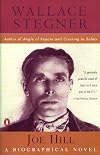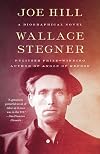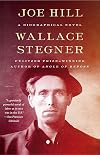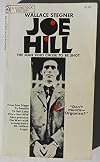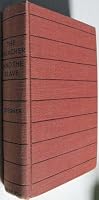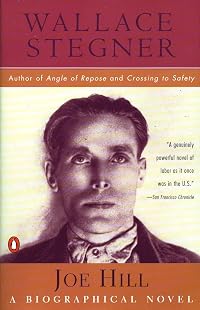
Joe Hill
by Wallace Stegner
On This Page
Description
Blending fact with fiction in this masterful historical novel, National Book Award and Pulitzer Prize winner Wallace Stegner retells the story of Joe Hill--the Wobbly bard and labor activist who became the stuff of legend when, in 1915, he was executed for the alleged murder of a Salt Lake City businessman. Organizer, agitator, "Labor's Songster"--a rebel from the skin inwards, with an absolute faith in the One Big Union--Joe Hill fought tirelessly in the frequently violent battles between show more organized labor and industry. But though songs and stories still vaunt him, and his legend continues to inspire those who feel the injustices he fought against, Joe Hill may not have been a perfectly saintly crusader--and may have been motivated by impulses darker than the search for justice. Joe Hill is a full-bodied portrait of both the man and the myth: from his entrance into the short-lived Industrial Workers of the World union, the most militant organization in the history of American labor, to his trial, imprisonment, and final martyrdom. His famous last words: "Don't waste time mourning. Organize." show lessTags
Recommendations










Member Reviews
Joe Hill “had a face to scare babies.”
When a man is up on murder charges there are better things to have. Needing better was Joe’s condition through much of his life. Rumored the bastard son of a “well-dressed man,” he became known for songs he composed to inspire laborers aligned with the Industrial Workers of the World, the “One Big Union.” To IWW members (“Wobblies” they were called), the notion that social change could be achieved through the ballot box was a delusion—electing new representatives was no more than swapping your masters. Joe Hill became an IWW true believer.
Joe’s path eventually put him on trial in Salt Lake City. That path and that trial form the core of Wallace Stegner’s biographical novel. show more Hill was charged with killing two men working in a modest family business, victims who were not industrialists.
The trial’s outcome is history and entailed a couple curious strategies for a man at risk of sentence of death. One was Joe’s decision not to cooperate with his own legal defense team. Another was that despite claiming an alibi he refused to provide any way to confirm it. Why? Possibly he thought that capitalists feel no need to claim innocence so why should he? If so, his refusal can be seen as a posture simulating power: We, the Wobblies, here do claim all privileges our oppressors claim.
Joe Hill is a good book. Perhaps more than most good books it needed to be great to have durable appeal. The conflicts between labor and business in that era were at a scale now muted on the U.S. stage: private sector strikes and worker/police clashes were current events; socialism, communism, and anarchism were influential movements; and fallout from these events and ideas roiled the political waters for decades. Killings occurred, sometimes in numbers called “massacres.” Stegner gives us a potent illustration of the instability by describing violence erupting at a Sacramento Valley labor camp. In the nineteen teens, a time for blood and martyrs, Joe Hill was a man who to unionists embodied both. show less
When a man is up on murder charges there are better things to have. Needing better was Joe’s condition through much of his life. Rumored the bastard son of a “well-dressed man,” he became known for songs he composed to inspire laborers aligned with the Industrial Workers of the World, the “One Big Union.” To IWW members (“Wobblies” they were called), the notion that social change could be achieved through the ballot box was a delusion—electing new representatives was no more than swapping your masters. Joe Hill became an IWW true believer.
Joe’s path eventually put him on trial in Salt Lake City. That path and that trial form the core of Wallace Stegner’s biographical novel. show more Hill was charged with killing two men working in a modest family business, victims who were not industrialists.
The trial’s outcome is history and entailed a couple curious strategies for a man at risk of sentence of death. One was Joe’s decision not to cooperate with his own legal defense team. Another was that despite claiming an alibi he refused to provide any way to confirm it. Why? Possibly he thought that capitalists feel no need to claim innocence so why should he? If so, his refusal can be seen as a posture simulating power: We, the Wobblies, here do claim all privileges our oppressors claim.
Joe Hill is a good book. Perhaps more than most good books it needed to be great to have durable appeal. The conflicts between labor and business in that era were at a scale now muted on the U.S. stage: private sector strikes and worker/police clashes were current events; socialism, communism, and anarchism were influential movements; and fallout from these events and ideas roiled the political waters for decades. Killings occurred, sometimes in numbers called “massacres.” Stegner gives us a potent illustration of the instability by describing violence erupting at a Sacramento Valley labor camp. In the nineteen teens, a time for blood and martyrs, Joe Hill was a man who to unionists embodied both. show less
This is one of Stegner’s lesser known novels, but, as always in his works, his plot line, character development and narrative are wonderfully crafted. The story is a fictionalized account of the widely-known labor activist of the early 20th century. Hill was a Swedish immigrant who joined the Industrial Workers of the World – the IWW, also known as the Wobblies. The IWW was a radical trade union who staged organizing campaigns and labor strikes throughout the country, principally in the far West. The Wobblies were known for their fervor and for violence often resulting from their activism. Although Stegner states in the preface that the book is a work of fiction it follows closely the real events of Hill’s story.
Hill is a drifter show more who had been a seaman and a lumber camp worker. He was sympathetic to the labor movement, but not deeply involved in its campaigns until he received notoriety by writing inspirational labor songs that attracted widespread attention and praise. Hill begins to be drawn to the adulation and becomes increasingly active in the union’s organizing and strike efforts. His disdain and hatred for the capitalist system and the “bosses” grows. While working to organize migrant workers at a California farm, violence breaks out and his close friend is killed along with a deputy sheriff. The speaker at the rally refuses to flee and awaits the impending arrests, despite Joe’s pleading for him to escape. Joe is troubled by his own unwillingness to stand for the confrontation with authorities and this increases his militancy and determination to fight for the union’s causes. As Joe is leaving the farm he impulsively breaks into the home of the owner and assaults and robs him. Whether this is in retaliation for the oppression of the boss or just a criminal act to get money to live on isn’t clear to Joe.
Joe has had a long relationship with Gus Lund, a fellow Swede who is a Lutheran minister who runs a mission in San Pedro. Joe and Gus have deep conversations about the conflict between alternative ways of facing oppression. Gus favors a patient approach, but Joe rejects this as weak and never to be successful. Despite their differences, Joe and Gus are close friends. While at the mission, there is a sudden knock on the door and Joe turns over his gun and cash to Gus to hide, leaving Gus to wonder if Joe has turned to criminal activity.
Joe moves on to Salt Lake City where he encounters an old associate Otto Applequist. Otto is a shady character on the fringe of the IWW, but mostly a petty thief. Otto introduces Joe to a Swedish family who, it happens, Joe knew from his childhood. Joe falls for Ingrid and contemplates whether to settle down to a stable life with her. He is torn by this conventional life and his allegiance to the labor cause. Otto approaches Joe about the prospect of robbing a local merchant who takes his daily receipts with him each night. It isn’t clear that Joe is interested in doing this.
There is a stick up at a store owned by a former policeman during which he and his son are killed by intruders. Shortly after, Joe presents himself to a local doctor with a gunshot wound to his chest. While there the doctor notices Joe has a gun. Joe claims that he was shot by a rival for a girl, but he won’t name the girl or the shooter. The police show up at Joe’s room where he is shot in the hand during the arrest. He is charged with the murders in the store robbery.
Joe goes to trial where he seeks to represent himself and refuses to reveal any details that would support his alibi. He holds that the state must prove his guilt and they have no direct evidence of his involvement in the murders. He is convicted as sentenced to die. While in prison the IWW mounts an intensive appeal to get him freed. They claim that he has been railroaded by the “system” because of this labor union affiliation and point to many irregularities in his trial. Joe’s situation receives national and international attention and is cast in the light of the battle between capitalists and radical labor opponents. Despite the intense pressure on the Utah authorities all Joe’s appeals are rejected and the sentence is carried out.
Whether Joe was guilty or innocent is never made certain in the story. What is certain is that Joe has determined that martyrdom is his aim; that his death will bring more to the labor movement than a commutation or a pardon. Stegner delves deeply into the meaning of the martyr’s sacrifice and the power it instills in those who adhere to a faith or cause. It seems that the IWW is genuinely attempting to save Joe, but that they know that his death will bring significant benefit to their aims.
After finishing the book, I took a look at some Wikipedia articles on Joe Hill and it does seem that his legacy that ensued after his execution was a powerful symbol for the cause of the labor movement. The IWW has barely survived, but the image that Joe Hill left behind continues to animate the supporters of labor. show less
Hill is a drifter show more who had been a seaman and a lumber camp worker. He was sympathetic to the labor movement, but not deeply involved in its campaigns until he received notoriety by writing inspirational labor songs that attracted widespread attention and praise. Hill begins to be drawn to the adulation and becomes increasingly active in the union’s organizing and strike efforts. His disdain and hatred for the capitalist system and the “bosses” grows. While working to organize migrant workers at a California farm, violence breaks out and his close friend is killed along with a deputy sheriff. The speaker at the rally refuses to flee and awaits the impending arrests, despite Joe’s pleading for him to escape. Joe is troubled by his own unwillingness to stand for the confrontation with authorities and this increases his militancy and determination to fight for the union’s causes. As Joe is leaving the farm he impulsively breaks into the home of the owner and assaults and robs him. Whether this is in retaliation for the oppression of the boss or just a criminal act to get money to live on isn’t clear to Joe.
Joe has had a long relationship with Gus Lund, a fellow Swede who is a Lutheran minister who runs a mission in San Pedro. Joe and Gus have deep conversations about the conflict between alternative ways of facing oppression. Gus favors a patient approach, but Joe rejects this as weak and never to be successful. Despite their differences, Joe and Gus are close friends. While at the mission, there is a sudden knock on the door and Joe turns over his gun and cash to Gus to hide, leaving Gus to wonder if Joe has turned to criminal activity.
Joe moves on to Salt Lake City where he encounters an old associate Otto Applequist. Otto is a shady character on the fringe of the IWW, but mostly a petty thief. Otto introduces Joe to a Swedish family who, it happens, Joe knew from his childhood. Joe falls for Ingrid and contemplates whether to settle down to a stable life with her. He is torn by this conventional life and his allegiance to the labor cause. Otto approaches Joe about the prospect of robbing a local merchant who takes his daily receipts with him each night. It isn’t clear that Joe is interested in doing this.
There is a stick up at a store owned by a former policeman during which he and his son are killed by intruders. Shortly after, Joe presents himself to a local doctor with a gunshot wound to his chest. While there the doctor notices Joe has a gun. Joe claims that he was shot by a rival for a girl, but he won’t name the girl or the shooter. The police show up at Joe’s room where he is shot in the hand during the arrest. He is charged with the murders in the store robbery.
Joe goes to trial where he seeks to represent himself and refuses to reveal any details that would support his alibi. He holds that the state must prove his guilt and they have no direct evidence of his involvement in the murders. He is convicted as sentenced to die. While in prison the IWW mounts an intensive appeal to get him freed. They claim that he has been railroaded by the “system” because of this labor union affiliation and point to many irregularities in his trial. Joe’s situation receives national and international attention and is cast in the light of the battle between capitalists and radical labor opponents. Despite the intense pressure on the Utah authorities all Joe’s appeals are rejected and the sentence is carried out.
Whether Joe was guilty or innocent is never made certain in the story. What is certain is that Joe has determined that martyrdom is his aim; that his death will bring more to the labor movement than a commutation or a pardon. Stegner delves deeply into the meaning of the martyr’s sacrifice and the power it instills in those who adhere to a faith or cause. It seems that the IWW is genuinely attempting to save Joe, but that they know that his death will bring significant benefit to their aims.
After finishing the book, I took a look at some Wikipedia articles on Joe Hill and it does seem that his legacy that ensued after his execution was a powerful symbol for the cause of the labor movement. The IWW has barely survived, but the image that Joe Hill left behind continues to animate the supporters of labor. show less
Joe Hill by Wallace Stegner
Originally published in 1950 under the title The Preacher and the Slave, [Joe Hill] is a biographical novel based on the short life of an early 20th century labor organizer and agitator named Joe Hillstrom, better known simply as Joe Hill.
Hill's lasting fame stems in part from his catchy pro-labor songs, but more from his trial and execution for two murders—his martyrdom many called it, claiming he was framed because of his pro-union activities. He was an active member of the Industrial Workers of the World or IWW, known as the Wobblies. And the Wobblies were the most radical, intransigent, and violent union. Hill traveled the west, from one labor hot spot to another. He was taciturn but self-centered, show more moody, hot-tempered, very much the loner.
According to Stegner biographer Jackson J. Benson, Wallace first got interested in Joe Hill during the late 1930s, when teaching at Harvard. At a party, he for the first time heard people sing "The Ballad of Joe Hill." ("I dreamed I saw Joe Hill last night…") The song stuck in his mind. In 1946, Stegner, then at Stanford, started reseaching Hill. Wrote Benson:
Since Stegner had great sympathy for the union movement and detested the red-baiting that had already started…in the late 1940s, he began his project with great sympathy for Hill, trying to prove that he was indeed a martyr and, in the spirit of the song that Wallace was so fond of, that his message lives on for all of us. But the further Wallace went with his research, "the less I thought of him as a legitimate martyr, you know?...I thought at least that he was probably guilty of the crime he was executed for."
The novel traces Hill's union activities from the docks in Washington State to those in San Pedro (a main port for Los Angeles), from farm fields in the Sacramento Valley to minefields in Utah. The living and working conditions are laid out in excruciating detail, alongside the atrocities of owners and managers and their thugs (including police and other government agents).
Hill's singular talent was writing song lyrics and poetry. Among his memorable songs are "The Tramp", "There is Power in a Union", "The Rebel Girl", and "Casey Jones—the Union Scab". Typically, he'd write new lyrics to a familiar tune, so everyone at a meeting could sing along. Using the tune from "In the Sweet By-and-Bye," he produced a song called "The Preacher and the Slave":
Long-haired preachers come out every night
Try to tell you what's wrong and what's right
But when asked how 'bout something to eat
They will answer in voices so sweet
chorus
You will eat, bye and bye
In that glorious land above the sky
Work and pray, live on hay
You'll get pie in the sky when you die
In the end, Hill was arrested and charged in a double homicide in Salt Lake City. The killer was known to have been shot, and Hill was treated for a gunshot wound the same night as the murders. At trial, he refused to take the stand in his own defense, insisting that he didn't have to prove himself innocent and that the state hadn't proven him guilty. Stegner puts it all in his novel.
I didn't dislike this novel, though clearly it is not among Stegner's best. I'd give it one thumb up, but not both. show less
Originally published in 1950 under the title The Preacher and the Slave, [Joe Hill] is a biographical novel based on the short life of an early 20th century labor organizer and agitator named Joe Hillstrom, better known simply as Joe Hill.
Hill's lasting fame stems in part from his catchy pro-labor songs, but more from his trial and execution for two murders—his martyrdom many called it, claiming he was framed because of his pro-union activities. He was an active member of the Industrial Workers of the World or IWW, known as the Wobblies. And the Wobblies were the most radical, intransigent, and violent union. Hill traveled the west, from one labor hot spot to another. He was taciturn but self-centered, show more moody, hot-tempered, very much the loner.
According to Stegner biographer Jackson J. Benson, Wallace first got interested in Joe Hill during the late 1930s, when teaching at Harvard. At a party, he for the first time heard people sing "The Ballad of Joe Hill." ("I dreamed I saw Joe Hill last night…") The song stuck in his mind. In 1946, Stegner, then at Stanford, started reseaching Hill. Wrote Benson:
Since Stegner had great sympathy for the union movement and detested the red-baiting that had already started…in the late 1940s, he began his project with great sympathy for Hill, trying to prove that he was indeed a martyr and, in the spirit of the song that Wallace was so fond of, that his message lives on for all of us. But the further Wallace went with his research, "the less I thought of him as a legitimate martyr, you know?...I thought at least that he was probably guilty of the crime he was executed for."
The novel traces Hill's union activities from the docks in Washington State to those in San Pedro (a main port for Los Angeles), from farm fields in the Sacramento Valley to minefields in Utah. The living and working conditions are laid out in excruciating detail, alongside the atrocities of owners and managers and their thugs (including police and other government agents).
Hill's singular talent was writing song lyrics and poetry. Among his memorable songs are "The Tramp", "There is Power in a Union", "The Rebel Girl", and "Casey Jones—the Union Scab". Typically, he'd write new lyrics to a familiar tune, so everyone at a meeting could sing along. Using the tune from "In the Sweet By-and-Bye," he produced a song called "The Preacher and the Slave":
Long-haired preachers come out every night
Try to tell you what's wrong and what's right
But when asked how 'bout something to eat
They will answer in voices so sweet
chorus
You will eat, bye and bye
In that glorious land above the sky
Work and pray, live on hay
You'll get pie in the sky when you die
In the end, Hill was arrested and charged in a double homicide in Salt Lake City. The killer was known to have been shot, and Hill was treated for a gunshot wound the same night as the murders. At trial, he refused to take the stand in his own defense, insisting that he didn't have to prove himself innocent and that the state hadn't proven him guilty. Stegner puts it all in his novel.
I didn't dislike this novel, though clearly it is not among Stegner's best. I'd give it one thumb up, but not both. show less
A well written, descriptive if slow moving novel. The book describes pre-WWI America through the eyes of the working class. A time before unions won us so many work place concessions.
I generally love Stegner: however, this is one of his lesser works. I knew of Hill of course as a labor organizer and Joan Baez' line: "I dreamt I saw Joe Hill tonight, alive as you or me." Hill is a difficult person to like and not at all the "noble" person I had in mind. On the other hand the book is a "novel" and I do not know what license Stegner may have taken with the facts, or more likely, the lack thereof. The book is slow-moving and pretty much depressing. For Stegner completists only.
I loved this book and first read it in the 1950's when it was called 'The Preacher and the Slave.' It was only with the advent of the internet that I discovered that it had been reissued as 'Joe Hill.' Stegner makes it clear that the book is a novel and is the product of his imagination; he doesn't make Hill a likeable character and he gives the impression that Hill was guilty. Foner's book on Joe Hill gives a factual account of Hill's trial and it is difficult to see how Stegner could see it other than a miscarriage of justice
Ratings
Members
- Recently Added By
Lists

Books Read in 2021
5,361 works; 114 members

Stephen King's 'On Writing' reading list
95 works; 4 members
Author Information

92+ Works 20,829 Members
In 1972, Wallace Earle Stegner won a Pulitzer Prize for Angle of Repose (1971), a novel about a wheelchair-bound man's recreation of his New England grandmother's experience in a late nineteenth-century frontier town. Stegner was born on February 18, 1909 in Lake Mills, Iowa. He was an American novelist, short story writer, environmentalist, and show more historian; he has been called "The Dean of Western Writers". He also won the US National Book Award in 1977 for The Spectator Bird. Stegner grew up in Great Falls, Montana; Salt Lake City, Utah; and in the village of Eastend, Saskatchewan, which he wrote about in his autobiography Wolf Willow. Stegner taught at the University of Wisconsin and Harvard University. Eventually he settled at Stanford University, where he initiated the creative writing program. His students included Wendell Berry, and Sandra Day O'Connor. The Stegner Fellowship program at Stanford University is a two-year creative writing fellowship. The house Stegner lived in from age 7 to 12 in Eastend, Saskatchewan, Canada, was restored by the Eastend Arts Council in 1990 and established as a Residence for Artists; the Wallace Stegner Grant For The Arts offers a grant of $500 and free residency at the house for the month of October for published Canadian writers. Stegner died in Santa Fe, New Mexico, on April 13, 1993, from a car accident on March 28, 1993. (Bowker Author Biography) show less
Common Knowledge
- Original title
- The Preacher and the Slave
- Alternate titles
- Joe Hill: A Biographical Novel
- Original publication date
- 1950
- People/Characters
- Joe Hill (1950 | 1950 fictionalized biography)
- Disambiguation notice
- first published as The Preacher and the Slave
Classifications
- Genres
- Fiction and Literature, General Fiction, Historical Fiction
- DDC/MDS
- 813.52 — Literature & rhetoric American literature in English American fiction in English 1900-1999 1900-1945
- LCC
- PS3537 .T316 .P7 — Language and Literature American literature American literature Individual authors 1900-1960
- BISAC
Statistics
- Members
- 284
- Popularity
- 113,042
- Reviews
- 6
- Rating
- (3.55)
- Languages
- English
- Media
- Paper, Ebook
- ISBNs
- 6
- ASINs
- 10