On This Page
Description
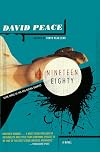
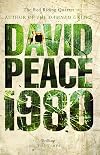
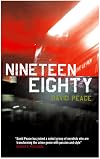
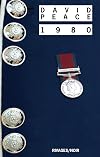
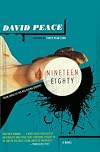
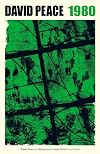
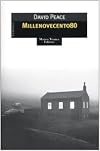
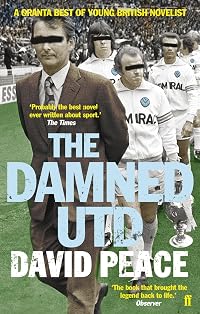
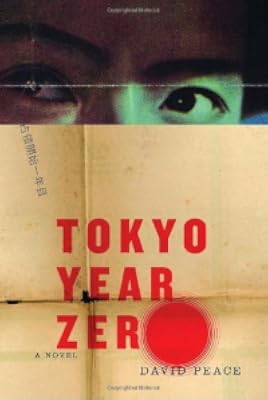
Continuing the narrative begun with Nineteen Seventy-Four and Nineteen Seventy-Seven, this electrifying third installment of David Peace’s Red Riding Quartet demonstrates a skill that goes above and beyond the limits of the genre. While Yorkshire is terrorized by the Ripper, the corrupt police continue to prosper. To give the case some new life, Peter Hunter, a “clean” cop from nearby Manchester, is brought in to offer a fresh perspective. As he goes about setting up a new case under show more the radar, he suffers the same fate as those who previously attempted to get in the way of the Ripper: his house is burned down, his wife threatened. But he soldiers on. And as he comes face to face with unthinkable evil, Hunter struggles to maintain his reputation, his sanity, and his life. show lessTags
Recommendations







Member Reviews
Improves on 1977 in one way with a fully sympathetic protagonist but gets much worse in another as the prose poetry becomes more repetitive and intrusive to the point that it's just tiring to read.
The same phrases, sentences and paragraphs repeated again and again. Up to a point, it's effective but in the latter parts of the book I found myself skipping whole paragraphs because it was the second or third time I'd read that same paragraph on the same page and I'd read it a dozen or more times before. If the device is used to the extent that the reader is skipping passages then it has been over-used.
The ending is somewhat confusing but will presumably be made slightly clearer in the final book (the semi-spoiler question being "who pulled show more the trigger?"), and the last minute reveal about one character's past involvement in a sleazy business left me asking what were the chances that this person got picked for the team in the first place? If they hadn't (and the conspirators who used it against them had no control over that) then it would have been totally irrelevant. Coincidence at the beginning of a story is okay but right at the end asks for a bit of a leap of faith on the part of the reader.
Whilst the TV adaptations leave out a lot of stuff (including the entire 1977 installment) they feel somehow more complete and satisfying than this re-read is showing the books to be. show less
The same phrases, sentences and paragraphs repeated again and again. Up to a point, it's effective but in the latter parts of the book I found myself skipping whole paragraphs because it was the second or third time I'd read that same paragraph on the same page and I'd read it a dozen or more times before. If the device is used to the extent that the reader is skipping passages then it has been over-used.
The ending is somewhat confusing but will presumably be made slightly clearer in the final book (the semi-spoiler question being "who pulled show more the trigger?"), and the last minute reveal about one character's past involvement in a sleazy business left me asking what were the chances that this person got picked for the team in the first place? If they hadn't (and the conspirators who used it against them had no control over that) then it would have been totally irrelevant. Coincidence at the beginning of a story is okay but right at the end asks for a bit of a leap of faith on the part of the reader.
Whilst the TV adaptations leave out a lot of stuff (including the entire 1977 installment) they feel somehow more complete and satisfying than this re-read is showing the books to be. show less
These books (1974. 1977, 1980, and 1983) collectively constitute The Red Riding Hood Quartet, a series of crime novels based on the Yorkshire Ripper murders. I had read the first in the series, Nineteen Seventy-four last year, and thought it would be a simple matter to pick up with Nineteen Seventy-seven (which BTW is on the 1001 list) and proceed. However, I soon determined that I needed to reread Nineteen Seventy-four, which I did, and when I finished Nineteen Seventy-seven, I had to immediately go onto Nineteen Eighty and then Nineteen Eighty-three. I can't remember when I've read so many books by the same author in such a concentrated amount of time. (I devoured these over several days). In my view, these four books can only be read show more as one novel.
The first book in the series is narrated by a novice crime reporter, and concerned the solving of a series of child murders, some of which occurred several years before 1974, when the book is set. It is grim and bleak, and about terrible people doing terrible things. In this book, we are introduced to some of the corrupt policemen who are the core of this series.
Nineteen Seventy-seven is narrated by Jack Whitehead, a senior crime reporter who had made an appearance in the first book as the arrogant, wisecracking rival of the narrator in the first book. Now that we are in his mind, we can see that he is a psychological wreck, with self-induced demons haunting him.
Whitehead's sections alternate with sections narrated by Bobby Fraser, a policeman who made a brief but important appearance in the first book. In that book, he was a rookie, and was ethical with a sense of fair play. Three years later, he is unrecognizable--corrupt and violent.
In Nineteen Seventy-seven the Ripper murders begin, but are not solved. As in Nineteen Seventy-four, the narrative flows freely back and forth in time, and is for the most part in stream of consciousness. It is again a novel without a hero, full of terrible people.
In Nineteen Eighty the murders continue, and we meet the first character we can like. Peter Hunter, an investigator from another district, is sent to review the Ripper investigation to determine whether the failure to solve the case is due to incompetence, or to some clue that has been overlooked. Again the narrative travels loosely back and forth in time, and more and more of the rampant police corruption becomes known to the reader.
Each of these first three novels ends with a huge bang, although we sometimes are not entirely sure what actually happened. It is not until the ensuing book that we are entirely aware of what happened, and the ramifications it has for the characters and the investigation.
Nineteen Eight-three is narrated from the pov of three characters. John Piggot, a sleazy solicitor who is trying to prove that the man convicted of the child murders in the first book was framed, narrates his sections in the first person. BJ, a "rent boy" who has made appearances in the first three novels, narrates his sections, referring to himself in the second person. The final sections are told from the point of view of a corrupt police official.
Nineteen Eight-three winds and unwinds, not unlike a symphonic exposition, all the threads begun in the first novel. It shifts back and forth in time over nearly twenty years. As in the first three novels, it also ends with a bang, and again we are not quite sure of all of the ramifications. Unfortunately, there will be no succeeding books to enlighten us.
These four novels are amazing. They are not, however, for everyone. There are obscenties on every page. Brutality and violence abound, sometimes graphicly described. Everyone is corrupt. The novels are bleak, gritty, cynical and despairing. If this description doesn't bother you, I highly recommend these books. Read as one, they are a masterpiece. show less
The first book in the series is narrated by a novice crime reporter, and concerned the solving of a series of child murders, some of which occurred several years before 1974, when the book is set. It is grim and bleak, and about terrible people doing terrible things. In this book, we are introduced to some of the corrupt policemen who are the core of this series.
Nineteen Seventy-seven is narrated by Jack Whitehead, a senior crime reporter who had made an appearance in the first book as the arrogant, wisecracking rival of the narrator in the first book. Now that we are in his mind, we can see that he is a psychological wreck, with self-induced demons haunting him.
Whitehead's sections alternate with sections narrated by Bobby Fraser, a policeman who made a brief but important appearance in the first book. In that book, he was a rookie, and was ethical with a sense of fair play. Three years later, he is unrecognizable--corrupt and violent.
In Nineteen Seventy-seven the Ripper murders begin, but are not solved. As in Nineteen Seventy-four, the narrative flows freely back and forth in time, and is for the most part in stream of consciousness. It is again a novel without a hero, full of terrible people.
In Nineteen Eighty the murders continue, and we meet the first character we can like. Peter Hunter, an investigator from another district, is sent to review the Ripper investigation to determine whether the failure to solve the case is due to incompetence, or to some clue that has been overlooked. Again the narrative travels loosely back and forth in time, and more and more of the rampant police corruption becomes known to the reader.
Each of these first three novels ends with a huge bang, although we sometimes are not entirely sure what actually happened. It is not until the ensuing book that we are entirely aware of what happened, and the ramifications it has for the characters and the investigation.
Nineteen Eight-three is narrated from the pov of three characters. John Piggot, a sleazy solicitor who is trying to prove that the man convicted of the child murders in the first book was framed, narrates his sections in the first person. BJ, a "rent boy" who has made appearances in the first three novels, narrates his sections, referring to himself in the second person. The final sections are told from the point of view of a corrupt police official.
Nineteen Eight-three winds and unwinds, not unlike a symphonic exposition, all the threads begun in the first novel. It shifts back and forth in time over nearly twenty years. As in the first three novels, it also ends with a bang, and again we are not quite sure of all of the ramifications. Unfortunately, there will be no succeeding books to enlighten us.
These four novels are amazing. They are not, however, for everyone. There are obscenties on every page. Brutality and violence abound, sometimes graphicly described. Everyone is corrupt. The novels are bleak, gritty, cynical and despairing. If this description doesn't bother you, I highly recommend these books. Read as one, they are a masterpiece. show less
I think this was my favourite of the Red Riding quartet. The narrative is based around Peter Hunter, a Manchester officer brought in to the West Yorkshire force to review the investigation into the Yorkshire Ripper. Hunter is a great character, the first police officer within the series you think you can trust. The book is based mainly around the hunt for the Ripper, which was based on real facts and I think because it was based around a real murder (and one that affected me strongly in my memory as I was only about 8 years' old at the time) it was intriguing. The book goes further into the corruption in the West Yorkshire police and is very believable.
Nineteen Seventy-Four
Nineteen Seventy-Seven
Nineteen Eighty
Nineteen Eighty-Three
I was inspired to read this crime quartet by arubabookwoman's superb review below. In her summary, she wrote "These four novels are amazing. They are not, however, for everyone. There are obscenities on every page. Brutality and violence abound, sometimes graphically described. Everyone is corrupt. The novels are bleak, gritty, cynical and despairing. If this description doesn't bother you, I highly recommend these books. Read as one, they are a masterpiece."
There is little I can add to this, except to say that Peace's writing is exceptional. Even though it can often be difficult to know who is talking or thinking, the way Peace gets inside people's heads so show more that his writing replicates how they think is astounding and, indeed, often poetic, despite the obscenity and graphic violence. I couldn't put these books down, even as they horrified me. show less
Nineteen Seventy-Seven
Nineteen Eighty
Nineteen Eighty-Three
I was inspired to read this crime quartet by arubabookwoman's superb review below. In her summary, she wrote "These four novels are amazing. They are not, however, for everyone. There are obscenities on every page. Brutality and violence abound, sometimes graphically described. Everyone is corrupt. The novels are bleak, gritty, cynical and despairing. If this description doesn't bother you, I highly recommend these books. Read as one, they are a masterpiece."
There is little I can add to this, except to say that Peace's writing is exceptional. Even though it can often be difficult to know who is talking or thinking, the way Peace gets inside people's heads so show more that his writing replicates how they think is astounding and, indeed, often poetic, despite the obscenity and graphic violence. I couldn't put these books down, even as they horrified me. show less
There is little more to be said about this book that I haven't already said about the other two, but this third installment in the Red Riding Quartet is much less surreal than Nineteen Seventy-Seven and reads more like the detective novel that I had expected out of Nineteen Seventy-Four.
Nineteen Eighty ties up some loose ends (while offering more questions) but is perhaps the duller of the quartet so far. Though it clears up some things from the last novel, I overall felt that Peter Hunter didn't do quite enough and that he rehashed several things we could already put together from Seventy-Seven.
It was still a good read, however, and I have already jumped straight into the final novel, Nineteen Eighty-Three. I commend David Peace for show more giving us such a bleak, wild, and grimly fascinating ride through Yorkshire. It's going to be one of the most memorable series I've read, I can feel it. show less
Nineteen Eighty ties up some loose ends (while offering more questions) but is perhaps the duller of the quartet so far. Though it clears up some things from the last novel, I overall felt that Peter Hunter didn't do quite enough and that he rehashed several things we could already put together from Seventy-Seven.
It was still a good read, however, and I have already jumped straight into the final novel, Nineteen Eighty-Three. I commend David Peace for show more giving us such a bleak, wild, and grimly fascinating ride through Yorkshire. It's going to be one of the most memorable series I've read, I can feel it. show less
An honest cop and good man marinate in hopelessness and evil. Best of the series. An incredibly difficult book, but worth it.
I'll put the same review on all four of them:
Nineteen Seventy-Four
Nineteen Seventy-Seven
Nineteen Eighty
Nineteen Eighty Three
I read them as a challenge - based on camaraderie with coworkers.
Once I started the series, didn't especially want to wimp out, and then was compelled to read thru to the last book to see if I could possibly figure out what the "ending" was.
I'm not faulting the author - it was a unique and compelling writing style and twisted plot with characters jumping back and forth between books.
I did it. I read them all. I think they got weirder and more difficult as they went along, but if you're looking for some intense, darkly challenging books - have at it.
Read in 2011.
Nineteen Seventy-Four
Nineteen Seventy-Seven
Nineteen Eighty
Nineteen Eighty Three
I read them as a challenge - based on camaraderie with coworkers.
Once I started the series, didn't especially want to wimp out, and then was compelled to read thru to the last book to see if I could possibly figure out what the "ending" was.
I'm not faulting the author - it was a unique and compelling writing style and twisted plot with characters jumping back and forth between books.
I did it. I read them all. I think they got weirder and more difficult as they went along, but if you're looking for some intense, darkly challenging books - have at it.
Read in 2011.
Members
- Recently Added By
Lists

Top Five Books of 2013
1,562 works; 721 members

...read all, pay nowt (Books set in Yorkshire)
86 works; 14 members

Top Five Books of 2012
55 works; 10 members
Author Information

19+ Works 5,478 Members
Some Editions
Series


Common Knowledge
- Canonical title
- Nineteen Eighty
- Alternate titles*
- Millenovecento80
- Original publication date
- 2001
- Important places
- Yorkshire, England, UK
- Important events
- Yorkshire Ripper Murders (1975 | 1980)
- Related movies
- Red Riding: 1980 (2009 | IMDb)
- First words
- A shot - I'm awake, sweating and afraid.
- Last words
- (Click to show. Warning: May contain spoilers.)Stop me - a shot.
- Original language
- Inglés
*Some information comes from Common Knowledge in other languages. Click "Edit" for more information.
Classifications
Statistics
- Members
- 487
- Popularity
- 62,203
- Reviews
- 12
- Rating
- (3.84)
- Languages
- 7 — Dutch, English, French, German, Italian, Spanish, Swedish
- Media
- Paper, Audiobook, Ebook
- ISBNs
- 22
- ASINs
- 4