On This Page
Description
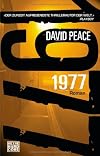
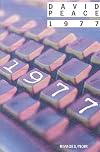
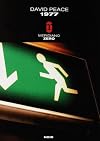
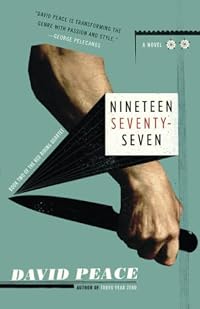
If you thought fiction couldn't get darker than David Peace's extraordinary debut, Nineteen Seventy Four, then think again. Nineteen Seventy Seven, the second instalment of the 'Red Riding Quartet', is one long nightmare. Its heroes - the half decent copper Bob Fraser and the burnt-out hack Jack Whitehead - would be considered villains in most people's books. Fraser and Whitehead have one thing in common though, they're both desperate men dangerously in love with Chapeltown prostitutes.And show more as the summer moves remorselessly towards the bonfires of Jubilee Night, the killings accelerate and it seems as if Fraser and Whitehead are the only men who suspect or care that there may be more than one killer at large. Out of the horror of true crime, David Peace has fashioned a work of terrible beauty. Like James Ellroy before him, David Peace tells us the true and fearsome secret history of our times. show lessTags
Recommendations








Member Reviews
Deeply unpleasant but ultimately satisfying read. I can’t imagine that folks would go straight to Nineteen Seventy-Seven without reading Nineteen Seventy-Four first, so prospective readers would already be familiar with Peace prose:
The clipped, staccato rhythms.
Hypnotic in their repetition.
In their repetition.
The refusal to connect the narrative dots for the reader.
Words spat out like bullets from a machine gun etc.
Unpleasant: the torrents of profanity, the racism and misogyny, not to mention explicit violence, are relentless and punishing and not for the squeamish.
But satisfying: it's nonetheless a hell of a page-turning read. Peace packs tension in between the lines, even in the most ordinary sequences (like in the many scenes of show more copious drinking). The reader's patience for the damaged and obsessive protagonists is arguably tested by their tendency towards melodramatic torment -- there's an awful lot of drunken tears and suicidal self-pity, even more than characters in a James Ellroy novel -- but the book on the whole is well worth the effort. Just don't be surprised if you want to start viewing cute puppy videos on YouTube after reading the book just to shake the bleakness and grime off. show less
The clipped, staccato rhythms.
Hypnotic in their repetition.
In their repetition.
The refusal to connect the narrative dots for the reader.
Words spat out like bullets from a machine gun etc.
Unpleasant: the torrents of profanity, the racism and misogyny, not to mention explicit violence, are relentless and punishing and not for the squeamish.
But satisfying: it's nonetheless a hell of a page-turning read. Peace packs tension in between the lines, even in the most ordinary sequences (like in the many scenes of show more copious drinking). The reader's patience for the damaged and obsessive protagonists is arguably tested by their tendency towards melodramatic torment -- there's an awful lot of drunken tears and suicidal self-pity, even more than characters in a James Ellroy novel -- but the book on the whole is well worth the effort. Just don't be surprised if you want to start viewing cute puppy videos on YouTube after reading the book just to shake the bleakness and grime off. show less
This is the second book in Peace's Red Riding Hood Quartet. It is just as grim and well-written as the first one. Although there are two narrators here, Jack Whitehead and Bobby Fraser, their voices are very similar (and like Nineteen Seventy-Four's Eddie Dunford), that I sometimes had trouble telling them apart. That was my only real problem with Peace's writing, however, as this book only seems to improve on the gory poetry of the first. The violence, corruption, and horror is almost mind numbing, and Peace's unique stream-of-consciousness ramblings, where the comma splices come like bullets and the obscenity pools like piles of blood, contributes to a sense of unreality, despite the realistic details of the setting. It's a nightmare show more that you can't wake up from, because if you put the book down, you will still be thinking about it, wondering what is truth and what is a dream. A brutal, beautifully styled noir, where there are no real answers (although I'm hoping we may get some by the end of the quartet), no heroes, and no rest for the wicked (the good don't exist). I will definitely be reading the rest of the series. It's like watching a train wreck, where you can't look away, and some perverted part of you doesn't want to. Four and a half stars. show less
Jack Whitehead is a seasoned journalist haunted by the spectre of a murdered woman. Bob Fraser is a cop married to the daughter of a legendary officer, with a bright future and a clean reputation. He is also involved in an obsessive relationship with a prostitute which may not be entirely consensual. In the flawed and dirty world of the villages and towns near Leeds, in Yorkshire, in Nineteen Seventy-Seven, they are the good guys. A violent sexual murderer, called the Yorkshire Ripper, is hunting down the prostitutes of the region, but there are questions about whether all the dead women were killed by the Ripper and about possible police involvement.
The second installment in David Peace's Red Riding Quartet is as violent and show more relentless as the first. This is Noir in its very darkest and bleakest incarnation. The Yorkshire of Peace's imagination is devoid of hope or even basic human decency, where Blacks and Gypsies are the targets of police brutality as a matter of course and where women are victimized with callous disregard. Whitehead and Fraser have reasons for pursuing their search for the killer, but they have their own demons to fight, which might just prove more formidable than the corrupt and venal system they operate within.
One needs a strong stomach to read this series, but they are compelling; the violence is graphic but it never feels gratuitous. After reading the first book in the series, Nineteen Seventy-Four, I rushed right out to get a copy of [Nineteen Seventy-Seven], which I then eyed distrustfully for several months before reading. I'll be doing the same with Nineteen Eighty. show less
The second installment in David Peace's Red Riding Quartet is as violent and show more relentless as the first. This is Noir in its very darkest and bleakest incarnation. The Yorkshire of Peace's imagination is devoid of hope or even basic human decency, where Blacks and Gypsies are the targets of police brutality as a matter of course and where women are victimized with callous disregard. Whitehead and Fraser have reasons for pursuing their search for the killer, but they have their own demons to fight, which might just prove more formidable than the corrupt and venal system they operate within.
One needs a strong stomach to read this series, but they are compelling; the violence is graphic but it never feels gratuitous. After reading the first book in the series, Nineteen Seventy-Four, I rushed right out to get a copy of [Nineteen Seventy-Seven], which I then eyed distrustfully for several months before reading. I'll be doing the same with Nineteen Eighty. show less
Just as brutal, dark, and unrelenting as Nineteen Seventy-Four, I wouldn't say this was a pleasant read, but one that I wasn't able to stop reading all the same.
Split between two main characters' points of view, I found Bob Fraser incredibly dislikable and was often frustrated with his horrible emotional intelligence, lack of self-control, and hateful, self-loathing attitude. Jack Whitehead, on the other hand, was a breath of fresh air and, unlike with Bob or even Eddie from the previous novel, I cared more about what happened to him and enjoyed reading his thoughts.
This book is heavier in terms of police brutality, racism, and depictions of gore than the last book, which made some passages very hard for me to get through, but I show more believe it all serves in a rather heavy-handed fashion to critique the ugly parts of law enforcement and society as a whole that we would rather ignore. I speculate, too, that these books may also be an expression of very real frustration toward the Yorkshire police's disrespect and incompetence during the real life Ripper murders.
Either way, for as unpleasant as this book was, it was exciting and Peace's talent for pacing and building suspense kept me turning the page, eager to see what might happen next. My only real critique is that it feels like Peace is playing with his readers. Few questions are answered by the end, and between surreal dream sequences and vague conversations where we're only given fragments of a whole picture, I'm left more confused than when I started.
Still, I've enjoyed the heart-pumping ride so far, and can't wait to see how the final two books play out. Hopefully Nineteen Eighty-Three will have a satisfying conclusion and answer all my questions. show less
Split between two main characters' points of view, I found Bob Fraser incredibly dislikable and was often frustrated with his horrible emotional intelligence, lack of self-control, and hateful, self-loathing attitude. Jack Whitehead, on the other hand, was a breath of fresh air and, unlike with Bob or even Eddie from the previous novel, I cared more about what happened to him and enjoyed reading his thoughts.
This book is heavier in terms of police brutality, racism, and depictions of gore than the last book, which made some passages very hard for me to get through, but I show more believe it all serves in a rather heavy-handed fashion to critique the ugly parts of law enforcement and society as a whole that we would rather ignore. I speculate, too, that these books may also be an expression of very real frustration toward the Yorkshire police's disrespect and incompetence during the real life Ripper murders.
Either way, for as unpleasant as this book was, it was exciting and Peace's talent for pacing and building suspense kept me turning the page, eager to see what might happen next. My only real critique is that it feels like Peace is playing with his readers. Few questions are answered by the end, and between surreal dream sequences and vague conversations where we're only given fragments of a whole picture, I'm left more confused than when I started.
Still, I've enjoyed the heart-pumping ride so far, and can't wait to see how the final two books play out. Hopefully Nineteen Eighty-Three will have a satisfying conclusion and answer all my questions. show less
These books (1974, 1977, 1980, and 1983)collectively constitute The Red Riding Hood Quartet, a series of crime novels based on the Yorkshire Ripper murders. I had read the first in the series, Nineteen Seventy-four last year, and thought it would be a simple matter to pick up with Nineteen Seventy-seven (which BTW is on the 1001 list) and proceed. However, I soon determined that I needed to reread Nineteen Seventy-four, which I did, and when I finished Nineteen Seventy-seven, I had to immediately go onto Nineteen Eighty and then Nineteen Eighty-three. I can't remember when I've read so many books by the same author in such a concentrated amount of time. (I devoured these over several days). In my view, these four books can only be read show more as one novel.
The first book in the series is narrated by a novice crime reporter, and concerned the solving of a series of child murders, some of which occurred several years before 1974, when the book is set. It is grim and bleak, and about terrible people doing terrible things. In this book, we are introduced to some of the corrupt policemen who are the core of this series.
Nineteen Seventy-seven is narrated by Jack Whitehead, a senior crime reporter who had made an appearance in the first book as the arrogant, wisecracking rival of the narrator in the first book. Now that we are in his mind, we can see that he is a psychological wreck, with self-induced demons haunting him.
Whitehead's sections alternate with sections narrated by Bobby Fraser, a policeman who made a brief but important appearance in the first book. In that book, he was a rookie, and was ethical with a sense of fair play. Three years later, he is unrecognizable--corrupt and violent.
In Nineteen Seventy-seven the Ripper murders begin, but are not solved. As in Nineteen Seventy-four, the narrative flows freely back and forth in time, and is for the most part in stream of consciousness. It is again a novel without a hero, full of terrible people.
In Nineteen Eighty the murders continue, and we meet the first character we can like. Peter Hunter, an investigator from another district, is sent to review the Ripper investigation to determine whether the failure to solve the case is due to incompetence, or to some clue that has been overlooked. Again the narrative travels loosely back and forth in time, and more and more of the rampant police corruption becomes known to the reader.
Each of these first three novels ends with a huge bang, although we sometimes are not entirely sure what actually happened. It is not until the ensuing book that we are entirely aware of what happened, and the ramifications it has for the characters and the investigation.
Nineteen Eight-three is narrated from the pov of three characters. John Piggot, a sleazy solicitor who is trying to prove that the man convicted of the child murders in the first book was framed, narrates his sections in the first person. BJ, a "rent boy" who has made appearances in the first three novels, narrates his sections, referring to himself in the second person. The final sections are told from the point of view of a corrupt police official.
Nineteen Eight-three winds and unwinds, not unlike a symphonic exposition, all the threads begun in the first novel. It shifts back and forth in time over nearly twenty years. As in the first three novels, it also ends with a bang, and again we are not quite sure of all of the ramifications. Unfortunately, there will be no succeeding books to enlighten us.
These four novels are amazing. They are not, however, for everyone. There are obscenties on every page. Brutality and violence abound, sometimes graphicly described. Everyone is corrupt. The novels are bleak, gritty, cynical and despairing. If this description doesn't bother you, I highly recommend these books. Read as one, they are a masterpiece. show less
The first book in the series is narrated by a novice crime reporter, and concerned the solving of a series of child murders, some of which occurred several years before 1974, when the book is set. It is grim and bleak, and about terrible people doing terrible things. In this book, we are introduced to some of the corrupt policemen who are the core of this series.
Nineteen Seventy-seven is narrated by Jack Whitehead, a senior crime reporter who had made an appearance in the first book as the arrogant, wisecracking rival of the narrator in the first book. Now that we are in his mind, we can see that he is a psychological wreck, with self-induced demons haunting him.
Whitehead's sections alternate with sections narrated by Bobby Fraser, a policeman who made a brief but important appearance in the first book. In that book, he was a rookie, and was ethical with a sense of fair play. Three years later, he is unrecognizable--corrupt and violent.
In Nineteen Seventy-seven the Ripper murders begin, but are not solved. As in Nineteen Seventy-four, the narrative flows freely back and forth in time, and is for the most part in stream of consciousness. It is again a novel without a hero, full of terrible people.
In Nineteen Eighty the murders continue, and we meet the first character we can like. Peter Hunter, an investigator from another district, is sent to review the Ripper investigation to determine whether the failure to solve the case is due to incompetence, or to some clue that has been overlooked. Again the narrative travels loosely back and forth in time, and more and more of the rampant police corruption becomes known to the reader.
Each of these first three novels ends with a huge bang, although we sometimes are not entirely sure what actually happened. It is not until the ensuing book that we are entirely aware of what happened, and the ramifications it has for the characters and the investigation.
Nineteen Eight-three is narrated from the pov of three characters. John Piggot, a sleazy solicitor who is trying to prove that the man convicted of the child murders in the first book was framed, narrates his sections in the first person. BJ, a "rent boy" who has made appearances in the first three novels, narrates his sections, referring to himself in the second person. The final sections are told from the point of view of a corrupt police official.
Nineteen Eight-three winds and unwinds, not unlike a symphonic exposition, all the threads begun in the first novel. It shifts back and forth in time over nearly twenty years. As in the first three novels, it also ends with a bang, and again we are not quite sure of all of the ramifications. Unfortunately, there will be no succeeding books to enlighten us.
These four novels are amazing. They are not, however, for everyone. There are obscenties on every page. Brutality and violence abound, sometimes graphicly described. Everyone is corrupt. The novels are bleak, gritty, cynical and despairing. If this description doesn't bother you, I highly recommend these books. Read as one, they are a masterpiece. show less
I'm not really sure what to make of this book. Gripping, I couldn't put it down but....
Every man in the book is misogynist and racist (apart from the men who aren't white and they don't play very big roles). Rape and pornography are accepted norms. The women are ciphers - there to be raped and abused. I kept hoping that there would be some redemptive quality shown by somebody, but there never was. Yet the novel stank of reality and maybe that's why I can't make up my mind whether this is just a misogynist rant or a commentary on a very sick and corrupt world.
Every man in the book is misogynist and racist (apart from the men who aren't white and they don't play very big roles). Rape and pornography are accepted norms. The women are ciphers - there to be raped and abused. I kept hoping that there would be some redemptive quality shown by somebody, but there never was. Yet the novel stank of reality and maybe that's why I can't make up my mind whether this is just a misogynist rant or a commentary on a very sick and corrupt world.
Peace's poetry-as-prose style is certainly distinctive but it gets a bit much at times and distracts me because it feels like "author showing off" rather than "character baring their soul". That style gets more and more intrusive as the book goes on and that, combined with the struggle to find one of the protagonists sympathetic, makes this a 3 rather than a 4 star.
Members
- Recently Added By
Lists

1001 Books You Must Read Before You Die
1,448 works; 1,131 members

The Guardian's 1000 Novels Everyone Must Read
1,005 works; 546 members

...read all, pay nowt (Books set in Yorkshire)
86 works; 14 members
Author Information

19+ Works 5,478 Members
Some Editions
Awards and Honors
Series


Belongs to Publisher Series
Common Knowledge
- Canonical title
- Nineteen Seventy Seven
- Original title
- Nineteen Seventy-Seven
- Alternate titles
- 1977
- Original publication date
- 2000
- Important places
- Yorkshire, England, UK; England, UK
- Important events
- Yorkshire Ripper Murders (1975 | 1980)
- First words
- Leeds. Sunday 29 May 1977. It's happening again: When the two sevens clash ...
- Last words*
- (Click to show. Warning: May contain spoilers.)Er schlug zu.
...keine Zukunft. - Original language*
- Englisch
*Some information comes from Common Knowledge in other languages. Click "Edit" for more information.
Classifications
Statistics
- Members
- 696
- Popularity
- 40,822
- Reviews
- 19
- Rating
- (3.67)
- Languages
- 8 — Dutch, English, French, German, Italian, Russian, Spanish, Swedish
- Media
- Paper, Audiobook, Ebook
- ISBNs
- 24
- ASINs
- 4