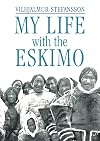
My Life with the Eskimo
by Vilhjalmur Stefansson
73 Members (4.17)
On This Page
Description
Who are the Eskimo peoples? And how do they survive in the freezing conditions of the far north? Vilhjálmur Stefánsson left New York in April 1908 to begin his journey northwards and into the Arctic Circle. For the next two years he made his way northwards to Victoria Island to study an isolated group of Inuit who still used primitive tools and had strong Caucasian features, and whom some believed were descended from Vikings. The journey into these remote areas was incredibly tough and show more being delayed by blizzards Stefánsson, along with his companions, were forced to eat the tongue of a beached whale that had been dead for at least four years. Stefánsson, who learnt how to communicate with the Inuit, provides fascinating insight into the beliefs and everyday life of these people. show lessTags
Recommendations



























Member Reviews
Members
- Recently Added By
Author Information

33+ Works 417 Members
Stefansson, Canadian-born of Icelandic parentage and the last of the dog-sled explorers, spent many years in the Arctic. His books aim to combat popular misconceptions about the Far North. They show that it is a good place for colonization, that human life can be supported there on a diet of seal alone, and that it has possibilities for commercial show more usefulness. Stefansson's "findings changed man's prevailing concepts. By "humanizing' the icy north, he became known as the man who robbed the Arctic Circle of all its terrors and most of its discomforts" (Boston Globe). As far back as 1915, he suggested the feat that the atom-powered Nautilus finally accomplished---submerging under the Arctic ice on the Pacific side and emerging, after two months, on the Atlantic side. The whole fascinating search for a northwest passage is told with scholarly authority in his Northwest to Fortune (1958). "Clearly and lovingly written, the book brings color and even warmth to regions which for so many of us have seemed wrapped in cold, fog, and ice" (Christian Science Monitor). (Bowker Author Biography) show less
Common Knowledge
- Important places
- Canadian Arctic
Classifications
- Genres
- Anthropology, Nonfiction, General Nonfiction, Biography & Memoir, Travel, Science & Nature, History
- DDC/MDS
- 919.8 — History & geography Geography & travel Geography of and travel in Australasia, Pacific Ocean islands, Atlantic Ocean islands, Arctic islands, Antarctica and on extraterrestrial worlds Polar regions
- LCC
- G670 — Geography, Anthropology and Recreation Geography (General) Arctic and Antarctic regions
- BISAC
Statistics
- Members
- 73
- Popularity
- 432,814
- Rating
- (4.17)
- Languages
- English, Swedish
- Media
- Paper, Audiobook, Ebook
- ISBNs
- 13
- ASINs
- 6