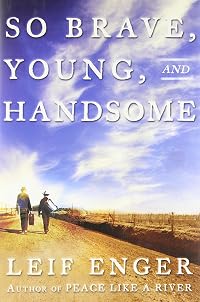
So Brave, Young and Handsome: A Novel
by Leif Enger
On This Page
Description
The story of an aging train robber on a quest to reconcile the claims of love and judgment on his life, and the failed writer who goes with him.Tags
Recommendations


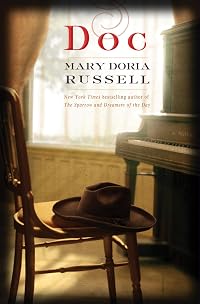
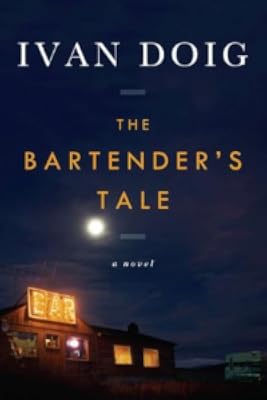
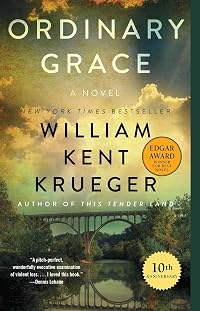
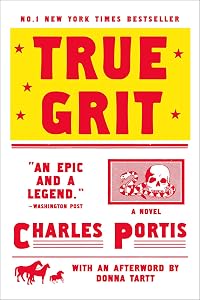

Member Reviews
I started this book annoyed. I did NOT like the pseudoformal English that the author posits regular people used a century ago, felt it was such a cutesy way of making the story feel "authentic" and so contrived as to make me want to smack the perpetrator.
I got over it. Glendon the train robber completely seduced me, just like he did the narrator, the narrator's wife, the narrator's son, and so many, many others along his twisty path.
This is a tale about Truth, not truth, and the author shows us that from the get-go with the very narrative voice I found so irksome at first. There is Truth in the world, often to be found shoved behind elaborate scrims of lies, where the facts that tell the truth are woven into the most fantastical beasts show more of falsehood it's amazing.
Leif Enger knows this, and tells us this amazing and important and underappreciated piece of knowledge in the voice of a man whose grasp of the facts is imperfect but whose knowledge of the Truth guides him and saves him from a wasted, useless life.
Very, very worth reading. I say grit your teeth at the narrative voice and charge into the story full tilt. You will be very glad you got to know these characters. They do remain characters, though; some essential *oomph* is missing that's necessary to launch them into full personhood. Still, they're good readin'. Go to it, unfettered by fear of disappointment. show less
I got over it. Glendon the train robber completely seduced me, just like he did the narrator, the narrator's wife, the narrator's son, and so many, many others along his twisty path.
This is a tale about Truth, not truth, and the author shows us that from the get-go with the very narrative voice I found so irksome at first. There is Truth in the world, often to be found shoved behind elaborate scrims of lies, where the facts that tell the truth are woven into the most fantastical beasts show more of falsehood it's amazing.
Leif Enger knows this, and tells us this amazing and important and underappreciated piece of knowledge in the voice of a man whose grasp of the facts is imperfect but whose knowledge of the Truth guides him and saves him from a wasted, useless life.
Very, very worth reading. I say grit your teeth at the narrative voice and charge into the story full tilt. You will be very glad you got to know these characters. They do remain characters, though; some essential *oomph* is missing that's necessary to launch them into full personhood. Still, they're good readin'. Go to it, unfettered by fear of disappointment. show less
Eloise rec'd:
rollicking, the words and rhythm captivated, made me pause and enjoy, read it twice
---
Well, she's certainly not wrong! I'm not reading it for the specific plot, or even for the specific characters. I'm reading it for the beautiful writing, and the way the author makes me feel like I'm actually enjoying something of actual Literary value.
How can I explain? Motivations are what unfold, not events. Histories are revealed, not secrets. There's tragedy, and humor. Peril, and joy. The characters are very different from each other, and from most readers... but they also represent the everyman.
Short 'books' and 'chapters' (or are they chapters and sub-chapters?) keep me turning the pages, but at the same time I take breaks and show more ponder the bit just read. I will indeed plan to read it again.
---
Done. Yep. Alrighty then.
"In times of dread it's good to have an old man along. An old man has seen worse." show less
rollicking, the words and rhythm captivated, made me pause and enjoy, read it twice
---
Well, she's certainly not wrong! I'm not reading it for the specific plot, or even for the specific characters. I'm reading it for the beautiful writing, and the way the author makes me feel like I'm actually enjoying something of actual Literary value.
How can I explain? Motivations are what unfold, not events. Histories are revealed, not secrets. There's tragedy, and humor. Peril, and joy. The characters are very different from each other, and from most readers... but they also represent the everyman.
Short 'books' and 'chapters' (or are they chapters and sub-chapters?) keep me turning the pages, but at the same time I take breaks and show more ponder the bit just read. I will indeed plan to read it again.
---
Done. Yep. Alrighty then.
"In times of dread it's good to have an old man along. An old man has seen worse." show less
If one makes bad decisions that somehow lead to a wonderful result — such as a bad marriage that results in a good child — were they actually bad decisions?
Leif Enger's 2008 novel “So Brave, Young, and Handsome” leads the reader to think such thoughts. The title comes from “The Cowboy's Lament,” which places that dilemma in this couplet: "For we loved our comrade, so brave, young, and handsome/We all loved our comrade, although he'd done wrong."
Enger's novel is narrated by a frustrated writer, Monte Becket, who after one successful novel seems unable to write anything of value. He, his wife and son become fascinated by a boat-building neighbor named Glendon. When Glendon decides to go West to try to find his Mexican wife, show more whom he abandoned years before, Becket decides to go with him, a decision his wife, Susannah, somehow approves of.
Along the way, Becket learns that abandoning his wife is the least of Glendon's sins. He is also a train robber and murderer being pursued by an aging, former Pinkerton agent named Siringo, who never gives up.
Instead of returning to his family in Minnesota, Becket decides to stick with Glendon, even when this makes himself a fugitive pursued by Siringo.
The consequences of Becket's decisions go from bad to worse, yet somehow it all works out in the end. And Becket, who tells his wild story, proves he can still write after all. show less
Leif Enger's 2008 novel “So Brave, Young, and Handsome” leads the reader to think such thoughts. The title comes from “The Cowboy's Lament,” which places that dilemma in this couplet: "For we loved our comrade, so brave, young, and handsome/We all loved our comrade, although he'd done wrong."
Enger's novel is narrated by a frustrated writer, Monte Becket, who after one successful novel seems unable to write anything of value. He, his wife and son become fascinated by a boat-building neighbor named Glendon. When Glendon decides to go West to try to find his Mexican wife, show more whom he abandoned years before, Becket decides to go with him, a decision his wife, Susannah, somehow approves of.
Along the way, Becket learns that abandoning his wife is the least of Glendon's sins. He is also a train robber and murderer being pursued by an aging, former Pinkerton agent named Siringo, who never gives up.
Instead of returning to his family in Minnesota, Becket decides to stick with Glendon, even when this makes himself a fugitive pursued by Siringo.
The consequences of Becket's decisions go from bad to worse, yet somehow it all works out in the end. And Becket, who tells his wild story, proves he can still write after all. show less
For his second novel, [So Brave, Young, and Handsome], Leif Enger chose one of the oldest and most hallowed tropes – the road trip. As far back as [The Canterbury Tales] or [The Odyssey], quests have been used as a metaphor for life, perhaps because the metaphor quickens within us all the desire to strike out and change ourselves.
In [So Brave, Young, and Handsome] Monte Beckett is stuck. After writing a wildly successful western adventure, he can no longer find the words or the story. He sits on the porch, scribbling unpublishable tripe and burning the pages. The porch affords him a view of the river, constantly moving and alive – a vital reminder of how stagnant he has become. Then, the river produces his salvation, a strange, show more spritely man rowing through the mist, mumbling and laughing to himself. Glendon Hale – which might be his real name or might be another in a long line of aliases designed to help elude a violent and vulgar past – breathes new life into Monte. Glen convinces Monte to leave with accompany him on a journey to Mexico to find a long lost love. The trip transforms the two men.
Early in the novel, a lawman chastises Monte that authors make the world too much of a romance. Monte takes exception to the argument, declaring, “violent and doomed as this world might be, a romance it certainly is.” This notion is one that Monte must recapture in his journey, as his life has become too much of a a forced march – he has lost the ability to see the romance in the world around him and, with that loss, the ability to live life instead of work at it. Not until Monte has regained the romance of the world is he able to write again.
What thrums with life in the novel is also its greatest weakness. The eccentric and quirky cast of characters Monte encounters on his journey is fascinating but by the time we get to the Annie Oakley shooting girl and the midget horse salesman, the circus has one too many clowns. Enger reaches too far to make these minor characters colorful when the real interest is in the main characters; the ones whose angst looks a little more like our own. Monte – a tragic figure, stagnant and moored too firmly by his fears of failure – and Glen – the drunk trying to recapture his past in the same breath as absolution for it – are the real interest. Or Monte’s wife, holding her family together delicately, like grasping at a group of eggs just larger than her hands. These are the truly provocative characters in the novel and they are featured far too little while Enger chases the quirky.
The best example of Enger’s misguided path is Charlie Siringo. Just as Monte and Glen’s journey has begun, they are separated and Monte is left in the custody of Charlie Siringo, a retired Pinkerton who cannot quit his prey. Perhaps because Siringo was a real and terribly interesting person, Enger seems devoted to creating some space to tell the man’s story. Sirigno, both in the novel and in real life, went undercover to infiltrate Butch Cassidy’s gang during its train-robbing phase. A renowned lawman, for his exploits and the books that he wrote about them, Siringo cast a more professional and intellectual shadow than the gunslingers of the time. But with Siringo, Enger’s novel goes off the rails. While Siringo pursues Glen with Monte in custody, Enger loses sight of the tone and character of his story. Almost immediately, the description of place and time falls by the wayside. Traveling over the Kansas flatlands and into the Oklahoma hills with Monte and Glen, the country is vivid and alive, bounding off the page. But Siringo carries the story into a void that is bland and featureless, opaque to everything but Siringo’s own narrative. And some of Monte’s most uncharacteristic and unbelievable moments are with Siringo. The lengths that Enger goes in keeping Monte in Siringo’s custody strain the bounds of believability. Even Monte, a fearful and stagnant man, should have been able to elude a man who is suffering the ill effects of age, gunshot wounds, and the onset of a paralyzing stroke.
Enger is clearly setting Siringo up as the anti-thesis of Glen and Monte’s pursuit of change and growth – as Siringo stands for all things unchanging. He is unable to lay down his obsession, ceaselessly chasing glory in the same way over and over again. But this is a comparison that would have been best suited to tell from afar. Remember that scene in Butch Cassidy and the Sundance Kid – the two outlaws perched on rocky crag, peering out over the reflective desert sand at the ever plume dust kicked up by their dogged pursuers. “Who are those guys?” Butch says. Siringo from afar, obsessed and persistent, would have made the same point across without derailing Monte and Glen’s story.
Bottom Line: A transformative quest tale – derailed in the middle but set aright in the end.
3 bones!!!!! show less
In [So Brave, Young, and Handsome] Monte Beckett is stuck. After writing a wildly successful western adventure, he can no longer find the words or the story. He sits on the porch, scribbling unpublishable tripe and burning the pages. The porch affords him a view of the river, constantly moving and alive – a vital reminder of how stagnant he has become. Then, the river produces his salvation, a strange, show more spritely man rowing through the mist, mumbling and laughing to himself. Glendon Hale – which might be his real name or might be another in a long line of aliases designed to help elude a violent and vulgar past – breathes new life into Monte. Glen convinces Monte to leave with accompany him on a journey to Mexico to find a long lost love. The trip transforms the two men.
Early in the novel, a lawman chastises Monte that authors make the world too much of a romance. Monte takes exception to the argument, declaring, “violent and doomed as this world might be, a romance it certainly is.” This notion is one that Monte must recapture in his journey, as his life has become too much of a a forced march – he has lost the ability to see the romance in the world around him and, with that loss, the ability to live life instead of work at it. Not until Monte has regained the romance of the world is he able to write again.
What thrums with life in the novel is also its greatest weakness. The eccentric and quirky cast of characters Monte encounters on his journey is fascinating but by the time we get to the Annie Oakley shooting girl and the midget horse salesman, the circus has one too many clowns. Enger reaches too far to make these minor characters colorful when the real interest is in the main characters; the ones whose angst looks a little more like our own. Monte – a tragic figure, stagnant and moored too firmly by his fears of failure – and Glen – the drunk trying to recapture his past in the same breath as absolution for it – are the real interest. Or Monte’s wife, holding her family together delicately, like grasping at a group of eggs just larger than her hands. These are the truly provocative characters in the novel and they are featured far too little while Enger chases the quirky.
The best example of Enger’s misguided path is Charlie Siringo. Just as Monte and Glen’s journey has begun, they are separated and Monte is left in the custody of Charlie Siringo, a retired Pinkerton who cannot quit his prey. Perhaps because Siringo was a real and terribly interesting person, Enger seems devoted to creating some space to tell the man’s story. Sirigno, both in the novel and in real life, went undercover to infiltrate Butch Cassidy’s gang during its train-robbing phase. A renowned lawman, for his exploits and the books that he wrote about them, Siringo cast a more professional and intellectual shadow than the gunslingers of the time. But with Siringo, Enger’s novel goes off the rails. While Siringo pursues Glen with Monte in custody, Enger loses sight of the tone and character of his story. Almost immediately, the description of place and time falls by the wayside. Traveling over the Kansas flatlands and into the Oklahoma hills with Monte and Glen, the country is vivid and alive, bounding off the page. But Siringo carries the story into a void that is bland and featureless, opaque to everything but Siringo’s own narrative. And some of Monte’s most uncharacteristic and unbelievable moments are with Siringo. The lengths that Enger goes in keeping Monte in Siringo’s custody strain the bounds of believability. Even Monte, a fearful and stagnant man, should have been able to elude a man who is suffering the ill effects of age, gunshot wounds, and the onset of a paralyzing stroke.
Enger is clearly setting Siringo up as the anti-thesis of Glen and Monte’s pursuit of change and growth – as Siringo stands for all things unchanging. He is unable to lay down his obsession, ceaselessly chasing glory in the same way over and over again. But this is a comparison that would have been best suited to tell from afar. Remember that scene in Butch Cassidy and the Sundance Kid – the two outlaws perched on rocky crag, peering out over the reflective desert sand at the ever plume dust kicked up by their dogged pursuers. “Who are those guys?” Butch says. Siringo from afar, obsessed and persistent, would have made the same point across without derailing Monte and Glen’s story.
Bottom Line: A transformative quest tale – derailed in the middle but set aright in the end.
3 bones!!!!! show less
[a:Leif Enger|13591|Leif Enger|https://images.gr-assets.com/authors/1534287991p2/13591.jpg] stole my heart with [b:Peace Like a River|227571|Peace Like a River|Leif Enger|https://i.gr-assets.com/images/S/compressed.photo.goodreads.com/books/1436139976l/227571._SY75_.jpg|3332231], holding me captive from the first page to the last. I was afraid he could not pull off that trick again, but he did. After the first few chapters, in which I was beginning to doubt, this book took off and sailed, dragging me along in its wake. It is not serious or wrenching like [b:Peace Like a River|227571|Peace Like a River|Leif Enger|https://i.gr-assets.com/images/S/compressed.photo.goodreads.com/books/1436139976l/227571._SY75_.jpg|3332231], but it is show more endlessly entertaining, and who wants an author to write the same book twice?
There are three superb characters, offered up for our enjoyment. They populate the dying West, where the desperados are old, as are the lawmen chasing them. Monte Becket, a man who knows nothing of the West except the imaginings he has put into his surprisingly successful novel; Glendon Hale, a man with a past that he wants to atone for; and Charlie Siringo, a less than scrupulous Pinkerton man, find themselves locked into each other's lives and swept across the rapidly changing 1915 landscape from Minnesota to California . The book is a wild ride, with these three reminding me of the lost art of bronco busting, where winning or losing is always determined by who hangs on the longest.
The West here is a dying culture, where the only cowboys are in wild west shows, and names like Butch Cassidy are beginning to fade with the memories of the men who knew him. It is, also, a tale about redemption; a tale about finding out who you are, or who you can be, before it is too late.
You can’t explain grace, anyway, especially when it arrives almost despite yourself. I didn’t even ask for it, yet somehow it breached and began to work. I suppose grace was pouring over Glendon, who had sought it so hard, and some spilled down on me.
Many of the events of the book would seem ludicrous in isolation and perhaps even in afterthought, but I believed this story and every event in the reading. I was there. I saw it, vividly. I pictured Hale and Siringo with weathered faces and western drawls that identified them as different, as relics, but with a kind of magical character that would be missed in the future from which they would shortly be missing.
I am so glad I took the time out of my planned reading to work in this delightful book. I was sad to relinquish these characters in the end, but I have no problem imagining where they are now, beyond the confines of the book, because the end is never truly the end in this one. show less
There are three superb characters, offered up for our enjoyment. They populate the dying West, where the desperados are old, as are the lawmen chasing them. Monte Becket, a man who knows nothing of the West except the imaginings he has put into his surprisingly successful novel; Glendon Hale, a man with a past that he wants to atone for; and Charlie Siringo, a less than scrupulous Pinkerton man, find themselves locked into each other's lives and swept across the rapidly changing 1915 landscape from Minnesota to California . The book is a wild ride, with these three reminding me of the lost art of bronco busting, where winning or losing is always determined by who hangs on the longest.
The West here is a dying culture, where the only cowboys are in wild west shows, and names like Butch Cassidy are beginning to fade with the memories of the men who knew him. It is, also, a tale about redemption; a tale about finding out who you are, or who you can be, before it is too late.
You can’t explain grace, anyway, especially when it arrives almost despite yourself. I didn’t even ask for it, yet somehow it breached and began to work. I suppose grace was pouring over Glendon, who had sought it so hard, and some spilled down on me.
Many of the events of the book would seem ludicrous in isolation and perhaps even in afterthought, but I believed this story and every event in the reading. I was there. I saw it, vividly. I pictured Hale and Siringo with weathered faces and western drawls that identified them as different, as relics, but with a kind of magical character that would be missed in the future from which they would shortly be missing.
I am so glad I took the time out of my planned reading to work in this delightful book. I was sad to relinquish these characters in the end, but I have no problem imagining where they are now, beyond the confines of the book, because the end is never truly the end in this one. show less
What makes this book really good is all the layers - the West and cowboys and outlaws and writing and the pursuit and love and redemption. It's all mixed in there and told with a deft hand. The story is told in a curious mix of formality and preciseness and unique turn of phrase ("been shot to moist rags" was one that caught my imagination). I particularly liked the journey Monte makes - caught up in events, he continues on - risking everything to figure out who exactly he is when measured in a different kind of life.
Monte Becket is a postman in Minnesota in 1915. In his spare time, he wrote a swash-buckling adventure that somehow becomes something of a bestseller. No one is more surprised than Monte. As these things do, the success goes to Monte’s head and he quits his day job to become a fulltime author. And he hits a wall. There’s nothing there. He has written all the stories he has in him in this one story. We first encounter Monte when he has been fighting this writer’s block for about five years. He is sitting at his window one day, trying to meet his daily quota of 1000 words, when he glimpses a boatman row into view through the fog. The boatman is rowing standing up and facing forward as he laughs to himself like he has a delightful show more little secret. Who could resist that particular allure? Monte runs outside and invites the boatman in for coffee. The man just keeps rowing and laughing, but responds, “Some other time.” Eventually, Monte and his wife and young son have the opportunity to become friends with the boatman, whose name is Glendon Hale. As they become closer to Glen, they feel certain that the man has a past he is hiding. One day, Glen confesses to Monte that he was married to a young Mexican girl a long time ago. He left her for reasons of his own, but now he feels like he should find Blue, as he affectionately calls her, and apologize for leaving her the way that he did. He invites Monte to accompany him on his search. Upon his wife’s urging, Monte eventually agrees to go with Glen, and their adventure begins.
Okay, let’s just get it out there. This is not Peace Like a River. It’s just not. I missed Reuben and Swede. But--this is still a five star book. I love Leif Enger’s writing. Magic happens for me when he starts stringing words together. When I open one of his two books, I am lost in his world. When I was trying to describe Enger’s writing style to my husband, all I could say was, “It’s just--just--just perfect.” That’s the best I can do. It’s just perfect.
The characters are wonderfully complex. Monte is a scrupulously honest narrator. He doesn’t dwell on the moments when he might shine a little. He plays up the times when his cowardice gets the better of him. I don’t want to give away anything else, so you’ll just have to take my word for it that the other characters are well-developed also. I told my husband five minutes after finishing this book, “I miss those characters already.” I wasn’t really exaggerating.
The plot moved along at a good pace and the story was engaging. I never wished that we could just get on with it. The characters moved in and out at just the right time, within events that happened at just the right time, with just the right amount of foreshadowing.
The story is a good story in and of itself. But there are larger themes hidden within the pages, and I loved those too. We’ve all read the books about how family isn’t necessarily the people you’re related to, it’s the people you choose and who choose you who are always there for you. True. But Enger takes it a step farther. He seems to believe that family can be made up of the people you’re related to and the people you choose. A true family will always have room for more people, blood relatives or not. Love grows more love. I like it.
There are more of these, but this is getting long.
I was so nervous starting this book. I was afraid that I would be disappointed because Peace Like a River is one of my two absolute favorite books. So Brave, Young, and Handsome is a wonderful book in its own right. Don’t overlook it because it’s not as good as Peace Like a River. Peace was something like a seven star, once-in-a-lifetime book. This one is “just” a five star. But think about that. Everyone runs out to buy a five star book, so give this one a chance. You won’t be disappointed. I wasn’t. show less
Okay, let’s just get it out there. This is not Peace Like a River. It’s just not. I missed Reuben and Swede. But--this is still a five star book. I love Leif Enger’s writing. Magic happens for me when he starts stringing words together. When I open one of his two books, I am lost in his world. When I was trying to describe Enger’s writing style to my husband, all I could say was, “It’s just--just--just perfect.” That’s the best I can do. It’s just perfect.
The characters are wonderfully complex. Monte is a scrupulously honest narrator. He doesn’t dwell on the moments when he might shine a little. He plays up the times when his cowardice gets the better of him. I don’t want to give away anything else, so you’ll just have to take my word for it that the other characters are well-developed also. I told my husband five minutes after finishing this book, “I miss those characters already.” I wasn’t really exaggerating.
The plot moved along at a good pace and the story was engaging. I never wished that we could just get on with it. The characters moved in and out at just the right time, within events that happened at just the right time, with just the right amount of foreshadowing.
The story is a good story in and of itself. But there are larger themes hidden within the pages, and I loved those too. We’ve all read the books about how family isn’t necessarily the people you’re related to, it’s the people you choose and who choose you who are always there for you. True. But Enger takes it a step farther. He seems to believe that family can be made up of the people you’re related to and the people you choose. A true family will always have room for more people, blood relatives or not. Love grows more love. I like it.
There are more of these, but this is getting long.
I was so nervous starting this book. I was afraid that I would be disappointed because Peace Like a River is one of my two absolute favorite books. So Brave, Young, and Handsome is a wonderful book in its own right. Don’t overlook it because it’s not as good as Peace Like a River. Peace was something like a seven star, once-in-a-lifetime book. This one is “just” a five star. But think about that. Everyone runs out to buy a five star book, so give this one a chance. You won’t be disappointed. I wasn’t. show less
Members
- Recently Added By
Lists

Books I've Read
7 works; 1 member

Books Read 2026
11 works; 1 member
Author Information

13+ Works 9,080 Members
Awards and Honors
Awards
Distinctions
Work Relationships
Is abridged in
Common Knowledge
- Original publication date
- 2008-04-22
- People/Characters
- Monte Becket; Susannah Becket; Redstart Becket; Glendon Hale; Arandano 'Blue' Soto; Claudio Soto (show all 7); Charles Siringo
- Important places
- Minnesota, USA; California, USA
- First words
- Not to disappoint you, but my troubles are nothing – not for an author, at least.
- Quotations
- I looked at my son, the lover of mysteries. You could never guess what Redstart might say, for his mind was made of stories; he’d gathered all manner of splendid facts about gunpowder and deserts of the world and the ancho... (show all)ring of lighthouses against the furious sea; he knew which members of the James gang had once ridden into our town to knock over a bank and been shot to moist rags for their trouble; and about me he knew some things not even his mother knew, such as the exact number of novels I had abandoned on that porch.
Then letters began to arrive. I was still employed at the P.O. and was startled in the sorting room when envelopes bearing my name began crossing the desk. I rarely received mail – when I did it was apt to be from my moth... (show all)er, whose letters were straightforward offerings of gained wisdom. These on the other hand were praise from strangers who had read my little tale. … The daunting and completely unforeseen fact was this: They had mistaken me for a person of substance! I blushed but kept the letters. When I did hear from my mother, sometime later, she suggested I cling to my place at the post office and not let publication make me biggity. Fine advice, you will agree, yet vanity is a devious monkey.
“Jack London sets down a thousand a day before breakfast,” said I. Why do the foolish insist? But I was thinking of the modest dimensions a thousand words actually describe – a tiny essay, a fragment of conversation. ... (show all) “How hard can it be?” concluded your idiot narrator, lifting his glass to the future.
He was formal in the way of men grown apart, yet energy teemed behind his eyes and in some ways he seemed a boy himself. He might laugh abruptly at one of Redstart’s childish jokes; he was pleased by the simplest plays on ... (show all)language; and, like a boy, he kept eating rolls as long as there were rolls to be eaten. To Susannah he gave all possible deference, rising whenever she got up for more coffee or frosting, saying thank you in reverent tones and with averted eyes. These manners endeared him to Susannah straightaway, so that she looked round the table to make sure Redstart and I were noticing how a gentleman acts. He gave his story in bright shards.
She was a refined woman. It was disturbing to imagine her slinging my manuscript, goaded by my weak idioms. - Last words
- (Click to show. Warning: May contain spoilers.)“What are you writing?” asked Susannah. She was painting something, I couldn’t see what. “Just a sentence.” She lifted her head, a daub of orange below her lip. “Read it to me,” she said.
Classifications
Statistics
- Members
- 1,116
- Popularity
- 22,762
- Reviews
- 60
- Rating
- (3.76)
- Languages
- English, Italian, Norwegian (Bokmål)
- Media
- Paper, Audiobook, Ebook
- ISBNs
- 15
- ASINs
- 11