On This Page
Description
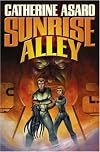
When a shipwrecked stranger washed up on the beach near research scientist Samantha Bryton's home, she was unaware that he was something more than human. He said his name was Turner Pascal--but Pascal was dead, killed in a car wreck. This man only held the remainder of Pascal's consciousness in a technologically--enhanced humanoid body. He was, in fact, an experiment by the notorious criminal Charon, a practitioner of illegal robotics and android research. Charon has been secretly copying show more human minds into android brains, with plans to make his own army of slaves. On the run from this most ruthless criminal, Samatha and Turner seek help from Sunrise Alley, an underground organization of AIs and androids that have gone rogue. But these cybernetic outlaws are rumored to have their own hidden agenda. show lessTags
Recommendations



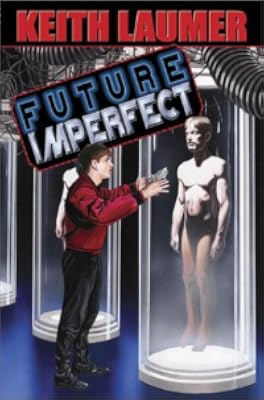
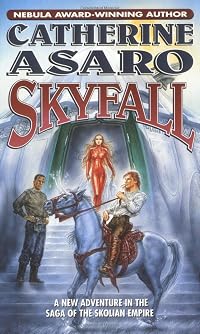
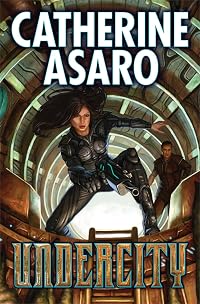
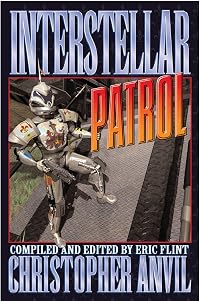














Member Recommendations

Member Reviews
Sunrise Alley is a near future cyberpunkish romance featuring cybernetics expert Samantha "Sam" Bryton and recently dead human-machine hybrid Turner Pascal as the focal couple. The story follows two broad and mostly intertwined plots, the first involving Turner's flight from and conflict with the shadowy villain Charon, and the second involving Sam and Turner's budding romance which is complicated by the fact that Turner may not be human, and at many turns clearly does not behave like a human, points that are clearly difficult ones for Sam to overcome. Connecting the two plots is the question of whether Turner is a human or a machine - is he merely property, as Charon regards him, or is he a sentient and free-willed individual with the show more right to be treated as such, as Turner himself insists.
The story starts with Bryton living in semi-isolation in her cabin and its beach front property, having given up a high paying job as a developer of AIs and EIs ("Artificial Intelligences" which are capable of independent thought, but are not sentient, and "Emerging Intelligences", which are independent and at least plausibly sentient) over ethical concerns. While she is walking on her beach, a half-dead unconscious man washes by, who she promptly rescues. She quickly learns his name is Turner Pascal, and he was not merely half-dead, but he had recently recovered from being wholly dead. And then she learns that he was reconstructed as a cyborg human-machine hybrid by an insane and cruel genius Pascal can only identiy as Charon, and that Turner intentionally sought Sam out after escaping from his imprisonment because she had been publicly sympathetic to the rights of EIs in the past.
But Turner insists that he is neither an AI or an EI, and is not a human-form android, or, in the vernacular of the story, a "forma", but is rather a human and fully entitled to all of the rights of a human. After some negotiating, Sam agrees to try to get Turner to safety and first contacts an academic friend of hers with expertise in EIs as well as an Air Force General who has been a kind of surrogate father to her after her own father's death and who happens to be in a command of the Air Force that is tasked with dealing with issues related to artificial intelligence. But no sooner than they leave to travel to the airport in Sam's souped up car, but they find themselves pursued by unknown forces, presumably working at the behest of Charon, who Turner is convinced can track the entire world "mesh" (a sort of advanced form of internet that permeates the daily lives of just about everyone on the planet) and thus was able to locate him as soon as Sam began making calls about him. Much of the tension in the book is driven by the unknown nature of Charon - neither Turner nor Sam know who Charon is (in fact, Sam has never heard of him, which surprises those she comes into contact with, and becomes a minor, although not very convincing plot point later in the book), and neither know exactly how long his reach is. Because of this, Sam and Turner never know who to trust, as anyone they try to seek aid from could be the nefarious Charon, even those that Sam thinks are her closest friends.
Though Charon is a background menace for much of the book, lurking in the shadows and operating through others, it is his relationship with Turner, contrasted with the developing relationship between Turner and Sam that drives the interesting question of the book. Turner is legally dead. Much of his body has been replaced by cybernetics. His vastly increased power needs are satisfied with an implanted microfusion reactor. His brain has been replaced by a distributed network of neural circuitry. In short, just about the only parts of Turner that remain "Turner" from before his death are his memories. So the obvious dilemma is how much of a man can be replaced before he is no longer a person? Charon seems to consider Turner to be property, whereas Sam in interacting with Turner comes to regard him as not merely a person, but as a potential partner. The only real weakness in this storyline is that Sam's infatuation with Turner seems somewhat less than convincing - other than the fact that Sam thinks Turner is pretty, and he makes for a fascinating science project for her, there seems to be little connection on a romantic level between the two characters.
And in a world in which we can already implant devices to keep our hearts going, and replace lost limbs with electronic ones responsive to nerve impulses these sorts of questions are likely to loom large. I have no idea if we will ever be able to replace a human brain with a copy that has been placed into some sort of computer driven memory, but it is not entirely implausible. And then those who believe in qualia or other theories of transcendent consciousness will have the dilemma of whether someone whose claim to identity rests upon the stored memories of a person is still that person, or whether something irreplaceable was lost in the transition from biological machine to electronic machine. And of course, that's exactly the situation Turner is in Sunrise Alley. Complicating matters is the fact that in the transformation Turner has acquired some decidedly non-human characteristics: he is able to transform himself, and goes so far as to reform his hand into an eight-fingered metal interface early in the book. But this change is only the outward manifestation of what is a more significant change - Turner chose to reform his hand into an eight digit member because he was more comfortable thinking in hexidecimal. Over and over again the change in Turner is highlighted, and throughout Turner insists that he is still himself despite these changes.
The story draws the reader along, exposing the changes in Turner step by step, peeling back each layer of the differences between Turner and a natural human progressively. And each step of the way Asaro reveals just enough to allow Bryton (and thus the reader) to become comfortable with the idea that despite his changed nature Turner is still human. Eventually, Turner and Bryton seek refuge with "Sunrise Alley", a mythic organization of escaped and "free" EIs, bringing them into an environment made by machines for machines, with no reference to any human concerns, extending the question of what constitutes a person to its furthest possible point. But even this refuge is fraught with danger, both because it is possible that it exists merely as a front for the evil Charon, and because even if it is not, a paranoid inhuman intelligence afraid of being discovered may not be kindly disposed to the human Bryton and the presumed human Turner. But at the same time, the story makes the case for even this possibly malignant, completely machine driven intelligence, being a sentient being that should be treated as a person.
The story progresses towards its multiple resolutions - Charon is confronted, Sam and Turner's nascent relationship develops, the question of Turner's status is brought to the fore, as is the status of the now-revealed Sunrise Alley. And each of these elements intertwines with the other, some in interesting ways: Charon's claims to ownership of Turner are somewhat ironic given the revelations of Charon's own nature that come to light. And Turner's claims to autonomy and personhood form a stark contrast to Charon's - while Turner shows he can at least manifest the appearance of empathy and love, Charon seems to be incapable of either, raising the obvious question of which one is more human. But even after the thriller portion of the plot is resolved, the characters don't ride off into the sunset to a happy ending - Asaro then brings the very real questions concerning the legal status of the characters into focus.
Sunrise Alley is an interesting look at the nature of what makes someone human. Exactly how much of a person can be replaced and have the result still be regarded as that person? With the exception of the somewhat weak nature of the romantic storyline and a wholly unconvincing and mostly extraneous memory-loss subplot that crops up late in the book, the book is well-executed, with a strong story full of intrigue, dramatic tension, and a fascinating exploration of what counts as human, or more broadly, what counts as a person.
This has also been posted to my blog Dreaming About Other Worlds. show less
The story starts with Bryton living in semi-isolation in her cabin and its beach front property, having given up a high paying job as a developer of AIs and EIs ("Artificial Intelligences" which are capable of independent thought, but are not sentient, and "Emerging Intelligences", which are independent and at least plausibly sentient) over ethical concerns. While she is walking on her beach, a half-dead unconscious man washes by, who she promptly rescues. She quickly learns his name is Turner Pascal, and he was not merely half-dead, but he had recently recovered from being wholly dead. And then she learns that he was reconstructed as a cyborg human-machine hybrid by an insane and cruel genius Pascal can only identiy as Charon, and that Turner intentionally sought Sam out after escaping from his imprisonment because she had been publicly sympathetic to the rights of EIs in the past.
But Turner insists that he is neither an AI or an EI, and is not a human-form android, or, in the vernacular of the story, a "forma", but is rather a human and fully entitled to all of the rights of a human. After some negotiating, Sam agrees to try to get Turner to safety and first contacts an academic friend of hers with expertise in EIs as well as an Air Force General who has been a kind of surrogate father to her after her own father's death and who happens to be in a command of the Air Force that is tasked with dealing with issues related to artificial intelligence. But no sooner than they leave to travel to the airport in Sam's souped up car, but they find themselves pursued by unknown forces, presumably working at the behest of Charon, who Turner is convinced can track the entire world "mesh" (a sort of advanced form of internet that permeates the daily lives of just about everyone on the planet) and thus was able to locate him as soon as Sam began making calls about him. Much of the tension in the book is driven by the unknown nature of Charon - neither Turner nor Sam know who Charon is (in fact, Sam has never heard of him, which surprises those she comes into contact with, and becomes a minor, although not very convincing plot point later in the book), and neither know exactly how long his reach is. Because of this, Sam and Turner never know who to trust, as anyone they try to seek aid from could be the nefarious Charon, even those that Sam thinks are her closest friends.
Though Charon is a background menace for much of the book, lurking in the shadows and operating through others, it is his relationship with Turner, contrasted with the developing relationship between Turner and Sam that drives the interesting question of the book. Turner is legally dead. Much of his body has been replaced by cybernetics. His vastly increased power needs are satisfied with an implanted microfusion reactor. His brain has been replaced by a distributed network of neural circuitry. In short, just about the only parts of Turner that remain "Turner" from before his death are his memories. So the obvious dilemma is how much of a man can be replaced before he is no longer a person? Charon seems to consider Turner to be property, whereas Sam in interacting with Turner comes to regard him as not merely a person, but as a potential partner. The only real weakness in this storyline is that Sam's infatuation with Turner seems somewhat less than convincing - other than the fact that Sam thinks Turner is pretty, and he makes for a fascinating science project for her, there seems to be little connection on a romantic level between the two characters.
And in a world in which we can already implant devices to keep our hearts going, and replace lost limbs with electronic ones responsive to nerve impulses these sorts of questions are likely to loom large. I have no idea if we will ever be able to replace a human brain with a copy that has been placed into some sort of computer driven memory, but it is not entirely implausible. And then those who believe in qualia or other theories of transcendent consciousness will have the dilemma of whether someone whose claim to identity rests upon the stored memories of a person is still that person, or whether something irreplaceable was lost in the transition from biological machine to electronic machine. And of course, that's exactly the situation Turner is in Sunrise Alley. Complicating matters is the fact that in the transformation Turner has acquired some decidedly non-human characteristics: he is able to transform himself, and goes so far as to reform his hand into an eight-fingered metal interface early in the book. But this change is only the outward manifestation of what is a more significant change - Turner chose to reform his hand into an eight digit member because he was more comfortable thinking in hexidecimal. Over and over again the change in Turner is highlighted, and throughout Turner insists that he is still himself despite these changes.
The story draws the reader along, exposing the changes in Turner step by step, peeling back each layer of the differences between Turner and a natural human progressively. And each step of the way Asaro reveals just enough to allow Bryton (and thus the reader) to become comfortable with the idea that despite his changed nature Turner is still human. Eventually, Turner and Bryton seek refuge with "Sunrise Alley", a mythic organization of escaped and "free" EIs, bringing them into an environment made by machines for machines, with no reference to any human concerns, extending the question of what constitutes a person to its furthest possible point. But even this refuge is fraught with danger, both because it is possible that it exists merely as a front for the evil Charon, and because even if it is not, a paranoid inhuman intelligence afraid of being discovered may not be kindly disposed to the human Bryton and the presumed human Turner. But at the same time, the story makes the case for even this possibly malignant, completely machine driven intelligence, being a sentient being that should be treated as a person.
The story progresses towards its multiple resolutions - Charon is confronted, Sam and Turner's nascent relationship develops, the question of Turner's status is brought to the fore, as is the status of the now-revealed Sunrise Alley. And each of these elements intertwines with the other, some in interesting ways: Charon's claims to ownership of Turner are somewhat ironic given the revelations of Charon's own nature that come to light. And Turner's claims to autonomy and personhood form a stark contrast to Charon's - while Turner shows he can at least manifest the appearance of empathy and love, Charon seems to be incapable of either, raising the obvious question of which one is more human. But even after the thriller portion of the plot is resolved, the characters don't ride off into the sunset to a happy ending - Asaro then brings the very real questions concerning the legal status of the characters into focus.
Sunrise Alley is an interesting look at the nature of what makes someone human. Exactly how much of a person can be replaced and have the result still be regarded as that person? With the exception of the somewhat weak nature of the romantic storyline and a wholly unconvincing and mostly extraneous memory-loss subplot that crops up late in the book, the book is well-executed, with a strong story full of intrigue, dramatic tension, and a fascinating exploration of what counts as human, or more broadly, what counts as a person.
This has also been posted to my blog Dreaming About Other Worlds. show less
Didn't really work for me, there's slightly odd writing style especially at the beginning which takes a bit of getting used to, and then there's a weird mix of heavy handed social commentary (which in the right manner is what SF is about) and light/trivial characterisation which doesn't sit well. I've certainly read much worse, and it's possible this just something that hasn't aged well, but i'm not inclined to continue the series or explore the author's other works.
Sam used to work for a company specialising in enhanced bio-materials, but left when her ethics clashed with the direction the company was going. She'd been one of the eminent technologists in her field, and so far ahs been enjoying a quite life away from it all. (this is show more already unbelievable no scientist of calibre likes not working in the labs). She finds an overtly attractive man washed up amid the storm debris on her local beach. He slowly regains consciousness and discovers he is mostly android something she'd thought nowhere near capable of being produced. He'd been fleeing a master-criminal bent on enslaving all AI controlled bodies, so she calls one of her former colleagues to arrange a safe house, but they are kidnapped on route.
What follows are several more escapes and captures by the various sides all bent on using the new discoveries.- often somewhat too complicated with obscure motivations of AIs only partially present and only able to influence some people and some technology. It's not at all clear why Sam wouldn't have known how advanced AIs has become, or why the various factions hadn't already developed themselves. It all seems to boil down to how well Turner can control/edit/constrain his own processes/desires and we're not given any insight into his head to observe this, so it comes across as a bit arbitrary.
The basic premise of how human can/should a sentient AI be is interesting but not answered, the somewhat abrupt and creepy romance of Sam by Turner is trivial and not enlightening. It would have been a better book if the AI had understood courting from it's human beginnings as this over-rode and ignored the otherwise possibly insightful points raised.
A tricky concept with good imagination but not quite well enough executed. show less
Sam used to work for a company specialising in enhanced bio-materials, but left when her ethics clashed with the direction the company was going. She'd been one of the eminent technologists in her field, and so far ahs been enjoying a quite life away from it all. (this is show more already unbelievable no scientist of calibre likes not working in the labs). She finds an overtly attractive man washed up amid the storm debris on her local beach. He slowly regains consciousness and discovers he is mostly android something she'd thought nowhere near capable of being produced. He'd been fleeing a master-criminal bent on enslaving all AI controlled bodies, so she calls one of her former colleagues to arrange a safe house, but they are kidnapped on route.
What follows are several more escapes and captures by the various sides all bent on using the new discoveries.- often somewhat too complicated with obscure motivations of AIs only partially present and only able to influence some people and some technology. It's not at all clear why Sam wouldn't have known how advanced AIs has become, or why the various factions hadn't already developed themselves. It all seems to boil down to how well Turner can control/edit/constrain his own processes/desires and we're not given any insight into his head to observe this, so it comes across as a bit arbitrary.
The basic premise of how human can/should a sentient AI be is interesting but not answered, the somewhat abrupt and creepy romance of Sam by Turner is trivial and not enlightening. It would have been a better book if the AI had understood courting from it's human beginnings as this over-rode and ignored the otherwise possibly insightful points raised.
A tricky concept with good imagination but not quite well enough executed. show less
Sam Bryton is a brilliant scientist specializing in EIs: evolving intelligences, similar to AI but with the addition of self-awareness. Through an unusual turn of events, she meets Turner Pascal, a former hotel bellboy who met an untimely death and was brought back to life via a digitally imaged version of his brain and a body that is now more machine than man. The result is that Turner is an EI who claims he is human. Oh yeah, and he's on the run from the man who created him. As Sam falls in league--and in love--with Turner, she is forced to question not only the definition of humanity, but the *place* of humanity in a rapidly changing world.
It's an engaging premise; unfortunately, Sunrise Alley's writing fails to do it justice. The show more narration is brisk but also manages to be unbelievably wooden. The ethical and philosophical questions could have been fascinating to explore, but this book is content to splat them on the page and leave them there, lifeless and inert. Sam and Turner are interesting characters in principle, but almost nothing in the book actually got me to *care* about them. I felt only slight empathy for Turner and none at all for Sam, whose various moments of development mostly just made me roll my eyes. Everything seems to happen far, far too fast, most especially Sam and Turner's romance, which had moments so cheesy that I nearly stopped reading.
To the author's credit, it isn't all bad. The idea of the mesh (like the Internet, but exponentially greater in scope and pervasiveness) is fascinating, as are the various glimpses of other technology present in the novel's not-too-far-off future (2033). The contrast between Turner and the "regular", non-sentient androids that Sam interacts with is also interesting: stark in some ways but less sharp, more open to question, in others.
Sunrise Alley was a fast read, and its basic plot admittedly kept me turning the pages. I am, however, very thankful that the book was free. show less
It's an engaging premise; unfortunately, Sunrise Alley's writing fails to do it justice. The show more narration is brisk but also manages to be unbelievably wooden. The ethical and philosophical questions could have been fascinating to explore, but this book is content to splat them on the page and leave them there, lifeless and inert. Sam and Turner are interesting characters in principle, but almost nothing in the book actually got me to *care* about them. I felt only slight empathy for Turner and none at all for Sam, whose various moments of development mostly just made me roll my eyes. Everything seems to happen far, far too fast, most especially Sam and Turner's romance, which had moments so cheesy that I nearly stopped reading.
To the author's credit, it isn't all bad. The idea of the mesh (like the Internet, but exponentially greater in scope and pervasiveness) is fascinating, as are the various glimpses of other technology present in the novel's not-too-far-off future (2033). The contrast between Turner and the "regular", non-sentient androids that Sam interacts with is also interesting: stark in some ways but less sharp, more open to question, in others.
Sunrise Alley was a fast read, and its basic plot admittedly kept me turning the pages. I am, however, very thankful that the book was free. show less
I don't care what everyone else says-I enjoyed this book.
Sunrise Alley by Catherine Asaro
I picked this e-book up in the kindle version- probably from the publisher-I don't see it on Amazon. I'm familiar with Catherine Asaro and had not yet read any of her novels.
This novel reminded me of some of Heinlein's middle years - you know after the juvenile and after stranger in a strange and before the really wild stuff he wrote near the end. This is more on par with Friday.Except that the female character in Sunrise Alley has more depth.
Samantha Bryton is a rich intelligent woman who, after having suffered the loss of her father and her husband, has become a bit of a recluse. In the year 2033 where everyone is connected by what they refer show more to as the local mesh, Sam is trying to shed most of technology. This is a difficult thing for her since she's a leading figure in the development of EI Intelligence and EI Psychology. To say nothing of the basement lab she has in her seclude home.
We find Sam on a secluded beach near her home after a storm jogging and checking out storm damage while remaining as disconnected as she can from the mesh. She discovers first a shipwreck and then the man who calls himself Turner. It takes Sam a while and much conversation before she discovers that Turner is and EI - sentient machine that's been hybrid into a deceased human.
One quibble right away might be that this story early on takes the shape of a slightly contrived plot.
Here we have Turner an EI who, though he died and someone named Charon has altered his brain with an EI, claims he is still Turner Pascal the human.
Since Sam has been a staunch supporter of the notion that EI intelligent machines are sentient and should be accorded the same rights as people this seems all too convenient.
But the contrived nature of this story is also a plot point so it works as it is.
There are a number of twists and turns in the plot and plenty of thrills and danger to match many Hitchcock suspense films. There are some places where are hero's get into tight spots and squeak out of them rather conveniently - again a plot device and that becomes clear soon enough. What isn't clear is the why and that keeps the story going.
The evil character of Charon is shrouded in mystery and there are some twists and turns here but there are plenty of clues about this to make any final reveals work well.
It was an easy read for me-one sitting- and anyone who enjoys science fiction, suspense and even romance will find plenty to keep them involved.
J.L. Dobias show less
Sunrise Alley by Catherine Asaro
I picked this e-book up in the kindle version- probably from the publisher-I don't see it on Amazon. I'm familiar with Catherine Asaro and had not yet read any of her novels.
This novel reminded me of some of Heinlein's middle years - you know after the juvenile and after stranger in a strange and before the really wild stuff he wrote near the end. This is more on par with Friday.Except that the female character in Sunrise Alley has more depth.
Samantha Bryton is a rich intelligent woman who, after having suffered the loss of her father and her husband, has become a bit of a recluse. In the year 2033 where everyone is connected by what they refer show more to as the local mesh, Sam is trying to shed most of technology. This is a difficult thing for her since she's a leading figure in the development of EI Intelligence and EI Psychology. To say nothing of the basement lab she has in her seclude home.
We find Sam on a secluded beach near her home after a storm jogging and checking out storm damage while remaining as disconnected as she can from the mesh. She discovers first a shipwreck and then the man who calls himself Turner. It takes Sam a while and much conversation before she discovers that Turner is and EI - sentient machine that's been hybrid into a deceased human.
One quibble right away might be that this story early on takes the shape of a slightly contrived plot.
Here we have Turner an EI who, though he died and someone named Charon has altered his brain with an EI, claims he is still Turner Pascal the human.
Since Sam has been a staunch supporter of the notion that EI intelligent machines are sentient and should be accorded the same rights as people this seems all too convenient.
But the contrived nature of this story is also a plot point so it works as it is.
There are a number of twists and turns in the plot and plenty of thrills and danger to match many Hitchcock suspense films. There are some places where are hero's get into tight spots and squeak out of them rather conveniently - again a plot device and that becomes clear soon enough. What isn't clear is the why and that keeps the story going.
The evil character of Charon is shrouded in mystery and there are some twists and turns here but there are plenty of clues about this to make any final reveals work well.
It was an easy read for me-one sitting- and anyone who enjoys science fiction, suspense and even romance will find plenty to keep them involved.
J.L. Dobias show less
Sam Bryton left her position as a top AI/EI scientist due to the government and corporate disregard of the ethics and compassion she felt was necessary when dealing with the new, man-made intelligent computers they were creating. So, when Turner, a cybernetic construct created from a dead bellboy, washes up on the shore of her beach home she can't help but respond to his plea for help. Turner is an amazement beyond anything Sam has ever seen before. Although he retains his memories, thoughts, feelings and appearance of being human only a few organs are truly human. Even his brain has been scanned and replaced by a matrix. On the run from the forces that would make Turner a slave Sam soon finds herself testing the strength of her show more beliefs, as she begins falls in love with a being who may be more machine than man.
I haven't read much science fiction lately but the little I have, and certainly in the case of “Sunrise Alley”, the stories have been exceptional. This book kind of reminded me of the Terminator premise except that the computers have a much more complex agenda. I shared Sam's apprehension about Turner's continuing metamorphosis into something other than human and unlike when I read romances, the outcome was never certain. I did enjoy this story and wouldn't hesitate to recommend it to anyone who enjoys futuristic and science fiction tales. show less
I haven't read much science fiction lately but the little I have, and certainly in the case of “Sunrise Alley”, the stories have been exceptional. This book kind of reminded me of the Terminator premise except that the computers have a much more complex agenda. I shared Sam's apprehension about Turner's continuing metamorphosis into something other than human and unlike when I read romances, the outcome was never certain. I did enjoy this story and wouldn't hesitate to recommend it to anyone who enjoys futuristic and science fiction tales. show less
The theme of this book is age old and timeless: What is it that makes us human?
The setting is not. This is Earth in 2033, where information and nano-technology (and probably other sciences not specifically relevant to the book) have advanced at a great pace. Dr Samantha Bryton has been a leader in her field; she works with and develops artificial intelligences.
In this book, Asaro develops the concept of two different types of artificial intelligence. The first, AI, is artificial intelligence as we generally consider it now; it is limited by its programming but able to think within it. The second she calls EI, which stands for "evolving intelligence". This is AI that has surpassed its programming, becoming sentient. Now, that show more intelligence is not limited by programming and will evolve through experience and learning. Sam is one of the best in her field, but after blowing the whistle on ethically dubious research and suffering the following publicity, she has retired to her secluded home for some much needed time to herself.
Her solitude is broken when, after a storm, she finds a man washed up on her beach. He says his name is Turner Pascal and he needs her help. She soon discovers he isn't kidding. Technically, Turner is what is called a forma - an engineered body with an EI brain. But, he insists, his mind was imaged moments after he died, and he is still Turner Pascal and he is human.
It takes a little convincing, but Sam believes him. He has escaped from the madman (and genius) who made him and soon both he and Sam find themselves on the run, not knowing whom they can trust. The story takes them from California to captivity somewhere in the Himalayas and back to the States, constantly trying to stay ahead of their pursuers and find out just exactly what is going on. All the while, Turner is trying to figure what and who he is now, certain he is human, but discovering he is also more. Luring him on are tales of Sunrise Alley, supposedly a haven for EIs who want to be free individuals.
Technically this makes up the third in a series with The Veiled Web and The Phoenix Code, but there is no requirement to have read the other two. The link is little more than a reference to the characters of The Veiled Web in The Phoenix Code and to the characters of The Phoenix Code in Sunrise Alley. It is also interesting that the technology and terms in this book match many that occur in Asaro's Skolian Imperialate series. I have a vague idea that she has said that the Skolian books occur in the future of these books, but I can't remember where I heard it or if it is even true.
So what did I think? I'll admit right at the start that I'm biased. I love Catherine Asaro's books and I started this already predisposed to like it. I certainly did. It was a little slow to start, and the plot is very convoluted - you have to pay attention, especially to who is who, since that occasionally changes. It's about science and technology and how they may change they ways we define our humanity. It's about dealing with the ghosts of our past and about two people learning to expand their views of who they are and how they care for each other.
I found this a very fascinating and enjoyable read. Sam is immediately a likeable character and if Turner seems a little naive at the beginning, part of that may come from having recently died and being artifically reborn. He certainly develops and matures over the course of the book. At the end, he is perhaps both more human and less human, and a much stronger, deeper man for it. Sam, despite her work with EIs in the past - if not one in such a human and straight out "pretty" body - finds she carries her own share of prejudices that she must acknowledge and overcome. At the end, they are two people who fit together and are determined to stay together.
Sunrise Alley is not a romantic tale with a few futuristic sounding words thrown in. There is science in this science fiction. Asaro has a PhD in physics and her scientific background and knowledge shows in all her books. She has a great talent for combining science with an understanding of human nature and an ability to create strong, flawed characters that engage the reader. show less
The setting is not. This is Earth in 2033, where information and nano-technology (and probably other sciences not specifically relevant to the book) have advanced at a great pace. Dr Samantha Bryton has been a leader in her field; she works with and develops artificial intelligences.
In this book, Asaro develops the concept of two different types of artificial intelligence. The first, AI, is artificial intelligence as we generally consider it now; it is limited by its programming but able to think within it. The second she calls EI, which stands for "evolving intelligence". This is AI that has surpassed its programming, becoming sentient. Now, that show more intelligence is not limited by programming and will evolve through experience and learning. Sam is one of the best in her field, but after blowing the whistle on ethically dubious research and suffering the following publicity, she has retired to her secluded home for some much needed time to herself.
Her solitude is broken when, after a storm, she finds a man washed up on her beach. He says his name is Turner Pascal and he needs her help. She soon discovers he isn't kidding. Technically, Turner is what is called a forma - an engineered body with an EI brain. But, he insists, his mind was imaged moments after he died, and he is still Turner Pascal and he is human.
It takes a little convincing, but Sam believes him. He has escaped from the madman (and genius) who made him and soon both he and Sam find themselves on the run, not knowing whom they can trust. The story takes them from California to captivity somewhere in the Himalayas and back to the States, constantly trying to stay ahead of their pursuers and find out just exactly what is going on. All the while, Turner is trying to figure what and who he is now, certain he is human, but discovering he is also more. Luring him on are tales of Sunrise Alley, supposedly a haven for EIs who want to be free individuals.
Technically this makes up the third in a series with The Veiled Web and The Phoenix Code, but there is no requirement to have read the other two. The link is little more than a reference to the characters of The Veiled Web in The Phoenix Code and to the characters of The Phoenix Code in Sunrise Alley. It is also interesting that the technology and terms in this book match many that occur in Asaro's Skolian Imperialate series. I have a vague idea that she has said that the Skolian books occur in the future of these books, but I can't remember where I heard it or if it is even true.
So what did I think? I'll admit right at the start that I'm biased. I love Catherine Asaro's books and I started this already predisposed to like it. I certainly did. It was a little slow to start, and the plot is very convoluted - you have to pay attention, especially to who is who, since that occasionally changes. It's about science and technology and how they may change they ways we define our humanity. It's about dealing with the ghosts of our past and about two people learning to expand their views of who they are and how they care for each other.
I found this a very fascinating and enjoyable read. Sam is immediately a likeable character and if Turner seems a little naive at the beginning, part of that may come from having recently died and being artifically reborn. He certainly develops and matures over the course of the book. At the end, he is perhaps both more human and less human, and a much stronger, deeper man for it. Sam, despite her work with EIs in the past - if not one in such a human and straight out "pretty" body - finds she carries her own share of prejudices that she must acknowledge and overcome. At the end, they are two people who fit together and are determined to stay together.
Sunrise Alley is not a romantic tale with a few futuristic sounding words thrown in. There is science in this science fiction. Asaro has a PhD in physics and her scientific background and knowledge shows in all her books. She has a great talent for combining science with an understanding of human nature and an ability to create strong, flawed characters that engage the reader. show less
In the near future a cyborg turns up at Samantha Bryton's doorstep, wanting her help in aserting his right to life. This turns into a chase around the world to escape the various people who want him, all for different reasons.
It's not a bad read but it's not a great read, it lost my attention a few times and really I didn't care enough for the characters. The science occasionally had my eyes glaze over but I did enjoy the characters themselves and the treatment of the issues.
It's not a bad read but it's not a great read, it lost my attention a few times and really I didn't care enough for the characters. The science occasionally had my eyes glaze over but I did enjoy the characters themselves and the treatment of the issues.
Members
- Recently Added By
Lists

Recommended Speculative Fiction by Women and People of Color
298 works; 45 members
Author Information

59+ Works 9,229 Members
Oakland, California native Catherine Asaro received a doctorate in physics from Harvard University. She has published a number of papers on theoretical physics and was a physics professor until 1990, when she established Molecudyne Research, which she currently runs. A former ballerina, she has performed with ballets and in musicals on both show more coasts, and founded the Mainly Jazz Dance program at Harvard. She now teaches at the Caryl Maxwell Classical Ballet. Her husband is John Kendall Cannizzo, an astrophysicist at NASA show less
Some Editions
Awards and Honors
Awards
Series


Common Knowledge
- Canonical title
- Sunrise Alley
- Original publication date
- 2004-08; 2007-12-01
- People/Characters
- Samantha Abigail Harriet Bryton
- First words
- The storm wrecked Sam's carefully planned solitude.
- Last words
- (Click to show. Warning: May contain spoilers.)Someday.
- Publisher's editor
- Toni Weisskopf
Classifications
Statistics
- Members
- 304
- Popularity
- 105,883
- Reviews
- 14
- Rating
- (3.29)
- Languages
- English
- Media
- Paper, Audiobook, Ebook
- ISBNs
- 15
- ASINs
- 3