The Forever Machine
by Mark Clifton, Frank Riley
On This Page
Tags
Recommendations















Member Reviews
Oh goodness. This 1955 Hugo winner nearly broke the Hugos. It was actually downright bad in parts, a catastrophic mess in others, and the handwavium was practically everywhere you looked, even in basic logic and common knowledge. I almost gave the novel a one star for all the clichés and the grab-bag of old SF tropes mixed together to create... a single clever idea that was subsequently beat into a fleshy pulp.
Oh my.
So why am I giving this three stars? Because I realized something fairly late into the novel that may or may not be actually there, but because I did see it, it managed to raise my enjoyment level by a crapload.
I discovered that I could read this novel as SATIRE. Is it true? Hell if I know. But between the doctorates of show more psychosomatic medicine, everyday Joe Psychic Supermen, UBERSUPER AIs that never have a speaking role despite being so brilliant even though they've discovered how to give 'dem normal folk immortality as well as MULTI-VARIABLE PHYSICS? OH MY GOD. That's AMAZING.
Ahem. Okay. Maybe I'm getting a tad carried away with my excitement. A little.
The characters were right out of 1930's stock scientist hero manuals, the old fat and stupid men and women who got to become supermen were a flipped sheet of paper, almost a perfect one-dimensional representation, and the way the novel flies through complicated ideas without stopping to smell the roses on any except one just made me wonder what the hell this novel was FOR.
Was it really about the admittedly cool premise behind the title? Well, we're meant to think so.
If you could have immortality, but the only way to have it is to be free of conviction, could you do it? If the knowledge of knowing you're right is the only reason you're growing old, fat, and stupid is the only reason you can't live young, happy, smart, and yes, full of fantastic psi powers, then could YOU give up your crappy worldview?
The answer, my dear satire readers, is NO. You probably couldn't. Very few people could, even if you put the UBER AMAZING AI in everyone's hands. See? The joke is on you!
This really could have been written much better. We probably didn't need more than 20% of the actual text to get this joke across nicely. I did have enough fun with it to give it pretty much a general passing grade, but seriously, so much of it was a slog. (That is, until I read it as a satire, and then it became my new [b:The Complete Roderick|968863|The Complete Roderick|John Sladek|https://d.gr-assets.com/books/1348419044s/968863.jpg|953760]).
Be forewarned! This is very much a 50's book with all that entails. I actually started groaning with the physical need for Asimov's early stilted dialogue and Heinlein's pedantic juveniles, and that's saying A LOT.
Whew! show less
Oh my.
So why am I giving this three stars? Because I realized something fairly late into the novel that may or may not be actually there, but because I did see it, it managed to raise my enjoyment level by a crapload.
I discovered that I could read this novel as SATIRE. Is it true? Hell if I know. But between the doctorates of show more psychosomatic medicine, everyday Joe Psychic Supermen, UBERSUPER AIs that never have a speaking role despite being so brilliant even though they've discovered how to give 'dem normal folk immortality as well as MULTI-VARIABLE PHYSICS? OH MY GOD. That's AMAZING.
Ahem. Okay. Maybe I'm getting a tad carried away with my excitement. A little.
The characters were right out of 1930's stock scientist hero manuals, the old fat and stupid men and women who got to become supermen were a flipped sheet of paper, almost a perfect one-dimensional representation, and the way the novel flies through complicated ideas without stopping to smell the roses on any except one just made me wonder what the hell this novel was FOR.
Was it really about the admittedly cool premise behind the title? Well, we're meant to think so.
If you could have immortality, but the only way to have it is to be free of conviction, could you do it? If the knowledge of knowing you're right is the only reason you're growing old, fat, and stupid is the only reason you can't live young, happy, smart, and yes, full of fantastic psi powers, then could YOU give up your crappy worldview?
The answer, my dear satire readers, is NO. You probably couldn't. Very few people could, even if you put the UBER AMAZING AI in everyone's hands. See? The joke is on you!
This really could have been written much better. We probably didn't need more than 20% of the actual text to get this joke across nicely. I did have enough fun with it to give it pretty much a general passing grade, but seriously, so much of it was a slog. (That is, until I read it as a satire, and then it became my new [b:The Complete Roderick|968863|The Complete Roderick|John Sladek|https://d.gr-assets.com/books/1348419044s/968863.jpg|953760]).
Be forewarned! This is very much a 50's book with all that entails. I actually started groaning with the physical need for Asimov's early stilted dialogue and Heinlein's pedantic juveniles, and that's saying A LOT.
Whew! show less
After awarding the Hugo Award to The Demolished Man in 1953, the award was temporarily retired. Apparently everyone thought that the Hugos awarded at the 1953 Worldcon would be a one-time event as opposed to an annual affair. In 1955 the award was brought back after its short hiatus and the Best Novel Hugo was inexplicably awarded to They'd Rather Be Right (later renamed The Forever Machine).
Why this turgid and pointless work of mediocrity won the Hugo remains a mystery, especially given that there were numerous far-superior alternatives available including Brain Wave by Poul Anderson, The Caves of Steel by Isaac Asimov, Earthman, Come Home by James Blish, Mission of Gravity by Hal Clement, and The Star Beast by Robert Heinlein. Hugo show more voters could have followed the International Fantasy Award and voted in favor of Edgar Pangborn's A Mirror for Observers. Or they could have even selected The Fellowship of the Ring by J.R.R. Tolkien. But no, they elected to choose a book so weak that it is the only Hugo winning novel to be allowed to go out of print for decades. (Note: In 1955 the selection process appears not to have been formalized fully, so there was no short list of competing nominees, this selection potential alternative winners is merely drawn from the array of other works of science fiction and fantasy published in 1955).
One odd side effect of They'd Rather Be Right's Hugo win is that every now and then, when some enterprising writer decides to plunge into science fiction and read all the Hugo winners, they plough through the excellent 1953 winner The Demolished Man, write glowing praise for it, and then are never heard from again on the subject of science fiction. I am guessing that it is because they move on to this example of lousy writing and lose their verve.
The story of They'd Rather Be Right is pretty straightforward, which is actually part of the problem with the book. A group of scientists create a thinking machine they call "Bossy", which causes public panic as everyone thinks that the machine will relegate humans to second class status. On that note, one has to wonder what sort of public relations failure one would have to engage in to name your thinking machine "Bossy" in the face of a panicky public. The novel opens with two of the scientists on the run, aided by a telepath named Joe Carter who hides them on skid row. They reassemble their machine and despite the fact that the machine was supposed to be designed to prevent airline crashes, they decide instead that the obvious thing to do is feed it a bunch of psychological data, hook it up to Mabel, their ex-prostitute landlady, and watch her become a young superpowered woman.
If you think this doesn't make much sense, you're right. But the book was written to order as a serial appearing in Astounding Science Fiction for editor John Campbell, who by the time this work was being penned had already become a proponent of L. Ron Hubbard's ludicrously pseudoscientific Dianetics (going so far as to proclaim that Hubbard would win the Nobel Peace Prize for creating Scientology). How does this connect to They'd Rather Be Right one might ask. Well, when Bossy is connected to Mabel it "cures" her of old age by eliminating all of the false ideas she has, and replacing them with logical ones, leaving her more ethical, smarter, healthier, apparently immortal, and possessing of the power of telepathy. This process seems closely analogous with the Scientology practice of "auditing" a person to eliminate the "reactive mind" and "thetans", which proponents of Scientology claim will leave a person more ethical, more intelligent, immune to a host of illnesses, and eventually possessing of supernatural powers.
This is not the only Scientology influenced element that the books seems to display. Hubbard's hatred of psychiatry is fairly public knowledge now, and it should come as no surprise that the sole psychiatrist character who appears in the novel is a dogmatic, venal character whose theories are quickly and easily dismissed by the clear-thinking Mabel. Whether Clifton and Riley inserted these sort of Scientology-like element as the centerpiece of their book because they were influenced by Hubbard, or influenced by the same sorts of popular thinking that inspired Hubbard, or simply because they knew that Campbell would like and and be more likely to buy their work, the fingerprints are there.
The Scientology influence isn't all that drags this book into sub-mediocrity. Once Bossy has been assembled and its magical healing powers revealed, the plot, such as there is of one, just sort of peters out. Joe and the two professors turn to a wealthy industrialist for help in getting out from under Federal indictment because they assume that because he published an editorial in favor of Bossy he'd be sympathetic to their cause. And instead of any kind of plot twist developing, he is wholeheartedly on their side, even when it becomes apparent that he won't get what he wants out of the relationship. It turns out that one has to give up all of your prejudices and beliefs in order to benefit from the use of the machine, prompting Joe to state that most people wouldn't be willing to do this but would "rather be right". It also turns out that anyone who successfully goes through the procedure becomes telepathic, another development with hug potential implications that is left unexplored. Joe's aberrant telepathy is also a mystery, and since he is already a telepath, it seems that no one thinks that he should go through the Bossy based process. Apparently, if you are already a telepath, the possibility of becoming immortal isn't that enticing.
Rather than examining what might happen if you had a society in which some people are effectively immortal and superpowered and others are not, the book ends just as the machines begin rolling off the assembly line. Instead of examining the effects of this sort of development, Clifton and Riley are pretty much content to have their cardboard characters lecture the reader about "opinion control" and give vague indications that the world is controlled by nebulous and yet pervasive public relations campaigns that, on a whim, can turn the populace on a dime. The one character who tries to undergo the process and fails simply resigns himself to the fact that he is destined to remain old and sick, which seems like an oddly listless reaction to what would probably be devastating news. This just highlights the fact that the "character" isn't really a character, but just a prop being used by the authors to make a point. Having made its argument in favor of Dianetics via computer interface, the book just ends.
They'd Rather Be Right is widely regarded as the worst novel to ever win a Hugo Award. I'm not inclined to disagree with this assessment. Given that, it is not a terrible book, but rather a very formulaic piece of mediocre fiction overlaid with a veneer of poorly disguised Scientology. The book isn't even bad enough to be derided as enjoyably awful, it is just bland, dull, and uninteresting. Overall the experience of reading the tasteless blandness of They'd Rather Be Right is akin to eating stale white bread, and is an experience best to be avoided.
This review has also been posted to my blog Dreaming About Other Worlds. show less
Why this turgid and pointless work of mediocrity won the Hugo remains a mystery, especially given that there were numerous far-superior alternatives available including Brain Wave by Poul Anderson, The Caves of Steel by Isaac Asimov, Earthman, Come Home by James Blish, Mission of Gravity by Hal Clement, and The Star Beast by Robert Heinlein. Hugo show more voters could have followed the International Fantasy Award and voted in favor of Edgar Pangborn's A Mirror for Observers. Or they could have even selected The Fellowship of the Ring by J.R.R. Tolkien. But no, they elected to choose a book so weak that it is the only Hugo winning novel to be allowed to go out of print for decades. (Note: In 1955 the selection process appears not to have been formalized fully, so there was no short list of competing nominees, this selection potential alternative winners is merely drawn from the array of other works of science fiction and fantasy published in 1955).
One odd side effect of They'd Rather Be Right's Hugo win is that every now and then, when some enterprising writer decides to plunge into science fiction and read all the Hugo winners, they plough through the excellent 1953 winner The Demolished Man, write glowing praise for it, and then are never heard from again on the subject of science fiction. I am guessing that it is because they move on to this example of lousy writing and lose their verve.
The story of They'd Rather Be Right is pretty straightforward, which is actually part of the problem with the book. A group of scientists create a thinking machine they call "Bossy", which causes public panic as everyone thinks that the machine will relegate humans to second class status. On that note, one has to wonder what sort of public relations failure one would have to engage in to name your thinking machine "Bossy" in the face of a panicky public. The novel opens with two of the scientists on the run, aided by a telepath named Joe Carter who hides them on skid row. They reassemble their machine and despite the fact that the machine was supposed to be designed to prevent airline crashes, they decide instead that the obvious thing to do is feed it a bunch of psychological data, hook it up to Mabel, their ex-prostitute landlady, and watch her become a young superpowered woman.
If you think this doesn't make much sense, you're right. But the book was written to order as a serial appearing in Astounding Science Fiction for editor John Campbell, who by the time this work was being penned had already become a proponent of L. Ron Hubbard's ludicrously pseudoscientific Dianetics (going so far as to proclaim that Hubbard would win the Nobel Peace Prize for creating Scientology). How does this connect to They'd Rather Be Right one might ask. Well, when Bossy is connected to Mabel it "cures" her of old age by eliminating all of the false ideas she has, and replacing them with logical ones, leaving her more ethical, smarter, healthier, apparently immortal, and possessing of the power of telepathy. This process seems closely analogous with the Scientology practice of "auditing" a person to eliminate the "reactive mind" and "thetans", which proponents of Scientology claim will leave a person more ethical, more intelligent, immune to a host of illnesses, and eventually possessing of supernatural powers.
This is not the only Scientology influenced element that the books seems to display. Hubbard's hatred of psychiatry is fairly public knowledge now, and it should come as no surprise that the sole psychiatrist character who appears in the novel is a dogmatic, venal character whose theories are quickly and easily dismissed by the clear-thinking Mabel. Whether Clifton and Riley inserted these sort of Scientology-like element as the centerpiece of their book because they were influenced by Hubbard, or influenced by the same sorts of popular thinking that inspired Hubbard, or simply because they knew that Campbell would like and and be more likely to buy their work, the fingerprints are there.
The Scientology influence isn't all that drags this book into sub-mediocrity. Once Bossy has been assembled and its magical healing powers revealed, the plot, such as there is of one, just sort of peters out. Joe and the two professors turn to a wealthy industrialist for help in getting out from under Federal indictment because they assume that because he published an editorial in favor of Bossy he'd be sympathetic to their cause. And instead of any kind of plot twist developing, he is wholeheartedly on their side, even when it becomes apparent that he won't get what he wants out of the relationship. It turns out that one has to give up all of your prejudices and beliefs in order to benefit from the use of the machine, prompting Joe to state that most people wouldn't be willing to do this but would "rather be right". It also turns out that anyone who successfully goes through the procedure becomes telepathic, another development with hug potential implications that is left unexplored. Joe's aberrant telepathy is also a mystery, and since he is already a telepath, it seems that no one thinks that he should go through the Bossy based process. Apparently, if you are already a telepath, the possibility of becoming immortal isn't that enticing.
Rather than examining what might happen if you had a society in which some people are effectively immortal and superpowered and others are not, the book ends just as the machines begin rolling off the assembly line. Instead of examining the effects of this sort of development, Clifton and Riley are pretty much content to have their cardboard characters lecture the reader about "opinion control" and give vague indications that the world is controlled by nebulous and yet pervasive public relations campaigns that, on a whim, can turn the populace on a dime. The one character who tries to undergo the process and fails simply resigns himself to the fact that he is destined to remain old and sick, which seems like an oddly listless reaction to what would probably be devastating news. This just highlights the fact that the "character" isn't really a character, but just a prop being used by the authors to make a point. Having made its argument in favor of Dianetics via computer interface, the book just ends.
They'd Rather Be Right is widely regarded as the worst novel to ever win a Hugo Award. I'm not inclined to disagree with this assessment. Given that, it is not a terrible book, but rather a very formulaic piece of mediocre fiction overlaid with a veneer of poorly disguised Scientology. The book isn't even bad enough to be derided as enjoyably awful, it is just bland, dull, and uninteresting. Overall the experience of reading the tasteless blandness of They'd Rather Be Right is akin to eating stale white bread, and is an experience best to be avoided.
This review has also been posted to my blog Dreaming About Other Worlds. show less
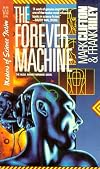
If you're going to read The Forever Machine a.k.a. They'd Rather Be Right, I highly recommend picking up the 1992 "Masters of Science Fiction" edition from Caroll & Graf. The original 1954 serial novel was actually a sequel to two short stories, "Crazy Joey" and "Hide! Hide! Witch!" by Mark Clifton & Alex Apostolides, and they're incorporated into the text here as Part I, "Crazy Joey" (though Apostolides is uncredited). The two provide somewhat helpful backstory, but more importantly, the original "Crazy Joey" is actually the best part of the book. Joey is a telepathic kid whose weirdnesses make him the object of hate of both his classmates and his father. His mother takes him to a psychiatrist, who figures out he's telepathic, but Joey show more picks this up and so begins downplaying his abilities, and there's a neat sort of cat-and-mouse game between Joey and the psychiatrist as Joey tries to not do what the psychiatrist wants him to do, and the psychiatrist tries to let mentally slip what Joey ought to do. It's kind of affecting, and kind of neat.
The rest of the book (the second half of Part I, which was originally "Hide! Hide! Witch!", and Part II, the original 1954 novel They'd Rather Be Right, called "'Bossy'" in this edition) is about how Joe's powers are used to construct a telepathic supercomputer at the behest of a totalitarian government. Joe and company dismantle the computer and go on the run; the computer is then reassembled and it grants a burnt-out old prostitute eternal youth. It's one of those books that goes on a bit, but when you think back you're not sure why, because surely the characters couldn't have just sat in a warehouse and talked about nothing for a hundred pages, yet clearly, somehow, they did. I feel like any description I can make of it doesn't do it justice, in that it's somehow more boring than it sounds. It's one of those sf books that seems to miss the interesting aspect of its novum; I like the idea that immortality requires one to abandon one's preconceptions of the universe, so there are some people who cannot become immortal because, well, they'd rather be right. So a billionaire industrialist can't become immortal, because he has a high level of certainty about how he thinks the world works, and cannot admit to being wrong about that. But the book doesn't really explore this idea; it just offers it to you and in the meantime you read about uninteresting people doing uninteresting things. So if you're going to read it, read this edition, but probably don't actually read it.
I note that this book shares with its predecessor as Hugo Award for Best Novel winner The Demolished Man an interest in the power of marketing. In both novels, marketing can do incredible things in the way it shapes public opinion. I guess this is a thing people were just becoming aware of in the 1950s, and thus 1950s sf was extrapolating it into the future. (A quick spot of Wikipedia research seems to indicate marketing really took off as a thing in the 1930s, so that makes sense.) show less
The rest of the book (the second half of Part I, which was originally "Hide! Hide! Witch!", and Part II, the original 1954 novel They'd Rather Be Right, called "'Bossy'" in this edition) is about how Joe's powers are used to construct a telepathic supercomputer at the behest of a totalitarian government. Joe and company dismantle the computer and go on the run; the computer is then reassembled and it grants a burnt-out old prostitute eternal youth. It's one of those books that goes on a bit, but when you think back you're not sure why, because surely the characters couldn't have just sat in a warehouse and talked about nothing for a hundred pages, yet clearly, somehow, they did. I feel like any description I can make of it doesn't do it justice, in that it's somehow more boring than it sounds. It's one of those sf books that seems to miss the interesting aspect of its novum; I like the idea that immortality requires one to abandon one's preconceptions of the universe, so there are some people who cannot become immortal because, well, they'd rather be right. So a billionaire industrialist can't become immortal, because he has a high level of certainty about how he thinks the world works, and cannot admit to being wrong about that. But the book doesn't really explore this idea; it just offers it to you and in the meantime you read about uninteresting people doing uninteresting things. So if you're going to read it, read this edition, but probably don't actually read it.
I note that this book shares with its predecessor as Hugo Award for Best Novel winner The Demolished Man an interest in the power of marketing. In both novels, marketing can do incredible things in the way it shapes public opinion. I guess this is a thing people were just becoming aware of in the 1950s, and thus 1950s sf was extrapolating it into the future. (A quick spot of Wikipedia research seems to indicate marketing really took off as a thing in the 1930s, so that makes sense.) show less
A Hugo winner so reviled by its core audience after the fact, that it spawned conspiracy theories involving the Church of Scientology rigging the vote of the 1955 Worldcon.
This is not the worst book I've ever read. But it is easily one of the worst Hugo winners I've read so far. And it's not bad in that offensively bad way. It's just so thoroughly pedestrian and mediocre. None of the characters exhibit any depth of personality; they're all either one-dimensional caricatures or they simply have no personality to speak of. The protagonist never really experiences any conflict. Everything always works out exactly as he expected or planned, and he always has a backup ready anyways. The diatribes against psychiatrists/psychologists and the show more whole realm of mental health do evoke L. Ron Hubbard, so I see why the Scientology conspiracy theory came about. I think why I so thoroughly dislike this book is that it doesn't really try to do anything. It has a message, but that message is never really tested, it's just always proven correct time after time. At least other Hugo winners I've disliked I could understand what they wanted to do, and just flopped in execution.
I'm glad to have this one out of the way finally, I've been dreading it. It honestly wasn't excruciating to read, probably because it's short, but I still will put it up there with some of the worst. show less
This is not the worst book I've ever read. But it is easily one of the worst Hugo winners I've read so far. And it's not bad in that offensively bad way. It's just so thoroughly pedestrian and mediocre. None of the characters exhibit any depth of personality; they're all either one-dimensional caricatures or they simply have no personality to speak of. The protagonist never really experiences any conflict. Everything always works out exactly as he expected or planned, and he always has a backup ready anyways. The diatribes against psychiatrists/psychologists and the show more whole realm of mental health do evoke L. Ron Hubbard, so I see why the Scientology conspiracy theory came about. I think why I so thoroughly dislike this book is that it doesn't really try to do anything. It has a message, but that message is never really tested, it's just always proven correct time after time. At least other Hugo winners I've disliked I could understand what they wanted to do, and just flopped in execution.
I'm glad to have this one out of the way finally, I've been dreading it. It honestly wasn't excruciating to read, probably because it's short, but I still will put it up there with some of the worst. show less
Rumor (okay, other reviews on Goodreads) has it that this is the worst book ever to win the Hugo. I don't know if that's true-yet. I do know that this is not a good book from any kind of literary perspective, and one that buries its occasional good ideas under tedious essays.
The story begins with Joey, an 8 year old boy in a working class family who is a telepath. Unique in the world, a basic extrapolation of 1950s America, he discovers a sympathetic university psychiatrist who tells him to conceal his gift from the world. The plot then skips forward 14 years, with Joey as a college senior working in the lab of Dr. Billings, the great psychosomaticist, some sort of combination of behavioral therapist and neuroscientist. Dr. Billings is show more given a government grant to develop an automatic pilot for automobile and airplane that will avoid collisions. Billings decides the request is actually for a general purpose AI capable of moral reasoning, and with the help of Joey to coordinate an interdisciplinary research team, achieves the first genuine breakthrough in decades. The AI, named "Bossy" for its resemblance to a cow, prompts a public outcry, and Joey and Billings and another member of the research team are forced to go into hiding in San Francisco. They perfect Bossy in a warehouse owned by an Mable, an old retired prostitute, use the completed Bossy to psychosomatically rejuvenate Mable, opening a path to immortality. They then seek shelter with Kennedy, the last independent industrial titan, and then re-use a public outcry about the potential of immortality to get Bossy approved by the government and sold as a mass-market consumer device.
So yeah, as you can see, the plot has grand ideas, but does almost nothing to link them together. There are some really interesting ideas about the relationship between science and society, innovation being crushed by government dominance, the exigencies of the Cold War turning American into a totalitarian dictatorship more-or-less identical to the USSR, the next stage in human evolution and its relationship to artificial intelligence. The problem is that instead of demonstrating these ideas in plot, the story pauses for a character to have a long internal monologue. There's something here for say, a literary critic tracing the genealogy of certain Big Ideas in science-fiction, but this book isn't just old, it's positively musty--and not in a way that inspires any kind of nostalgia or imagination. show less
The story begins with Joey, an 8 year old boy in a working class family who is a telepath. Unique in the world, a basic extrapolation of 1950s America, he discovers a sympathetic university psychiatrist who tells him to conceal his gift from the world. The plot then skips forward 14 years, with Joey as a college senior working in the lab of Dr. Billings, the great psychosomaticist, some sort of combination of behavioral therapist and neuroscientist. Dr. Billings is show more given a government grant to develop an automatic pilot for automobile and airplane that will avoid collisions. Billings decides the request is actually for a general purpose AI capable of moral reasoning, and with the help of Joey to coordinate an interdisciplinary research team, achieves the first genuine breakthrough in decades. The AI, named "Bossy" for its resemblance to a cow, prompts a public outcry, and Joey and Billings and another member of the research team are forced to go into hiding in San Francisco. They perfect Bossy in a warehouse owned by an Mable, an old retired prostitute, use the completed Bossy to psychosomatically rejuvenate Mable, opening a path to immortality. They then seek shelter with Kennedy, the last independent industrial titan, and then re-use a public outcry about the potential of immortality to get Bossy approved by the government and sold as a mass-market consumer device.
So yeah, as you can see, the plot has grand ideas, but does almost nothing to link them together. There are some really interesting ideas about the relationship between science and society, innovation being crushed by government dominance, the exigencies of the Cold War turning American into a totalitarian dictatorship more-or-less identical to the USSR, the next stage in human evolution and its relationship to artificial intelligence. The problem is that instead of demonstrating these ideas in plot, the story pauses for a character to have a long internal monologue. There's something here for say, a literary critic tracing the genealogy of certain Big Ideas in science-fiction, but this book isn't just old, it's positively musty--and not in a way that inspires any kind of nostalgia or imagination. show less
They'd Rather Be Right. It apparently cannot be found in the library systems in my state, the ILL book came from a small college in Minnesota. A reviewer elsewhere was correct in saying that you really need to read "Crazy Joey" and "Bossy" among his short stories before tackling the novel. They provide the back story and events leading up to the opening scene of the novel: the two professors and Joe as fugitives hiding out on Skid Row in San Francisco in the wake of public hysteria about the creation of a cybernetic machine capable of thinking and therefore replacing people. While federal agents seek them, they reassemble "Bossy" and test its capabilities. It was originally commissioned by the government as an airplane pilot for some show more sort of automated defense system, but Professor Billings, the project director, is a psychologist, so the first test involves psychotherapy with a test subject. Bossy treated all of the physical and mental dysfunctions and blocks of Mabel Monahan, a retired prostitute and the landlady of their hideaway, down to a cellular level over the course of two weeks. In the process, Mabel acquires telepathy and is rejuvenated and even becomes immortal as cell death is eliminated, along with any prejudices or assumptions about the nature of truth and reality.
As I've said before, the novel is very much a product of its time: the 1950's McCarthy era and the Cold War, as well as Einstein's Unified Field Theory and the expanding field of psychiatry involving both psychoanalysis and new pharmaceutical treatments. This book is less about science and more about the nature of society and the human condition. In many places it is proselytization thinly disguised as pages of exposition. Once again, Mark Clifton's concern is the hazards of authoritarianism, the arrogance of the privileged, the insidious influence of marketing, unacknowledged assumptions and biases disguised as truth, and the fear of the other, especially if it is suspected of being better. He is fascinated with the idea of mental coordinate systems and conceptual frameworks and how these may prevent us from achieving the full potential of the human mind and retaining the accomplishments of civilization. It is a good read in terms of ideas and arguments that are worth exploring, though it is certainly true that the plot and characterizations are minimalist.
Even small novels are rather too long a format for Mark Clifton, I'm afraid. He shines much more in a short story format, where a compelling idea at the expense of characters, plot, dialogue, etc. is not so detrimental to the overall effect. While the novel is worth reading, I am not interested in owning it. I am interested in acquiring a collection of his short stories, though these also are hard to find in paper format. show less
As I've said before, the novel is very much a product of its time: the 1950's McCarthy era and the Cold War, as well as Einstein's Unified Field Theory and the expanding field of psychiatry involving both psychoanalysis and new pharmaceutical treatments. This book is less about science and more about the nature of society and the human condition. In many places it is proselytization thinly disguised as pages of exposition. Once again, Mark Clifton's concern is the hazards of authoritarianism, the arrogance of the privileged, the insidious influence of marketing, unacknowledged assumptions and biases disguised as truth, and the fear of the other, especially if it is suspected of being better. He is fascinated with the idea of mental coordinate systems and conceptual frameworks and how these may prevent us from achieving the full potential of the human mind and retaining the accomplishments of civilization. It is a good read in terms of ideas and arguments that are worth exploring, though it is certainly true that the plot and characterizations are minimalist.
Even small novels are rather too long a format for Mark Clifton, I'm afraid. He shines much more in a short story format, where a compelling idea at the expense of characters, plot, dialogue, etc. is not so detrimental to the overall effect. While the novel is worth reading, I am not interested in owning it. I am interested in acquiring a collection of his short stories, though these also are hard to find in paper format. show less
The Forever Machine was a short book and easy to get through. I read it as part of my attempt to read all the Hugo Award winners, which seems to be par for most of the reviews. The story clips along, and never really seemed to bog down. However, the plot was really just a vehicle for the authors to wax philosophical about science, government and propaganda. The ideas and language are very dated. If I hadn't known already, I could have guessed that this book was written in the fifties. The storytelling's weakest point is that the authors almost exclusively tell, instead of show everything that happens.
I wouldn't recommend this book to any but the most strident Hugo readers. While I don't really feel like it was a waste of time to read, I show more also don't feel I gained anything from it. show less
I wouldn't recommend this book to any but the most strident Hugo readers. While I don't really feel like it was a waste of time to read, I show more also don't feel I gained anything from it. show less
Members
- Recently Added By
Lists

Hugo Award Winning Novels
63 works; 23 members
Author Information

28+ Works 1,144 Members
8+ Works 438 Members
Some Editions
Awards and Honors
Awards
Series
Belongs to Publisher Series
Galaxy SF Novel (35)
Work Relationships
Common Knowledge
- Original title
- They'd Rather Be Right
- Original publication date
- 1956 (Astounding Aug,Sep,Oct,Nov) (Astounding Aug,Sep,Oct,Nov)
Classifications
Statistics
- Members
- 424
- Popularity
- 72,885
- Reviews
- 22
- Rating
- (2.72)
- Languages
- English, German, Romanian, Spanish
- Media
- Paper
- ISBNs
- 4
- ASINs
- 14