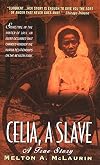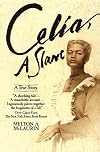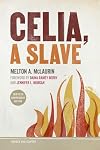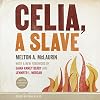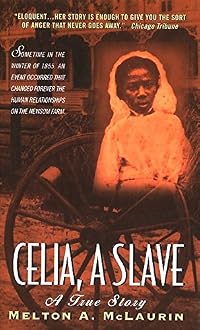
Celia, a Slave
by Melton Alonza McLaurin
On This Page
Description
Originally published in 1991, "Celia, a Slave" illuminates the moral dilemmas that lie at the heart of a slaveholding society by telling the story of a young slave who was sexually exploited by her enslaver and ultimately executed for his murder. Melton A. McLaurin uses Celia's story to reveal the tensions that strained the fabric of antebellum southern society by focusing on the role of gender and the manner in which the legal system was used to justify slavery. An important addition to our show more understanding of the pre-Civil War era, "Celia, a Slave" is also an intensely compelling narrative of one woman pushed beyond the limits of her endurance by a system that denied her humanity at the most basic level. show lessTags
Recommendations






Member Reviews
I thought Celia, A Slave was very good. I've read a few slave narratives before, but this was a fascinating departure from that. It focuses on the trial of a 19-year-old slave accused of murdering her master in Missouri. It explores the politics of slavery (Kansas was being fought over by pro- and anti-slavery groups at the time), as well as the powerlessness of women, especially slave women, during this period. It was a bit slow reading at first, but once it got to the crime and the trial, I was hooked. It was quite readable for a scholarly work, and was brief enough that it kept my attention.
Most of the viewers read this as a story of slavery. But why was it instead more a critique of the American legal system at the time. Celia killed her master for attempted rape. The judge disallowed the motive to be presented to the jury. In fact Missouri law did not disallow the rape of a slave woman and she was executed To understand this book, assigned to students with little understanding of the court process. The point of the probably is never truly made. Good in terms of the particulars of the law, not so good as a biography for which it is usually read.
A short and slanted book which aims to be historically objective. The author clearly takes the side of abolitionists. A difficult subject about slavery and sexual violence by Slavers upon Blacks during the pre-Civil War years. The narrative is about a young girl who refused sexual demands by her slave owner, killed him and burned his body in her private residence fireplace. Celia (no last name) was charged, convicted and hung after a jury of her master's peers followed the judge's jury instructions to not review self-defense motives against rape as Celia had no rights (at the time) to defend herself except from clear and immanent death threats.
Hard to read. Dry but short and I'm glad to have read this as it made me sick to read about show more historical accounts of slavery in southern states. A few things seemed odd. McLauren says that the French sold us the Louisana Purchase because the French were afraid of a slave rebellion like they expereinced in Haiti. The French don't care about colonies but they do like money. I was taught they wanted money up front for use back in France. They left Vietnam in the 1950s for the same reasons, They got the US to hold over after their military was overrun by Communists at Battle of Dien Bien Phu, Vietnam.
Slavery was horrible and I'm proud of America but America with slavery would have left the country entirely destroyed. The American democratic experiment would not have survived as Lincoln could see. This is probably one of the reasons I am not interested in the Civil War as opposed to other time periods. I can't yet understand how Christians justified slavery even on political grounds. I'm learning more about the era but it still makes sense to see the war that was needed to put an end to such an abomination. I can see why people might argue that slavery is a permanent stain on America. It is a guilt that we must accept as a fact of history but the question is now why we eventually put an end to it? Who put an end to it? If someone else put an end it, we are still guilty. Are we still the descendents of slavers? The answer is No. The answer leads us to consider why are we more advanced than other countries? We have yet to answer that question other than we are more enlightened about civil rights for citizens and human rights for all. In other words, Americans by being American move the rest of the world forward on what is essentially human perogatives rather than through tribal or royal interests. There have been huge political foreign policy disasters but those are usually hidden by the immoral agents perpetuating them. Transparency in governance is one the bright lights of our Republic.
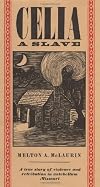
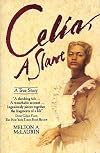
The cover shows the fireplace consuming the body of the slave owner on the night when Celia was attacked. The title Celia, A Slave is a fragment from the offical case charged: Missouri vs. Celia, a Slave. show less
Hard to read. Dry but short and I'm glad to have read this as it made me sick to read about show more historical accounts of slavery in southern states. A few things seemed odd. McLauren says that the French sold us the Louisana Purchase because the French were afraid of a slave rebellion like they expereinced in Haiti. The French don't care about colonies but they do like money. I was taught they wanted money up front for use back in France. They left Vietnam in the 1950s for the same reasons, They got the US to hold over after their military was overrun by Communists at Battle of Dien Bien Phu, Vietnam.
Slavery was horrible and I'm proud of America but America with slavery would have left the country entirely destroyed. The American democratic experiment would not have survived as Lincoln could see. This is probably one of the reasons I am not interested in the Civil War as opposed to other time periods. I can't yet understand how Christians justified slavery even on political grounds. I'm learning more about the era but it still makes sense to see the war that was needed to put an end to such an abomination. I can see why people might argue that slavery is a permanent stain on America. It is a guilt that we must accept as a fact of history but the question is now why we eventually put an end to it? Who put an end to it? If someone else put an end it, we are still guilty. Are we still the descendents of slavers? The answer is No. The answer leads us to consider why are we more advanced than other countries? We have yet to answer that question other than we are more enlightened about civil rights for citizens and human rights for all. In other words, Americans by being American move the rest of the world forward on what is essentially human perogatives rather than through tribal or royal interests. There have been huge political foreign policy disasters but those are usually hidden by the immoral agents perpetuating them. Transparency in governance is one the bright lights of our Republic.
The cover shows the fireplace consuming the body of the slave owner on the night when Celia was attacked. The title Celia, A Slave is a fragment from the offical case charged: Missouri vs. Celia, a Slave. show less
Another book I have read for class. I like the micro-history, but I felt this author did not do as good of a job as Natalie Davis in making the back-story easy to read. It is, however, and very sad story.
Thoroughly engrossing, even if at times a bit repetitive.
Celia, a Slave was an 1855 murder trial held in the Circuit Court of Callaway County, Missouri, in
which a slave woman named Celia was tried for the first-degree murder of her owner, Robert Newsom.
Celia was convicted by a jury of twelve white men and sentenced to death.
An appeal of the conviction was denied by the Supreme Court of Missouri in December 1855,
and Celia was hanged on December 21, 1855.
Melton A. McLaurin
July 11, 1941
Melton Alonza McLaurin received his Ph.D. in American history from the University of South Carolina
in 1967 and taught at the University of South Alabama prior to joining the UNCW department of
history as chairperson in 1977. From 1996 until 2003 he served as Associate Vice Chancellor for Academic Affairs, show more
retiring in 2004. He is the author or co-author of nine books and numerous articles on various aspects
of the history of the American South and race relations. show less
which a slave woman named Celia was tried for the first-degree murder of her owner, Robert Newsom.
Celia was convicted by a jury of twelve white men and sentenced to death.
An appeal of the conviction was denied by the Supreme Court of Missouri in December 1855,
and Celia was hanged on December 21, 1855.
Melton A. McLaurin
July 11, 1941
Melton Alonza McLaurin received his Ph.D. in American history from the University of South Carolina
in 1967 and taught at the University of South Alabama prior to joining the UNCW department of
history as chairperson in 1977. From 1996 until 2003 he served as Associate Vice Chancellor for Academic Affairs, show more
retiring in 2004. He is the author or co-author of nine books and numerous articles on various aspects
of the history of the American South and race relations. show less
Ratings
Members
- Recently Added By
Author Information
12 Works 640 Members
Common Knowledge
- Canonical title
- Celia, a Slave
- Original title
- Celia, a Slave
- Original publication date
- 1991
- People/Characters
- Celia (slave); Robert Newsom
- Important places
- Callaway County, Missouri, USA
- Dedication
- To Sandra
in admiration of her
courage and conviction - First words
- [Introduction] The lives of public figures, those whom society comes to regard as great men and women, are often used by historians and biographers to exemplify or define an issue or era from the fast.
Robert Newsom seemed the ideal representative of the family farmers who in 1850 composed the majority of the citizens of Callaway Country, Missouri.
[Conclusions] In a recent essay, historian Darlene Clark Hine observes that "one of the most remarked upon but least analyzed themes in Black women's history" is their "sexual vulnerability and powerlessness as victims of ra... (show all)pe and domestic violence." - Last words
- (Click to show. Warning: May contain spoilers.)[Introduction] Finally, because race and gender are issues with which our society continues to grapple, and because both remain major factors in the distribution of power within modern society, the case of Celia, a slave, reminds us that the personal and the political are never totally separate entities.
(Click to show. Warning: May contain spoilers.)His gravestone still stands in a field just off a Callaway County road, some nine miles south of Fulton.
(Click to show. Warning: May contain spoilers.)[Conclusions] Those events also suggest that the psychic cost to whites of the defense of slavery, though paid, was high, just as they suggest that the psychic cost to blacks, though paid, was incalculable and enduring. - Blurbers
- Joyner, Charles
- Original language
- English US
Classifications
Statistics
- Members
- 474
- Popularity
- 63,873
- Reviews
- 6
- Rating
- (3.70)
- Languages
- English
- Media
- Paper, Audiobook, Ebook
- ISBNs
- 9
- ASINs
- 10