On This Page
Description
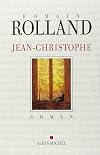
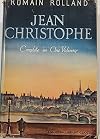
"Jean-Christophe Krafft, born, like Beethoven, to an alcoholic, exploitative father and a doting, chambermaid mother, is an exquisitely talented musician growing up in the German-occupied Rhineland. Splendidly capturing the development of Jean-Christophe's personality and his musical talent alike, Rolland progressively follows his hero through the states of his life: his innocent but ultimately disillusioned boyhood; his escape from his provincial home; his travels to pre-World War I Paris; show more his friends, lovers, and pupils, as they enter, leave, and reappear in his life through the years; and his passionate search for his spiritual role as an artist, while censuring the decadent European civilization around him." "The novel's form - and Jean-Christophe's life - flows like a river, with vast shapelessness on the surface but an immense momentum towards its goal. Through a vivid portrait of his hero's creative life, Rolland's work is a deeply personal examination of art's power to express moral truth and to combat disintegrating values."--BOOK JACKET.Title Summary field provided by Blackwell North America, Inc. All Rights Reserved show lessTags
Recommendations















Member Recommendations

Member Reviews
This is a massive multi-volume novel that, with music and humanity at its heart, is one of my favorites joining the pantheon beside Musil, Proust, and Shakespeare. The central character of the novel is Jean-Christophe Krafft, a German musician whose life is traced from his birth until his death. Using a wide canvas, Rolland broadened his scope to explore many aspects relating to different stages of life. The story starts when the hero is born in a small German village on the banks of the Rhine to an alcoholic musician father and loving, care-worn mother. Christophe discovers the world of fears, suffering and social injustice whilst at the same time his musical genius takes form. He also experiences childhood love, adolescent romances show more and the need to support the household as a musician following the death of, first, his grandfather, and then his father.
Romain Rolland did not see his novel as belonging to the accepted literary genres of the day. He was the first to designate it as a “roman-fleuve”. His “created” character took form as Rolland himself observed and experienced life and many of the comments in the novel reflect Rolland’s personal thoughts on social, political and cultural matters at the time of writing. Rolland’s musical background also played a determining role in how he structured Jean-Christophe.
Consistent with his overall philosophy Rolland's underlying message conveyed in the novel is that peoples of different countries and backgrounds could and should come together in harmony. The power of the novel derives from his thirst for truth, his need for morality and his love of humanity. The aesthetic life for him is not just to create beauty, but above all it is a means to create an act of humanity. The power and the beauty of his prose made this long novel one I will always remember. show less
Romain Rolland did not see his novel as belonging to the accepted literary genres of the day. He was the first to designate it as a “roman-fleuve”. His “created” character took form as Rolland himself observed and experienced life and many of the comments in the novel reflect Rolland’s personal thoughts on social, political and cultural matters at the time of writing. Rolland’s musical background also played a determining role in how he structured Jean-Christophe.
Consistent with his overall philosophy Rolland's underlying message conveyed in the novel is that peoples of different countries and backgrounds could and should come together in harmony. The power of the novel derives from his thirst for truth, his need for morality and his love of humanity. The aesthetic life for him is not just to create beauty, but above all it is a means to create an act of humanity. The power and the beauty of his prose made this long novel one I will always remember. show less
I love this book, it is in the same tradition of proust. a long study of jean christophe's life, of cultural, music, of national character. some of the writing just blew me away
The life and times of a musical protege. Fascinating when reading it, not too memorable afterward.
J'ai écrit la tragédie d'une génération qui va disparaître. Je n'ai rien cherché à dissimuler de ses vices et de ses vertus, de sa pesante tristesse, de son orgueil chaotique, de ses efforts héroïques et de ses accablements. Hommes d'aujourd'hui, jeunes hommes, foulez-nous aux pieds et allez de l'avant. Soyez plus grands et plus heureux que nous.
Nov 21, 2010French
> Avant Jules Romains, Martin du Gard, Hermann Hesse et bien d'autres, Jean-Christophe fixa un genre qui s'imposa dans la littérature européenne des années 1930 et dont certains grands romans anglo-saxons sont encore tributaires.
—Jean-Maurice de Montrému, Livres Hebdo.
> Biographie d'une musicien francais né entre la France et l'Allemagne, souffrant et combattant la guerre entre ces deux pays.
-- Une vie au dessus de la mêlée, l'indépendance de l'esprit, d'abord et avant tout, et contre tout, coûte que coûte.
—Laurent Sirois (ICI.Radio-Canada.ca)
> Adrian (Laculturegenerale.com) : Les 150 classiques de la littérature française qu’il faut avoir lus !
07/05/2017 - Romain Rolland, l’homme de la justice universelle et de show more la communion entre les hommes, a écrit un roman singulier, un roman musical composé comme une symphonie, mais aussi un roman-fleuve historique qui décrit l’Europe en marche vers la guerre de 1914. show less
—Jean-Maurice de Montrému, Livres Hebdo.
> Biographie d'une musicien francais né entre la France et l'Allemagne, souffrant et combattant la guerre entre ces deux pays.
-- Une vie au dessus de la mêlée, l'indépendance de l'esprit, d'abord et avant tout, et contre tout, coûte que coûte.
—Laurent Sirois (ICI.Radio-Canada.ca)
> Adrian (Laculturegenerale.com) : Les 150 classiques de la littérature française qu’il faut avoir lus !
07/05/2017 - Romain Rolland, l’homme de la justice universelle et de show more la communion entre les hommes, a écrit un roman singulier, un roman musical composé comme une symphonie, mais aussi un roman-fleuve historique qui décrit l’Europe en marche vers la guerre de 1914. show less
Dec 1, 2018 (Edited)French
Ratings
Members
- Recently Added By
Lists

Books featuring alcoholics
103 works; 18 members

Nobel Price Winners
222 works; 20 members

The Road to Freedom (Will Durant's 100 Best Books for an Education)
100 works; 8 members

music to my eyes
86 works; 10 members

Trinity College Booklist (1951): Class Nine, Foreign Literatures
161 works; 3 members

Best 20th Century Books as of 1924
100 works; 6 members

Authors mentioned in The World of Yesterday
68 works; 1 member
Author Information

422+ Works 2,588 Members
Romain Rolland was born in Clemency, France. The family moved to Paris in 1880 in order to obtain a better schooling for their son. In 1886 Rolland entered the École Normale Supérieure. He passed his agrégation examination in 1889 and continued his studies in Rome, where he formed a lasting friendship with Malwida von Meysenbug. She knew show more Wagner, Liszt, Nietzsche, and Ibsen, and encouraged his first attempt to write. He received his doctorate in art in 1895, with the first dissertation on music ever presented at the Sorbonne. Rolland became professor of art history at the École Normale in Paris. In 1904 he became a professor of the history of music at the Sorbonne. In his mid-30s he wrote successful dramas about the French Revolution. After his best-known work, Jean-Christophe, was finished, Rolland devoted himself entirely to writing. The ten-volume novel was an epic story of a German musical genius. Rolland had already published a biography on Beethoven in 1903. On completion of Jean-Christophe, Rolland was awarded the Grand Prize in Literature by the French Academy in 1913 and the Nobel Prize for Literature in 1915. With a collection of antiwar writings published in Swiss newspapers, Above the Battle, Rolland became a prominent figure in the pacifist movement during World War I. The book caused protests in France, but Rolland condemned the war and tried to show the oneness of western culture. Due to these opinions he was called traitor. In 1913 he wrote the novel Colas Breugnon, which was published in 1919. In the 1920s Rolland became interested in Indian philosophy and wrote a biography of Mahatma Gandhi. In 1923 Rolland founded the international magazine Europe, which opposed nationalism. Gradually he started to reject Stalinism, and support non-violent social change. From 1914 to 1937 Rolland lived in Switzerland. There he completed the second novel cycle, The Enchanted Soul. Rolland became a mouthpiece of the opposition to Fascism and the Nazis. During the last years of his life, Rolland lived in Vézelay and worked on the biography of Charles Péguy. On December 30, 1944 he succumbed to tuberculosis, an illness that had afflicted him since his childhood. (Bowker Author Biography) show less
Some Editions
Awards and Honors
Series

Belongs to Publisher Series
Work Relationships
Is contained in
Common Knowledge
- Canonical title
- Jean-Christophe
- Original title
- Jean-Christophe
- Original publication date
- 1913
- Epigraph
- Come, quando i vapori umide spessi A diradar cominciansi, la spera Del sol debilemente entra per essi..., (Purg. XVII)
- Dedication
- Junio 3.53.
To my dearest friend, the great "Nachuf" with all my best wishes.
Jean ????? - First words
- Le grondement du fleuve monte derrière la maison.
From behind the house rises the murmuring of the river. - Last words
- (Click to show. Warning: May contain spoilers.)"I am the day soon to be born."
- Original language
- French
- Disambiguation notice
- L'aube (1) ; Le matin (2) ; L' adolescent (3) ; La révolte (4) ; Jean Christophe a Paris : La foire sur la place (5) ; Jean Christophe a Paris : Dans la maison (7) ; Jean Christophe la fin du voyage : Les amies (8) ; Jean... (show all) Christophe la fin du voyage : Le buisson ardent (9) ; Jean Christophe la fin du voyage : La nouvelle journée
Classifications
Statistics
- Members
- 343
- Popularity
- 92,267
- Reviews
- 5
- Rating
- (3.84)
- Languages
- 6 — Chinese, Czech, English, French, German, Farsi/Persian
- Media
- Paper, Ebook
- ISBNs
- 33
- ASINs
- 25