On This Page
Description
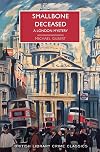
Horniman, Birley and Craine is a highly respected legal firm with clients drawn from the highest in the land. When a deed box in the office is opened to reveal a corpse, the threat of scandal promises to wreak havoc on the firm's reputation-especially as the murder looks like an inside job. The partners and staff of the firm keep a watchful and suspicious eye on their colleagues, as Inspector Hazlerigg sets out to solve the mystery of who Mr. Smallbone was-and why he had to die. Written with show more style, pace, and wit, this is a masterpiece by one of the finest writers of traditional British crime novels since the Second World War. show lessTags
Recommendations


































Member Reviews
The deed boxes found in a mid-20th-century London solicitor’s office usually contain paper deeds. However, one deed box at the firm of Horniman, Birley and Craine contains evidence of a much fouler deed: the body of Marcus Smallbone. And as if that weren’t enough scandal, the fact of the body being found where it was suggests strongly that someone involved in the firm committed the crime. It’s up to Inspector Hazlerigg to figure out who it was.
I found this a highly satisfying entry in the British Library Crime Classics imprint and well worth inclusion on the “best crime novel” lists it’s been added to over the years. Gilbert worked for a law firm and deploys this expertise to advantage without overwhelming the general show more reader. The writing style is smooth and Inspector Hazlerigg in particular gets some good one-liners—I do like a detective who doesn’t take themselves too seriously, and I like when characters in detective stories accuse each other of reading too many detective stories. It’s a bit of a cliche now, I think, but in the classic crime novels it’s always delightfully meta. show less
I found this a highly satisfying entry in the British Library Crime Classics imprint and well worth inclusion on the “best crime novel” lists it’s been added to over the years. Gilbert worked for a law firm and deploys this expertise to advantage without overwhelming the general show more reader. The writing style is smooth and Inspector Hazlerigg in particular gets some good one-liners—I do like a detective who doesn’t take themselves too seriously, and I like when characters in detective stories accuse each other of reading too many detective stories. It’s a bit of a cliche now, I think, but in the classic crime novels it’s always delightfully meta. show less
Smallbone Deceased by Michael Gilbert is a 1950 mystery novel. The author, being a lawyer himself, set this mystery in a London solicitor’s office and, as Dorothy Sayers did for advertising in Murder Must Advertise, gives the reader a fishbowl look at the inner workings of a 1950s law office.
The day to day business of contracts, trust funds and conveyance work is shattered with the discovery of a body concealed in a large deed box. Investigating the case is Scotland Yard’s Chief Inspector Hazlerigg, ably assisted by Henry Bohun, a new employee of the firm of Horniman, Birley and Craine. As the employees of the firm, including secretaries, clerks and partners are interviewed, plenty of red herrings are dished out and the police are show more kept busy tracking down alibi’s and finances.
The author uses his knowledge to give Smallbone Deceased an authentic setting, adds in some interesting characters and plenty of witty conversation to give this clever puzzle some depth and originality. Overall this was a very enjoyable read. show less
The day to day business of contracts, trust funds and conveyance work is shattered with the discovery of a body concealed in a large deed box. Investigating the case is Scotland Yard’s Chief Inspector Hazlerigg, ably assisted by Henry Bohun, a new employee of the firm of Horniman, Birley and Craine. As the employees of the firm, including secretaries, clerks and partners are interviewed, plenty of red herrings are dished out and the police are show more kept busy tracking down alibi’s and finances.
The author uses his knowledge to give Smallbone Deceased an authentic setting, adds in some interesting characters and plenty of witty conversation to give this clever puzzle some depth and originality. Overall this was a very enjoyable read. show less
Overall the book is pretty lightly witty and written well with a strong sense of place around the solicitors office this all takes part in, and the mystery does work well mechanics wise and ties in cleverly with lots of minor scattered clues but... I admit I found the ending a little unsatisfying emotionally even though technically it's totally fine. I think the problem is that there are so many characters in the book which inevitably means they only get so much attention and even though the writer handled each character deftly enough that they all gave a good impression it's still hard to keep track of them and they don't really get a chance to have any particular emotional depth. The ending really doesn't go into any sort of depth show more with the wrapping up and the motive although technically legitimate doesn't feel satisfying.
3 stars is maybe a bit mean but the denouement is so important in mystery novels and I just didn't get that sense of satisfaction and understanding and emotional payoff that I really look for even though the rest of the book is technically highly proficient and deftly handled. show less
3 stars is maybe a bit mean but the denouement is so important in mystery novels and I just didn't get that sense of satisfaction and understanding and emotional payoff that I really look for even though the rest of the book is technically highly proficient and deftly handled. show less
"Apart from the Roman Church, who are acknowledged experts of human behaviour, there is nobody quicker than a solicitor at detecting the first faint stirrings of a scandal: that distinctive, that elusive odour of Something which is not quite as it Should Be." (Opening of Chapter 3)
A smelly human body is found abandoned in a law firm's sealed deed box. The body belongs to a Mr. Marcus Smallbone, a mysterious client of the firm. It's agreed that there's been foul play and this brings in Scotland Yard's Chief Inspector Hazelrigg to investigate. Hazelrigg in turn enlists the help of a young newly-qualified solicitor in the firm, Henry Bohun. He is a unique individual who requires little sleep and has some diverse vocations to fill the night show more time hours while the rest of the world sleeps.
Each of Hazelrigg and Bohun investigates in his own way to eventually discover the killer's identity. There's another suspicious death along the way to up the ante. It's a twisty classical puzzle mystery, heavy in legal jargon and rigamarole, which is set within the law firm and involves the cast of characters which inhabit it. It's an excellent detective story and pleasant entertainment, almost whimsical to read. All the acclaim it has received is well earned. show less
A smelly human body is found abandoned in a law firm's sealed deed box. The body belongs to a Mr. Marcus Smallbone, a mysterious client of the firm. It's agreed that there's been foul play and this brings in Scotland Yard's Chief Inspector Hazelrigg to investigate. Hazelrigg in turn enlists the help of a young newly-qualified solicitor in the firm, Henry Bohun. He is a unique individual who requires little sleep and has some diverse vocations to fill the night show more time hours while the rest of the world sleeps.
Each of Hazelrigg and Bohun investigates in his own way to eventually discover the killer's identity. There's another suspicious death along the way to up the ante. It's a twisty classical puzzle mystery, heavy in legal jargon and rigamarole, which is set within the law firm and involves the cast of characters which inhabit it. It's an excellent detective story and pleasant entertainment, almost whimsical to read. All the acclaim it has received is well earned. show less
Somehow I had managed to never hear of Michael Gilbert until I downloaded copies of both the Mystery Writers of America and UK Crime Writers Association top 100 crime novels lists last year. SMALLBONE DECEASED is on both lists and I can see why. It is quite delicious, especially in the audio version delightfully narrated by Michael McStay.
On one level the book is ‘just another’ puzzle that could be difficult to distinguish from a thousand other whodunnits. But what set it apart for me was its black humour and astute observations of human behaviour. And although it takes place 65 years ago, and bears some hallmarks of its vintage, it has a timeless quality that many other ‘classics’ fail to achieve. Although some specific details show more are wedded to its time and place, references to everyone’s wartime service for example, the relationships and office politics depicted were easily recognisable to me. And that puzzle is fiendishly well constructed too.
The novel opens at a staff dinner of the law firm of Horniman, Birley and Craine. Henry Bohun is a newly qualified, just hired lawyer who provides a handy point of exposition for both writer and reader. Through him we meet all the key players for events which follow and most, but not all, of the action unfolds from his perspective. The most dramatic of these events is the discovery of the body of Marcus Smallbone, a trustee for one of the firm’s trust accounts, which has been crammed into a tightly sealed Deed Box for some weeks. Restrained mayhem ensues.
Because he is too new to the firm to be a suspect, and because the police Inspector assigned to the case knows of him (and his odd ‘condition’ about which I shall say no more) Henry is allowed, encouraged even, to participate actively in the investigation and he’s an enjoyable character to travel with. He’s clever, interested and witty and his physical quirk adds a nice point of whimsy (I wonder if it’s a real thing, I deliberately haven’t googled it because, honestly, that does rather take the fun out of wondering).
I didn’t confirm it until after I’d finished the book but I was not surprised to learn Gilbert was a lawyer. The details of life in the office and the various tricks that people in that profession could, at least theoretically, get up too seemed all along to be coming from the mind of someone with direct experience of that life. I couldn’t help but ponder which of his own clients he’d stuffed into a Deed Box by proxy.
As someone who has spent a good portion of her working life organising people and their business I was quite thrilled to come across a book in which this usually ignored activity takes centre stage (the firm’s business is organised according to the Horniman system, named after the founding partner and playing a key role in the crime). But I don’t think you need my particular insight to enjoy this terrific novel. For once I agree with the list-makers, SMALLBONE DECEASED is a fabulous example of the classic detective novel: a plot full of surprises and red herrings, sharp-witted investigators and a satisfying resolution. show less
On one level the book is ‘just another’ puzzle that could be difficult to distinguish from a thousand other whodunnits. But what set it apart for me was its black humour and astute observations of human behaviour. And although it takes place 65 years ago, and bears some hallmarks of its vintage, it has a timeless quality that many other ‘classics’ fail to achieve. Although some specific details show more are wedded to its time and place, references to everyone’s wartime service for example, the relationships and office politics depicted were easily recognisable to me. And that puzzle is fiendishly well constructed too.
The novel opens at a staff dinner of the law firm of Horniman, Birley and Craine. Henry Bohun is a newly qualified, just hired lawyer who provides a handy point of exposition for both writer and reader. Through him we meet all the key players for events which follow and most, but not all, of the action unfolds from his perspective. The most dramatic of these events is the discovery of the body of Marcus Smallbone, a trustee for one of the firm’s trust accounts, which has been crammed into a tightly sealed Deed Box for some weeks. Restrained mayhem ensues.
Because he is too new to the firm to be a suspect, and because the police Inspector assigned to the case knows of him (and his odd ‘condition’ about which I shall say no more) Henry is allowed, encouraged even, to participate actively in the investigation and he’s an enjoyable character to travel with. He’s clever, interested and witty and his physical quirk adds a nice point of whimsy (I wonder if it’s a real thing, I deliberately haven’t googled it because, honestly, that does rather take the fun out of wondering).
I didn’t confirm it until after I’d finished the book but I was not surprised to learn Gilbert was a lawyer. The details of life in the office and the various tricks that people in that profession could, at least theoretically, get up too seemed all along to be coming from the mind of someone with direct experience of that life. I couldn’t help but ponder which of his own clients he’d stuffed into a Deed Box by proxy.
As someone who has spent a good portion of her working life organising people and their business I was quite thrilled to come across a book in which this usually ignored activity takes centre stage (the firm’s business is organised according to the Horniman system, named after the founding partner and playing a key role in the crime). But I don’t think you need my particular insight to enjoy this terrific novel. For once I agree with the list-makers, SMALLBONE DECEASED is a fabulous example of the classic detective novel: a plot full of surprises and red herrings, sharp-witted investigators and a satisfying resolution. show less
This book is a murder-mystery counterpart to Jan Karon’s At Home In Mitford. Slow, everyday life investigating a mystery. It was well-written and intricate enough, with enough red herrings of everyday life, that I had no good guess of whodunit until I was at least 3/4 through. Even after guessing two people, I still didn’t get the right person. I also lost track of how many new words I added to my vocabulary…especially those of British use.
I would recommend this to older teens and adults (clean except for an eventually-discovered extramarital relationship and common British curses). I took off a star because of that and for the fact that it was slow moving—which, if that’s what you’re looking for, will make this book a great show more read. I appreciated that the author did not do to his readers what his principal investigator describes in chapter 6. (This is a slightly abbreviated humorous quote.)
“The trouble with you is that you read too many detective stories.”
“How do you make that out?”
“Admit that you expect me to spend my time sitting here asking a million questions. Occasionally moving around the office in a catlike manner, popping up unexpectedly when people are talking to each other, stooping to pick up minute scraps of paper and invisible threads of wool; all the time smoking a foul pipe or playing on a mouth organ or quoting Thucydides in order to establish a character for originality with the book reviewers—“
“Well—“
“Then, at the end of about 75,000 words, I shall collect you all into this room, and inaugurate a sort of verbal game of grandmother‘s steps, creeping up behind each of the suspects in turn and saying Boo! to them in order to make them jump. At the end of which, when everybody is exhausted, including the reader, I shall produce a revolver, confess that I committed the crime, and shoot myself in front of you all.”
“Well, omitting the melodramatic conclusion, isn’t that just about how it’s done?”
“As a practical method of detection, it would be about as much use as leaving an open creel beside a trout stream, and expecting the fish to jump into it. So far as I’ve found out, there are only two ways of fishing for men. One is to drop a grenade into the water: you might call that fishery by shock. The drawback is that you haven’t always a grenade of the appropriate size and power to your hand. The other method is more laborious but just as certain. You weave a net. And you drag it across the pool backwards and forwards. You won’t get everything at first, but if your mesh is fine enough, and you drag deeply enough, everything must come up in the end.”
“Well, I can quite understand why the detective story writers don’t set about it in your way. They’d never get any readers.”
“You’re right. It’s a darned dull process.” show less
I would recommend this to older teens and adults (clean except for an eventually-discovered extramarital relationship and common British curses). I took off a star because of that and for the fact that it was slow moving—which, if that’s what you’re looking for, will make this book a great show more read. I appreciated that the author did not do to his readers what his principal investigator describes in chapter 6. (This is a slightly abbreviated humorous quote.)
“The trouble with you is that you read too many detective stories.”
“How do you make that out?”
“Admit that you expect me to spend my time sitting here asking a million questions. Occasionally moving around the office in a catlike manner, popping up unexpectedly when people are talking to each other, stooping to pick up minute scraps of paper and invisible threads of wool; all the time smoking a foul pipe or playing on a mouth organ or quoting Thucydides in order to establish a character for originality with the book reviewers—“
“Well—“
“Then, at the end of about 75,000 words, I shall collect you all into this room, and inaugurate a sort of verbal game of grandmother‘s steps, creeping up behind each of the suspects in turn and saying Boo! to them in order to make them jump. At the end of which, when everybody is exhausted, including the reader, I shall produce a revolver, confess that I committed the crime, and shoot myself in front of you all.”
“Well, omitting the melodramatic conclusion, isn’t that just about how it’s done?”
“As a practical method of detection, it would be about as much use as leaving an open creel beside a trout stream, and expecting the fish to jump into it. So far as I’ve found out, there are only two ways of fishing for men. One is to drop a grenade into the water: you might call that fishery by shock. The drawback is that you haven’t always a grenade of the appropriate size and power to your hand. The other method is more laborious but just as certain. You weave a net. And you drag it across the pool backwards and forwards. You won’t get everything at first, but if your mesh is fine enough, and you drag deeply enough, everything must come up in the end.”
“Well, I can quite understand why the detective story writers don’t set about it in your way. They’d never get any readers.”
“You’re right. It’s a darned dull process.” show less
A witty tale about a high-falutin' firm of solicitors and the dead man found, quite unexpectedly, inside one of their deed boxes. I found this very readable, and if I had been able to read it all in one sitting or day, I probably would've connected the dots faster, at least as far as the murderer was concerned. This one is pretty light on motive, unfortunately.
I enjoyed the duality between Inspector Hazelrigg, very methodical and by the book, and the 'inside man' Henry Bohun, who was more of the lateral/deductive reasoning thinker. They worked together well, even if it did raise some eyebrows among the firm.
I enjoyed the duality between Inspector Hazelrigg, very methodical and by the book, and the 'inside man' Henry Bohun, who was more of the lateral/deductive reasoning thinker. They worked together well, even if it did raise some eyebrows among the firm.
Members
- Recently Added By
Lists

The Top 100 Crime Novels of All Time
100 works; 15 members

Top 100 Mystery Novels of All Time
98 works; 9 members

H.R.F. Keating's 100 Best Crime & Mystery Books
100 works; 8 members

Books mentioned in Julian Symons’ Bloody Murder
438 works; 6 members

Barzun and Taylor's Classics of Crime
93 works; 3 members

Books Read in 2021
5,361 works; 114 members

Must Read Detective Stories (Nick Fuller)
278 works; 2 members
Author Information

77+ Works 3,052 Members
Some Editions
Awards and Honors
Distinctions
Notable Lists
Series

Belongs to Publisher Series
Work Relationships
Is an adaptation of
Common Knowledge
- Original publication date
- 1950
- People/Characters
- John Cove; Abel Horniman; Marcus Smallbone; Henry Bohun; Bob Horniman; Eric Duxford (show all 9); Cissie Chittering; Inspector Hazelrigg; Anne Mildmay
- First words
- "There is no point in concealing the fact that London solicitors work in certain well-known and well-defined areas; nor would much purpose have been served by giving these fictitious names."
- Last words
- (Click to show. Warning: May contain spoilers.)"Sir, our client, Lady Buntingford, instructs us most emphatically that she dispatched three undervests--"
Classifications
Statistics
- Members
- 515
- Popularity
- 58,257
- Reviews
- 20
- Rating
- (3.87)
- Languages
- Danish, English, Italian
- Media
- Paper, Audiobook, Ebook
- ISBNs
- 27
- ASINs
- 16