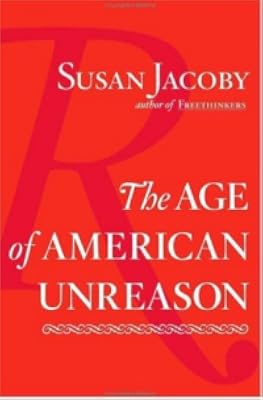
The Age of American Unreason
by Susan Jacoby
On This Page
Description
Traces the current of anti-intellectualism from post-WWII to the present and argues that the nation's cult of unreason is both deadly and destructive.Tags
Recommendations






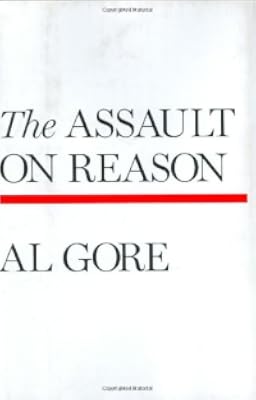

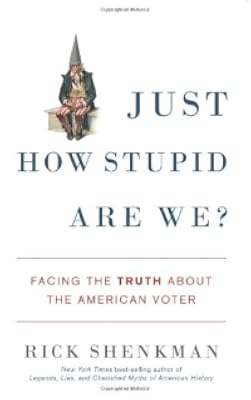
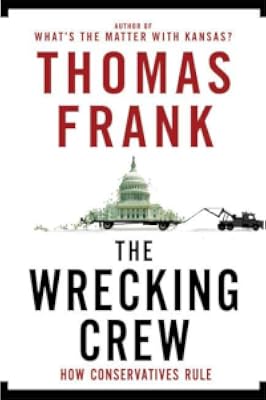


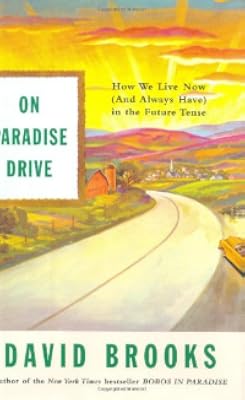







Member Recommendations
Member Reviews
How did America get to this point, a point of hubristic anti-intellectualism, of a mocking dismissal of science, a point at which Karl Rove, President George W. Bush’s main advisor, could say — in all seriousness — to author Ron Suskind, as he did in 2004,
Author Susan Jacoby provides the answer of how the death of middlebrow culture and the rise of television, politically motivated think tanks, the new fundamentalism, pseudoscientists of the Left and Right, and the Internet created the perfect storm that brought about The Age of American Unreason. This excellent, fact-laced — imagine that! — and fair appraisal of the American intellectual condition in history, particularly since the turn of the 20th century, should be required reading for anyone appalled by what Jacoby calls “junk thought” and the abandonment of critical thinking and intellectual rigor. show less
that guys like me were “in what we call the reality-based community,” which he defined as people who “believe that solutions emerge from your judicious study of discernible reality.” ...show more
“That's not the way the world really works anymore,” he continued. “We’re an empire now, and when we act, we create our own reality. And while you’re studying that reality — judiciously, as you will — we’ll act again, creating other new realities, which you can study too,
and that’s how things will sort out. We’re history's actors…and you, all of you, will be left to just study what we do.”
Author Susan Jacoby provides the answer of how the death of middlebrow culture and the rise of television, politically motivated think tanks, the new fundamentalism, pseudoscientists of the Left and Right, and the Internet created the perfect storm that brought about The Age of American Unreason. This excellent, fact-laced — imagine that! — and fair appraisal of the American intellectual condition in history, particularly since the turn of the 20th century, should be required reading for anyone appalled by what Jacoby calls “junk thought” and the abandonment of critical thinking and intellectual rigor. show less
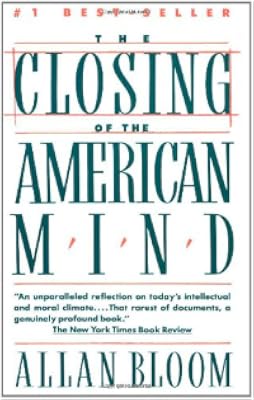
Ah, a left-wing version of Alan Bloom's 'Closing of the American Mind.' Just what we need.
There are good things about this book, specifically, the history of the early and mid-twentieth century. The opening chapters and the closing chapters, however, are mind-boggling. If one takes it upon oneself to defend 'reason', it is best to be rational in the task. Jacoby can't do it. I'm glad she pointed out that the worst instance of irrationality is our general inability to distinguish between causation and correlation. Just because x and y go together doesn't mean one caused the other, and it certainly doesn't mean you can decide which is the cause and which the effect. But instead of taking her own advice, Jacoby argues that stupidity is show more caused by 'screen media.'
Of course there can be no evidence for this causation, only a correlation. I'm not surprised that people who watch more television do worse on tests of intelligence. I am surprised that one would conclude from this that television causes low intelligence. Had Jacoby thought a little more before launching onto her Jeremiad, she might have considered the following:
* that the Emersonian individualism she preaches is itself a cause for irrationalism. It implies that each person should find their own way. The problem is that nobody can ever 'find their own way.' At best, they can get thrown onto a path, and much later learn to view it dispassionately. But if you assume that everyone can, by virtue of being a 'unit, one character,' a picker of peculiar fruit, you block off this possibility. And you assume that the path you're on was freely chosen, unlike 'the gross, the hundred or the thousand.' Unlike everyone else.
* that this individualism fits nicely with the doctrines of 'responsible journalism,' which mandate that both sides of a story be told even when there is only one side. 'Responsible journalism' has left American blissfully free of truth in reporting. Jacoby and her ilk believe that long form reporting is what we're missing. Not so. What's missing is a belief that journalism involves more than facts; it involves opinions.
* Jacoby argues against all social theory, most of the social sciences, philosophy, theology... in short, anything which isn't based on physical scientific facts. This fits in nicely with the about 'responsible journalism.' The question arises, then, what Jacoby's own work is? It's certainly social science in some guise or another, with a hefty dose of philosophy (Enlightenment humanism, more or less). So the book is self-refuting. More importantly, if all knowledge is scientific fact, then the 'rational' among us have nothing to say to those we think of as 'irrational'. Facts are neither reasonable nor unreasonable. Only their interpretations are reasonable or unreasonable. And unfortunately, Jacoby's interpretation is unreasonable: there is a correlation between screen media use and intellectual ability, not a direct causal relationship.
* Her belief that this is a causal relationship means Jacoby doesn't look a little deeper to find the reason so many people spend all their time watching TV, despite knowing that a game/a concert/a dinner with friends is more fulfilling: most of us are simply too frigging tired to make the effort. And we're too tired because our work-hours have increased, the intellectual requirements of our work have increased, and our holiday time has decreased. Had Jacoby done a bit more reading of the classics, and a bit less time reading I. F. Stone's idiotic conversations about those classics, she would know that 'negotiation' means, more or less, 'not leisure.' And that it was precisely leisure that made all the deep thinking of the classic authors possible - the free time that was more available in the 'fifties and 'sixties, and which has now disappeared.
You can't just tell people to read more if they're too tired to read. Better to spend your time fighting for reasonable labor laws. But I think we know how unlikely that is. It wouldn't sell at all. show less
There are good things about this book, specifically, the history of the early and mid-twentieth century. The opening chapters and the closing chapters, however, are mind-boggling. If one takes it upon oneself to defend 'reason', it is best to be rational in the task. Jacoby can't do it. I'm glad she pointed out that the worst instance of irrationality is our general inability to distinguish between causation and correlation. Just because x and y go together doesn't mean one caused the other, and it certainly doesn't mean you can decide which is the cause and which the effect. But instead of taking her own advice, Jacoby argues that stupidity is show more caused by 'screen media.'
Of course there can be no evidence for this causation, only a correlation. I'm not surprised that people who watch more television do worse on tests of intelligence. I am surprised that one would conclude from this that television causes low intelligence. Had Jacoby thought a little more before launching onto her Jeremiad, she might have considered the following:
* that the Emersonian individualism she preaches is itself a cause for irrationalism. It implies that each person should find their own way. The problem is that nobody can ever 'find their own way.' At best, they can get thrown onto a path, and much later learn to view it dispassionately. But if you assume that everyone can, by virtue of being a 'unit, one character,' a picker of peculiar fruit, you block off this possibility. And you assume that the path you're on was freely chosen, unlike 'the gross, the hundred or the thousand.' Unlike everyone else.
* that this individualism fits nicely with the doctrines of 'responsible journalism,' which mandate that both sides of a story be told even when there is only one side. 'Responsible journalism' has left American blissfully free of truth in reporting. Jacoby and her ilk believe that long form reporting is what we're missing. Not so. What's missing is a belief that journalism involves more than facts; it involves opinions.
* Jacoby argues against all social theory, most of the social sciences, philosophy, theology... in short, anything which isn't based on physical scientific facts. This fits in nicely with the about 'responsible journalism.' The question arises, then, what Jacoby's own work is? It's certainly social science in some guise or another, with a hefty dose of philosophy (Enlightenment humanism, more or less). So the book is self-refuting. More importantly, if all knowledge is scientific fact, then the 'rational' among us have nothing to say to those we think of as 'irrational'. Facts are neither reasonable nor unreasonable. Only their interpretations are reasonable or unreasonable. And unfortunately, Jacoby's interpretation is unreasonable: there is a correlation between screen media use and intellectual ability, not a direct causal relationship.
* Her belief that this is a causal relationship means Jacoby doesn't look a little deeper to find the reason so many people spend all their time watching TV, despite knowing that a game/a concert/a dinner with friends is more fulfilling: most of us are simply too frigging tired to make the effort. And we're too tired because our work-hours have increased, the intellectual requirements of our work have increased, and our holiday time has decreased. Had Jacoby done a bit more reading of the classics, and a bit less time reading I. F. Stone's idiotic conversations about those classics, she would know that 'negotiation' means, more or less, 'not leisure.' And that it was precisely leisure that made all the deep thinking of the classic authors possible - the free time that was more available in the 'fifties and 'sixties, and which has now disappeared.
You can't just tell people to read more if they're too tired to read. Better to spend your time fighting for reasonable labor laws. But I think we know how unlikely that is. It wouldn't sell at all. show less
Although I'd vaguely heard her name, I hadn't come across Jacoby's work before; now that I have, my Powells wish list has taken a walloping . . .
With a wonderfully fresh, witty prose, a lot of humour and just the right touch of fogeyishness, in The Age of American Unreason she tackles the very evident modern social problem of rapidly spreading irrationality among Americans -- and not just among what I nervously call the underclasses -- that has occurred partially but not entirely in consequence of a catastrophic dumbing-down of our culture. After an introductory chapter on contemporary "just us folks" culture -- try plugging "folks" into all the relevant places in the Gettysburg Address to get a measure of the paucity of modern show more politicians' thought processes alongside Lincoln's -- she takes up the story at the dawn of the new nation, skipping rapidly from there to the 19th/20th centuries cusp and the impact of the pseudoscience of Social Darwinism. Here she follows the line of Richard Hofstadter's Social Darwinism in American Thought (1944/59), that it's meaningful to describe Social Darwinism as having been a "movement" (or an approximation thereof), rather than the more common recent assessment that Social Darwinism was a later invention applied in retrospect to a rather disparate group of philosophers. Further chapters deal with the McCarthy witch hunts, the importance of the 1950s' middlebrow culture, the gains and excesses of the 1960s (her brief drubbing of Timothy Leary on pp174-5 is alone practically worth the entrance fee), etc., before she reaches the present (and recent past), where a series of chapters examines such topics as junk thought, that "New Old-Time Religion" and the collapse of attention spans in a "Culture of Distraction". Her final two chapters are entitled "Public Life: Defining Dumbness Downward" and "Cultural Conservation".
As many will perceive, this book could have been designed specifically with moi in mind; I was joyously punching the air so often it was begging me for mercy. All of my disgustingly snobby elitisms and intellectual pretensions -- such as my boring-old-fartish preference for cultural artefacts that are worth more than the 30 seconds it takes to watch a YouTube clip -- were amply catered to (lemme tell you about the lambasting of chicklit; or just see Timothy Leary, op. cit.). But don't get the idea that I was enjoying the book just as a sort of echo chamber: I learnt a very great deal from it, in particular from its chapters on the middlebrow culture of the 1950s and on Social Darwinism (I learnt more, I think, from Jacoby's breezy roundup than I did, later, from Hofstadter's book). And her hilarious skewing of various cultural icons is just an aspect of something more important, which is her constant pattern of offering accurate insights into ideas and social pillars that we all too often regard as givens but which are revealed, under Jacoby's spotlight, to be follies.
One of many conclusions I came away with was that the oft-bemoaned political polarization in this country today is likely connected in some way (it's not a one-to-one relationship) with a polarization between those who read widely and voraciously, spending considerable portions of their time in this activity, and those who don't. Another was that the sole major trouble with this book is that the very people who might gain the most from reading it probably never will. show less
With a wonderfully fresh, witty prose, a lot of humour and just the right touch of fogeyishness, in The Age of American Unreason she tackles the very evident modern social problem of rapidly spreading irrationality among Americans -- and not just among what I nervously call the underclasses -- that has occurred partially but not entirely in consequence of a catastrophic dumbing-down of our culture. After an introductory chapter on contemporary "just us folks" culture -- try plugging "folks" into all the relevant places in the Gettysburg Address to get a measure of the paucity of modern show more politicians' thought processes alongside Lincoln's -- she takes up the story at the dawn of the new nation, skipping rapidly from there to the 19th/20th centuries cusp and the impact of the pseudoscience of Social Darwinism. Here she follows the line of Richard Hofstadter's Social Darwinism in American Thought (1944/59), that it's meaningful to describe Social Darwinism as having been a "movement" (or an approximation thereof), rather than the more common recent assessment that Social Darwinism was a later invention applied in retrospect to a rather disparate group of philosophers. Further chapters deal with the McCarthy witch hunts, the importance of the 1950s' middlebrow culture, the gains and excesses of the 1960s (her brief drubbing of Timothy Leary on pp174-5 is alone practically worth the entrance fee), etc., before she reaches the present (and recent past), where a series of chapters examines such topics as junk thought, that "New Old-Time Religion" and the collapse of attention spans in a "Culture of Distraction". Her final two chapters are entitled "Public Life: Defining Dumbness Downward" and "Cultural Conservation".
As many will perceive, this book could have been designed specifically with moi in mind; I was joyously punching the air so often it was begging me for mercy. All of my disgustingly snobby elitisms and intellectual pretensions -- such as my boring-old-fartish preference for cultural artefacts that are worth more than the 30 seconds it takes to watch a YouTube clip -- were amply catered to (lemme tell you about the lambasting of chicklit; or just see Timothy Leary, op. cit.). But don't get the idea that I was enjoying the book just as a sort of echo chamber: I learnt a very great deal from it, in particular from its chapters on the middlebrow culture of the 1950s and on Social Darwinism (I learnt more, I think, from Jacoby's breezy roundup than I did, later, from Hofstadter's book). And her hilarious skewing of various cultural icons is just an aspect of something more important, which is her constant pattern of offering accurate insights into ideas and social pillars that we all too often regard as givens but which are revealed, under Jacoby's spotlight, to be follies.
One of many conclusions I came away with was that the oft-bemoaned political polarization in this country today is likely connected in some way (it's not a one-to-one relationship) with a polarization between those who read widely and voraciously, spending considerable portions of their time in this activity, and those who don't. Another was that the sole major trouble with this book is that the very people who might gain the most from reading it probably never will. show less
An early-century (2008) look at the impact of a poor education system, social media, and America's historical aversion to elites have on our success and ability as a nation. What stood out for me, though, is how comfortable Jacoby is expressing contempt for people who don't share her academic, coastal elite, Enlightenment-based worldview. We've advanced (or regressed) past that in the decade since.
Don't know much about history,
Don't know much biology,
Don't know much about a science book,
Don't know much about the French I took.
It sometimes seems that lyrics such as these from the 1958 Sam Cooke song "Wonderful World" should be part of the US national anthem. Then there is the observation of the late comedian George Carlin (I paraphrase): Think of how stupid the average person is; then consider that, by definition, half the population is stupider than *that*.
In a country with 2600 colleges and universities, how can there be so much ignorance about everything from geography to the structure of government to the factuality of biological evolution, from the metric system to the right way of assigning red and blue as political-party show more colors?
Don't know much about geography,
Don't know much trigonometry,
Don't know much about algebra,
Don't know what a slide rule is for.
Susan Jacoby does discuss ignorance per se, but the main concern of her book is US anti-rationalism and anti-intellectualism, both the history and the current era thereof. The truth of "we're dumb" is regrettable enough, but the propensity to say "we're dumb and proud of it" is worse. The book approaches the issue, with scholarship, from several different angles. I will just mention a couple of these aspects.
Religiosity, of course, is a big part of the problem -- nothing is more effective than religion at making people stupid. Long sections of the book have to be devoted to the effects of religiosity. These sections are perhaps best skipped (that's what I mostly did) because of the unrelenting dismalness of the truth they lay forth and the sheer nonsensicality of religion itself.
In the chapter entitled "Public Life: Defining Dumbness Downward," Jacoby's remarks about the 43rd president strike me as being irrefutable but relatively light-hitting: "If Bush's election was not a measure of conscious anti-intellectualism on the part of voters, it was certainly a measure of the public's indifference to demonstrable mental acuity and knowledge as standards for the presidency." (p 285) Pointing out that Shrubbish often does things like referring to Spanish as "Mexican" and popping his cork when an American newsman poses a question to a foreign leader in the latter's own language, she says, "The issue is not whether Bush is as stupid as he sounds but that he ... is unashamed of -- and even seems quite proud of -- his own parochialism and intellectual limitations." (p 285)
My own view, for what it's worth: The 2000 election, in which Shrubbish did not get a plurality (let alone a majority) of the popular vote, proved that the US electoral system can be non-democratic. The 2004 election, in which Shrubbish got a popular majority, proved that the system can be not worth a damn even when it *is* democratic. Voter idiocy makes democracy worthless. The 2004 "re"-election of Shrubbish was perhaps the worst and most unforgivable thing the American people will have done to the world in my lifetime, and may be seen by future historians as the beginning of America's final descent from power and influence.
Don't know nothin' 'bout _Decline and Fall_,
Don't know nothin' 'bout nothin' at all. show less
Don't know much biology,
Don't know much about a science book,
Don't know much about the French I took.
It sometimes seems that lyrics such as these from the 1958 Sam Cooke song "Wonderful World" should be part of the US national anthem. Then there is the observation of the late comedian George Carlin (I paraphrase): Think of how stupid the average person is; then consider that, by definition, half the population is stupider than *that*.
In a country with 2600 colleges and universities, how can there be so much ignorance about everything from geography to the structure of government to the factuality of biological evolution, from the metric system to the right way of assigning red and blue as political-party show more colors?
Don't know much about geography,
Don't know much trigonometry,
Don't know much about algebra,
Don't know what a slide rule is for.
Susan Jacoby does discuss ignorance per se, but the main concern of her book is US anti-rationalism and anti-intellectualism, both the history and the current era thereof. The truth of "we're dumb" is regrettable enough, but the propensity to say "we're dumb and proud of it" is worse. The book approaches the issue, with scholarship, from several different angles. I will just mention a couple of these aspects.
Religiosity, of course, is a big part of the problem -- nothing is more effective than religion at making people stupid. Long sections of the book have to be devoted to the effects of religiosity. These sections are perhaps best skipped (that's what I mostly did) because of the unrelenting dismalness of the truth they lay forth and the sheer nonsensicality of religion itself.
In the chapter entitled "Public Life: Defining Dumbness Downward," Jacoby's remarks about the 43rd president strike me as being irrefutable but relatively light-hitting: "If Bush's election was not a measure of conscious anti-intellectualism on the part of voters, it was certainly a measure of the public's indifference to demonstrable mental acuity and knowledge as standards for the presidency." (p 285) Pointing out that Shrubbish often does things like referring to Spanish as "Mexican" and popping his cork when an American newsman poses a question to a foreign leader in the latter's own language, she says, "The issue is not whether Bush is as stupid as he sounds but that he ... is unashamed of -- and even seems quite proud of -- his own parochialism and intellectual limitations." (p 285)
My own view, for what it's worth: The 2000 election, in which Shrubbish did not get a plurality (let alone a majority) of the popular vote, proved that the US electoral system can be non-democratic. The 2004 election, in which Shrubbish got a popular majority, proved that the system can be not worth a damn even when it *is* democratic. Voter idiocy makes democracy worthless. The 2004 "re"-election of Shrubbish was perhaps the worst and most unforgivable thing the American people will have done to the world in my lifetime, and may be seen by future historians as the beginning of America's final descent from power and influence.
Don't know nothin' 'bout _Decline and Fall_,
Don't know nothin' 'bout nothin' at all. show less
Susan Jacoby's The Age of American Unreason (Pantheon, 2007) is one of the most frustrating books I've read in a long time. It wasn't that I disagreed with the premise (while I take issue with some of her arguments - and how she goes about making them - I am in general agreement on the fundamental message of the book); what bothered me most is that Jacoby has fallen into one of the very traps she decries. She's written a book in which many people like her will find some points of agreement, but which is unlikely to gain any converts. Honey vs. vinegar and all that: you're unlikely to persuade someone to change their behavior by belittling their intelligence and tossing insults at them.
Perhaps better titled the Ages of American Unreason, show more this book examines the history of anti-intellectualism and anti-rationalism in America, beginning - she suggests - in the heady days of the early republic. In the first several chapters (following a fairly lengthy introduction), Jacoby discusses early instances of these dangers rearing their heads: in the Second Great Awakening, in the debate over Darwinian evolution beginning in the late 1850s, in the spread of "social Darwinism" later in the 19th century, communist philosophy in the middle of the 20th century, and then the spike in fundamentalist Protestantism beginning in the mid-1900s. She argues that we are currently in an age of American Unreason, but her examples stretching back to the very roots of the nation suggest that perhaps our own time may not be so unique after all.
That said, Jacoby begins her book by suggesting that the current state of unreason is different from all those that have come before: "This new form of anti-rationalism, at odds not only with the nation's heritage of eighteenth-century Enlightenment reason but with modern scientific knowledge, has propelled a surge of anti-intellectualism capable of inflicting vastly great damage than its historical predecessors did on American culture and politics" (xi). She provides numerous examples of this, combining bits from some scary public opinion surveys about the extent (or lack thereof) of civic, literary, scientific and general knowledge with personal anecdotes which serve to buttress her argument but not in any meaningful way.
Some of Jacoby's points are important, and well-argued. She has an excellent point about the current education system at every level, which is not functioning as it should. I agree entirely that the shift toward "practical education," which has resulted in the continued specialization and narrowing of educational tracks that creates college graduates who've never taken courses outside their major, is not a good thing. I join her in lamenting the fact that right-wing fundamentalist ideologues have succeeded in creating doubt in many minds about the state of scientific debate over topics like evolution and global warming. Yes, people ought to spend more time with books and less time in front of the t.v., or video games (I particularly liked her section on the relative benefits of reading versus playing video games, p. 251-252).
But there were times when I was turned off by Jacoby's finger-pointing rhetoric. The media are not to blame for every ill of society (although to be sure the bear the blame for some), nor are political centrists (who, she argues with no basis whatever, "place all opinions on an equal footing and make little effort to separate fact from opinion", p. 211).
My main point of contention with Jacoby (aside from that nasty shot at centrists which was just uncalled for) is with her generalizations about certain elements of modern culture. She dismisses the rise of young adult fiction glibly, thus: "If a girl hadn't outgrown Nancy Drew by around age twelve, there was something wrong with her. When you were old enough to turn to books for an exploration of the mysteries of sex and adulthood, you turned to adult fiction by adult authors writing about adults" (p. 266-67 That might have worked fine, and might continue to work fine, but why denigrate a genre of literature (some of which is awful but some of which is quite well done, just like any other genre) that can speak to young people from a perspective closer to their own?
Jacoby seems to have a particular hatred for blogs, which again seems rather gratuitous. Here's her generalization: "Blogs spew forth, in largely unedited form, the crude observations of people who are often unable to express themselves coherently in writing and are as inept at the virtual conversation skills required for online exchanges as they must be at face-to-face communication" (p. 272) Wow. Sure, that's true of some blogs, just as it's true of some books, &c. But I've been reading and writing blogs for several years now, and I think I can safely say that there's a healthy subset of perfectly intelligent and intelligible blogs out there, which I find quite coherent and not at all crude. I've even met a few of the writers in person, and can report that they manage to carry on a conversation quite nicely, thank you very much. Of course by Ms. Jacoby's standards, maybe I can't, so who am I to judge?
Jacoby goes out of her way to lament the "decline of conversation" (I have to send this chapter to my mother, who agrees wholeheartedly with the author on this point), by providing a perfectly silly personal anecdote: apparently she spent one night in a college dorm recently after giving a talk, and was surprised not to have been kept up all night by loud noise. First of all, having lived in a college dorm (for much longer than one night) recently, I can say that perhaps that night might have been the exception rather than the rule. Second, I don't think that the kind of noise which tends to keep one up at night in college dorms is the kind of intelligent conversation Jacoby seems to have been craving anyway. It was passages like this that made me a little bit crazy as I was reading this book. I don't think her message is a bad one, but I think she should have buttoned it up a bit more, laid off the generalizations and unwarranted attacks, and been a little more concerned with persuasion than with bloviation and self-centered retrospection.
Jacoby's final chapter, usually, as she notes, the one reserved in this type of book for proposed solutions, doesn't go in for that. Perhaps she figured out that anybody to made it to the last chapter probably didn't need to make many personal changes (since most people who did had rolled their eyes and given up on the book chapters ago). Instead, she discusses the need for "reality-based leadership," and "adult self-control," both of which are, rather obviously, desirable things. I'd like to know how Jacoby's feeling these days, now that the American people delivered a fairly stinging rebuke to the stunning anti-rationalism of the soon-to-be-departing Bush administration and its would-be successors and elected the first intellectual president in forty years. Perhaps she's allowing herself a little breather. I sure hope so.
Yes, America's got troubles. Many of them stem from what is to many of us a shockingly widespread unwillingness to accept fact as fact, and from our increasingly sound-bite-based culture which puts a premium on brevity and glibness at the expense of exposition. We do need to turn off the t.v., or at least push back against the trash which currently fills the airwaves. We do need to make sure that our education system does what it needs to do. On some level we need real leadership to make these things happen, and one hopes that perhaps that force for change has finally arrived. On another level, there are choices each of us can make in our own lives to improve our own way of life and the culture as a whole. Read more, game less. Talk more, text less. And so on. Simple things. Life is choices.
http://philobiblos.blogspot.com/2008/12/book-review-age-of-american-unreason.htm... show less
Perhaps better titled the Ages of American Unreason, show more this book examines the history of anti-intellectualism and anti-rationalism in America, beginning - she suggests - in the heady days of the early republic. In the first several chapters (following a fairly lengthy introduction), Jacoby discusses early instances of these dangers rearing their heads: in the Second Great Awakening, in the debate over Darwinian evolution beginning in the late 1850s, in the spread of "social Darwinism" later in the 19th century, communist philosophy in the middle of the 20th century, and then the spike in fundamentalist Protestantism beginning in the mid-1900s. She argues that we are currently in an age of American Unreason, but her examples stretching back to the very roots of the nation suggest that perhaps our own time may not be so unique after all.
That said, Jacoby begins her book by suggesting that the current state of unreason is different from all those that have come before: "This new form of anti-rationalism, at odds not only with the nation's heritage of eighteenth-century Enlightenment reason but with modern scientific knowledge, has propelled a surge of anti-intellectualism capable of inflicting vastly great damage than its historical predecessors did on American culture and politics" (xi). She provides numerous examples of this, combining bits from some scary public opinion surveys about the extent (or lack thereof) of civic, literary, scientific and general knowledge with personal anecdotes which serve to buttress her argument but not in any meaningful way.
Some of Jacoby's points are important, and well-argued. She has an excellent point about the current education system at every level, which is not functioning as it should. I agree entirely that the shift toward "practical education," which has resulted in the continued specialization and narrowing of educational tracks that creates college graduates who've never taken courses outside their major, is not a good thing. I join her in lamenting the fact that right-wing fundamentalist ideologues have succeeded in creating doubt in many minds about the state of scientific debate over topics like evolution and global warming. Yes, people ought to spend more time with books and less time in front of the t.v., or video games (I particularly liked her section on the relative benefits of reading versus playing video games, p. 251-252).
But there were times when I was turned off by Jacoby's finger-pointing rhetoric. The media are not to blame for every ill of society (although to be sure the bear the blame for some), nor are political centrists (who, she argues with no basis whatever, "place all opinions on an equal footing and make little effort to separate fact from opinion", p. 211).
My main point of contention with Jacoby (aside from that nasty shot at centrists which was just uncalled for) is with her generalizations about certain elements of modern culture. She dismisses the rise of young adult fiction glibly, thus: "If a girl hadn't outgrown Nancy Drew by around age twelve, there was something wrong with her. When you were old enough to turn to books for an exploration of the mysteries of sex and adulthood, you turned to adult fiction by adult authors writing about adults" (p. 266-67 That might have worked fine, and might continue to work fine, but why denigrate a genre of literature (some of which is awful but some of which is quite well done, just like any other genre) that can speak to young people from a perspective closer to their own?
Jacoby seems to have a particular hatred for blogs, which again seems rather gratuitous. Here's her generalization: "Blogs spew forth, in largely unedited form, the crude observations of people who are often unable to express themselves coherently in writing and are as inept at the virtual conversation skills required for online exchanges as they must be at face-to-face communication" (p. 272) Wow. Sure, that's true of some blogs, just as it's true of some books, &c. But I've been reading and writing blogs for several years now, and I think I can safely say that there's a healthy subset of perfectly intelligent and intelligible blogs out there, which I find quite coherent and not at all crude. I've even met a few of the writers in person, and can report that they manage to carry on a conversation quite nicely, thank you very much. Of course by Ms. Jacoby's standards, maybe I can't, so who am I to judge?
Jacoby goes out of her way to lament the "decline of conversation" (I have to send this chapter to my mother, who agrees wholeheartedly with the author on this point), by providing a perfectly silly personal anecdote: apparently she spent one night in a college dorm recently after giving a talk, and was surprised not to have been kept up all night by loud noise. First of all, having lived in a college dorm (for much longer than one night) recently, I can say that perhaps that night might have been the exception rather than the rule. Second, I don't think that the kind of noise which tends to keep one up at night in college dorms is the kind of intelligent conversation Jacoby seems to have been craving anyway. It was passages like this that made me a little bit crazy as I was reading this book. I don't think her message is a bad one, but I think she should have buttoned it up a bit more, laid off the generalizations and unwarranted attacks, and been a little more concerned with persuasion than with bloviation and self-centered retrospection.
Jacoby's final chapter, usually, as she notes, the one reserved in this type of book for proposed solutions, doesn't go in for that. Perhaps she figured out that anybody to made it to the last chapter probably didn't need to make many personal changes (since most people who did had rolled their eyes and given up on the book chapters ago). Instead, she discusses the need for "reality-based leadership," and "adult self-control," both of which are, rather obviously, desirable things. I'd like to know how Jacoby's feeling these days, now that the American people delivered a fairly stinging rebuke to the stunning anti-rationalism of the soon-to-be-departing Bush administration and its would-be successors and elected the first intellectual president in forty years. Perhaps she's allowing herself a little breather. I sure hope so.
Yes, America's got troubles. Many of them stem from what is to many of us a shockingly widespread unwillingness to accept fact as fact, and from our increasingly sound-bite-based culture which puts a premium on brevity and glibness at the expense of exposition. We do need to turn off the t.v., or at least push back against the trash which currently fills the airwaves. We do need to make sure that our education system does what it needs to do. On some level we need real leadership to make these things happen, and one hopes that perhaps that force for change has finally arrived. On another level, there are choices each of us can make in our own lives to improve our own way of life and the culture as a whole. Read more, game less. Talk more, text less. And so on. Simple things. Life is choices.
http://philobiblos.blogspot.com/2008/12/book-review-age-of-american-unreason.htm... show less
An excellent and timely book on the decline of intellectualism in the USA, which is also relevant to the rest of the developed world. While I personally believe that Jacoby overplays her hand in the latter chapters on the malign influence of screen culture (the ubiquity of TV and now computers), the thrust of her argument is well written and undeniable. If we do not respect intellectualism and aspire to it for ourselves and our children, if we do not educate ourselves by reading broadly rather than accepting TV soundbites and unfounded weblog and editorial opinions and if we do not insist that our schools, colleges and universities teach rigorous thinking which we back up ourselves with the examples we give our children, we risk being show more manipulated by advertising, pseudo-science and self-serving politicians and, in the very worst case, risk the very values and achievements of our society. show less
Members
- Recently Added By
Lists

David Bowie's Top 100
97 works; 23 members

David Bowie's List of Top 100 Books
94 works; 6 members

Atheism, humanism, freethought, &c. — Best nonfiction books in favour of
167 works; 14 members

Five star books
1,767 works; 110 members
David Bowie’s Top 100 Favourite Reads
100 works; 3 members
Author Information

16+ Works 3,630 Members
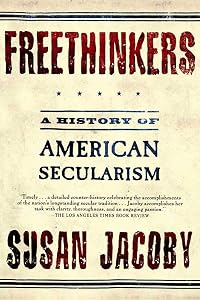
Susan Jacoby began her writing career as a reporter for The Washington Post. Her first book, Moscow Conversations, was based on the articles she contributed to the Post from Moscow between 1969 and 1971. Her other books include Wild Justice: The Evolution of Revenge, The Possible She, Half-Jew: A Daughter's Search for Her Family's Buried Past, show more Freethinkers: A History of American Secularism, The Age of American Unreason, The Great Agnostic: Robert Ingersoll and American Freethought, and Strange Gods: A Secular History of Conversion. (Bowker Author Biography) show less
Some Editions
Awards and Honors
Awards
Distinctions
Notable Lists
Common Knowledge
- Original publication date
- 2008
- Important places
- USA
- Epigraph
- If a nation expects to be ignorant and free, in a state of civilization, it expects what never was and never will be. Thomas Jefferson, 1816
- First words
- The word is everywhere, a plague spread by the President of the United States, television anchors, radio talk show hosts, preachers in megachurches, self-help gurus, and anyone else attempting to demonstrate his or her identi... (show all)fication with ordinary, presumably wholesome American values.
- Last words
- (Click to show. Warning: May contain spoilers.)"Not so, brothers and friends—please God, ours shall not be so."
- Publisher's editor
- Bigman, Fran; Adelman, Ann
- Blurbers
- Brinkley, Douglas; Angell, Marcia; Thomas, Helen; Crews, Frederick; Miles, Jack
Classifications
Statistics
- Members
- 1,451
- Popularity
- 16,236
- Reviews
- 49
- Rating
- (3.71)
- Languages
- English
- Media
- Paper, Audiobook, Ebook
- ISBNs
- 13
- ASINs
- 7