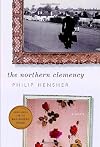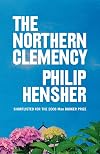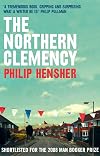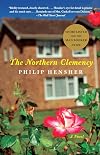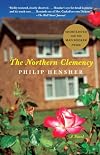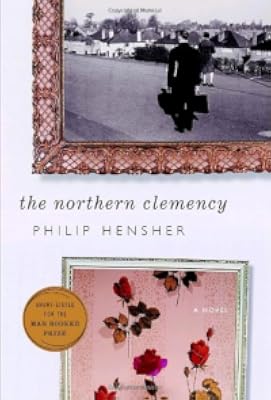
The Northern Clemency
by Philip Hensher
On This Page
Description
Fiction. Literature. HTML:In 1974, the Sellers family is transplanted from London to Sheffield in northern England. On the day they move in, the Glover household across the street is in upheaval: convinced that his wife is having an affair, Malcolm Glover has suddenly disappeared. The reverberations of this rupture will echo through the years to come as the connection between the families deepens. But it will be the particular crises of ten-year-old Tim Glover—set off by two seemingly show more inconsequential but ultimately indelible acts of cruelty—that will erupt, full-blown, two decades later in a shocking conclusion.Expansive and deeply felt, The Northern Clemency shows Philip Hensher to be one of our most masterly chroniclers of modern life, and a storyteller of virtuosic gifts. show less
Tags
Recommendations





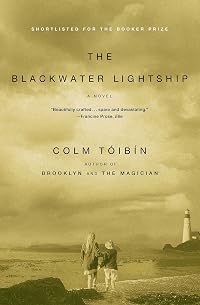

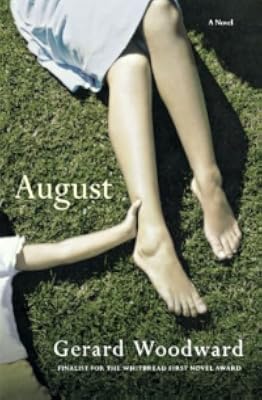
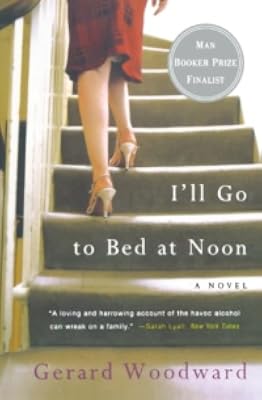








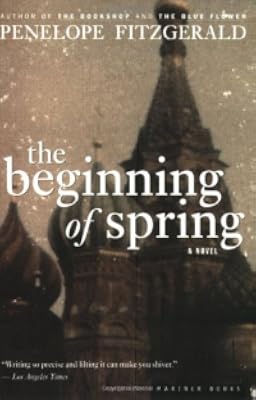





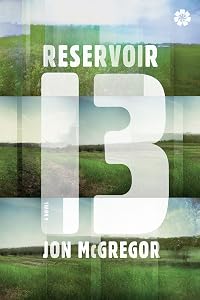

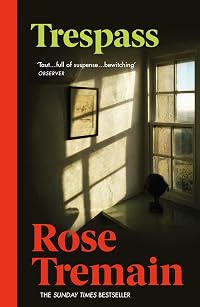


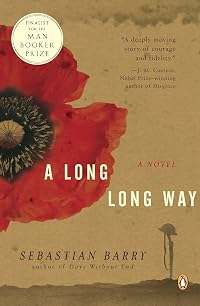



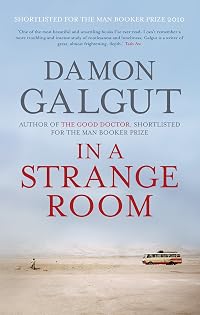

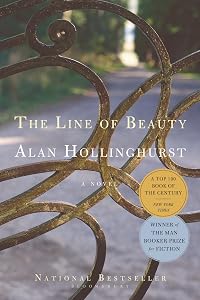




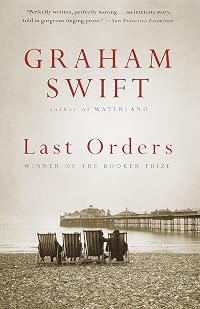
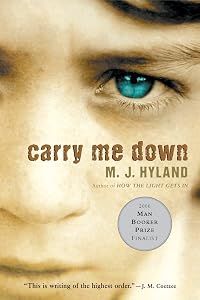
Member Recommendations

KimB Another very well written novel with a familial tension base. Set in Australia.
30
Member Reviews
The Northern Clemency begins in 1974 and follows two families living in Sheffield, England for the next twenty years. The Glover family holds a party, to which many in the neighborhood are invited. When Katherine conceived of the idea, it was with the assumption that the empty house across the street would have new owners, but it isn't until later that the Sellers family arrives from London to take up residence. Over the years, the two families become more entwined as they experience the changes brought by those two eventful decades, from the miners' strike to the changes caused by their children growing up and beginning life as adults.
I love novels like this, where ordinary people live ordinary lives, relationships strengthen or fail show more under adversity, children struggle through adolescence and find a place in the world, events swirl around them, some affecting them greatly, others barely noticed as they go about their lives.
For the most part, this was an excellent book. Hensher writes with compassion and understanding for the weaknesses and desires of his characters. It's only at the very end, when the least fleshed-out character behaves oddly and is treated unsympathetically by the author that I felt my interest flag a bit. It's like the author needed an event, for something more dramatic than the usual family crises, when the novel's strength lies in just those mundane affairs and relationships. Still, this was a solid novel and I look forward to reading more by this author. show less
I love novels like this, where ordinary people live ordinary lives, relationships strengthen or fail show more under adversity, children struggle through adolescence and find a place in the world, events swirl around them, some affecting them greatly, others barely noticed as they go about their lives.
For the most part, this was an excellent book. Hensher writes with compassion and understanding for the weaknesses and desires of his characters. It's only at the very end, when the least fleshed-out character behaves oddly and is treated unsympathetically by the author that I felt my interest flag a bit. It's like the author needed an event, for something more dramatic than the usual family crises, when the novel's strength lies in just those mundane affairs and relationships. Still, this was a solid novel and I look forward to reading more by this author. show less
This brick of a book (750+ pages) follows the stories of two families growing up across the street from each other in 1970s Sheffield, and of the other lives which intertwine with theirs over the next 20 years. Within each section of the book, the reader is plunged into a dense network of daily detail, but several years go by between sections.
You might be able to guess from this that the book is more about the passage of time than individual personalities. The upward mobility of the two families comes to stand in for the upward mobility of the whole country's self-image, along with the shift in virtues from thrift to display.
This is also one of those books where details of furniture, clothing or language are used to identify the show more social status and aspirations of the characters. The 1970s seem to be drawn in more detail than later decades, although since I'm not old enough to remember them I don't know how accurate the depiction is - it seems spot-on but it may only be a good depiction of stereotypes about the 1970s. In particular, the focus is on the way that old certainties and traditions are beginning to show little cracks, indicating the seismic social shifts to come.
Katherine decides to get a job in a flower shop, because it's the first shop she's seen in the area which is about useless, wasteful beauty rather than practical, hard-wearing necessities. The owner, Nick, says he first needs to
"...talk it through with my brother. It's half his money."
"Where is he?" Katherine said.
"New York," Nick said. "I'll mention it at the weekend."
"Is he coming over, then?" Katherine said, treading cautiously. She was inexperienced in lives and brothers like that, New York brothers; she felt in danger of saying something that showed where she was and where she'd seen. What she was.
"No," Nick said. "I'll speak to him on the phone."
"Can you do that?" and "That's an awful expense," came to Katherine, but she managed to say, "Of course," in quite a natural way, and went away soon afterwards.
There were lots of things I enjoyed about this book. Despite its length, it's a page-turner, and there is a lot of dry wit - including a few occasions when I laughed out loud. (Katherine becomes obsessed with Nick to the point that she can't stop talking about him. At the same time, her youngest son is monomaniacal, in the way small boys can be, about snakes: At first Jane felt that she would never get on with her mother's conversation, the way you waited for Nick to enter it at any moment, but time wore down anything. Soon it was the same as Tim's dreaming evocation of snakes, his paragraphs of detail and longing, and they divided the long evenings between them like a pair of madmen supervising the silent sane.) The painful adolescences of the children are also very well drawn.
However, there were two big problems for me with the book. The first is that the characters, by and large, feel like representatives of types rather than real people. This meant that I didn't particularly care about them. For example, there is a scene where Katherine's husband, long into their marriage, comforts her after a life-shattering embarrassment by encouraging her to look through the family's old photograph albums. This should have been an incredibly moving incident - quietly demonstrating his delicacy, tact, and concern for her - but I didn't have the emotional engagement for it to be so.
The second is that since the story is really about the larger social changes, there's not a lot of structure, and this is most obvious at the end of the book. Hensher brings it to a fairly artificial climax. I can't help feeling that the book might have been better if it had stayed in the 70s, maybe with a few hints at what was to come, and had put more thought into its characters as individuals.
Recommended for: I'd like to recommend this to someone who remembers provincial Britain in the 1970s, to see how accurate the portrayal actually is. Other than that, I do think the way the writing captures the beginnings of social change is excellent, so I would recommend it to anyone who likes books with a very specific spirit of time. Not for anyone who needs very plot-driven books, though! show less
You might be able to guess from this that the book is more about the passage of time than individual personalities. The upward mobility of the two families comes to stand in for the upward mobility of the whole country's self-image, along with the shift in virtues from thrift to display.
This is also one of those books where details of furniture, clothing or language are used to identify the show more social status and aspirations of the characters. The 1970s seem to be drawn in more detail than later decades, although since I'm not old enough to remember them I don't know how accurate the depiction is - it seems spot-on but it may only be a good depiction of stereotypes about the 1970s. In particular, the focus is on the way that old certainties and traditions are beginning to show little cracks, indicating the seismic social shifts to come.
Katherine decides to get a job in a flower shop, because it's the first shop she's seen in the area which is about useless, wasteful beauty rather than practical, hard-wearing necessities. The owner, Nick, says he first needs to
"...talk it through with my brother. It's half his money."
"Where is he?" Katherine said.
"New York," Nick said. "I'll mention it at the weekend."
"Is he coming over, then?" Katherine said, treading cautiously. She was inexperienced in lives and brothers like that, New York brothers; she felt in danger of saying something that showed where she was and where she'd seen. What she was.
"No," Nick said. "I'll speak to him on the phone."
"Can you do that?" and "That's an awful expense," came to Katherine, but she managed to say, "Of course," in quite a natural way, and went away soon afterwards.
There were lots of things I enjoyed about this book. Despite its length, it's a page-turner, and there is a lot of dry wit - including a few occasions when I laughed out loud. (Katherine becomes obsessed with Nick to the point that she can't stop talking about him. At the same time, her youngest son is monomaniacal, in the way small boys can be, about snakes: At first Jane felt that she would never get on with her mother's conversation, the way you waited for Nick to enter it at any moment, but time wore down anything. Soon it was the same as Tim's dreaming evocation of snakes, his paragraphs of detail and longing, and they divided the long evenings between them like a pair of madmen supervising the silent sane.) The painful adolescences of the children are also very well drawn.
However, there were two big problems for me with the book. The first is that the characters, by and large, feel like representatives of types rather than real people. This meant that I didn't particularly care about them. For example, there is a scene where Katherine's husband, long into their marriage, comforts her after a life-shattering embarrassment by encouraging her to look through the family's old photograph albums. This should have been an incredibly moving incident - quietly demonstrating his delicacy, tact, and concern for her - but I didn't have the emotional engagement for it to be so.
The second is that since the story is really about the larger social changes, there's not a lot of structure, and this is most obvious at the end of the book. Hensher brings it to a fairly artificial climax. I can't help feeling that the book might have been better if it had stayed in the 70s, maybe with a few hints at what was to come, and had put more thought into its characters as individuals.
Recommended for: I'd like to recommend this to someone who remembers provincial Britain in the 1970s, to see how accurate the portrayal actually is. Other than that, I do think the way the writing captures the beginnings of social change is excellent, so I would recommend it to anyone who likes books with a very specific spirit of time. Not for anyone who needs very plot-driven books, though! show less
This book is a little tricky to rate and review, and three stars may be a trifle harsh - there were several elements I liked, but many that I didn't and a couple I found preposterous, and it made me appreciate that Jonathan Coe does this kind of microcosm of a nation novel better and less heavy handedly. It is also too long, and for me a little unbalanced politically - the characters on the right all seem reasonable and sympathetic whereas the one who represents the left is both radical and mentally disturbed.
I enjoyed the first 200 pages or so a lot, a very entertaining story that reflected the author's own childhood in the middle class suburbs on the west side of Sheffield. This introduces the two main families of the story - the show more Glovers who are Sheffield natives and the Sellers family whose move from London opens the book. The whole thing is told by an omniscient character whose account follows different characters for extended periods.
Where things start to go wrong for me is in Book Three, which is set against the backdrop of the miner's strike and the Thatcher government. Hensher barely acknowledges that this government was deeply unpopular in Sheffield (the so-called Socialist Republic of South Yorkshire), and that the accepted media narrative on the violence that accompanied the strike was as compromised as the initial account of the Hillsborough disaster, both being filtered through the largely discredited South Yorkshire police. So the supposed first hand account of the battle of Orgreave seems sensationalist to me.
The really preposterous stuff is saved for the final part, in which the left wing firebrand Timothy becomes seriously deluded, travelling to Australia on a bizarre personal mission to "rescue" a character who had gone missing since part one.
I think that is more than enough negativity - I did enjoy large parts of the book, which is quite funny and perceptive in places, and the first part in particular brought back many memories of a time and British culture that are now long gone. show less
I enjoyed the first 200 pages or so a lot, a very entertaining story that reflected the author's own childhood in the middle class suburbs on the west side of Sheffield. This introduces the two main families of the story - the show more Glovers who are Sheffield natives and the Sellers family whose move from London opens the book. The whole thing is told by an omniscient character whose account follows different characters for extended periods.
Where things start to go wrong for me is in Book Three, which is set against the backdrop of the miner's strike and the Thatcher government. Hensher barely acknowledges that this government was deeply unpopular in Sheffield (the so-called Socialist Republic of South Yorkshire), and that the accepted media narrative on the violence that accompanied the strike was as compromised as the initial account of the Hillsborough disaster, both being filtered through the largely discredited South Yorkshire police. So the supposed first hand account of the battle of Orgreave seems sensationalist to me.
The really preposterous stuff is saved for the final part, in which the left wing firebrand Timothy becomes seriously deluded, travelling to Australia on a bizarre personal mission to "rescue" a character who had gone missing since part one.
I think that is more than enough negativity - I did enjoy large parts of the book, which is quite funny and perceptive in places, and the first part in particular brought back many memories of a time and British culture that are now long gone. show less
I have gotten very little sleep in the last twenty-four hours. Hensher's opus is 738 pages and, aside from four hours sleep, I have read it straight through. Excepting Harry Potter I have not had such an enjoyable time since Jonathan Strange came out. I will do a general Booker Prize post soon but this one deserves its own review.
The Northern Clemency covers a period of twenty years (from 1974 to 1994) in the lives of two families and their satellites. The Glovers and the Sellers live across the street from each other in northern England, Sheffield to be specific. As the book opens the Glovers are entertaining their neighbors and there is much speculation on their incipient newcomers. A couple of days later the Sellers move in, land in show more the midst of a crisis at the Glover's and witness an extraordinary act of public cruelty. There are five children between the two families and the book follows their lives as well as the four parents. All family members have intertwined relationships waxing and waning during the two decades of the book. Philip Hensher does an exemplary job of describing the seventies. While the food was different here in the U. S. I have been to parties just like the one he described. His descriptive prose is so evocative I could picture myself in the middle of many of his locales. The story travels from Sheffield to London to Sydney and back.
This book is so densely packed with characters I found myself more than once puzzling out the relationships and there is one, a cleaning lady, I still cannot connect or make sense of. Several story lines seem to just disappear which isn't necessarily a problem but it is unusual and the ending is a new one to me. It made me laugh.
Whatever I say about this book will be inadequate. I couldn't put it down. If I had to choose right now this would be my choice for the Booker Prize. We shall just have to wait and see. show less
The Northern Clemency covers a period of twenty years (from 1974 to 1994) in the lives of two families and their satellites. The Glovers and the Sellers live across the street from each other in northern England, Sheffield to be specific. As the book opens the Glovers are entertaining their neighbors and there is much speculation on their incipient newcomers. A couple of days later the Sellers move in, land in show more the midst of a crisis at the Glover's and witness an extraordinary act of public cruelty. There are five children between the two families and the book follows their lives as well as the four parents. All family members have intertwined relationships waxing and waning during the two decades of the book. Philip Hensher does an exemplary job of describing the seventies. While the food was different here in the U. S. I have been to parties just like the one he described. His descriptive prose is so evocative I could picture myself in the middle of many of his locales. The story travels from Sheffield to London to Sydney and back.
This book is so densely packed with characters I found myself more than once puzzling out the relationships and there is one, a cleaning lady, I still cannot connect or make sense of. Several story lines seem to just disappear which isn't necessarily a problem but it is unusual and the ending is a new one to me. It made me laugh.
Whatever I say about this book will be inadequate. I couldn't put it down. If I had to choose right now this would be my choice for the Booker Prize. We shall just have to wait and see. show less
This wonderful middleclass novel! The characters, decent and hardworking, or not, normal and well-adjusted or slightly dotty, but cleanly drawn and identifiable come from my life and yours. We know them and have met them or variations of them and it is engaging to think of how they confront the issues of their very ordinary lives. Marriage, work, children, houses, geography, adjustments from urban to rural, appearances, dissapointments, cars, what to make for dinner, school, neighbors it is all here, the components of the middleclass life. Then there is the language. Nearly all of the writing is immediate and direct, but there are parts and phrases that are so perfect that I read them over again, more slowly and had a sigh of complete show more delight. The stay at the horrible hotel, the description of he trial, the unsettling game at the grade school with such unfortunate consequences. There are phrases such as "elective cheerfulness" to describe kitchen decor or "a voice so weary with tragedy" for an announcement in a grocery store. As I went to search out these tidbits, I realized that I wanted to read the book again, even though I have a tower of good reads waiting. It was that good and it was that satisfying to see the development of the characters and the foreshadowing of outcomes as the novel unfolds. show less
When you're ready to start this one, make sure you've got everything done that you need to do, because it's hard to stop reading. At 700+ pages, you need to know what you're getting into. I didn't and have stayed up way too late the last few nights to finish it.
The story centers on two families in Sheffield: The Glovers, who are from the area, and the Sellers, who have at the beginning of the story (1970s) just moved from London. We follow the story through the 1990s. The Sellers don't realize it, but they are moving into the neighborhood at a time when the Glovers are going through a crisis: Mr. Glover has left the home without saying anything, and Katherine's so frustrated that she performs a most senseless act of cruelty right out show more in front of everyone, none the least of whom are her children, especially her son Tim. This sort of sets the tone and gets the story up and running very quickly. But the Sellers have their own problems; for example, the kids aren't fitting in well at all at school because they're not native to the area. The 1970s leave indelible marks on both families, and their stories weave in and out throughout the years. You can't stop reading, because you really want to know what happens with everyone.
Beyond that, Hensher's writing is very descriptive and quite good. His characterizations are excellent, and should be; this is not really so much plot driven but more character driven. It is a bit long, and I found myself thinking that maybe there could have been less conversation in some parts to move things along. But that's just me.
Would I vote for it to win the Booker? Probably not, but it was still a fine read and one I can recommend. show less
The story centers on two families in Sheffield: The Glovers, who are from the area, and the Sellers, who have at the beginning of the story (1970s) just moved from London. We follow the story through the 1990s. The Sellers don't realize it, but they are moving into the neighborhood at a time when the Glovers are going through a crisis: Mr. Glover has left the home without saying anything, and Katherine's so frustrated that she performs a most senseless act of cruelty right out show more in front of everyone, none the least of whom are her children, especially her son Tim. This sort of sets the tone and gets the story up and running very quickly. But the Sellers have their own problems; for example, the kids aren't fitting in well at all at school because they're not native to the area. The 1970s leave indelible marks on both families, and their stories weave in and out throughout the years. You can't stop reading, because you really want to know what happens with everyone.
Beyond that, Hensher's writing is very descriptive and quite good. His characterizations are excellent, and should be; this is not really so much plot driven but more character driven. It is a bit long, and I found myself thinking that maybe there could have been less conversation in some parts to move things along. But that's just me.
Would I vote for it to win the Booker? Probably not, but it was still a fine read and one I can recommend. show less
I was a bit non-plussed by this book, it had so many disparate elements, loose ends and jumps in time. I did really enjoy it, liked the fact it was set in Sheffield, a place I used to live, so the setting felt familiar. It follows 2 families over a period of 20 years or so, but there are big jumps in time between sections. All the characters have flaws and quirks which make them interesting, but sometimes it all feels a bit too implausible and is a bit frustrating when storylines are just dropped without closure.
Members
- Recently Added By
Published Reviews
ThingScore 25
Although Hensher has set The Northern Clemency in an introverted (if not Schoenberg-loving) middle-class suburb of Sheffield where the mines and steel mills might as well have been in London for all most people knew of them - I can vouch for this because I, like Hensher, grew up there; he and I went to the same comprehensive school - he is neither brave nor blithe enough to ignore the tug of show more history entirely. show less
added by Nevov
Hensher's epic novel is set in Sheffield and spans the rise, fall and return of the vol-au-vent as a social accessory. In the opening scene, timorous hostess Katherine Glover hands round plates of nibbles while her teenage son Daniel lolls on the sofa leering at the female guests, who are perturbed by his ill-concealed erection. By the end of the book it is the mid-1990s: Daniel has settled show more down and established a modish restaurant in a redundant forge, where the starters come speared to a foil-wrapped potato. show less
added by wandering_star — edited by Nevov
Hensher is a brilliant anatomist of familial tension and marshals his large cast of characters deftly. He has an impeccable eye for nuances of character and setting, and the details of Seventies food and decor are lovingly done: the mushroom vol-au-vents, the white wall units with brown smoked glass and the gold-tasselled sofas “glowering at each other across the drawing room like a pair of show more retired rival strippers”. show less
added by wandering_star
Lists

Booker Prize
491 works; 62 members

Man Booker Prize Longlist 2008
13 works; 2 members

Booker Prize Shortlist: Titles Not Yet Read
161 works; 4 members
Author Information

25+ Works 2,690 Members
Awards and Honors
Common Knowledge
- Original title
- The Northern Clemency
- Original publication date
- 2008
- People/Characters
- Malcolm Glover; Katherine Glover; Daniel Glover; Jane Glover; Timothy Glover; Bernie Sellers (show all 9); Alice Sellers; Sandra Sellers; Francis Sellers
- Important places
- Australia; London, England, UK; New South Wales, Australia; Sheffield, South Yorkshire, England, UK; South Yorkshire, England, UK; Sydney, New South Wales, Australia
- Important events
- Miners' Strike (1984)
- Epigraph*
- what he would have done (crossed out) hooped to do for anyone else
E. M. Forster, "Arctic Summer", principal fragment - Dedication
- For Zaved Mahmoud
- First words
- 'So the garden of number eighty-four is nothing more than a sort of playground for all the kids of the neighbourhood?'
- Last words
- (Click to show. Warning: May contain spoilers.)There had never been any real doubt in his mind that she would forgive him.
*Some information comes from Common Knowledge in other languages. Click "Edit" for more information.
Classifications
Statistics
- Members
- 838
- Popularity
- 32,935
- Reviews
- 32
- Rating
- (3.61)
- Languages
- English
- Media
- Paper, Audiobook, Ebook
- ISBNs
- 18
- ASINs
- 7