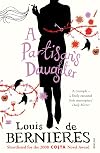
A Partisan's Daughter
by Louis de Bernières
On This Page
Description
The new novel from the acclaimed author of Birds Without Wings and Captain Corelli's Mandolin is a love story at once raw and sweetly funny, wry and heartbreakingly sad. Chris is bored, lonely, trapped in a loveless, sexless marriage. In his forties, he's a stranger to the 1970s youth culture of London, a stranger to himself on the night he invites a hooker into his car. Roza is Yugoslavian, recently moved to London, the daughter of one of Tito's partisans. She's in her twenties, but has show more already lived a life filled with danger, misadventure, romance, and tragedy. And though she's not a hooker, when she's propositioned by Chris, she gets into his car anyway. Over the next few months Roza tells Chris the stories of her past. She's a fast-talking Scheherazade, saving her own life by telling it to Chris. And he takes in her tales as if they were oxygen in an otherwise airless world. But is Roza telling the truth? Does Chris hear the stories through the filter of his own need? Does it even matter? This deeply moving novel of their unlikely love - narrated in the moment and through recollection, each of their voices deftly realised - is also a brilliantly subtle commentary on storytelling: its seductions and powers, and its ultimately unavoidable dangers. show lessTags
Recommendations






















Member Recommendations

Member Reviews
This was a delightful little book. A more up-to-date 1001 nights, the story focuses on the relationship between a middle aged man, Chris, and the object of his affection, the extremely unreliable storyteller Roza.
Chris is out of love with his boring wife, whom he calls the great white loaf. He feels so distant he finally screws up his courage to approach a prostitute. This is Roza. She immediately denies being a prostitute and then agrees she is, spinning Chris this way and that and entrancing him all the more.
In between their storytelling evenings, held in a decrepit squat, life goes on. Cultural and historical dates and images pop up every chapter, telling the passage of time. Even the old London man walking with the “passion show more proteins” sign makes an appearance (to my delight, as I used to see him all the time around the place).
Roza teases Chris, wielding her sexual power until he can think of nothing else. The tension rises until the inevitable crisis.
The book is written in the voices of Roza and Chris, in present time and in the past and it is at times hard to orient oneself. But it’s such a delightful read, you just can’t put it down! show less
Chris is out of love with his boring wife, whom he calls the great white loaf. He feels so distant he finally screws up his courage to approach a prostitute. This is Roza. She immediately denies being a prostitute and then agrees she is, spinning Chris this way and that and entrancing him all the more.
In between their storytelling evenings, held in a decrepit squat, life goes on. Cultural and historical dates and images pop up every chapter, telling the passage of time. Even the old London man walking with the “passion show more proteins” sign makes an appearance (to my delight, as I used to see him all the time around the place).
Roza teases Chris, wielding her sexual power until he can think of nothing else. The tension rises until the inevitable crisis.
The book is written in the voices of Roza and Chris, in present time and in the past and it is at times hard to orient oneself. But it’s such a delightful read, you just can’t put it down! show less
After the cinematic sweep of De Bernières' Captain Corelli's Mandolin (1995), A Partisan's Daughter seems like a one-act play. The novel is set in a crumbling house in a down-and-out district of London in the 1970s. Over coffee and cigarettes, Roza, an illegal immigrant from Yugoslavia, tells her life story to Chris, an unhappily married, middle-aged pharmaceuticals salesman. As Chris listens to Roza's sad and often brutal stories, he wrestles with his feelings for her. "I never lost the sexual attraction I felt for Roza, even long after we became friends," Chris explains, early in the novel. "If anything, it increased because she began to touch my heart."
De Bernières is interested in the difficulty of knowing another person, and in show more how stories create sympathy between people. He's also interested in the tangled history of post-war Europe. The personal—the relationship between Roza and Chris—is tangled up with the political—the ethnic tensions simmering in Yugoslavia under the tight lid of Tito's dictatorship, and the drift of Great Britain toward the conservatism of Thatcher. Is the complicated and fragile relationship between Roza and Chris somehow a commentary on the situation in Europe near the end of the Cold War? Is the world made up of scarred and disappointed strangers, for whom sympathy is always overpowered by lust?
Roza's stories are larded with details about post-War Yugoslavia, but De Bernières is also careful to mark the progress of Roza and Chris's relationship with references to contemporary events in Britain. I first noticed this in chapter eight, which begins: "I came by on the day that Airey Neave was killed by the IRA, and found Roza in a penitent mood..." In chapter eleven (titled "The Betrayal"), Chris comes to Roza's house, and the door is answered by "the Bob Dylan Upstairs" (the BDU), a young man who's obsessed with Bob Dylan. The BDU is wearing a black armband because Dylan has just sold out by recording a religious album (1979's Slow Train Coming). In chapter thirteen, the BDU comes to the door again: "When I next visited, the door was answered by the Bob Dylan Upstairs, who by now had stopped wearing his black armband, but was still very morose. I'd just learned on my car radio that President Bhutto had been hanged in Pakistan, but I was right to assume that it was something else that was bothering the BDU." In fact, the BDU was depressed about a minor romantic disappointment.
Chapter 18: "The next time I saw Roza there was a lot to be depressed about. The Ayatolla Khomeni was saying that there wasn't going to be any democracy in Iran. Everyone was still on strike for preposterous pay rises, and the only good news was that Idi Amin had absconded. Everyone was sing some bloody song that you couldn't get out of your head called 'I Will Survive,' but not many of us reckoned we would. Seeing Roza cheered me up, though."
Chapter 19: "The next time I saw Roza I was feeling uneasy because the Yorkshire Ripper had just killed another woman in Halifax."
Chapter 20: "Mrs. Thatcher came to power..."
Chapter 21: John Wayne dies.
Chapter 22: Muhammad Ali retires.
It seems as if the personal—our romances and relationships, our taste in music, our interest in sport and celebrity—is more real than the distant backdrop of political history. I'd like to think that as skilled a novelist as De Bernières isn't clumsily using these references simply to mark the passage of time. Is he saying something about the shallowness of Western culture, and the increasing isolation of the West from the concerns of the rest of the world? Is he saying something about how we perceive history through the lens of our own personal experience?
Chapter 25: "I came back just after Wimbledon fortnight. I remember feeling a bit sorry because Chris Evert had just been beaten by Martina Navratilova. It was only because Chris Evert was quite pretty. I wouldn't have cared otherwise. I've known for a long time that I'm quite shallow, but I'm reconciled to it. I get consolation from the thought that everyone probably is." show less
De Bernières is interested in the difficulty of knowing another person, and in show more how stories create sympathy between people. He's also interested in the tangled history of post-war Europe. The personal—the relationship between Roza and Chris—is tangled up with the political—the ethnic tensions simmering in Yugoslavia under the tight lid of Tito's dictatorship, and the drift of Great Britain toward the conservatism of Thatcher. Is the complicated and fragile relationship between Roza and Chris somehow a commentary on the situation in Europe near the end of the Cold War? Is the world made up of scarred and disappointed strangers, for whom sympathy is always overpowered by lust?
Roza's stories are larded with details about post-War Yugoslavia, but De Bernières is also careful to mark the progress of Roza and Chris's relationship with references to contemporary events in Britain. I first noticed this in chapter eight, which begins: "I came by on the day that Airey Neave was killed by the IRA, and found Roza in a penitent mood..." In chapter eleven (titled "The Betrayal"), Chris comes to Roza's house, and the door is answered by "the Bob Dylan Upstairs" (the BDU), a young man who's obsessed with Bob Dylan. The BDU is wearing a black armband because Dylan has just sold out by recording a religious album (1979's Slow Train Coming). In chapter thirteen, the BDU comes to the door again: "When I next visited, the door was answered by the Bob Dylan Upstairs, who by now had stopped wearing his black armband, but was still very morose. I'd just learned on my car radio that President Bhutto had been hanged in Pakistan, but I was right to assume that it was something else that was bothering the BDU." In fact, the BDU was depressed about a minor romantic disappointment.
Chapter 18: "The next time I saw Roza there was a lot to be depressed about. The Ayatolla Khomeni was saying that there wasn't going to be any democracy in Iran. Everyone was still on strike for preposterous pay rises, and the only good news was that Idi Amin had absconded. Everyone was sing some bloody song that you couldn't get out of your head called 'I Will Survive,' but not many of us reckoned we would. Seeing Roza cheered me up, though."
Chapter 19: "The next time I saw Roza I was feeling uneasy because the Yorkshire Ripper had just killed another woman in Halifax."
Chapter 20: "Mrs. Thatcher came to power..."
Chapter 21: John Wayne dies.
Chapter 22: Muhammad Ali retires.
It seems as if the personal—our romances and relationships, our taste in music, our interest in sport and celebrity—is more real than the distant backdrop of political history. I'd like to think that as skilled a novelist as De Bernières isn't clumsily using these references simply to mark the passage of time. Is he saying something about the shallowness of Western culture, and the increasing isolation of the West from the concerns of the rest of the world? Is he saying something about how we perceive history through the lens of our own personal experience?
Chapter 25: "I came back just after Wimbledon fortnight. I remember feeling a bit sorry because Chris Evert had just been beaten by Martina Navratilova. It was only because Chris Evert was quite pretty. I wouldn't have cared otherwise. I've known for a long time that I'm quite shallow, but I'm reconciled to it. I get consolation from the thought that everyone probably is." show less
An odd little book, much shorter than Corelli's Mandolin or Birds Without Wings. It is the story of Roza (the titular partisan's daughter) and Chris, a forty-something London man. The chapters are relatively short and the narration shifts back and forth between Roza and Chris (and sometimes Chris as Roza or Roza as Chris).
They meet when Chris attempts to pick up Roza, who he thinks is a prostitute. He begins visiting her at her run-down house, not for sex but to hear her stories of her father - the partisan - and her childhood, and how she came to be living in London. The two begin to feel true affection for each other - they may even be falling in love - but one night Chris makes a terrible mistake when drunk, and Roza disappears.
One show more gets the sense that Roza - and maybe Chris also - is an unreliable narrator, but a larger framing device is lacking, so altogether the effect is a bit confusing. However, the author is a master of voice, and the story is laced with unexpected humor as well.
Quotes:
When you look back afterwards, you can always find another way of putting it. You say, "I was obsessed, it was really lust, I was fooling myself," because after you've recovered from being in love, you always decide that that wasn't what it was. (9)
...in that region it isn't ever possible not to live a hostage to history. They're all possessed and tormented by it. It takes the logic and humanity out of their souls and gives them heroic stupidity. (32)
I once heard a joke about Irish Alzheimer's disease, which is when you forget everything but a grudge (47)
What struck me was how strange language is, when you don't know what it means. (63)
A broken heart travels with you. (112)
...but now I know that everyone's escaping from themselves. Everybody's on the run, and then one day you've stopped running, and that's when you're dead, and nobody ever gets to be where they wanted. (132)
She said she'd discovered that even atheists pray when they're desperate. (160)
"Nobody sees what they don't know." (177) show less
They meet when Chris attempts to pick up Roza, who he thinks is a prostitute. He begins visiting her at her run-down house, not for sex but to hear her stories of her father - the partisan - and her childhood, and how she came to be living in London. The two begin to feel true affection for each other - they may even be falling in love - but one night Chris makes a terrible mistake when drunk, and Roza disappears.
One show more gets the sense that Roza - and maybe Chris also - is an unreliable narrator, but a larger framing device is lacking, so altogether the effect is a bit confusing. However, the author is a master of voice, and the story is laced with unexpected humor as well.
Quotes:
When you look back afterwards, you can always find another way of putting it. You say, "I was obsessed, it was really lust, I was fooling myself," because after you've recovered from being in love, you always decide that that wasn't what it was. (9)
...in that region it isn't ever possible not to live a hostage to history. They're all possessed and tormented by it. It takes the logic and humanity out of their souls and gives them heroic stupidity. (32)
I once heard a joke about Irish Alzheimer's disease, which is when you forget everything but a grudge (47)
What struck me was how strange language is, when you don't know what it means. (63)
A broken heart travels with you. (112)
...but now I know that everyone's escaping from themselves. Everybody's on the run, and then one day you've stopped running, and that's when you're dead, and nobody ever gets to be where they wanted. (132)
She said she'd discovered that even atheists pray when they're desperate. (160)
"Nobody sees what they don't know." (177) show less
Set in England in the 1970's with alternating chapters and viewpoints we are drawn into the life of middle-aged Chris - bored, lonely and never eager to go home to the "Great White Loaf" and Roza a young Yugoslav immigrant whose father was one of Tito's partisans. Roza is a masterful storyteller who has seized more than her share of moments in life and struggles with love. Sometimes told in the present sometimes in recollection with historical and political touch points a celebration of ordinary people and the sadness that comes from one wrong choice. I loved this book, read it in one sitting and will be checking out his other books soon!
I wonder if we are supposed to think that the stories she tells are ok, somehow, because we know that she lies in part. A strange and troubling love story.
This is a story of two ordinary lives, that are, of course, extraordinary. Chris is a bored travelling salesman, living with a wife he no longer loves. Roza is Serbian who's found herself living in London. These two meet, and over the course of time, Roza tells Chris her story. Or does she? How much is fact? How much is a product of her imagination? Is she really someone who's slept with her best friend, her father, dropped out of university, lived as a prostitute? We become as fascinated by her as Chris is. This is a story of missed opportunities, of lives turning out differently because of decisions made, or not made, and the ending leaves a bitter taste in the mouth.
This is a story about story-telling.
This is a story about story-telling.
A partisan's daughter is a rather sad love story. Chris is a 40-something Londoner who feels that life has passed him by. His marriage has become loveless and sexless. He has lost his ideals, his hope for an adventurous life. Then, one day, he runs into Roza, a young Yugoslav immigrant, who poses as a prostitute. To Chris, Roza represents adventure, life lived to the fullest. But who is Roza really? She is a great storyteller and in the course of the next few months she tells Chris her life story. But is this her real life story, or does she make it up, inventing shocking scenes just to see how Chris will react?
The book has two narrators, Chris and Roza. In the Roza chapters we learn that she is making up stories, however, we never show more come to know if it's all made up or just partially. Actually it was quite unclear to me why De Bernieres used Roza as a second (direct) narrator. It seems weird that Roza is telling her side of the story, looking backwards, but suddenly disappears as a narrator towards the end of the book.
All in all, I didn't like this book as much as Captain Corelli and the Latin American trilogy. The double narrators bothered me, and the dramatic story of Roza is undermined by the suggestion that it isn't true anyway. (Well, in the end this is fiction of course, so why be bothered?) However, De Bernieres is a very good storyteller, who captures you by his style and his sense of humor, by his quick short scenes. So it was a pleasant read after all. show less
The book has two narrators, Chris and Roza. In the Roza chapters we learn that she is making up stories, however, we never show more come to know if it's all made up or just partially. Actually it was quite unclear to me why De Bernieres used Roza as a second (direct) narrator. It seems weird that Roza is telling her side of the story, looking backwards, but suddenly disappears as a narrator towards the end of the book.
All in all, I didn't like this book as much as Captain Corelli and the Latin American trilogy. The double narrators bothered me, and the dramatic story of Roza is undermined by the suggestion that it isn't true anyway. (Well, in the end this is fiction of course, so why be bothered?) However, De Bernieres is a very good storyteller, who captures you by his style and his sense of humor, by his quick short scenes. So it was a pleasant read after all. show less
Members
- Recently Added By
Author Information

39+ Works 18,290 Members
Louis de Bernières was born on December 8, 1954, in England to a military family. He spent four months in the British army in his late teens. When he was nineteen, he spent a year in Colombia where he wrote a short story about a true incident of violence that occurred there. Fifteen years later, while recuperating from a motorcycle accident, de show more Bernières used that short story as the basis for the first volume of his Latin American Trilogy, The War of Don Emmanuel's Nether Parts, Senor Vivo and the Coca Lord, and The Troublesome Offspring of Cardinal Guzman. In the 1980s, de Bernières worked as an auto mechanic and then as a supply teacher in London. In 1993 he took a holiday on the Greek island of Cephallonia. That became the setting for Captain Correlli's Mandolin, a novel of war, love, and heroism, which remained on the (London) Times bestseller list for four years. It has sold more than 600,000 copies, has been reprinted in paperback more than thirty times, and has been translated into more than seventeen languages.The book also won the Commonwealth Writers Prize for Best Book. It was also shortlisted for the 1994 Sunday Express Book of the Year. De Bernières was named one of Granta's 20 Best British Novelists in 1993, and Author of the Year 1998 by England's Publishing News. He will be give the opening night address at the 2015 Melbourne Writers Festival. His title The Dust that Falls from Dreams made the New Zealand Best Seller List in 2015 (Bowker Author Biography) show less
Some Editions
Awards and Honors
Awards
Distinctions
Common Knowledge
- Canonical title
- A Partisan's Daughter
- Original title
- A Partisan's Daughter
- Original publication date
- 2008
- People/Characters
- Chris (Christian); Roza
- Epigraph
- 'Le marriage bourgeois a mis notre pays en pantoufles, et bientot aux portes de la mort.' Albert Camus, La Chute
- First words
- I am not the sort of man who goes to prostitutes.
- Last words
- (Click to show. Warning: May contain spoilers.)The message was: 'I thought you loved me.'
Classifications
Statistics
- Members
- 598
- Popularity
- 48,997
- Reviews
- 32
- Rating
- (3.21)
- Languages
- 18 — Arabic, Czech, Dutch, English, French, German, Greek, Italian, Norwegian (Bokmål), Norwegian, Portuguese (Brazil), Portuguese (Portugal), Russian, Serbian, Slovak, Spanish, Swedish, Turkish
- Media
- Paper, Audiobook, Ebook
- ISBNs
- 26
- ASINs
- 12