
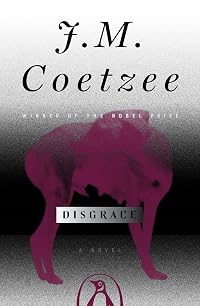
Disgrace
by J. M. Coetzee
On This Page
Description
After years teaching Romantic poetry at the Technical University of Cape Town, David Lurie, middle-aged and twice divorced, has an impulsive affair with a student. The affair sours; he is denounced and summoned before a committee of inquiry. Willing to admit his guilt, but refusing to yield to pressure to repent publicly, he resigns and retreats to his daughter Lucy's isolated farm. For a time, his daughter's influence and the natural rhythms of the farm promise to harmonize his discordant show more life. But the balance of power in the country is shifting. He and Lucy become victims of a savage and disturbing attack which brings into relief all the faults in their relationship. Chilling, uncompromising and unforgettable, Disgrace is a masterpiece. "From the Trade Paperback edition." show lessTags
Recommendations

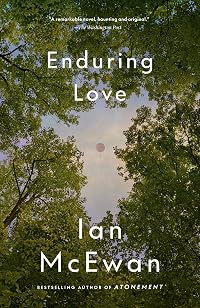
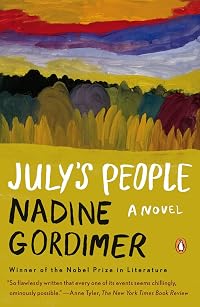
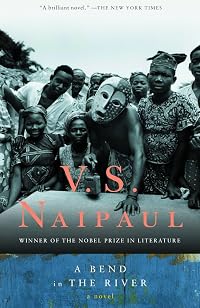
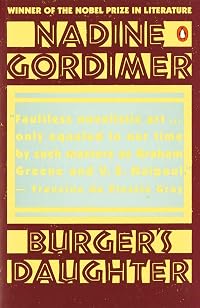



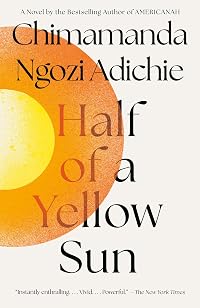

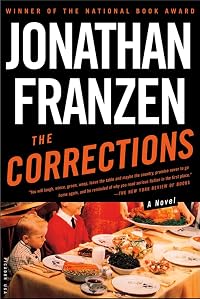
Member Recommendations
WildMaggie Same topic treated as fiction/nonfiction.
21


charl08 Key character an ageing writer contemplating his life choices. Both stark reading.

Member Reviews
*** This review may contain spoilers ***
This was interesting more than engaging, but memorable nonetheless. The best summary I can think of is that "Disgrace" provides insight into the inner workings of an eloquent anti-feminist youtube commenter struggling with incomprehension and irrelevance.
David Lurie, an ageing literature professor in South Africa, strikes up a sexual relationship with one of his students and rapes her. When the affair is discovered, this, but curiously not the rape, lead to his forced resignation, since he can't apologize or admit wrongful behaviour in any but the most abstract, pseudo-philosophical way.
The book delves into the thought patterns and the literary allusions with which Lurie justifies his rape to show more himself and to the people who confront him with it: he was taken over by Eros' fire; denying one's own natural inclinations is inhuman, like punishing a dog for getting aroused by a bitch in heat. Soon his daughter's rape and retaliatory anti-white racism complicate matters, and still Lurie cannot change: he is convinced that he is too old, too set in his ways. He cannot break out of his worldview to meaningfully and significantly impact the changing world around him. show less
This was interesting more than engaging, but memorable nonetheless. The best summary I can think of is that "Disgrace" provides insight into the inner workings of an eloquent anti-feminist youtube commenter struggling with incomprehension and irrelevance.
David Lurie, an ageing literature professor in South Africa, strikes up a sexual relationship with one of his students and rapes her. When the affair is discovered, this, but curiously not the rape, lead to his forced resignation, since he can't apologize or admit wrongful behaviour in any but the most abstract, pseudo-philosophical way.
The book delves into the thought patterns and the literary allusions with which Lurie justifies his rape to show more himself and to the people who confront him with it: he was taken over by Eros' fire; denying one's own natural inclinations is inhuman, like punishing a dog for getting aroused by a bitch in heat. Soon his daughter's rape and retaliatory anti-white racism complicate matters, and still Lurie cannot change: he is convinced that he is too old, too set in his ways. He cannot break out of his worldview to meaningfully and significantly impact the changing world around him. show less
Coetzee can certainly capture an audience with his emotionally charged story-telling skills. And his style is simple, clean, and direct. But reading Coetzee’s depiction of post-apartheid South Africa is like reading Faulkner’s interpretation of the deep south: offensive, depressing, and repulsive. I love Faulkner’s writing. So why do I hate this book? Perhaps because Faulkner knew most of his characters were uneducated, ignorant, and despicable. I’m not sure Coetzee can say the same for his characters. Coetzee seems to imply that even though some of his characters are ugly on the outside, they are all beautiful within. And it’s ok to be repulsive because it is human nature and the best we can do is humble ourselves, accept our show more lot in life, lower our expectations, and show some kindness. To me, it’s all bunk!
In a nutshell, this is a story of an aging, twice-divorced womanizer who gets fired from his job as a college professor for having a lucid affair with a student. It’s not just an ordinary affair. It borders on rape and involves stalking. And this isn’t the first time for Professor David Lurie. He’s got a long history of one-night stands and visits to prostitutes, and he lets the reader know the prostitutes are used - not because he can’t get sex for free - it just is less trouble for him to avoid the emotional commitment. He thinks he is God’s gift to women... literally. David truly believes the God of love, Eros is his master and acts through him. He fancies himself a romantic and his sexual behavior emulates his literary idol Lord Byron the poet, who was also a womanizer.
So after David loses his job, his income, and his standing in the Cape Town college community, he decides to pay an extended visit to his estranged daughter Lucy - a frumpy, earthy, lesbian hippy who lives alone in the remote countryside on a working farm. He visualizes himself living a fantasy of romanticized exile just like Byron. From the onset, the father and daughter’s personalities clash and tensions rise. David is having a hard time adjusting to primitive country living. For one thing, there are no attractive women to seduce. And worse, Lucy’s closest friend is an ugly hag of a woman - an amateur veterinarian who spends seven full days a week euthanizing dogs. Can there really be that many stray dogs in South Africa?
As the drama begins, Lucy gets raped by a gang of black African men. And worse - it is all a set-up by her black next door neighbor and handy man who is trying to get control of her land.
I will not fill you in on the entire plot, but tell you that this is where Faulkner and Coetzee depart in philosophy. Faulkner’s characters were amoral. They acted by human instinct and were too ignorant to realize they could aspire to a higher standard of living. But Coetzee’s characters know better. They choose to martyr themselves, wallowing in their own disgrace.
The whole plot is loaded with symbolism; the sex, the dogs, the racial violence, and the references to Lord Byron and Victor Hugo. Yes, when David can on longer rely on Byron for his stereotype, he reverts to Victor Hugo.
"Disgrace" was winner of the 1999 Booker Prize, a finalist for the National Book Critics Award, and received many great reviews. But I would rather have not read the book. Like a bad rotting carcass, it left an affected-soul aftertaste, and lingering anger at the “disgrace” in behavior of people who should have known better. I was particularly angered by Lucy and David’s complacent acceptance of savagery as a way of life and their pride in presuming that acceptance of this behavior would bring redemption. Mercy is never superior to justice and lowering ones standards does not assure redemption. I don’t care what Coetzee says!
I was tempted to rate this book 1 Star - because I abhor the allegory Coetzee presents in "Disgrace", but why shoot the messenger. I do believe Coetzee was trying to convey an accurate depiction of post-apartheid Africa’s cultural limitations, warped moral values, and the grotesque outcome of the struggle to implement the policies of the Truth and Reconciliation Commission. show less
In a nutshell, this is a story of an aging, twice-divorced womanizer who gets fired from his job as a college professor for having a lucid affair with a student. It’s not just an ordinary affair. It borders on rape and involves stalking. And this isn’t the first time for Professor David Lurie. He’s got a long history of one-night stands and visits to prostitutes, and he lets the reader know the prostitutes are used - not because he can’t get sex for free - it just is less trouble for him to avoid the emotional commitment. He thinks he is God’s gift to women... literally. David truly believes the God of love, Eros is his master and acts through him. He fancies himself a romantic and his sexual behavior emulates his literary idol Lord Byron the poet, who was also a womanizer.
So after David loses his job, his income, and his standing in the Cape Town college community, he decides to pay an extended visit to his estranged daughter Lucy - a frumpy, earthy, lesbian hippy who lives alone in the remote countryside on a working farm. He visualizes himself living a fantasy of romanticized exile just like Byron. From the onset, the father and daughter’s personalities clash and tensions rise. David is having a hard time adjusting to primitive country living. For one thing, there are no attractive women to seduce. And worse, Lucy’s closest friend is an ugly hag of a woman - an amateur veterinarian who spends seven full days a week euthanizing dogs. Can there really be that many stray dogs in South Africa?
As the drama begins, Lucy gets raped by a gang of black African men. And worse - it is all a set-up by her black next door neighbor and handy man who is trying to get control of her land.
I will not fill you in on the entire plot, but tell you that this is where Faulkner and Coetzee depart in philosophy. Faulkner’s characters were amoral. They acted by human instinct and were too ignorant to realize they could aspire to a higher standard of living. But Coetzee’s characters know better. They choose to martyr themselves, wallowing in their own disgrace.
The whole plot is loaded with symbolism; the sex, the dogs, the racial violence, and the references to Lord Byron and Victor Hugo. Yes, when David can on longer rely on Byron for his stereotype, he reverts to Victor Hugo.
"Disgrace" was winner of the 1999 Booker Prize, a finalist for the National Book Critics Award, and received many great reviews. But I would rather have not read the book. Like a bad rotting carcass, it left an affected-soul aftertaste, and lingering anger at the “disgrace” in behavior of people who should have known better. I was particularly angered by Lucy and David’s complacent acceptance of savagery as a way of life and their pride in presuming that acceptance of this behavior would bring redemption. Mercy is never superior to justice and lowering ones standards does not assure redemption. I don’t care what Coetzee says!
I was tempted to rate this book 1 Star - because I abhor the allegory Coetzee presents in "Disgrace", but why shoot the messenger. I do believe Coetzee was trying to convey an accurate depiction of post-apartheid Africa’s cultural limitations, warped moral values, and the grotesque outcome of the struggle to implement the policies of the Truth and Reconciliation Commission. show less
Disgrace is the work of one of the best novelists in the English language writing at the top of his form. More nuanced than a simple tale of moral transgression and redemption, it is also a story of clashing cultures and a society that has made no headway against historically motivated racial divisions that occasionally boil over into violence. David Lurie's affair with a student is uncovered when the student reports him to the university, but when he is called upon to answer for his behaviour he responds with haughty indignation, refusing "on principle" to issue a public apology. He resigns his post and, essentially blacklisted, retreats from the city to live with his daughter, Lucy, on her farm in a remote corner of the Eastern Cape. show more Here he encounters first hand the tensions and incongruities of a society divided along racial lines, and one afternoon Lucy's home is invaded by a team of three black men who rape her and assault her father. In the aftermath of the attack, the differences between David and Lucy that he had detected as minor flaws in their relationship are magnified until he is forced to leave. As the story progresses, David becomes more and more isolated by attitudes that are not in keeping with the new reality in which he finds himself. Solace is elusive, but he does find it, in a most surprising place. Coetzee's Booker prize winning novel is tersely narrated in clipped prose that heightens the tension and gives the story a visceral urgency that makes it riveting and unforgettable. show less
I have to say that a few pages into the book one is totally unprepared for what's to follow. We see this man, this drifter in his affections (if you can call it "affections"), a man with preconceived cynical notions about himself and about the world around him, as he gets a rude awakening when he comes face to face with the reality that threatens his daughter.
I went from disliking David Lurie to pitying him to having respect for him (the latter being due to his unwavering devotion to his daughter in her unimaginable plight and his humane attitude to homeless dogs). In my dislike of him, I even felt a whiff of "Lolita" there: he being driven by desire that much, in particular - his emotions when seeing Melanie's younger sister, not a show more pretty sight of his inner thoughts... Even though Lurie himself admits that "desire is a burden we could do well without", he is pretty much powerless in that respect. But after all, to various degrees, in all of us there is some duality of nature - the author certainly strikes a cord there.
The deplorable political and economical situation of South Africa is another focus of the book - sharp criticism mixed with disillusionment and resignation, both on the protagonist's, and, I felt, on the author's part.
Coetzee's relationship with his protagonist seems to be that of an aloof observer, an observer with no judgement, watching the man's unintentional, unscripted, unpredictable thoughts. This format worked so well. I certainly mean to put this author on my reading list. show less
I went from disliking David Lurie to pitying him to having respect for him (the latter being due to his unwavering devotion to his daughter in her unimaginable plight and his humane attitude to homeless dogs). In my dislike of him, I even felt a whiff of "Lolita" there: he being driven by desire that much, in particular - his emotions when seeing Melanie's younger sister, not a show more pretty sight of his inner thoughts... Even though Lurie himself admits that "desire is a burden we could do well without", he is pretty much powerless in that respect. But after all, to various degrees, in all of us there is some duality of nature - the author certainly strikes a cord there.
The deplorable political and economical situation of South Africa is another focus of the book - sharp criticism mixed with disillusionment and resignation, both on the protagonist's, and, I felt, on the author's part.
Coetzee's relationship with his protagonist seems to be that of an aloof observer, an observer with no judgement, watching the man's unintentional, unscripted, unpredictable thoughts. This format worked so well. I certainly mean to put this author on my reading list. show less
He just doesn't get it!
The He in question is David Lurie a college lecturer in the university of Cape Town in South Africa. A white male of 52 years old who sees himself as a sort of Byronic figure. He readily uses his power and position to satisfy his sexual needs; only now as he gets older his main concern is that he may be losing his appeal. He has always been disgraceful, but when he seduces a 20 year old female student of his, he faces the wrath of an investigating committee, after her family make a formal complaint. He readily admits his guilt, agrees that he has done wrong, but sees no reason why he should apologise or seek help. He will lose his job and his reputation, but sees no reason to change his behaviour. When faced with show more a more difficult position when his daughter is raped and he is beaten up, he still demonstrates that he has a total inability to see another persons point of view or 'walk in their shoes'. He is selfish, egotistical and remains so until the end of the novel. He just doesn't get it. This is not a bildungsroman.
This novel published in 1999 won Coetzee his second Booker prize and in my opinion it was a very worthy winner, because not only is it a good extremely well written story, it throws up so many themes and issues around post colonial Africa, women's equality and even animal rights in just over 200 pages, that it could keep college lecturers in employment until the end of this century (assuming they could keep their sex in their pants or their knickers, while at work). There have been many fine reviews, analysis and expositions of the story line and so I don't want to add another one to the list, but there have also been many thoughts expressed that I think are wrong headed. In my opinion this is not a book that shows, or even hints at, some sort of redemption for David Lurie. He is clearly a man out of his time. This is important because as a reader we see almost everything through David Luries' eyes, although it is written in the third person. Lucy his daughter cannot explain to him, her fears and concerns after the attack, because she knows he will not be able to grasp the reasons that she behaves the way she does. He will only make it worse. He will not understand. He will not get it. It is best that he keeps himself occupied with his pointless attempts to write an opera on Byron's final years. Just because he shows empathy towards an injured dog in the final paragraph of the book doesn't mean he is on the path towards redemption.
A brilliant novel 5 stars. show less
The He in question is David Lurie a college lecturer in the university of Cape Town in South Africa. A white male of 52 years old who sees himself as a sort of Byronic figure. He readily uses his power and position to satisfy his sexual needs; only now as he gets older his main concern is that he may be losing his appeal. He has always been disgraceful, but when he seduces a 20 year old female student of his, he faces the wrath of an investigating committee, after her family make a formal complaint. He readily admits his guilt, agrees that he has done wrong, but sees no reason why he should apologise or seek help. He will lose his job and his reputation, but sees no reason to change his behaviour. When faced with show more a more difficult position when his daughter is raped and he is beaten up, he still demonstrates that he has a total inability to see another persons point of view or 'walk in their shoes'. He is selfish, egotistical and remains so until the end of the novel. He just doesn't get it. This is not a bildungsroman.
This novel published in 1999 won Coetzee his second Booker prize and in my opinion it was a very worthy winner, because not only is it a good extremely well written story, it throws up so many themes and issues around post colonial Africa, women's equality and even animal rights in just over 200 pages, that it could keep college lecturers in employment until the end of this century (assuming they could keep their sex in their pants or their knickers, while at work). There have been many fine reviews, analysis and expositions of the story line and so I don't want to add another one to the list, but there have also been many thoughts expressed that I think are wrong headed. In my opinion this is not a book that shows, or even hints at, some sort of redemption for David Lurie. He is clearly a man out of his time. This is important because as a reader we see almost everything through David Luries' eyes, although it is written in the third person. Lucy his daughter cannot explain to him, her fears and concerns after the attack, because she knows he will not be able to grasp the reasons that she behaves the way she does. He will only make it worse. He will not understand. He will not get it. It is best that he keeps himself occupied with his pointless attempts to write an opera on Byron's final years. Just because he shows empathy towards an injured dog in the final paragraph of the book doesn't mean he is on the path towards redemption.
A brilliant novel 5 stars. show less
“For a man of his age, fifty-two, divorced, he has, to his mind, solved the problem of sex rather well.” And so opens J.M. Coetzee’s book “Disgrace”. This is the story of a middle-aged professor who faces disgrace in many forms, starting with an affair with a student young enough to be his daughter, a girl really, and the humiliation of the resulting public scandal. It broadens to the disgrace of old age, of not being able to defend his daughter when she is attacked, and the humiliation of being weak.
There is a parallel in the sex which was not really desired by his student, though she does not resist, and the rape of his own daughter, who does not resist in the sense she does not seek justice, and in fact allows one of her show more rapists to later live freely among her. This is the disgrace of whites in South Africa who because of past injustice will endure humiliation, in addition to the disgrace of rape.
As the professor stares out at the time remaining to him, he has increased sensitivity to the death and suffering of animals, who endure their own humiliation in being devalued simply because of their numbers. On the other hand, despite his somewhat feeble attempts at altruism, he somewhat randomly has sex with someone he is not attracted to, and is in fact, is repulsed by. He seems disgraced and humiliated by youth having passed him by, and of being close enough to the end of his life that he is not only aware of but comfortable with seeing through jaded eyes, and living with compromise.
In this the book goes well beyond disgrace, or perhaps speaks to the ultimate disgrace: how powerless and small we are in the face of time, and how we aspire to grander things in our lives but fall short. We’re simply human, all too human. And just as we begin to have some perspective, some sense, some skill at living our lives, they begin to slip away from us, slowly and imperceptibly at first, but then accelerating into nothingness.
Quotes
On sex:
“He thinks of Emma Bovary, coming home sated, glazen-eyed, from an afternoon of reckless fucking. So this is bliss!, says Emma, marveling at herself in the mirror. So this is the bliss the poets speak of!”
On children separating from parents:
“…I can’t run my life according to whether or not you like what I do. Not any more. You behave as if everything I do is part of the story of your life. You are the main character, I am a minor character who doesn’t make an appearance until halfway through. Well, contrary to what you think, people are not divided into major and minor. I am not minor. I have a life of my own, just as important to me as yours is to you, and in my life I am the one who makes decisions.”
On memories:
“In a sudden and soundless eruption, as if he has fallen into a waking dream, a stream of images pours down, images of women he has known on two continents, some from so far away in time that he barely recognizes them. Like leaves blown on the wind, pell-mell, they pass before him. A fair field full of folk: hundreds of lives all tangled with his. He holds his breath, willing the vision to continue.
What has happened to them, all those women, all those lives? Are there moments when they too, or some of them, are plunged without warning into the ocean of memory? The German girl: is it possible that at this very instant she is remembering the man who picked her up on the roadside in Africa and spent the night with her?”
On old age:
“The company of women made of him a lover of women and, to an extent, a womanizer. With his height, his good bones, his olive skin, his flowing hair, he could always count on a degree of magnetism. If he looked at a woman in a certain way, with a certain intent, she would return his look, he could rely on that. That was how he lived; for years, for decades, that was the backbone of his life.
Then one day it all ended. Without warning his powers fled. Glances that would once have responded to his slid over, past, through him. Overnight he became a ghost. If he wanted a woman he had to learn to pursue her; often, in one way or another, to buy her.”
“An unseemly business, sitting in the dark spying on a girl (unbidden the word letching comes to him). Yet the old men whose company he seems to be on the point of joining, the tramps and drifters with their stained raincoats and cracked false teeth and hairy earholes – all of them were once upon a time children of God, with straight limbs and clear eyes. Can they be blamed for clinging to the last of their place at the sweet banquet of the senses?”
“’You’re what – fifty-two? Do you think a young girl finds any pleasure in going to bed with a man of that age?’
…
Perhaps it is the right of the young to be protected from the sight of their elders in the throes of passion. That is what whores are for, after all: to put up with the ecstasies of the unlovely.”
“He has a sense that, inside him, a vital organ has been bruised, abused – perhaps even his heart. For the first time he has a taste of what it will be like to be an old man, tired to the bone, without hopes, without desires, indifferent to the future. Slumped on a plastic chair amid the stench of chicken feathers and rotting apples, he feels his interest in the world draining from him drop by drop. It may take weeks, it may take months before he is bled try, but he is bleeding. When that is finished, he will be like a fly-casing in a spiderweb, brittle to the touch, lighter than rice-chaff, ready to float away.”
Lastly this one on old age, and also poetry and love:
“’…in my experience poetry speaks to you either at first sight or not at all. A flash of revelation and a flash of response. Like lightning. Like falling in love.’
Like falling in love. Do the young still fall in love, or is that mechanism obsolete by now, unnecessary, quaint, like steam locomotion? He is out of touch, out of date. Falling in love could have fallen out of fashion and come back again half a dozen times, for all he knows.” show less
There is a parallel in the sex which was not really desired by his student, though she does not resist, and the rape of his own daughter, who does not resist in the sense she does not seek justice, and in fact allows one of her show more rapists to later live freely among her. This is the disgrace of whites in South Africa who because of past injustice will endure humiliation, in addition to the disgrace of rape.
As the professor stares out at the time remaining to him, he has increased sensitivity to the death and suffering of animals, who endure their own humiliation in being devalued simply because of their numbers. On the other hand, despite his somewhat feeble attempts at altruism, he somewhat randomly has sex with someone he is not attracted to, and is in fact, is repulsed by. He seems disgraced and humiliated by youth having passed him by, and of being close enough to the end of his life that he is not only aware of but comfortable with seeing through jaded eyes, and living with compromise.
In this the book goes well beyond disgrace, or perhaps speaks to the ultimate disgrace: how powerless and small we are in the face of time, and how we aspire to grander things in our lives but fall short. We’re simply human, all too human. And just as we begin to have some perspective, some sense, some skill at living our lives, they begin to slip away from us, slowly and imperceptibly at first, but then accelerating into nothingness.
Quotes
On sex:
“He thinks of Emma Bovary, coming home sated, glazen-eyed, from an afternoon of reckless fucking. So this is bliss!, says Emma, marveling at herself in the mirror. So this is the bliss the poets speak of!”
On children separating from parents:
“…I can’t run my life according to whether or not you like what I do. Not any more. You behave as if everything I do is part of the story of your life. You are the main character, I am a minor character who doesn’t make an appearance until halfway through. Well, contrary to what you think, people are not divided into major and minor. I am not minor. I have a life of my own, just as important to me as yours is to you, and in my life I am the one who makes decisions.”
On memories:
“In a sudden and soundless eruption, as if he has fallen into a waking dream, a stream of images pours down, images of women he has known on two continents, some from so far away in time that he barely recognizes them. Like leaves blown on the wind, pell-mell, they pass before him. A fair field full of folk: hundreds of lives all tangled with his. He holds his breath, willing the vision to continue.
What has happened to them, all those women, all those lives? Are there moments when they too, or some of them, are plunged without warning into the ocean of memory? The German girl: is it possible that at this very instant she is remembering the man who picked her up on the roadside in Africa and spent the night with her?”
On old age:
“The company of women made of him a lover of women and, to an extent, a womanizer. With his height, his good bones, his olive skin, his flowing hair, he could always count on a degree of magnetism. If he looked at a woman in a certain way, with a certain intent, she would return his look, he could rely on that. That was how he lived; for years, for decades, that was the backbone of his life.
Then one day it all ended. Without warning his powers fled. Glances that would once have responded to his slid over, past, through him. Overnight he became a ghost. If he wanted a woman he had to learn to pursue her; often, in one way or another, to buy her.”
“An unseemly business, sitting in the dark spying on a girl (unbidden the word letching comes to him). Yet the old men whose company he seems to be on the point of joining, the tramps and drifters with their stained raincoats and cracked false teeth and hairy earholes – all of them were once upon a time children of God, with straight limbs and clear eyes. Can they be blamed for clinging to the last of their place at the sweet banquet of the senses?”
“’You’re what – fifty-two? Do you think a young girl finds any pleasure in going to bed with a man of that age?’
…
Perhaps it is the right of the young to be protected from the sight of their elders in the throes of passion. That is what whores are for, after all: to put up with the ecstasies of the unlovely.”
“He has a sense that, inside him, a vital organ has been bruised, abused – perhaps even his heart. For the first time he has a taste of what it will be like to be an old man, tired to the bone, without hopes, without desires, indifferent to the future. Slumped on a plastic chair amid the stench of chicken feathers and rotting apples, he feels his interest in the world draining from him drop by drop. It may take weeks, it may take months before he is bled try, but he is bleeding. When that is finished, he will be like a fly-casing in a spiderweb, brittle to the touch, lighter than rice-chaff, ready to float away.”
Lastly this one on old age, and also poetry and love:
“’…in my experience poetry speaks to you either at first sight or not at all. A flash of revelation and a flash of response. Like lightning. Like falling in love.’
Like falling in love. Do the young still fall in love, or is that mechanism obsolete by now, unnecessary, quaint, like steam locomotion? He is out of touch, out of date. Falling in love could have fallen out of fashion and come back again half a dozen times, for all he knows.” show less
i guess i'll have to read this again to see if i feel the same way about it, but this felt to me like an aging white man unable to come to terms with changing sexual and racial equality, and it really rubbed me the wrong way. i don't know if i've been reading too much commentary lately about books written by white men for white men, but i've never read a book that felt more like that than this one. and, i think because of that, all the annoyances (or worse) that i felt toward the main character or the story, i can't seem to separate from coetzee, who i'd never read before.
david lurie has "an affair" with a student of his, which looks exactly like rape, and which is never remotely described that way. (even ignoring the professor/student show more relationship, she expressly says no, after which he plies her with alcohol. i don't know the laws in south africa, but he's committed rape three times over in the usa, and i suspect it's the same there.) so this is a story of a man who loses control of his life, from his job and his home to his relationships with friends and his daughter. the racial stuff i don't know enough about south africa to really evaluate. his character, though - it seems that we're not supposed to think of him as a bad guy (even if not a good guy) although he's completely reprehensible. his salvation in the end? i couldn't be made to give a shit.
i mean, this disgusts me: "'...a woman's beauty does not belong to her alone. It is part of the bounty she brings into the world. She has a duty to share it.'" show less
david lurie has "an affair" with a student of his, which looks exactly like rape, and which is never remotely described that way. (even ignoring the professor/student show more relationship, she expressly says no, after which he plies her with alcohol. i don't know the laws in south africa, but he's committed rape three times over in the usa, and i suspect it's the same there.) so this is a story of a man who loses control of his life, from his job and his home to his relationships with friends and his daughter. the racial stuff i don't know enough about south africa to really evaluate. his character, though - it seems that we're not supposed to think of him as a bad guy (even if not a good guy) although he's completely reprehensible. his salvation in the end? i couldn't be made to give a shit.
i mean, this disgusts me: "'...a woman's beauty does not belong to her alone. It is part of the bounty she brings into the world. She has a duty to share it.'" show less
Members
- Recently Added By
Published Reviews
ThingScore 75
Coetzee erweist sich als ein Autor, der ein außerordentlich feines Gespür für die Atmosphäre und Probleme seiner Heimat besitzt. Er versteht es, eine beunruhigende, kompromisslose Geschichte daraus zu entwickeln.
added by Indy133
Even though it presents an almost unrelieved series of grim moments, ''Disgrace'' isn't claustrophobic or depressing, as some of Coetzee's earlier work has been. Its grammar allows for the sublime exhilaration of accident and surprise, and so the fate of its characters -- and perhaps indeed of their country -- seems not determined but improvised.
added by Widsith
Any novel set in post-apartheid South Africa is fated to be read as a political portrait, but the fascination of Disgrace – a somewhat perverse fascination, as some will feel – is the way it both encourages and contests such a reading by holding extreme alternatives in tension.
added by Widsith
Lists

1001 Books You Must Read Before You Die
1,448 works; 1,132 members

The Guardian's 1000 Novels Everyone Must Read
1,005 works; 550 members
501 Must-Read Books
529 works; 72 members

Best Contemporary Literary Fiction (Around the Last 30 Years)
388 works; 124 members
20th Century Literature
1,161 works; 55 members

The Top Ten: Writers Pick Their Favorite Books
240 works; 31 members
Favourite Booker Prize contenders
73 works; 21 members
Booker Prize
491 works; 62 members

Best African Books
126 works; 46 members

Favourite Books
1,817 works; 316 members
BBC's 100 Novels That Shaped Our World
100 works; 22 members
Folio Society
831 works; 48 members

Recommend the 20 best books you've read in the last five years
2,168 works; 602 members

Unread books
1,063 works; 82 members

Best Campus Novels
99 works; 18 members

Canon de la narrativa universal del siglo XX
254 works; 6 members

Nobel Price Winners
222 works; 20 members

1990s
309 works; 17 members
Booker Prize Shortlist: Titles Read
103 works; 10 members

1,001 BYMRBYD Concensus
723 works; 27 members

Five star books
1,755 works; 108 members

Big Jubilee List
70 works; 3 members

A Novel Cure
742 works; 23 members

The Guardian's 100 Best Novels Written in English
105 works; 13 members

Most Disturbing Books
124 works; 27 members

Man Booker Prize Longlist 1999
6 works; 2 members

New Authors to Read
21 works; 3 members

Academia in Fiction
158 works; 23 members

2017 Goal
18 works; 2 members

Books Read in 2017
4,249 works; 130 members

Africa
109 works; 8 members

Allie's Favourite 150 Books
145 works; 3 members

Authors from South Africa
4 works; 1 member

Books Read in 2023
5,547 works; 145 members
Best Domestic Fiction
77 works; 6 members

Libros que todos deberíamos leer al menos una vez en la vida (Librotea)
14 works; 1 member
Most Popular Books Tagged Africa
35 works; 3 members

Books Set In Africa
81 works; 4 members
Best Books of the 20th Century
193 works; 5 members
Racism and Race Relations in Literature
48 works; 9 members

Favourite Books by Male Authors
29 works; 2 members

Books About Older People
50 works; 11 members

My Favourite Books
86 works; 5 members
Reading Globally
136 works; 15 members

Books Read in 2008
335 works; 7 members
My favourite books
96 works; 3 members

Tonikat reading completed on Librarything journals
329 works; 2 members

My TBR
371 works; 3 members
Franklit
95 works; 1 member
to get
244 works; 2 members

Florida
366 works; 3 members

Books We Love to Reread
688 works; 296 members
Canon de la narrativa universal del s. XX (cicutadry)
499 works; 3 members

Retrospective of 20th- and 21st-century literature
154 works; 1 member
DigitalDreamDoor top 300
300 works; 4 members

.
194 works; 2 members
.
396 works; 1 member

Fiction With Familiar Settings
280 works; 93 members

Library Books/Loans
37 works; 1 member
Philosophical Fiction
97 works; 27 members
Author Information

111+ Works 42,170 Members
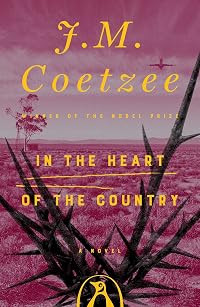
J.M. Coetzee's full name is John Michael Coetzee. Born in Cape Town, South Africa, in 1940, Coetzee is a writer and critic who uses the political situation in his homeland as a backdrop for many of his novels. Coetzee published his first work of fiction, Dusklands, in 1974. Another book, Boyhood, loosely chronicles an unhappy time in Coetzee's show more childhood when his family moved from Cape Town to the more remote and unenlightened city of Worcester. Other Coetzee novels are In the Heart of the Country and Waiting for the Barbarians. Coetzee's critical works include White Writing and Giving Offense: Essays on Censorship. Coetzee is a two-time recipient of the Booker Prize and in 2003, he won the Nobel Literature Award. (Bowker Author Biography) J. M. Coetzee's books include "Boyhood", "Dusklands", "In the Heart of the Country", "Waiting for the Barbarians", "Life & Times of Michael K", "Foe", & "The Master of Petersburg". A professor of general literature at the University of Cape Town, Coetzee has won many literary awards, including the CNA Prize (South Africa's premier literary award), the Booker Prize (twice), the Prix Etranger Femina, the Jerusalem Prize, the Lannan Literary Award, & The Irish Times International Fiction Prize. (Publisher Provided) show less
Some Editions
Awards and Honors
Series
Belongs to Publisher Series
Work Relationships
Is contained in
Contains
Has the adaptation
Has as a reference guide/companion
Has as a student's study guide
Common Knowledge
- Canonical title
- Disgrace
- Original title
- Disgrace
- Original publication date
- 1999
- People/Characters
- David Lurie; Lucy Lurie; Bev Shaw; Melanie Isaacs; Petrus
- Important places
- Cape Town, Western Cape, South Africa; Salem, South Africa
- Related movies
- Disgrace (2008 | IMDb)
- First words
- For a man of his age, fifty-two, divorced, he has, to his mind, solved the problem of sex rather well.
- Quotations
- Follow your temperament.
- Last words
- (Click to show. Warning: May contain spoilers.)"Yes, I am giving him up."
- Original language
- English
- Disambiguation notice*
- De gescande versie van In ongenade die op www.bibliotheek.nl als e-boek beschikbaar is, is van een zeer slechte kwaliteit: hele woorden zijn weggevallen, afbreektekens zijn spaties geworden en lettercombinaties als 'fj... (show all)' en 'ff' zijn gelezen als '@' en '='.
*Some information comes from Common Knowledge in other languages. Click "Edit" for more information.
Classifications
Statistics
- Members
- 11,837
- Popularity
- 744
- Reviews
- 298
- Rating
- (3.85)
- Languages
- 27 — Afrikaans, Catalan, Chinese, Czech, Danish, Dutch, English, Estonian, Finnish, French, German, Galician, Greek, Hebrew, Italian, Korean, Lithuanian, Norwegian (Bokmål), Polish, Portuguese, Romanian, Russian, Serbian, Croatian, Spanish, Swedish, Turkish
- Media
- Paper, Audiobook, Ebook
- ISBNs
- 151
- UPCs
- 1
- ASINs
- 32