On This Page
Description
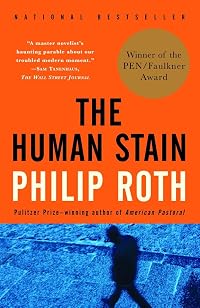
It is 1998, the year in which America is whipped into a frenzy of prurience by the impeachment of a president, and in a small New England town, an aging classics professor, Coleman Silk, is forced to retire when his colleagues decree that he is a racist. The charge is a lie, but the real truth about Silk would have astonished his most virulent accuser. Coleman Silk has a secret. But it's not the secret of his affair, at seventy-one, with Faunia Farley, a woman half his age with a savagely show more wrecked past-a part-time farmhand and a janitor at the college where, until recently, he was the powerful dean of faculty. And it's not the secret of Coleman's alleged racism, which provoked the college witch-hunt that cost him his job and, to his mind, killed his wife. Nor is it the secret of misogyny, despite the best efforts of his ambitious young colleague, Professor Delphine Roux, to expose him as a fiend. Coleman's secret has been kept for fifty years: from his wife, his four children, his colleagues, and his friends, including the writer Nathan Zuckerman, who sets out to understand how this eminent, upright man, esteemed as an educator for nearly all his life, had fabricated his identity and how that cannily controlled life came unraveled. Set in 1990s America, where conflicting moralities and ideological divisions are made manifest through public denunciation and rituals of purification, The Human Stain concludes Philip Roth's eloquent trilogy of postwar American lives that are as tragically determined by the nation's fate as by the "human stain" that so ineradicably marks human nature. This harrowing, deeply compassionate, and completely absorbing novel is a magnificent successor to his Vietnam-era novel, American Pastoral, and his McCarthy-era novel, I Married a Communist. show lessTags
Recommendations











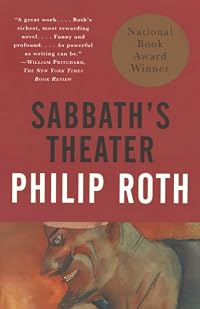
Member Recommendations


Member Reviews
Philip Roth is a brave author for trusting entirely to his story, relentlessly showing all of his cards at the start. There's no surprise ending here, only surprises along the way. His reveal about Coleman's past is so blunt and sudden, I thought I'd misunderstood at first. And still his story is compelling enough it doesn't matter. There is something quotable on nearly every page of this novel full of wisdom and insight about life and lives.
Since the author isn't shy with his own spoilers, I won't be either. Coleman clothes himself in an ulterior identity as a means of transcending societal limitations on his race. Thereafter he has a curiously adverse response to any minority group's movement to overthrow those limitations. It isn't show more merely disbelief in the movements' effectiveness. He finds them puerile, a childish tantrum against the laws of reality.
Coleman has progressed so far in his chosen direction that it becomes impossible for him to relate to what was, even when self-interest is at stake. Like a domesticated crow that can no longer return to the wild, his nature and identity have diverged too far to be reconciled. This theme applies as well to the other three central characters: a woman suffering from past traumas, a Vietnam veteran suffering from PTSD, and a professor caught between the country she left and one that won't accept her. All of them reject the notion of turning back, whatever their difficulties, because the identity they've embraced (or want to embrace) is more real.
I've not read Roth before, and I came to him anticipating less empathy for perspectives outside of his own background; a false impression I acquired somewhere. Only once did I wince - badly. Coleman muses about the possibility of his lover being better in bed as "a gift of the molestation" she suffered as a child. Try to read that as the character's thoughts alone. show less
Since the author isn't shy with his own spoilers, I won't be either. Coleman clothes himself in an ulterior identity as a means of transcending societal limitations on his race. Thereafter he has a curiously adverse response to any minority group's movement to overthrow those limitations. It isn't show more merely disbelief in the movements' effectiveness. He finds them puerile, a childish tantrum against the laws of reality.
Coleman has progressed so far in his chosen direction that it becomes impossible for him to relate to what was, even when self-interest is at stake. Like a domesticated crow that can no longer return to the wild, his nature and identity have diverged too far to be reconciled. This theme applies as well to the other three central characters: a woman suffering from past traumas, a Vietnam veteran suffering from PTSD, and a professor caught between the country she left and one that won't accept her. All of them reject the notion of turning back, whatever their difficulties, because the identity they've embraced (or want to embrace) is more real.
I've not read Roth before, and I came to him anticipating less empathy for perspectives outside of his own background; a false impression I acquired somewhere. Only once did I wince - badly. Coleman muses about the possibility of his lover being better in bed as "a gift of the molestation" she suffered as a child. Try to read that as the character's thoughts alone. show less
My Phillip Roth epiphany. Spoilers engaged.
When I’ve read a book that I think is brilliant, that I did not want to end, that I enjoyed and was challenged by on many levels, I find it hardest to write the review. Doubly so when the author is new to me and a venerated literary figure. So bear with me as I try to distill into this review why I liked The Human Stain so much.
I first tried to read a Phillip Roth book in my 20s. It was Sabbath’s Theater and I failed. I hung onto it though and tried again in my 30s. Another failure. The character of Sabbath was so violently misogynistic that it was painful to read. I have since given the book away and am sad that I can’t try again (without getting another copy) now that I understand show more Roth’s style a bit better. He doesn’t pull punches with language and I have to deal with that conscious choice and what it does to the story much better than I have so far. I can’t let the PC police interfere with deliberate craft. I need to realize there are valid reasons for choosing certain words. Coleman’s ridiculous downfall smacks me over the head with that truism.
Granted, reading a solitary book by a prolific author doesn’t make one an expert, but it has given me an appetite to read more. Partly it was the way the story and back story was revealed. Not so much a narrative, but a novel of tangents. At first it was disconcerting to be forcefully dragged down a rabbit hole that seemingly had nothing to do with what I’d been reading just before. He establishes character so well that when he gives you contradictory or surprising information, it literally stuns you. Makes you feel at once triumphant for the revelation and embarrassed at having been duped. The technique only serves to reinforce what I think is the main theme of the book; that you can never truly know anyone.
More than once our narrator, Nathan Zuckerman, asserts that the trap of thinking that you know a person is one we fall into all too often. Obviously the main character, Coleman Silk is its victim and it is delicious to know (ah, there’s that word again) just how wrong the pompous Delphine Roux is about him; that he must be a deviant, a misogynist, a racist and intellectual fraud. The character most completely assumed about, though, is Faunia. From all sides she is boxed and categorized according to what people think they know about her and I found her tangents to be really interesting and sort of liberating in my own assuming things about people. The most challenging and difficult tangent to read is the first one about Lester. So violent and extreme that I feared the knowledge that certainly some men must have come back from Vietnam in the exact same condition. All during the scene on the frozen lake with Nathan I dreaded what might happen. Would Lester snap? Did I think it was inevitable? Did I know?
Human sexuality is the aspect Roth uses most to illustrate this theme. Not only with the backdrop of the Clinton/Lewinsky scandal, but the center stage affair between Coleman and Faunia. The opening sentence of the whole book introduces the affair. Instantly we categorize Faunia as a sex-object and it is doubly, triply reinforced by Lester’s outrage that while his kids were trapped in the burning house, his wife, their mother was busy going down on some guy. Later still, the rabid gossip and presumed reason for the car accident that would kill them, was Faunia’s salacious, corrupt need to perform oral sex on a man. Any man it was implied almost as much as Coleman’s contradictory forcing her to do it. She can’t possibly be in control here, this can’t possibly be her will, she must be a victim of her own deranged lust and Coleman’s dominant personality. Why humans are so judgmental and hypocritical about sex is baffling to Roth and outrages him as demonstrated by the idea of draping a banner over the White House that reads ‘A Human Being Lives Here’.
Another theme I latched onto is the capricious nature of humans and the narrow confines of what an individual considers normal and reasonable. We do weird stuff for weird and unfathomable reasons and other people seem to think this is weird. To an outsider those reasons can seem insignificant, flimsy and immaterial causing us to judge that person severely. I agree with Zuckerman (Roth) that we as a society aren’t very good at stopping to think outside our own prejudices before we go for the pitchforks and torches. Coleman’s sister talks to Nathan about this at the end explaining that today it would be tantamount to criminal for a black person to try to pass as Colman decided to then. Her and her family’s assumption about why he did was off the mark. In reality he didn’t hate his race and didn’t want to insult anyone in it, he just wanted to shed it. To make it unimportant. A non-issue. For the vast majority of white people, race is not something that takes up room in the consciousness; it just is. For the vast majority of black people it is the opposite. I think Coleman wanted to haul it out to the curb to make room for something more worthy of his consciousness. This is not the conclusion we jump to though, when we first learn of Coleman’s deception. We think his reasons cannot be innocent or even otherwise.
The same holds true for Faunia I think, though to me, her trade is even less understandable. To pretend illiteracy is just unfathomable for me. I cannot conceive of going through life ignoring words. To close myself off to that route to my imagination (to freedom, to knowledge, to fantasy, to learning!) is alien. Reading and literacy to me are so totally a human reflex that it’s shocking and fantastic (in that meaning of the word) to see Faunia suppress it. The assumptions, judgments and even more, the pity she received as a result would be unbearable to me. How she reacts to Coleman’s seminars with her is revealing. She is not stupid, she is not uneducated, and she is not unperceptive. She just understands, perceives and values things that the rest of the world deems worthless. I don’t get it, but it is fascinating in an other-worldly sort of way. The deliberate setting of the trap though, I do understand. Did she savor and gloat over the secret knowledge of her diary in the night when she wrote in it? Did she laugh at Coleman and the other scholastic luminaries she served? She’s the most intriguing character of all of them. Her earthiness and directness is unusual in a female protagonist and surprising. Did she reach Coleman in the end? Did she free him? I don’t know, and maybe that’s the whole point. show less
When I’ve read a book that I think is brilliant, that I did not want to end, that I enjoyed and was challenged by on many levels, I find it hardest to write the review. Doubly so when the author is new to me and a venerated literary figure. So bear with me as I try to distill into this review why I liked The Human Stain so much.
I first tried to read a Phillip Roth book in my 20s. It was Sabbath’s Theater and I failed. I hung onto it though and tried again in my 30s. Another failure. The character of Sabbath was so violently misogynistic that it was painful to read. I have since given the book away and am sad that I can’t try again (without getting another copy) now that I understand show more Roth’s style a bit better. He doesn’t pull punches with language and I have to deal with that conscious choice and what it does to the story much better than I have so far. I can’t let the PC police interfere with deliberate craft. I need to realize there are valid reasons for choosing certain words. Coleman’s ridiculous downfall smacks me over the head with that truism.
Granted, reading a solitary book by a prolific author doesn’t make one an expert, but it has given me an appetite to read more. Partly it was the way the story and back story was revealed. Not so much a narrative, but a novel of tangents. At first it was disconcerting to be forcefully dragged down a rabbit hole that seemingly had nothing to do with what I’d been reading just before. He establishes character so well that when he gives you contradictory or surprising information, it literally stuns you. Makes you feel at once triumphant for the revelation and embarrassed at having been duped. The technique only serves to reinforce what I think is the main theme of the book; that you can never truly know anyone.
More than once our narrator, Nathan Zuckerman, asserts that the trap of thinking that you know a person is one we fall into all too often. Obviously the main character, Coleman Silk is its victim and it is delicious to know (ah, there’s that word again) just how wrong the pompous Delphine Roux is about him; that he must be a deviant, a misogynist, a racist and intellectual fraud. The character most completely assumed about, though, is Faunia. From all sides she is boxed and categorized according to what people think they know about her and I found her tangents to be really interesting and sort of liberating in my own assuming things about people. The most challenging and difficult tangent to read is the first one about Lester. So violent and extreme that I feared the knowledge that certainly some men must have come back from Vietnam in the exact same condition. All during the scene on the frozen lake with Nathan I dreaded what might happen. Would Lester snap? Did I think it was inevitable? Did I know?
Human sexuality is the aspect Roth uses most to illustrate this theme. Not only with the backdrop of the Clinton/Lewinsky scandal, but the center stage affair between Coleman and Faunia. The opening sentence of the whole book introduces the affair. Instantly we categorize Faunia as a sex-object and it is doubly, triply reinforced by Lester’s outrage that while his kids were trapped in the burning house, his wife, their mother was busy going down on some guy. Later still, the rabid gossip and presumed reason for the car accident that would kill them, was Faunia’s salacious, corrupt need to perform oral sex on a man. Any man it was implied almost as much as Coleman’s contradictory forcing her to do it. She can’t possibly be in control here, this can’t possibly be her will, she must be a victim of her own deranged lust and Coleman’s dominant personality. Why humans are so judgmental and hypocritical about sex is baffling to Roth and outrages him as demonstrated by the idea of draping a banner over the White House that reads ‘A Human Being Lives Here’.
Another theme I latched onto is the capricious nature of humans and the narrow confines of what an individual considers normal and reasonable. We do weird stuff for weird and unfathomable reasons and other people seem to think this is weird. To an outsider those reasons can seem insignificant, flimsy and immaterial causing us to judge that person severely. I agree with Zuckerman (Roth) that we as a society aren’t very good at stopping to think outside our own prejudices before we go for the pitchforks and torches. Coleman’s sister talks to Nathan about this at the end explaining that today it would be tantamount to criminal for a black person to try to pass as Colman decided to then. Her and her family’s assumption about why he did was off the mark. In reality he didn’t hate his race and didn’t want to insult anyone in it, he just wanted to shed it. To make it unimportant. A non-issue. For the vast majority of white people, race is not something that takes up room in the consciousness; it just is. For the vast majority of black people it is the opposite. I think Coleman wanted to haul it out to the curb to make room for something more worthy of his consciousness. This is not the conclusion we jump to though, when we first learn of Coleman’s deception. We think his reasons cannot be innocent or even otherwise.
The same holds true for Faunia I think, though to me, her trade is even less understandable. To pretend illiteracy is just unfathomable for me. I cannot conceive of going through life ignoring words. To close myself off to that route to my imagination (to freedom, to knowledge, to fantasy, to learning!) is alien. Reading and literacy to me are so totally a human reflex that it’s shocking and fantastic (in that meaning of the word) to see Faunia suppress it. The assumptions, judgments and even more, the pity she received as a result would be unbearable to me. How she reacts to Coleman’s seminars with her is revealing. She is not stupid, she is not uneducated, and she is not unperceptive. She just understands, perceives and values things that the rest of the world deems worthless. I don’t get it, but it is fascinating in an other-worldly sort of way. The deliberate setting of the trap though, I do understand. Did she savor and gloat over the secret knowledge of her diary in the night when she wrote in it? Did she laugh at Coleman and the other scholastic luminaries she served? She’s the most intriguing character of all of them. Her earthiness and directness is unusual in a female protagonist and surprising. Did she reach Coleman in the end? Did she free him? I don’t know, and maybe that’s the whole point. show less
I initially had a great deal of trouble getting into the flow of this book, due to Roth's jumps between time and location, his lengthy paragraphs (some of which extend for 5 pages) and the numerous changes in direction the novel took. In the end, however, this is what sealed The Human Stainas a great story. It took me in places I did not expect to go while elaborating on characters I assumed would remain in the background.
In particular, I loved Roth's beautiful characterisation of Delphine Roux, a hideous woman who I found myself wanting to read more and more about. To me, this illustrates the skill of a great writer, able to keep you turning the pages despite describing a personality so revolting. Still, though, you can't help but show more feel for this character in turmoil. The passages that concerned Vietnam veteran Lester Farley also left me amazed, brilliantly bringing the horrific ramifications of war to reality.
I also have to commend Roth's ability to create conflictions within the reader. Many times I found my self cringing at the words, and yet nodding my head simultaneously, hating what was happening and yet understanding why it was necessary.
While on the surface, Roth raises questions about identity, humanity and relationships, there are so many ideas jammed into this novel, every passage bursting with insights.
Once I settled with the fact that this book was not going to go where I wanted, I sat back and relaxed as Philip Roth took me on a marvelous ride. show less
In particular, I loved Roth's beautiful characterisation of Delphine Roux, a hideous woman who I found myself wanting to read more and more about. To me, this illustrates the skill of a great writer, able to keep you turning the pages despite describing a personality so revolting. Still, though, you can't help but show more feel for this character in turmoil. The passages that concerned Vietnam veteran Lester Farley also left me amazed, brilliantly bringing the horrific ramifications of war to reality.
I also have to commend Roth's ability to create conflictions within the reader. Many times I found my self cringing at the words, and yet nodding my head simultaneously, hating what was happening and yet understanding why it was necessary.
While on the surface, Roth raises questions about identity, humanity and relationships, there are so many ideas jammed into this novel, every passage bursting with insights.
Once I settled with the fact that this book was not going to go where I wanted, I sat back and relaxed as Philip Roth took me on a marvelous ride. show less
The best advice I can give if you want to read this book is to do so straight away and not to google it or read any reviews. Not even this one. There’s a massive reveal part way through and while I don’t intend to give the game away there’s always the chance I might unintentionally be passing information that will allow you to guess Coleman Silk’s secret. That said, I knew the secret going in as I’d seen the film and it didn’t ruin it for me as there’s so much more to the novel than a surprise.
The theme here is the idea of the impurity which might adhere to people as a result of impiety and the rituals people perform in an attempt to cleanse themselves and society. That may sound heavy. This is a heavy-weight novel, but show more doesn’t feel like one as you’re reading it. All beautifully handled as the scenarios of the story dance about this central theme and illuminate it from various angles.
With any other book, on that basis I’d call it a day and give it five stars, but what really impressed me were these set-piece passages, each unique, each with great energy that presses, presses, until the fabric of the fiction bends under the pressure and the fourth wall bows inward. The first of these, Farley’s PTSD daymare, quite shocked me with it’s power and then Roth somehow repeats the performance again and again, Fauna’s dance scene being a particular stand-out. The humanity of it.
It’s showing off really, but all is forgiven when a novel is this intense. show less
The theme here is the idea of the impurity which might adhere to people as a result of impiety and the rituals people perform in an attempt to cleanse themselves and society. That may sound heavy. This is a heavy-weight novel, but show more doesn’t feel like one as you’re reading it. All beautifully handled as the scenarios of the story dance about this central theme and illuminate it from various angles.
With any other book, on that basis I’d call it a day and give it five stars, but what really impressed me were these set-piece passages, each unique, each with great energy that presses, presses, until the fabric of the fiction bends under the pressure and the fourth wall bows inward. The first of these, Farley’s PTSD daymare, quite shocked me with it’s power and then Roth somehow repeats the performance again and again, Fauna’s dance scene being a particular stand-out. The humanity of it.
It’s showing off really, but all is forgiven when a novel is this intense. show less
Roth deploys a masterful array of characters in this melodrama. Less obsessed with storytelling than Counterlife or even American Pastoral, he maintains a connection with them by making the purported author of the book Nathan Zuckerman into a character. By refusing to introduce an omniscient narrator, he can leave us with certain blind spots and guesses about the motivations and history of the characters in ways that make them see that much more human.
The Human Stain by Philip Roth
Coleman Silk has had a stellar career as a classics professor and dean of faculty at a small New England college. He was, we're told, "one of a handful of Jews on the…faculty when he was hired and perhaps among the first Jews to be permitted to teach in a classics department anywhere in America." He grew up in the 1930s in East Orange, NJ, neighboring Newark. In high school, he excelled academically and was a standout boxer. After a stint in the navy, he moved to NYC's Greenwich Village, attended NYU, met and married a Jewish girl named Iris Gittelman. They had four children.
As Philip Roth's novel begins, Coleman Silk has stepped down as dean to return to the classroom. About five weeks into the show more semester, he notes that two students have never appeared, never attended a single session. He doesn't know who they are; he's never laid eyes on them. He asks those in the room: "Does anyone know these people? Do they exist or are they spooks?" So of course these people exist and they are…blacks. Called into the dean's office--his old office—and told a complaint charging racism has been lodged, Silk is stunned, then enraged. He tells the dean:
It doesn't end there though. The dean sets up a formal hearing. Faculty members begin tiptoing around, most aligning themselves against their demanding, autocratic former dean. Silk abruptly resigns. Iris—Mrs. Silk—abruptly has a stroke and dies. He seeks out a writer, Nathan Zuckerman, that he knows lives in the area.
Zuckerman turns him down, but the two men stay in touch. And Silk begins writing the book himself, planning to title it Spooks. Ultimately, Zuckerman does write Coleman's book, and it is the one we are reading.
A couple of years pass, during which Silk takes up with Faunia Farley, a woman half his age who's a janitor at the college and, on weekends, at the post office, who lives at a farm in exchange for milking cows, who claims to be a victim of childhood molestation by her stepfather, who purports to be illiterate, who was married to a PTSD-afflicted Vietnam vet who stalks her because he believes her responsible for the deaths of their two children in a housefire. Yoiks! One night, this former husband, Les Farley, barges into Silk's house to threaten both him and Faunia. So Coleman turns to Atty. Nelson Primus for advice, which advice (and more particularly the way in which it is delivered) so enrages him that he tells the lawyer, "I never again want to hear that self-admiring voice of yours or see your smug fucking lily-white face."
Primus is mystified. "Why 'lily-white'?" he wonders.
Cut—three pages later—to 1943 in East Orange, NJ. Ernestine Silk is recounting for her brother Coleman an overheard conversation between their parents and Dr. Fensterman, a Jew and a prominent surgeon. He offers the Silks $5,000 if his son Bertram is helped to become valedictorian of the East Orange High School Class of 1944. The help needed? Coleman, who is first in the class, must boot a course to allow Bertram, now second in the class, to slip past him into first. Bert needs to be the best of the best to beat the tight quotas designed to keep Jews out of the top medical schools. The irony? The Silks are Negroes, victims of even greater discrimination in all things than Jews.
And so, on page 86, we're told what Coleman's secret is; but that's far from the totality of it. As the story unfolds, we learn how Coleman learns just how easy it is for him to pass for white, thanks to a tryout his boxing coach, a Jewish dentist in East Orange known as Doc Chizner, arranges with the Pitt boxing coach.
Coleman Silk passes for white. He does it with Iris, with his children, with his academic colleagues, with everybody. To do it, he makes calculated choices. Iris suits him because of her hair, "that sinuous thicket of hair that was far more Negroid" than his own. He totally abandons his birth family, depriving his mother of her daughter-in-law and her grandchildren. He never tells his daughter, who just may have to explain to a future white husband how it is their newborn child is black.
[The Human Stain] is full of wrinkles, all sorts that you might not imagine as you contemplate the ins and outs of a Negro passing for white. Once you make the choice, and the ancillary hard choices that follow—lying to your spouse throughout a close and intimate marriage, cutting yourself from your parents and siblings (and them from you), contriving and maintaining a false family history—you can't go back.
Philip Roth is a favorite author. [The Human Stain] is one of his best books, in my opinion. I give it two thumbs up. show less
Coleman Silk has had a stellar career as a classics professor and dean of faculty at a small New England college. He was, we're told, "one of a handful of Jews on the…faculty when he was hired and perhaps among the first Jews to be permitted to teach in a classics department anywhere in America." He grew up in the 1930s in East Orange, NJ, neighboring Newark. In high school, he excelled academically and was a standout boxer. After a stint in the navy, he moved to NYC's Greenwich Village, attended NYU, met and married a Jewish girl named Iris Gittelman. They had four children.
As Philip Roth's novel begins, Coleman Silk has stepped down as dean to return to the classroom. About five weeks into the show more semester, he notes that two students have never appeared, never attended a single session. He doesn't know who they are; he's never laid eyes on them. He asks those in the room: "Does anyone know these people? Do they exist or are they spooks?" So of course these people exist and they are…blacks. Called into the dean's office--his old office—and told a complaint charging racism has been lodged, Silk is stunned, then enraged. He tells the dean:
"I was referring to their possibly ectoplasmic character. Isn't that obvious? These two students had not attended a single class. That's all I knew about them. I was using the word in its customary and primary meaning: 'spook' as a specter or a ghost. I had no idea what color these two students might be. I had known perhaps fifty years ago but had wholly forgotten that 'spooks' is an invidious term sometimes applied to blacks. Otherwise, since I am totally meticulous regarding student sensibilities, I would never have used that word. Consider the context: Do they exist or are they spooks? The charge of racism is spurious. It is preposterous. My colleagues know it is preposterous and my students know it is preposterous. The issue, the only issue, is the nonattendance of these two students and their flagrant and inexcusable neglect of work. What's galling is that the charge is not just false—it is spectacularly false."
It doesn't end there though. The dean sets up a formal hearing. Faculty members begin tiptoing around, most aligning themselves against their demanding, autocratic former dean. Silk abruptly resigns. Iris—Mrs. Silk—abruptly has a stroke and dies. He seeks out a writer, Nathan Zuckerman, that he knows lives in the area.
Coleman was at the side of my house, {Zuckerman says,} banging on the door and asking to be let in. Though he had something urgent to ask, he couldn't stay seated for more than thirty seconds to clarify what it was...I had to write something for him—he all but ordered me to…I had to write about this "absurdity," that "absurdity"—I, who then knew nothing about his woes at the college and could not even begin to follow the chronology of the horror that, for five months now, had engulfed him and the late Iris Silk: the punishing immersion in meetings, hearings, and interviews, the documents and letters submitted to college officials, to faculty committees, to a pro bono black lawyer representing the two students . . . the charges, denials, and countercharges, the obtuseness, ignorance, and cynicism, the gross and deliberate misinterpretations, the laborious, repetitious explanations, the prosecutorial questions—and always, perpetually, the pervasive sense of unreality. "Her murder!" Coleman cried, leaning across my desk and hammering on it with his fist. "These people murdered Iris!"
Zuckerman turns him down, but the two men stay in touch. And Silk begins writing the book himself, planning to title it Spooks. Ultimately, Zuckerman does write Coleman's book, and it is the one we are reading.
A couple of years pass, during which Silk takes up with Faunia Farley, a woman half his age who's a janitor at the college and, on weekends, at the post office, who lives at a farm in exchange for milking cows, who claims to be a victim of childhood molestation by her stepfather, who purports to be illiterate, who was married to a PTSD-afflicted Vietnam vet who stalks her because he believes her responsible for the deaths of their two children in a housefire. Yoiks! One night, this former husband, Les Farley, barges into Silk's house to threaten both him and Faunia. So Coleman turns to Atty. Nelson Primus for advice, which advice (and more particularly the way in which it is delivered) so enrages him that he tells the lawyer, "I never again want to hear that self-admiring voice of yours or see your smug fucking lily-white face."
Primus is mystified. "Why 'lily-white'?" he wonders.
Cut—three pages later—to 1943 in East Orange, NJ. Ernestine Silk is recounting for her brother Coleman an overheard conversation between their parents and Dr. Fensterman, a Jew and a prominent surgeon. He offers the Silks $5,000 if his son Bertram is helped to become valedictorian of the East Orange High School Class of 1944. The help needed? Coleman, who is first in the class, must boot a course to allow Bertram, now second in the class, to slip past him into first. Bert needs to be the best of the best to beat the tight quotas designed to keep Jews out of the top medical schools. The irony? The Silks are Negroes, victims of even greater discrimination in all things than Jews.
And so, on page 86, we're told what Coleman's secret is; but that's far from the totality of it. As the story unfolds, we learn how Coleman learns just how easy it is for him to pass for white, thanks to a tryout his boxing coach, a Jewish dentist in East Orange known as Doc Chizner, arranges with the Pitt boxing coach.
Doc was sure that, what with Coleman's grades, the coach could get him a four-year scholarship to Pitt, a bigger scholarship than he could ever get for track, and all he'd have to do was box for the Pitt team.
Now, it wasn't that on the way up Doc told him to tell the Pitt coach that he was white. He just told Coleman not to mention that he was colored.
"If nothing comes up," Doc said, "you don't bring it up. You're neither one thing or the other. You're Silky Silk. That's enough. That's the deal." Doc's favorite expression: that's the deal. Some¬thing else Coleman's father would not allow him to repeat in the house.
"He won't know?" Coleman asked.
"How? How will he know? How the hell is he going to know? Here is the top kid from East Orange High, and he is with Doc Chizner. You know what he's going to think, if he thinks anything?"
"What?"
"You look like you look, you're with me, and so he's going to think that you're one of Doc's boys. He's going to think that you're Jewish."
Coleman Silk passes for white. He does it with Iris, with his children, with his academic colleagues, with everybody. To do it, he makes calculated choices. Iris suits him because of her hair, "that sinuous thicket of hair that was far more Negroid" than his own. He totally abandons his birth family, depriving his mother of her daughter-in-law and her grandchildren. He never tells his daughter, who just may have to explain to a future white husband how it is their newborn child is black.
[The Human Stain] is full of wrinkles, all sorts that you might not imagine as you contemplate the ins and outs of a Negro passing for white. Once you make the choice, and the ancillary hard choices that follow—lying to your spouse throughout a close and intimate marriage, cutting yourself from your parents and siblings (and them from you), contriving and maintaining a false family history—you can't go back.
Philip Roth is a favorite author. [The Human Stain] is one of his best books, in my opinion. I give it two thumbs up. show less
Since this is late-stage Philip Roth we're talking about, it's hard to call "The Human Stain" a bad book, but I'm sad to say that it isn't nearly as good as the other two books in his "American Trilogy." There are times at which we see Roth at his very best, and most of these involve his character's histories in some way, specifically Coleman Silk's privileged, if fragile, upbringing in suburban New Jersey. There's a kind of reverie here of a lost America that befits the elderly narrator, but there's also a profound understanding of the racial and class politics of the time. "The Human Stain" also features beautiful descriptions of the Berkshires, the classical music that the author seems to prefer, and of beautiful, alluring women, the show more last of which have always been one of the author's strong suits. When he wades into the present, Roth seems to do less well. While there's nothing wrong with them, technically speaking, I felt that his depictions of Les Farley, the PTSD-afflicted Vietnam vet and Delphine Roux, Athena College's imported post-everything academic, weren't up to Roth's admittedly lofty standard. Les and Delphine aren't quite cartoons, but Roth seems to be writing them from the outside. I have to say that I rushed through certain parts of "The Human Stain," and that's not something you do too often when you read Roth.
The other problem here has to do with politics, and not necessarily Roth's, though the author has, on occasion, expressed his dissatisfaction with the direction that the post-sixties left has taken. In the same way that the Clinton/Lewinsky affair often seemed too ridiculous and flimsy for the great themes that the journalists at the time tried to hang on it, I wonder if there might not be enough to the story of Coleman Silk and Faunia Farley to make a three-hundred page closely printed novel out of. There were times when I felt that both the book's plot, which is pretty improbable in some places, and its characters, strained under the themes that Roth had loaded on to them. I think it's even possible to argue that the author, who's not shy about pointing out his own plot's farcical elements, might even be aware of this. Of course, Roth can still reel off note-perfect paragraph long sentences, and, as the book comes to a close, he's got some lovely things to say about the dangers and burdens of keeping secrets, even if I found the appeal to the First Amendment fatuous, seeing that the problems that Coleman deals with here are largely cultural, not legal. But it's possible that Roth, like Toni Morrison and more than a few other good writers, just writes best when he writes about the past. Perhaps memory, his own and that of his characters, is his real strong suit. Recommended, I suppose, but, sadly, with certain reservations. show less
The other problem here has to do with politics, and not necessarily Roth's, though the author has, on occasion, expressed his dissatisfaction with the direction that the post-sixties left has taken. In the same way that the Clinton/Lewinsky affair often seemed too ridiculous and flimsy for the great themes that the journalists at the time tried to hang on it, I wonder if there might not be enough to the story of Coleman Silk and Faunia Farley to make a three-hundred page closely printed novel out of. There were times when I felt that both the book's plot, which is pretty improbable in some places, and its characters, strained under the themes that Roth had loaded on to them. I think it's even possible to argue that the author, who's not shy about pointing out his own plot's farcical elements, might even be aware of this. Of course, Roth can still reel off note-perfect paragraph long sentences, and, as the book comes to a close, he's got some lovely things to say about the dangers and burdens of keeping secrets, even if I found the appeal to the First Amendment fatuous, seeing that the problems that Coleman deals with here are largely cultural, not legal. But it's possible that Roth, like Toni Morrison and more than a few other good writers, just writes best when he writes about the past. Perhaps memory, his own and that of his characters, is his real strong suit. Recommended, I suppose, but, sadly, with certain reservations. show less
Members
- Recently Added By
Lists

1001 Books You Must Read Before You Die
1,448 works; 1,136 members

The Guardian's 1000 Novels Everyone Must Read
1,005 works; 552 members
501 Must-Read Books
529 works; 72 members

Best Contemporary Literary Fiction (Around the Last 30 Years)
400 works; 124 members

The Telegraph's 110 Best Books: The Perfect Library
101 works; 18 members

Novels from The Guardian's Great American Novelist Tournament
148 works; 24 members

Read the book and saw the movie
1,170 works; 195 members

Unread books
1,063 works; 86 members

Best Campus Novels
99 works; 18 members

Jewish Books
367 works; 24 members

Top Five Books of 2018
802 works; 265 members
The American Experience
173 works; 18 members

Pen/Faulkner Winners and Finalists
178 works; 9 members
Love Triangles in Literature
108 works; 15 members
1,001 BYMRBYD Concensus
723 works; 27 members

Academia in Fiction
158 works; 23 members

Racism and Race Relations in Literature
48 works; 9 members

Books Read in 2016
4,666 works; 199 members

to get
244 works; 2 members

Authors from the United States
245 works; 3 members

NYT 100 best books of 21st C
100 works; 31 members

Recommended Reading : 600 Classics Reviewed, Editors of Salem Press, 2015
634 works; 6 members

Retrospective of 20th- and 21st-century literature
154 works; 1 member
Vlogbrothers Book Recommendations
307 works; 4 members
Author Information

123+ Works 74,930 Members
Philip Milton Roth was born in Newark, New Jersey on March 19, 1933. He attended Rutgers University for one year before transferring to Bucknell University where he completed a B.A. in English with highest honors in 1954. He received an M.A. from the University of Chicago in 1955. His first book, Goodbye, Columbus, received the National Book Award show more in 1960. His other books include Letting Go, When She Was Good, Portnoy's Complaint, My Life as a Man, The Ghostwriter, Zuckerman Unbound, I Married a Communist, The Plot Against America, The Facts, The Anatomy Lesson, Exit Ghost, Deception, Nemesis, Everyman, Indignation, and The Humbling. He won the National Book Critic Circle Awards in 1987 for his novel The Counterlife and in 1992 for his memoir Patrimony: A True Story. He won the PEN/Faulkner Award for Fiction in 1993 for Operation Shylock: A Confession and in 2001 for The Human Stain, the National Book Award in 1995 for Sabbath's Theater, and the Pulitzer Prize in 1998 for American Pastoral. He stopped writing in 2010. He died from congestive heart failure on May 22, 2018 at the age of 85. (Bowker Author Biography) show less
Some Editions
Awards and Honors
Awards
Distinctions
Notable Lists
Series


Belongs to Publisher Series
Biblioteca Sábado (11)
Иллюминатор (66)
Work Relationships
Is contained in
Has the adaptation
Is expanded in
Has as a commentary on the text
Common Knowledge
- Canonical title
- The Human Stain
- Original title
- The Human Stain
- Original publication date
- 2000
- People/Characters
- Nathan Zuckerman; Coleman Silk; Faunia Farley; Lester Farley; Delphine Roux
- Important places
- Berkshires, Massachusetts, USA; Berkshire Hills, Massachusetts, USA; Newark, New Jersey, USA
- Important events
- President Clinton's Impeachment; Vietnam War
- Related movies
- The Human Stain (2003 | IMDb)
- Epigraph
- Oedipus:
What is the rite
or purification? How shall it be done?
Creon:
By banishing a man, or expiation
of blood by blood . . .
—Sophocles, Oedipus the King - Dedication
- For R.M.
- First words
- It was in the summer of 1998 that my neighbor Coleman Silk - who, before retiring two years earlier, had been a classics professor at nearby Athena College for some twenty-odd years as well as serving for sixteen more as the ... (show all)dean of faculty - confided in me that, at the age of seventy-one, he was having an affair with a thirty-four-year-old cleaning woman who worked down at the college.
- Quotations*
- Prima «spettri», adesso «bianco»: chi sa quale stortura ripugnante sarà svelata dalla prossima locuzione un po' antiquata, dalla prossima frase idiomatica deliziosamente datata che gli esce volando dalla bocca? Come si v... (show all)iene smascherati o distrutti dalla parola ideale. Cosa svela il travestimento, la copertura e la dissimulazione? Questo, la parola giusta pronunciata spontaneamente, senza doverci nemmeno pensare.
- Last words
- (Click to show. Warning: May contain spoilers.)Only rarely, at the end of our century, does life offer up a vision as pure and peaceful as this one: a solitary man on a bucket, fishing through eighteen inches of ice in a lake that's constantly turning over its water atop an arcadian mountain in America.
- Original language
- English
*Some information comes from Common Knowledge in other languages. Click "Edit" for more information.
Classifications
Statistics
- Members
- 7,251
- Popularity
- 1,610
- Reviews
- 109
- Rating
- (3.85)
- Languages
- 20 — Catalan, Chinese, Danish, Dutch, English, Finnish, French, German, Greek, Hungarian, Italian, Norwegian (Bokmål), Polish, Portuguese, Romanian, Russian, Croatian, Spanish, Swedish, Turkish
- Media
- Paper, Audiobook, Ebook
- ISBNs
- 85
- UPCs
- 3
- ASINs
- 45