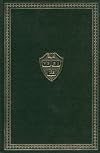
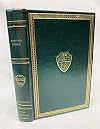
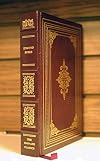
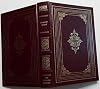
On Taste / On the Sublime and Beautiful / Reflections on the French Revolution / A Letter to a Noble Lord
by Edmund Burke, Charles William Eliot
On This Page
Description
In this unique book, Peter J. Stanlis, the leading Burke scholar in America, has collected all the most important works and speeches of Edmund Burke (1729-1797), British statesman, political philosopher, and founder of modern conservative thought and, with due care to preserve the beauty of Burke's prose, edited them down to their essentials. "The main purpose of these selections," Stanlis explains, "is to present extensive and in the main unbroken samples of Burke's most representative show more thought in his most characteristic style, on a great variety of subjects." In this major effort you can find--to name only a few topics covered--Burke's defense of ordered liberty, his advocacy of secure property rights, his love of Christianity and Europe's moral tradition, and his impassioned jeremiad against the orgy of destruction that the French Revolution became. Stanlis's general introduction gives important insight into Burke's early life, education, professional training, literary and political career, prose style, political philosophy, and more. In addition, each selection is preceded by a headnote that clarifies the selections in their historical context and includes a brief analytical interpretation. A chronology highlights important dates in Burke's life and career. In its compactness and comprehensiveness, this volume is the quintessential Burke reader. It will be of interest to historians, political scientists, and students of literature and intellectual history. show lessTags
Recommendations





















Member Reviews
Burke's comments on the contemporary French Revolution were important, however, they were confusing and mixed up with his fairly novel (at the time) concept of the importance of "property rights" to liberty. While brilliant, it is nonsense.
So is his defense of the English colonials in America based on their "antient" [his repeated word, which I think he made up?] rights as Englishmen. Just nonsense, but he just could never get himself to recognize that all people -- not just those of "the nobility"--are not only entitled to liberty but are collectively the source of all authority.
Wikipedia has done a great bio of him, and now I realize that "conservatives" have misled us in appropriating him as one of theirs. He is not. Not only did he show more almost get hung for his support of the American Revolution, but he also savaged the British East India Company and its "CEO". His peers thought him a "liberal". Lord Acton named him as one of the three great liberals -- see also Gladstone, Thos B Macaulay.
The Wiki article has quoted from his other work and in those he is genuinely eloquent. In addition, although it appears he began as a paid pigeon, he matured into an independent voice of genuine principle, with unequaled eloquence.
Of course, the effect of Burke's remonstrations against the most extreme forms of "Leftist" expressions was to embolden the Right. In effect, the British joined with the entire ancien regime in attacking the upstarts in France and went to a war. The war only forced the French people to defend themselves, which they did with unity and zeal they would not otherwise have exerted. The French managed to win the war in their "people's defense" against the entire "nobility" of Europe. But this of course, pushed them into the nasty little embrace of Napoleon Bonaparte.
Burke could not seem to focus on what the constitutes a "danger" to Liberty. show less
So is his defense of the English colonials in America based on their "antient" [his repeated word, which I think he made up?] rights as Englishmen. Just nonsense, but he just could never get himself to recognize that all people -- not just those of "the nobility"--are not only entitled to liberty but are collectively the source of all authority.
Wikipedia has done a great bio of him, and now I realize that "conservatives" have misled us in appropriating him as one of theirs. He is not. Not only did he show more almost get hung for his support of the American Revolution, but he also savaged the British East India Company and its "CEO". His peers thought him a "liberal". Lord Acton named him as one of the three great liberals -- see also Gladstone, Thos B Macaulay.
The Wiki article has quoted from his other work and in those he is genuinely eloquent. In addition, although it appears he began as a paid pigeon, he matured into an independent voice of genuine principle, with unequaled eloquence.
Of course, the effect of Burke's remonstrations against the most extreme forms of "Leftist" expressions was to embolden the Right. In effect, the British joined with the entire ancien regime in attacking the upstarts in France and went to a war. The war only forced the French people to defend themselves, which they did with unity and zeal they would not otherwise have exerted. The French managed to win the war in their "people's defense" against the entire "nobility" of Europe. But this of course, pushed them into the nasty little embrace of Napoleon Bonaparte.
Burke could not seem to focus on what the constitutes a "danger" to Liberty. show less
Ratings
Members
- Recently Added By
Author Information

242+ Works 7,886 Members
Born in Ireland in 1729, Edmund Burke was an English statesman, author, and orator who is best remembered as a formidable advocate for those who were victims of injustice. He was the son of a Dublin lawyer and had also trained to practice law. In the 1760s, Burke was elected to the House of Commons from the Whig party. Burke spent most of his show more career in Parliament as a member of the Royal Opposition, who was not afraid of controversy, as shown by his support for the American Revolution and for Irish/Catholic rights. His best-known work is Reflections on the French Revolution (1790). Some other notable works are On Conciliation with the American Colonies (1775) and Impeachment of Warren Hastings (1788). Edmund Burke died in 1797. (Bowker Author Biography) show less
75+ Works 14,500 Members
Series
Belongs to Publisher Series
Harvard Classics (24)
Work Relationships
Is contained in
Common Knowledge
- Canonical title
- On Taste / On the Sublime and Beautiful / Reflections on the French Revolution / A Letter to a Noble Lord
- Original publication date
- 1900
- Important events
- French Revolution (1789)
- Disambiguation notice
- This is volume 24 of the Harvard Classics series, and is an omnibus of various works by Edmund Burke. It should not be combined with any other omnibi that contain a different selection of works. The individual works in this o... (show all)mnibus are:
- On Taste
- On the Sublime and Beautiful
- Reflections on the French Revolution
- A Letter to a Noble Lord
Classifications
- Genre
- Nonfiction
- DDC/MDS
- 828.6 — Literature & rhetoric English & Old English literatures English miscellaneous writings English miscellaneous writings 1745-1799
- LCC
- AC1 .A4 — General Works Collections. Series. Collected works Collections. Series. Collected works Collections of monographs, essays, etc. American and English
- BISAC
Statistics
- Members
- 787
- Popularity
- 35,433
- Reviews
- 1
- Rating
- (3.93)
- Languages
- English
- Media
- Paper, Ebook
- ISBNs
- 11
- UPCs
- 1
- ASINs
- 69