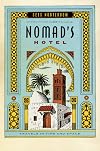
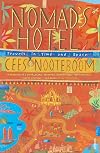
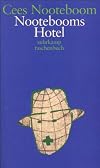
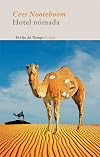
Nomad's Hotel: Travels in Time and Space
by Cees Nooteboom
On This Page
Description
In a collection of essays and travelogues, the author of Roads to Santiago recounts his journeys around the world, sharing his keen observations and reflections on people and places both conventional and exotic.Tags
Recommendations
































Member Reviews
In the opening essay of this subtle collection of his shorter travel writing in translation from Dutch, Nooteboom tries to answer the question asked over and over by his friends - why has he spent over 50 years of his life traveling? Known both for his novels and over a dozen volumes chronicling his travels, including several full-length accounts of journeys, readers of both will not be surprised at part of the answer: he travels in order to gain ideas for his writing, especially his fiction. Incidents, motifs, and even people from his travel writing show up repeatedly in his fiction. Yet this explanation only goes half-way in explaining Nooteboom’s need to be elsewhere. For as he explains multiple times over the course of the 14 show more essays contained in this book, only in travel is he able to achieve the “silence” necessary to be able to write, a detachment from the world he is unable to achieve by remaining stationary, as a part of a world.
Regardless of his motivations, the end result is more often than not a wonderful reading experience. Nooteboom’s prose is often quite lyrical, as evidenced by such pieces as his visit to Zurich or the Isle of Aran. In many of the essays, the idea of movement is vividly apparent (not always a fact in travel writing, which often comes across as a tiring list of point A to point B to point C, ad nausea), chiefly due to the author’s constant need to move in new ways - to travel at odd angles, as it were. In Mantua, he leaves the city at once so that he can experience it walking in from the countryside. On Aran, he seeks out an author who life’s work has been to chronicle every plant, animal, person, and kind of rock on the sparse isle in order to understand how such a barren place could evoke an infinitely complex and brilliant personal geography. Finally, in two of the longer pieces, Nooteboom travels apparently at random from person to person met in Gambia and Mali, letting their associations lead him physically deeper into the countryside, and intellectually farther toward an understanding of cultures far outside the realm of his prior experience.
Occasionally the writing becomes somewhat too concerned with meta-travel, and being a writer primarily concerned with the literary history of many of the places he visits, Nooteboom has the tendency to wander off in a meandering tangent of words. He always comes back to the here and now, though, and the more essays one reads in this book, the more one appreciates their compact structures as intricate and jewel-like miniatures of single places in time. Not gaudy jewels, but tasteful and multifaceted, enduring like small treasures in the mind long after the last step has been taken, the last word read. A few instances of explicit language and descriptions of violence from distant history. show less
Regardless of his motivations, the end result is more often than not a wonderful reading experience. Nooteboom’s prose is often quite lyrical, as evidenced by such pieces as his visit to Zurich or the Isle of Aran. In many of the essays, the idea of movement is vividly apparent (not always a fact in travel writing, which often comes across as a tiring list of point A to point B to point C, ad nausea), chiefly due to the author’s constant need to move in new ways - to travel at odd angles, as it were. In Mantua, he leaves the city at once so that he can experience it walking in from the countryside. On Aran, he seeks out an author who life’s work has been to chronicle every plant, animal, person, and kind of rock on the sparse isle in order to understand how such a barren place could evoke an infinitely complex and brilliant personal geography. Finally, in two of the longer pieces, Nooteboom travels apparently at random from person to person met in Gambia and Mali, letting their associations lead him physically deeper into the countryside, and intellectually farther toward an understanding of cultures far outside the realm of his prior experience.
Occasionally the writing becomes somewhat too concerned with meta-travel, and being a writer primarily concerned with the literary history of many of the places he visits, Nooteboom has the tendency to wander off in a meandering tangent of words. He always comes back to the here and now, though, and the more essays one reads in this book, the more one appreciates their compact structures as intricate and jewel-like miniatures of single places in time. Not gaudy jewels, but tasteful and multifaceted, enduring like small treasures in the mind long after the last step has been taken, the last word read. A few instances of explicit language and descriptions of violence from distant history. show less
Cees Nooteboom is my kind of traveler. He likes out of the way places where he can wander into some kind of adventure. Occasionally his style is bit too literary for my taste (I don't know much about art, for example, but clearly Nooteboom does), but often he is just hanging out, talking to people, learning about what is around him. I think he and I would probably agree on what we like about travel and about why we often like to travel alone.
Especially in contrast to Facing The Congo, Nooteboom's efforts should be regarded as filet of travel observation; this haunted perspective views matters in a timeless (and seemingly effortless) manner, the arresting details are so gripping, one loses the cuddling orientation of time: most of the pieces included are 30-40 years old, but the images remain outside of history, both shared and marvelled.
Author has spent the last twenty or more years traveling to all parts of the globe. Insighful essays about the places he has been, including Mali and Zuerich
Éste es un libro dedicado a los viajeros, a quienes entienden el viaje como un modo de conocerse a sí mismo y no como una huida; a quienes creen que a viajar se aprende, como se aprende a leer, a amar, a morir.
En este libro Cees Nooteboom nos lleva a conocer su condición de nómada, en una serie de viajes a través del tiempo por Gambia, Malí, el Sahara, Bolivia y México. «Sigo construyendo mi hotel, ese inexistente edificio que sólo existe en mi cabeza, el hotel del mundo próximo y lejano, de la ciudad y del silencio, del frío y del calor.» Nómadas somos todos porque el origen de la existencia es el movimiento: por eso el viaje es una experiencia que no tiene fin. Sólo tenemos que aprender a no temerla.
En este libro Cees Nooteboom nos lleva a conocer su condición de nómada, en una serie de viajes a través del tiempo por Gambia, Malí, el Sahara, Bolivia y México. «Sigo construyendo mi hotel, ese inexistente edificio que sólo existe en mi cabeza, el hotel del mundo próximo y lejano, de la ciudad y del silencio, del frío y del calor.» Nómadas somos todos porque el origen de la existencia es el movimiento: por eso el viaje es una experiencia que no tiene fin. Sólo tenemos que aprender a no temerla.
Dec 9, 2010Spanish
> La première partie de ce livre s'intitule Art des voyages, et se compose de plusieurs textes. la deuxième partie qui compose cet ouvrage, intitulée Voyages de l'art comprend plusieurs textes, sur un ton autobiographique. L'auteur y évoque des artistes (Rembrandt, Proust) et des lieux de sa mémoire. Tout aussi passionnant que la première partie.
—Danieljean (Babelio)
—Danieljean (Babelio)
Feb 13, 2021 (Edited)French
Ratings
Members
- Recently Added By
Published Reviews
ThingScore 75
Während sich die epische Langatmigkeit in Nootebooms Romanen oft als Hindernis erweist, ist der sich wild ausbreitende Gedankenfluss in diesen formlosen Texten eine Bereicherung, denn nie war man dem Autor Cees Nooteboom näher als in diesem Sammelband.
Reisen sind stets auch Suchbewegungen. Bleibt zu hoffen, dass sich Nooteboom noch oft auf die Suche nach unerkundeten Orten begibt, denn als show more Leser folgt man diesem Autor ohne Vorbehalte bis ans Ende der Welt. show less
Reisen sind stets auch Suchbewegungen. Bleibt zu hoffen, dass sich Nooteboom noch oft auf die Suche nach unerkundeten Orten begibt, denn als show more Leser folgt man diesem Autor ohne Vorbehalte bis ans Ende der Welt. show less
added by Indy133
Author Information

194+ Works 7,648 Members
Series
Belongs to Publisher Series
Common Knowledge
- Original title
- Nootebooms Hotel
- Original publication date
- 2002
Classifications
- Genres
- Travel, Fiction and Literature, Nonfiction
- DDC/MDS
- 839.3186408 — Literature & rhetoric German & related literatures Other Germanic literatures Netherlandish literatures Dutch Miscellaneous Dutch writings 20th Century
- LCC
- PT5881.24 .O55 .N6613 — Language and Literature German, Dutch and Scandinavian literatures Dutch literature Individual authors or works 1961-2000
- BISAC
Statistics
- Members
- 205
- Popularity
- 160,142
- Reviews
- 6
- Rating
- (3.31)
- Languages
- 8 — Dutch, English, French, German, Italian, Norwegian (Bokmål), Polish, Spanish
- Media
- Paper, Ebook
- ISBNs
- 22
- ASINs
- 4