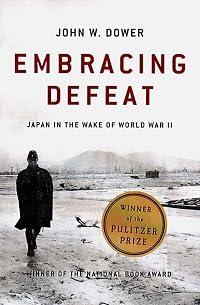
Embracing Defeat: Japan in the Wake of World War II
by John W. Dower
On This Page
Description
In this illuminating study, Dower explores the ways in which the shattering defeat of the Japanese in World War II, followed by over six years of American military occupation, affected every level of Japanese society. He describes the countless ways in which the Japanese met the challenge of "starting over"-from top-level manipulations concerning the fate of Emperor Hirohito to the hopes, fears, and activities of ordinary men and women in every walk of life. He shows us the intense and show more turbulent interplay of conqueror and conquered, West and East, in a way no Western historian has done before. This is a fascinating portrait of an extraordinary moment in history, when new values warred with the old, and early ideals of demilitarization and radical reform were soon challenged by the United States' decision to incorporate Japan in the Cold War Pax Americana. show lessTags
Recommendations








Member Reviews
Is it possible to have a book about transformation, and yet somehow miss the transformation? Dower's Embracing Defeat is a monumental work, that somehow feels like it misses the essence of Japan's re-invention in the wake of the war.
Dower's work is organized thematically, first psychologically, with the shock of defeat, then materially with starvation and the black market, the culturally, then politically with the new constitution, censorship, and war crimes tribunals, and finally with laying the foundation for the rise of Japan in the 1960s.
It's really an incredible story. The Japanese, who prior to Hiroshima and Nagasaki were prepared to die with bamboo spears in their hands against the full might of the Allied forces, surrendered show more and accepted occupation almost completely, letting MacArthur's army of occupation remake their country from top to bottom with almost no overt violence. It wasn't easy, of course. A psychological depression overtook many. Prostitution became a leading industry. Black marketeers thrived, while ordinary people starved or suffered at the hands of gangsters. The 'democratic' transition was imposed by above. American censorship was comprehensive, with the leading topic being the existence of American censorship, an Orwellian mess that stifled open society, even as the arts underwent a small renaissance. The war crimes trials, which sentenced seven Class A war criminals to death while protecting Emperor Hirohito, were a colonialist farce.
The problem with this primarily thematic organization is that the temporality of the occupation gets compressed. There are very real differences between the periods of real famine and deprivation immediately in the wake of surrender, the normalization around 1948, the pushback against the Left and embrace of old militarists as the Korean War turned hot, and the formal ending of the occupation. Dower's book has lots of detail about the resilience of a whole people, but fails to find a thesis. show less
Dower's work is organized thematically, first psychologically, with the shock of defeat, then materially with starvation and the black market, the culturally, then politically with the new constitution, censorship, and war crimes tribunals, and finally with laying the foundation for the rise of Japan in the 1960s.
It's really an incredible story. The Japanese, who prior to Hiroshima and Nagasaki were prepared to die with bamboo spears in their hands against the full might of the Allied forces, surrendered show more and accepted occupation almost completely, letting MacArthur's army of occupation remake their country from top to bottom with almost no overt violence. It wasn't easy, of course. A psychological depression overtook many. Prostitution became a leading industry. Black marketeers thrived, while ordinary people starved or suffered at the hands of gangsters. The 'democratic' transition was imposed by above. American censorship was comprehensive, with the leading topic being the existence of American censorship, an Orwellian mess that stifled open society, even as the arts underwent a small renaissance. The war crimes trials, which sentenced seven Class A war criminals to death while protecting Emperor Hirohito, were a colonialist farce.
The problem with this primarily thematic organization is that the temporality of the occupation gets compressed. There are very real differences between the periods of real famine and deprivation immediately in the wake of surrender, the normalization around 1948, the pushback against the Left and embrace of old militarists as the Korean War turned hot, and the formal ending of the occupation. Dower's book has lots of detail about the resilience of a whole people, but fails to find a thesis. show less
This excellent analysis of the American occupation of Japan after WWII argues that the Japan that emerged from the occupation was profoundly affected by the United States but still maintained a large degree of continuity from the pre-war period. It was, in effect, a Japanese-American hybrid. The big changes were in the political arena, where Japanese had more political freedom and civil rights than under the Meiji constitution. The continuity came from corporatism, a directly capitalist economy and Japanese exceptionalism. An additional aspect was that the Japanese came to view themselves as victims, not because they were blameless in the war, but because they were being judged by harsher standards than other countries that had show more committed atrocities.
The book is divided by subject, making it very easy to digest. It looks at the black market and prostitution, the emperor, censorship. Japanese reflections and coming to terms with the war, the new constitution and economic rebuilding of Japan.
There are a lot of interesting stories and points in this book. One of the most interesting was how the Japanese tried to make sense of the war. For some, this became a depression as the wondered how this had happened and what they had sacrificed for. Some Japanese wanted the war crimes trials expanded to included more politicians and businessmen. Others rebelled against the occupation but because of censorship, their voices were rarely heard until the 1950s.
Censorship was intertwined with these reflections. The Supreme Command of Allied Powers (SCAP) had a rigid, and sometimes silly, regime to stop criticism of the occupation or any news that might adversely affect reconstruction. In fact, any comment on censorship was censored. It severely limited discussion of the occupation, which made it officially invisible. This became farcical in films where American soldiers and planes of any kind were forbidden. Movie producers could not, in effect, shoot in Tokyo because they couldn't get a scene that didn't have Americans in it. The more serious affect was that it scuppered any serious discourse over the war. Causes, mistakes and guilt were only discussed with American approval, providing only a monologue. By the time censorship was lifted, the Japanese attitude towards the war had changed, yet there was still only limited public discussion about it.
Another important issue was the emperor, whom MacArthur thought was essential to keeping control of Japan. As such, he drove a "wedge" (SCAP's term) between the emperor and his advisors, who were the real culprits in the war, according to SCAP. He was used by SCAP and embraced by Japanese conservatives. Some radicals wanted him put on trial, but their voices were censored, which reinforced the emperor's position in the newly secular democracy of Japan.
Dower is very critical of the Tokyo war trials. The choice of who was put on trial seems arbitrary as some of the worst perpetrators were not prosecuted. Most notably absent were the members of Unit 731, which used Chinese for medical experiments against their will. The legal basis for "crimes against peace" was dubious and there was no precedent for trying individuals for their service to the state. The trial was applauded by some but also became a symbol of victor's justice, where Japan was mainly punished for losing, not because it's conduct was different that other countries during the war. Many Japanese POWs who were held as criminals around Asia were eventually sent home without trial. Whereas in 1945, when the Japanese first heard of some of the atrocities committed by their army, some Japanese mothers were threatening to disown their sons, in 1949, these war criminals were welcomed home as heroes.
Dower also discussed the new constitution, which was created in about a week by American (and some European) personnel. The creation of a constitution was beyond the instructions of MacArthur, but he rarely let such limitations affect him. The SCAP team drew up what would become the basis of the Japanese constitution, based on MacArthur's rough guidelines, and presented it to the Japanese government to accept. The government had come up with their own draft, which had prompted MacArthur's call for an American one, but the Japanese draft had only superficial changes to the Meiji constitution. The SCAP draft was amended by the Japanese Diet, but with an invisible American hand guiding the changes. That hand, along with the true origins of the draft, was another victim of censorship in an effort to make the new constitution seem a purely Japanese creation. The most controversial part of the document was the demilitarization clause (Article 9), which the Americans almost immediately regretted and continue to regret to the present day.
The final section was on the economy, although Dower talks about it throughout the book. In this section, he looks at the rebuilding of the economy through directing production. This worked in producing some important goods but also led to rampant inflation and undermined non-essential production. The turning point was the Korean War, which was "a gift from God" for the Japanese economy. They started producing war goods, which stimulated the economy in other areas. Because of Article 9, however, Japan could not send troops, which frustrated Americans but thrilled the Japanese and Koreans. Because of tensions of the early Cold War, especially after Korea, and because of the need to get the Japanese economy started again but without US reconstruction aid, the US had to rely on big business that had allied with the military before the war. Convenience for the US and its strongly anti-communist attitude pushed it to embrace the powerful and conservative elements of Japanese society, ensuring some continuity in social structure from before the war.
This a great book. It is, by far, the best I have read on the subject. It is well-researched and well-written. If you are interested in modern Japan, this is the book you should start with. show less
The book is divided by subject, making it very easy to digest. It looks at the black market and prostitution, the emperor, censorship. Japanese reflections and coming to terms with the war, the new constitution and economic rebuilding of Japan.
There are a lot of interesting stories and points in this book. One of the most interesting was how the Japanese tried to make sense of the war. For some, this became a depression as the wondered how this had happened and what they had sacrificed for. Some Japanese wanted the war crimes trials expanded to included more politicians and businessmen. Others rebelled against the occupation but because of censorship, their voices were rarely heard until the 1950s.
Censorship was intertwined with these reflections. The Supreme Command of Allied Powers (SCAP) had a rigid, and sometimes silly, regime to stop criticism of the occupation or any news that might adversely affect reconstruction. In fact, any comment on censorship was censored. It severely limited discussion of the occupation, which made it officially invisible. This became farcical in films where American soldiers and planes of any kind were forbidden. Movie producers could not, in effect, shoot in Tokyo because they couldn't get a scene that didn't have Americans in it. The more serious affect was that it scuppered any serious discourse over the war. Causes, mistakes and guilt were only discussed with American approval, providing only a monologue. By the time censorship was lifted, the Japanese attitude towards the war had changed, yet there was still only limited public discussion about it.
Another important issue was the emperor, whom MacArthur thought was essential to keeping control of Japan. As such, he drove a "wedge" (SCAP's term) between the emperor and his advisors, who were the real culprits in the war, according to SCAP. He was used by SCAP and embraced by Japanese conservatives. Some radicals wanted him put on trial, but their voices were censored, which reinforced the emperor's position in the newly secular democracy of Japan.
Dower is very critical of the Tokyo war trials. The choice of who was put on trial seems arbitrary as some of the worst perpetrators were not prosecuted. Most notably absent were the members of Unit 731, which used Chinese for medical experiments against their will. The legal basis for "crimes against peace" was dubious and there was no precedent for trying individuals for their service to the state. The trial was applauded by some but also became a symbol of victor's justice, where Japan was mainly punished for losing, not because it's conduct was different that other countries during the war. Many Japanese POWs who were held as criminals around Asia were eventually sent home without trial. Whereas in 1945, when the Japanese first heard of some of the atrocities committed by their army, some Japanese mothers were threatening to disown their sons, in 1949, these war criminals were welcomed home as heroes.
Dower also discussed the new constitution, which was created in about a week by American (and some European) personnel. The creation of a constitution was beyond the instructions of MacArthur, but he rarely let such limitations affect him. The SCAP team drew up what would become the basis of the Japanese constitution, based on MacArthur's rough guidelines, and presented it to the Japanese government to accept. The government had come up with their own draft, which had prompted MacArthur's call for an American one, but the Japanese draft had only superficial changes to the Meiji constitution. The SCAP draft was amended by the Japanese Diet, but with an invisible American hand guiding the changes. That hand, along with the true origins of the draft, was another victim of censorship in an effort to make the new constitution seem a purely Japanese creation. The most controversial part of the document was the demilitarization clause (Article 9), which the Americans almost immediately regretted and continue to regret to the present day.
The final section was on the economy, although Dower talks about it throughout the book. In this section, he looks at the rebuilding of the economy through directing production. This worked in producing some important goods but also led to rampant inflation and undermined non-essential production. The turning point was the Korean War, which was "a gift from God" for the Japanese economy. They started producing war goods, which stimulated the economy in other areas. Because of Article 9, however, Japan could not send troops, which frustrated Americans but thrilled the Japanese and Koreans. Because of tensions of the early Cold War, especially after Korea, and because of the need to get the Japanese economy started again but without US reconstruction aid, the US had to rely on big business that had allied with the military before the war. Convenience for the US and its strongly anti-communist attitude pushed it to embrace the powerful and conservative elements of Japanese society, ensuring some continuity in social structure from before the war.
This a great book. It is, by far, the best I have read on the subject. It is well-researched and well-written. If you are interested in modern Japan, this is the book you should start with. show less
Another really interesting history, this time of the American occupation of Japan. Dower argues that the Americans were more committed to the preservation of the Emperor than many average Japanese, and so they didn’t investigate his war responsibility or explore the possibility of a postwar political order without at least having the Emperor as symbolic head of the nation. He also details the hardship and despair of the postwar years; the way in which the American occupation turned the focus away from the atrocities the Japanese armies had committed against non-Americans; the sometimes exhilarating and sometimes terrifying sense that all the past boundaries had fallen away; the sexual liberation (though he’s pretty sanguine about show more prostitution as the best alternative for many young women under the circumstances); and the pervasive censorship that prevented almost any portrayal of the occupiers and then switched near the end from suppressing anything that smacked of militarism to suppressing anything leftist, as the US switched its position from demilitarizing Japan to demanding rearmament in order to help contain the Soviets. show less
There was much in this excellent history which made me proud to be an American (e.g. the drafting of Japan's current constitution by a group assigned by Gen. MacArthur) but also much to indicate my own beloved country's need for self examination and improvement. Certainly Japan in the agony of defeat responded in creative ways from which we Americans can and should learn . War always brings injustice,tragedy, bitter ironies and hosts of other negatives. To move on to more productive activities than fighting seems to be something which Japan has learned better than many other nations. In my opinion,this book deserves to be read and pondered over by every patriotic American, regardless of political persuasion. (less)
Fróðleg bók um umbrotatíma í Japan í kjölfar síðari heimsstyrjaldar. Dower fer ítarlega yfir kollsteypu japansks samfélags og hvernig það breytist í bókmenntum, iðnaði, fjölskyldutengslum o.s.frv. Hann fer einnig yfir hernám Bandaríkjamanna undir stjórn Douglas McArthurs hershöfðingja og einræðisstjórn hans í landinu þar til hann var rekinn úr starfi af Truman forseta.
Þetta rit snertir ótrúlega marga þætti í japönsku samfélagi og má nefna sem dæmi að Dower fer yfir leiki barna í Japan og hvernig þeir breyttust í kjölfar stríðsins og endurspegluðu hungrið sem svarf að fjölskyldunum og hvernig hernámsliðið sat að einkalestarvögnum meðan japönsk börn köfnuðu vegna þrengsla í show more lestarvögnum sem ætlaðir voru heimamönnum - líkt og kynþáttastefnan var í BNA og Suður-Afríku. Sömuleiðis er öflugri ritskoðun herstjórnarinnar gerð góð skil en þar var þess krafist að ekki mættu sjást ummerki ritskoðunar og fyrir kom að t.d. kvikmyndir fengju samþykki eftir dúk og disk til birtingar en þegar myndin var komin í sýningu þá skiptu ritskoðendur um skoðun og létu fjarlægja myndina úr dreifingu og allar kópíur sem til voru af henni. Fjárhagstjónið sem af þessu varð skall alfarið á framleiðendum myndarinnar.
Þessi bók fékk fjölda verðlauna á sínum tíma: Pulitzer (1986), National Book Award (1999), Bancroft Prize (2000), National Book Critics Circle Award Nominee (1999), John K. Fairbank Prize í A.-Asíu sagnfræði (1999). Vel að þeim komin og hafirðu áhuga á að kynnast japönsku nútímasamfélagi þá er óhætt að mæla með þessari bók. show less
Þetta rit snertir ótrúlega marga þætti í japönsku samfélagi og má nefna sem dæmi að Dower fer yfir leiki barna í Japan og hvernig þeir breyttust í kjölfar stríðsins og endurspegluðu hungrið sem svarf að fjölskyldunum og hvernig hernámsliðið sat að einkalestarvögnum meðan japönsk börn köfnuðu vegna þrengsla í show more lestarvögnum sem ætlaðir voru heimamönnum - líkt og kynþáttastefnan var í BNA og Suður-Afríku. Sömuleiðis er öflugri ritskoðun herstjórnarinnar gerð góð skil en þar var þess krafist að ekki mættu sjást ummerki ritskoðunar og fyrir kom að t.d. kvikmyndir fengju samþykki eftir dúk og disk til birtingar en þegar myndin var komin í sýningu þá skiptu ritskoðendur um skoðun og létu fjarlægja myndina úr dreifingu og allar kópíur sem til voru af henni. Fjárhagstjónið sem af þessu varð skall alfarið á framleiðendum myndarinnar.
Þessi bók fékk fjölda verðlauna á sínum tíma: Pulitzer (1986), National Book Award (1999), Bancroft Prize (2000), National Book Critics Circle Award Nominee (1999), John K. Fairbank Prize í A.-Asíu sagnfræði (1999). Vel að þeim komin og hafirðu áhuga á að kynnast japönsku nútímasamfélagi þá er óhætt að mæla með þessari bók. show less
Magnificently researched, incredible book. But not at all engaging. Japan recovered because of MITI and, critically, the huge economic impact of the Korean War. The US invested more in Japan because of this war - and gave its economy more opportunities - than ever in the years before Korea. The context for Rashomon is fascinating - but it is very hard to identify with the details of this book unless you already know about Japan, which I do not at all.
An even-handed history of the Occupation of Japan, though scant on analysis. Wish it engaged with long-term political and cultural effects of the occupation, both on Japan and globally.
Members
- Recently Added By
Lists

r/AskHistorians' Recommended Books
1,068 works; 19 members

Pulitzer Prize for General Non-Fiction
16 works; 3 members

National Book Award winners
65 works; 11 members

NTS Book Channel
316 works; 1 member
Author Information

20+ Works 3,062 Members
John W. Dower is professor emeritus of history at Massachusetts Institute of Technology. He is the author of several books, including War Without Mercy, and Embracing Defeat, which received the Pulitzer and the National Book Award.
Awards and Honors
Awards
Distinctions
Work Relationships
Common Knowledge
- Original title
- Embracing Defeat: Japan in the Wake of World War II
- Original publication date
- 1999
- Important places
- Japan
- Important events
- Allied occupation of Japan (1945 | 1952)
- Disambiguation notice
- Full title (1999): Embracing defeat : Japan in the wake of World War II / John W. Dower
Classifications
Statistics
- Members
- 1,510
- Popularity
- 15,371
- Reviews
- 15
- Rating
- (4.09)
- Languages
- English
- Media
- Paper, Audiobook, Ebook
- ISBNs
- 17
- ASINs
- 8