Chinese philosophy in classical times
by E. R. Hughes
On This Page
Tags
Recommendations


























Member Reviews
CHINESE PHILOSOPHY IN CLASSICAL TIMES
PREFACE
I ACKNOWLEDGE with a great sense of gratitude my debt to
two contemporary Chinese philosophers. One is Dr. Hu
Shih, now serving his country as ambassador at Washington.
The reading of his famous Chung Kuo Ku Tai Che Hsieh
Shik Ta Kang (1921) in 1923 was an immense stimulus, and
the second reading of it later suggested to me the necessity
for studies in the development of the language of logic in
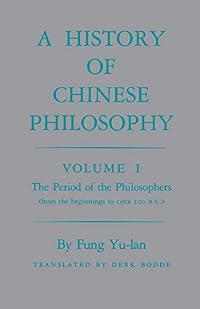
Classical Chinese. The other is Professor Feng Yu-lan,
whose Chung Kuo Che Hsüeh Shih (2 vols.) became another
landmark in my philosophical education. Since the first
volume of this work has been translated by Professor Derk
Bodde, working in collaboration with the author, I also owe
a debt to Dr. Bodde, which I show more gratefully recognize. It is
inevitable and right that reference should be made to his
book, A History of Chinese Philosophy (1939, Peiping and
London), for there is no other book for the English reader to
compare with it; but its value to me has been more of a
general nature than of a kind to warrant an accusation of
plagiarism. Yet here, as in the case of other translators, it
has been my pleasure to salute from time to time le mot juste,
and to substitute it for my own less felicitous rendering.
There is only one passage which I have taken word for
word from another translator. It is Chapter XLVIII in Mr
Arthur Waley's The Way and its Power, and I thank him
and his publishers for the privilege of using that rendering
I am also grateful to Messrs. Probsthain for their permission
o use Dr. Duyvendak's Lord Shang, and Dr. W. K. Liao's
Han Fei, vol. i. My original intention was to take the
translations I needed word for word, for that seems the
y respectful course to take. I found, however, particularly
in Dr. Liao's work, as to a less extent in Dr. Duyvendak's,
certain roughnesses of expression which seemed
better emended. I apologize, therefore, for taking these
liberties with their work. If it had been feasible to... show less
PREFACE
I ACKNOWLEDGE with a great sense of gratitude my debt to
two contemporary Chinese philosophers. One is Dr. Hu
Shih, now serving his country as ambassador at Washington.
The reading of his famous Chung Kuo Ku Tai Che Hsieh
Shik Ta Kang (1921) in 1923 was an immense stimulus, and
the second reading of it later suggested to me the necessity
for studies in the development of the language of logic in
Classical Chinese. The other is Professor Feng Yu-lan,
whose Chung Kuo Che Hsüeh Shih (2 vols.) became another
landmark in my philosophical education. Since the first
volume of this work has been translated by Professor Derk
Bodde, working in collaboration with the author, I also owe
a debt to Dr. Bodde, which I show more gratefully recognize. It is
inevitable and right that reference should be made to his
book, A History of Chinese Philosophy (1939, Peiping and
London), for there is no other book for the English reader to
compare with it; but its value to me has been more of a
general nature than of a kind to warrant an accusation of
plagiarism. Yet here, as in the case of other translators, it
has been my pleasure to salute from time to time le mot juste,
and to substitute it for my own less felicitous rendering.
There is only one passage which I have taken word for
word from another translator. It is Chapter XLVIII in Mr
Arthur Waley's The Way and its Power, and I thank him
and his publishers for the privilege of using that rendering
I am also grateful to Messrs. Probsthain for their permission
o use Dr. Duyvendak's Lord Shang, and Dr. W. K. Liao's
Han Fei, vol. i. My original intention was to take the
translations I needed word for word, for that seems the
y respectful course to take. I found, however, particularly
in Dr. Liao's work, as to a less extent in Dr. Duyvendak's,
certain roughnesses of expression which seemed
better emended. I apologize, therefore, for taking these
liberties with their work. If it had been feasible to... show less
Nov 12, 2018Spanish
Ratings
Members
- Recently Added By
Author Information
8+ Works 110 Members
Series
Belongs to Publisher Series
Everyman's Library (973)
Common Knowledge
- First words
- 1. The 'Book of Odes.'
A collection of three hundred odd poems supposed to have been selected by Confucius from some three thousand poes current in the various states. - Last words
- (Click to show. Warning: May contain spoilers.)When a man dies his essence rises to heaven and his bones go into the keeping of the soil. (Chuan xx, Essay 3.)
Classifications
Statistics
- Members
- 82
- Popularity
- 386,730
- Reviews
- 2
- Rating
- (3.50)
- Languages
- English
- Media
- Paper
- ISBNs
- 3
- ASINs
- 7