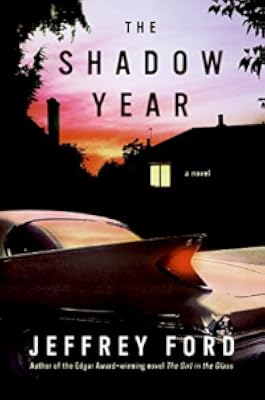
The Shadow Year
by Jeffrey Ford
On This Page
Description
In New York's Long Island, in the unpredictable decade of the 1960s, a young boy laments the approaching close of summer and the advent of sixth grade. Growing up in a household with an overworked father whom he rarely sees, an alcoholic mother who paints wonderful canvases that are never displayed, an older brother who serves as both tormentor and protector, and a younger sister who inhabits her own secret world, the boy takes his amusements where he can find them. Some of his free time is show more spent in the basement of the family's modest home, where he and his brother, Jim, have created Botch Town, a detailed cardboard replica of their community, complete with clay figurines representing friends and neighbors. And so the time passes with a not-always-reassuring sameness--until the night a prowler is reported stalking the neighborhood. Appointing themselves ad hoc investigators, the brothers set out to aid the police--while their little sister, Mary, smokes cigarettes, speaks in other voices, inhabits alternate personas . . . and, unbeknownst to her older siblings, moves around the inanimate residents of Botch Town. But ensuing events add a shadowy cast to the boys' night games: disappearances, deaths, and spectral sightings capped off by the arrival of a sinister man in a long white car trawling the neighborhood after dark. Strangest of all is the inescapable fact that every one of these troubling occurrences seems to correspond directly to the changes little Mary has made to the miniature town in the basement. Not since Ray Bradbury's classic Dandelion Wine has a novel so richly evoked the dark magic of small-town boyhood. At once a hypnotically compelling mystery, a masterful re-creation of a unique time and place, a celebration of youth, and a poignant and disquieting portrait of home and family--all balancing on a razor's edge separating reality from the unsettlingly remarkable--The Shadow Year is a monumental new work from one of contemporary fiction's most fearless and inventive artists. show lessTags
Recommendations




Member Recommendations
Member Reviews
I can't believe how quickly I read this. I honestly expected three or four days of picking it up and putting it down when a bright distraction went by, but once I picked it up I'll be damned if anything other than an earthquake was going to interrupt. It's not as if it's a fast 'n' furious thriller. It's a slow, atmospheric tale of a strange year as seen from the point of view of a young boy in a small American town, which is practically a genre of its own. Every other Stephen King book, Ray Bradbury, Rober R McCammon's Boy's Life and the late great Graham Joyce's Tooth Fairy did one in England. What has to happen is that the young protagonist has to be in the cusp of leaving childhood behind and as the fog of innocence fades and the show more other fog of hormones rises to take its place, strange things emerge from the murk. Unreal, half-real, surreal. In The Shadow Year, it's a long white car driven by a man in a white coat. It's people dying and disappearing. It's the model town in the basement and the eerie correspondences between the little figures moved by little sister Mary and the people in the real town above. It's a hundred other things, some strange, some banal, and the whole year exerts a strange fascination over the reader and draws them in as the town reveals its secrets but somehow every secret seems to make it more strange and mysterious, a thing constructed from faded dreams and memories. Wonderful prose paints the place and the people and then tilts them all slightly askew. Compulsively readable. show less
The Shadow Year chronicles a year in the life of a sixth grader who narrates and remains unnamed. Like all of the other details that are spot-on, Ford gets right that for kids a year begins with the start of school and ends the following summer.
This book nails the details of the narrator's life. It describes that coming-of-age period when we realize that some people hurt little kids and that sometimes our parents aren't doing as good of a job as they should. The characters in this book feel like real people and do the things that real people do.
The book has a supernatural element as well with the narrator's sister, Mary, using a miniature version of their town and its inhabitants to predict events with some reliability. In many ways, show more the supernatural part of the plot was secondary to the plot of a child's life in a family with problems. There is a scene where the boys purposely encourage their alcoholic mother to drink so they can sneak out of the house that feels so devastatingly real it is almost unbearable to fathom.
In the end, the most important thing about the book is that Jeffrey Ford can really write. Each description is a pleasure to read. show less
This book nails the details of the narrator's life. It describes that coming-of-age period when we realize that some people hurt little kids and that sometimes our parents aren't doing as good of a job as they should. The characters in this book feel like real people and do the things that real people do.
The book has a supernatural element as well with the narrator's sister, Mary, using a miniature version of their town and its inhabitants to predict events with some reliability. In many ways, show more the supernatural part of the plot was secondary to the plot of a child's life in a family with problems. There is a scene where the boys purposely encourage their alcoholic mother to drink so they can sneak out of the house that feels so devastatingly real it is almost unbearable to fathom.
In the end, the most important thing about the book is that Jeffrey Ford can really write. Each description is a pleasure to read. show less
 This review was written for LibraryThing Early Reviewers.
Ford has a secure grasp of the darkness of childhood with an addicted parent, along with the ways a child can find brightness in order to live with it. Descriptions are elegant, and the main character is one you can imagine growing into the writer of this tale. A child, looking to create his own world, would very likely get caught up in Botchtown, using his siblings as fodder for his imagination.
I found the ending to be a little too cookie-cutter, given the treasured jagged edges of the beginning of the novel. For me, the jagged edges are what allow a story to become real in my mind, what attach themselves to me. The ending lacked this attachment for me. (I cannot say how I would have hoped to rectify this, only that it felt as though show more Ford ran out of material after a very solid 225 pages.)
**Spoiler alert, kind of**
Ford gives clues as to the truth about Ray, and I was okay with the paranormal hints regarding the character. If anything, the questions which are presented in passing give strength to the childlike quality of the narrator. There was absolutely no need to solidify the assumptions of the main character with a "years later" epilogue. show less
I found the ending to be a little too cookie-cutter, given the treasured jagged edges of the beginning of the novel. For me, the jagged edges are what allow a story to become real in my mind, what attach themselves to me. The ending lacked this attachment for me. (I cannot say how I would have hoped to rectify this, only that it felt as though show more Ford ran out of material after a very solid 225 pages.)
**Spoiler alert, kind of**
Ford gives clues as to the truth about Ray, and I was okay with the paranormal hints regarding the character. If anything, the questions which are presented in passing give strength to the childlike quality of the narrator. There was absolutely no need to solidify the assumptions of the main character with a "years later" epilogue. show less
This review was written for LibraryThing Early Reviewers.A boy growing up in the a small Long Island town in the 1960s discovers that a serial killer is stalking his neighborhood.
This is a quirky coming-of-age story with a nostalgic small-town feel and an undercurrent of the sinister, as well as the supernatural. Ford is great with characters, especially the dysfunctional but still affectionate family of the unnamed narrator. The narrator has a hobby of writing little stories about his neighbors, and we get to know them and their eccentricities that way. He and his older brother have also recreated their neighborhood in their basement, a model made out of junk called Botch Town, where their odd younger sister moves the figures in a way that eerily predicts real-life events. The story is a mix show more of short vignettes about a pivotal year in the boy's life and the ongoing plot of the siblings' efforts to catch Mr. White, a creepy man in a white car who they suspect is murdering people. They have the help of an older neighborhood kid who moved away but mysteriously reappeared. Mixed in are nostalgic stories with a realistic edge: the horrors of middle school; dealing with an alcoholic, depressed mother; the antics of a Halloween night; an exuberant Christmas party; rambling through the nearby woods. There is an epilogue that feels tacked on and probably wasn't necessary, but otherwise this is a little gem of a book. show less
This is a quirky coming-of-age story with a nostalgic small-town feel and an undercurrent of the sinister, as well as the supernatural. Ford is great with characters, especially the dysfunctional but still affectionate family of the unnamed narrator. The narrator has a hobby of writing little stories about his neighbors, and we get to know them and their eccentricities that way. He and his older brother have also recreated their neighborhood in their basement, a model made out of junk called Botch Town, where their odd younger sister moves the figures in a way that eerily predicts real-life events. The story is a mix show more of short vignettes about a pivotal year in the boy's life and the ongoing plot of the siblings' efforts to catch Mr. White, a creepy man in a white car who they suspect is murdering people. They have the help of an older neighborhood kid who moved away but mysteriously reappeared. Mixed in are nostalgic stories with a realistic edge: the horrors of middle school; dealing with an alcoholic, depressed mother; the antics of a Halloween night; an exuberant Christmas party; rambling through the nearby woods. There is an epilogue that feels tacked on and probably wasn't necessary, but otherwise this is a little gem of a book. show less
La trama se sitúa en Long Island, en los años 60, y el protagonista narra en primera persona lo que le sucedió cuando tenía unos 11 años. Este vive junto a su hermano mayor Jim y su hermana pequeña Mary, así como con su madre alcoholizada, y un padre que siempre está trabajando. Los abuelos viven en una especie de casa adosada.
Toda la historia transcurre entre los nostálgicos recuerdos del narrador, donde destaca la figura de un mirón que acosa a los vecinos, adjudicándose el papel de investigadores tanto él como sus hermanos.
‘El año sombrío’ (The Shadow Year, 2008), del escritor estadounidense Jeffrey Ford, ganó el Premio Mundial de Fantasía del año 2009, para mí de manera incomprensible, ya que el elemento show more fantástico es mínimo. Y terror tampoco hay, solo un poco de suspense. En fin, que no ha sido lo que me esperaba. show less
Toda la historia transcurre entre los nostálgicos recuerdos del narrador, donde destaca la figura de un mirón que acosa a los vecinos, adjudicándose el papel de investigadores tanto él como sus hermanos.
‘El año sombrío’ (The Shadow Year, 2008), del escritor estadounidense Jeffrey Ford, ganó el Premio Mundial de Fantasía del año 2009, para mí de manera incomprensible, ya que el elemento show more fantástico es mínimo. Y terror tampoco hay, solo un poco de suspense. En fin, que no ha sido lo que me esperaba. show less
“Her small stature, dark, and wrinkled complexion, and the silken black strands at the corners of her upper lip made her seem to me at times like some ancient monkey king. When she’d fart while standing, she’d kick her left leg up in the back and say: ‘Shoot him in the pants. The Coat and vest are mine.’”
In “The Shadow Years” by Jeffrey Ford
The world-wide craze for superheroes is obvious. We all see ourselves as passive victims and don't expect to rescue ourselves.
There's also the national craze for vampires and zombies in books, TV, movies, and the web. It may seem odd that a deeply Christian country is also obsessed with vampires, but as Joseph Glanvill wrote in the 1600s, if you deny the existence of demons and show more witches, you deny god. I see it as another form of projection: a few survivors are surrounded by the dead, i.e., the masses of the unemployed and soon-to-be-unemployable. I’m thinking USA here.
Magical realism is a bit like SF, where colorful, fanciful personas, places and technologies are used to explore all too real attitudes, trends and prejudices. It could be said that Ford's take on it is America's second exploration of the genre, since it was also prevalent in the 50's and 60's (and to some extent the 70's) with the proliferation of pulp magazines, SF publications (also the birth of the modern comic book) and SF movies and TV shows (Outer Limits, Twilight Zone, Star Trek). This post war boom was a symptom of America's unease with the new reality of The Bomb, Detente, the Cold War and the Red Menace.
It’s no coincidence that the resurgence of these Magical Realism genres occur at this time, when Americans again feel the ground shifting beneath their feet. American culture has always been hugely imaginative (it's not unique in that, of course) and I see no reason whatsoever why magic realism should be linked to a perceived decline in power.
Unfortunately, many English speakers don't seem to get the fact that magical realism started elsewhere a long time ago: Kafka, Bruno Schulz, Gogol, Bulgakov, Garcia Marquez -- one could go on and on. It's these writers who captured the absurdity of so-called reality and the truths revealed by the so-called magic. Ford, in my mind, is the best American representative of this kind of fiction.
Bottom-Line:
1. Reality and fantasy today have changed places. Was the current Presidential election campaign reality, or fantasy? I'd argue that the campaign and our contemporary dilemmas (watching our "leaders" fiddle while Rome burns) is the latter. So it follows that “The Shadow Years” is addressing reality in the oblique, imaginative way that great art does;
2. Using the imagination is hardly a retreat. It's essential. It's our materialist, fact-centred world, suspicious of everything intangible, that is in full-blown retreat from true imaginative art (as opposed to the manipulative products of Hollywood). The American writer Kathleen Norris brilliantly examines what she calls Americans' fear of metaphor -- hence the rise of fundamentalist, literalist religion.
Ford is most of the time literary and beautiful, but this novel bummed me out. Downbeat and offbeat. Unfortunately I am not in the right phase of my life to love this stuff; but it does not prevent me from seeing what Ford was able to do.
Nevertheless, bring on more Beasts, please! show less
In “The Shadow Years” by Jeffrey Ford
The world-wide craze for superheroes is obvious. We all see ourselves as passive victims and don't expect to rescue ourselves.
There's also the national craze for vampires and zombies in books, TV, movies, and the web. It may seem odd that a deeply Christian country is also obsessed with vampires, but as Joseph Glanvill wrote in the 1600s, if you deny the existence of demons and show more witches, you deny god. I see it as another form of projection: a few survivors are surrounded by the dead, i.e., the masses of the unemployed and soon-to-be-unemployable. I’m thinking USA here.
Magical realism is a bit like SF, where colorful, fanciful personas, places and technologies are used to explore all too real attitudes, trends and prejudices. It could be said that Ford's take on it is America's second exploration of the genre, since it was also prevalent in the 50's and 60's (and to some extent the 70's) with the proliferation of pulp magazines, SF publications (also the birth of the modern comic book) and SF movies and TV shows (Outer Limits, Twilight Zone, Star Trek). This post war boom was a symptom of America's unease with the new reality of The Bomb, Detente, the Cold War and the Red Menace.
It’s no coincidence that the resurgence of these Magical Realism genres occur at this time, when Americans again feel the ground shifting beneath their feet. American culture has always been hugely imaginative (it's not unique in that, of course) and I see no reason whatsoever why magic realism should be linked to a perceived decline in power.
Unfortunately, many English speakers don't seem to get the fact that magical realism started elsewhere a long time ago: Kafka, Bruno Schulz, Gogol, Bulgakov, Garcia Marquez -- one could go on and on. It's these writers who captured the absurdity of so-called reality and the truths revealed by the so-called magic. Ford, in my mind, is the best American representative of this kind of fiction.
Bottom-Line:
1. Reality and fantasy today have changed places. Was the current Presidential election campaign reality, or fantasy? I'd argue that the campaign and our contemporary dilemmas (watching our "leaders" fiddle while Rome burns) is the latter. So it follows that “The Shadow Years” is addressing reality in the oblique, imaginative way that great art does;
2. Using the imagination is hardly a retreat. It's essential. It's our materialist, fact-centred world, suspicious of everything intangible, that is in full-blown retreat from true imaginative art (as opposed to the manipulative products of Hollywood). The American writer Kathleen Norris brilliantly examines what she calls Americans' fear of metaphor -- hence the rise of fundamentalist, literalist religion.
Ford is most of the time literary and beautiful, but this novel bummed me out. Downbeat and offbeat. Unfortunately I am not in the right phase of my life to love this stuff; but it does not prevent me from seeing what Ford was able to do.
Nevertheless, bring on more Beasts, please! show less
4.5 stars
ORIGINALLY POSTED AT Fantasy Literature.
The Shadow Year is a charming coming-of-age tale about the 6th grade year of an average American boy (we never learn his name) growing up in the 1960s. This year isn’t average, though, because there are some strange things going on in his small town. As he navigates his way around mundane matters such as an alcoholic manic depressive mother, a father who holds down three jobs, live-in grandparents, and unpleasant teachers, he’s also concerned with a prowler, a classmate who disappeared, and a strange suspicious man who drives an eerie white car. Things get really creepy when he realizes that the weird things happening around town seem to be linked to the way his possibly-autistic / show more possibly-savant little sister moves the cars and people around in his older brother’s replica of their town which he works on in their basement.
The Shadow Year feels more like mainstream fiction — it’s mostly about coming of age, family relationships, and living in a small town. Except for the wonder at Mary’s abilities, the supernatural elements are down-played and don’t become obvious until the end. The novel reminds me very much of A Christmas Story — that classic movie about Ralphie who wants a Red Ryder BB gun for Christmas ("You'll shoot your eye out!"). Similarly, Jeffrey Ford fills his story with over-the-top characters who are fun to read about but who you’re glad you don’t live with and who you have a hard time believing could all co-exist in the same small town.
Also similarly, most of the plot revolves around the day to day events in a 6th grade boy’s life: waiting for the ice cream man, trying to complete school assignments with a minimal amount of effort, getting picked on by older kids, skipping church, sneaking out of the house, and trying to keep up with his brave and reckless older brother. These little slices of life are funny, poignant, and so beautifully and vividly described that they often brought a smile to my face and occasionally brought tears to my eyes. Here’s a passage about the ice cream man:
Occasionally Mel would try to be pleasant, but I think the paper canoe of a hat he wore every day soured him. He also wore a blue bow tie, a white shirt, and white pants. His face was long and crooked, and at times, when the orders came to fast and the kids didn’t have the right change, the bottom half of his face would slowly melt — a sundae abandoned at the curb…. In a voice that came straight from his freezer, he called my sister, Mary, and all the other girls “sweetheart.”
The Shadow Year is worth reading simply for Jeffrey Ford’s excellent imagery and atmosphere, powerful prose, and razor-sharp descriptions of life we can relate to, but it’s also a good mystery with plenty of tension and suspense. The relationship we observe between the boy and his older brother and little sister is truly touching. I have to add, also, that our ability to engage with a character whose name we never know is surprising and indicates Ford’s confidence and courage.
Despite its subject material, The Shadow Year is not a book for kids because of the language and sexual content. I listened to Audible Frontier’s production of The Shadow Year which was read by Kevin T. Collins who has an astonishing range of voices at his command. His excellent narration definitely added to my reading enjoyment and I’ll be looking for his name in the future.
I’m already on to my second Jeffrey Ford novel. He’s now on my list of must-be-read authors. show less
ORIGINALLY POSTED AT Fantasy Literature.
The Shadow Year is a charming coming-of-age tale about the 6th grade year of an average American boy (we never learn his name) growing up in the 1960s. This year isn’t average, though, because there are some strange things going on in his small town. As he navigates his way around mundane matters such as an alcoholic manic depressive mother, a father who holds down three jobs, live-in grandparents, and unpleasant teachers, he’s also concerned with a prowler, a classmate who disappeared, and a strange suspicious man who drives an eerie white car. Things get really creepy when he realizes that the weird things happening around town seem to be linked to the way his possibly-autistic / show more possibly-savant little sister moves the cars and people around in his older brother’s replica of their town which he works on in their basement.
The Shadow Year feels more like mainstream fiction — it’s mostly about coming of age, family relationships, and living in a small town. Except for the wonder at Mary’s abilities, the supernatural elements are down-played and don’t become obvious until the end. The novel reminds me very much of A Christmas Story — that classic movie about Ralphie who wants a Red Ryder BB gun for Christmas ("You'll shoot your eye out!"). Similarly, Jeffrey Ford fills his story with over-the-top characters who are fun to read about but who you’re glad you don’t live with and who you have a hard time believing could all co-exist in the same small town.
Also similarly, most of the plot revolves around the day to day events in a 6th grade boy’s life: waiting for the ice cream man, trying to complete school assignments with a minimal amount of effort, getting picked on by older kids, skipping church, sneaking out of the house, and trying to keep up with his brave and reckless older brother. These little slices of life are funny, poignant, and so beautifully and vividly described that they often brought a smile to my face and occasionally brought tears to my eyes. Here’s a passage about the ice cream man:
Occasionally Mel would try to be pleasant, but I think the paper canoe of a hat he wore every day soured him. He also wore a blue bow tie, a white shirt, and white pants. His face was long and crooked, and at times, when the orders came to fast and the kids didn’t have the right change, the bottom half of his face would slowly melt — a sundae abandoned at the curb…. In a voice that came straight from his freezer, he called my sister, Mary, and all the other girls “sweetheart.”
The Shadow Year is worth reading simply for Jeffrey Ford’s excellent imagery and atmosphere, powerful prose, and razor-sharp descriptions of life we can relate to, but it’s also a good mystery with plenty of tension and suspense. The relationship we observe between the boy and his older brother and little sister is truly touching. I have to add, also, that our ability to engage with a character whose name we never know is surprising and indicates Ford’s confidence and courage.
Despite its subject material, The Shadow Year is not a book for kids because of the language and sexual content. I listened to Audible Frontier’s production of The Shadow Year which was read by Kevin T. Collins who has an astonishing range of voices at his command. His excellent narration definitely added to my reading enjoyment and I’ll be looking for his name in the future.
I’m already on to my second Jeffrey Ford novel. He’s now on my list of must-be-read authors. show less
Members
- Recently Added By
Lists

Best Contemporary Literary Fiction (Around the Last 30 Years)
388 works; 124 members

Books Set in New York State
65 works; 11 members

Shirley Jackson Award Winners and Shortlist 2007-2020
77 works; 6 members

Books Set on Islands
190 works; 24 members

Books Read in 2017
4,249 works; 130 members

Stories for Halloween
11 works; 1 member

2000s (the decade, not the century)
184 works; 11 members

Books With Time Words in the Title
160 works; 4 members

Books About Boys
175 works; 15 members

Haunted Places and Ghost Stories Reading List
99 works; 4 members
Author Information

95+ Works 3,689 Members
Jeffrey Ford is the author of nine novels and five short story collections. He has received the World Fantasy, Shirley Jackson, Nebula, and Edgar awards among others. A college English teacher of writing and literature for thirty years, he lives with his wife Lynn in a century-old farm house in a land of slow clouds and endless fields.
Some Editions
Awards and Honors
Awards
Distinctions
Common Knowledge
- Canonical title
- The Shadow Year
- Original publication date
- 2008
- People/Characters
- Jim; Mary; Franky Conrad; George; Nan; Pop
- Important places
- Long Island, New York, USA
- Dedication
- For Jim, Mary, and Dool,
whose love was like a light
in the shadow years - First words
- It began in the last days of August, when the leaves of the elm in the front yard had curled into crisp brown tubes and fallen away to litter the lawn.
- Quotations
- Through the week I would smell a hint of machine oil here and there, on the cushions of the couch, on a towel in the bathroom, as if he were a ghost leaving vague traces of his presence.
I heard the big pages turn, the fork against the plate, a match being struck, and that's when it happened. There came from outside the house the shrill scream of a woman, so loud it tore the night open wide enough for the Sha... (show all)dow Year to slip out.
"What if he gets lost in there?" I said. ¶ "We'll just have everyone in town flush at the same time, and he'll ride the wave out into the sump behind the baseball field," said Jim.
School started on a day so hot it seemed stolen from the heart of summer.
He was a short guy with a sharp nose and a crew cut so flat you could land a helicopter on it.
That day we all learned an important lesson in how not to laugh no matter how funny something is.
As George and I continued on our rounds, autumn came.
I wondered how dying could be a good thing.
In my mind I saw the evil queen gazing into her talking mirror, and I tried to rebuff the image by conjuring the memory of a snowy day that I was little and she pulled Jim and me to school on the sled, running as fast as she ... (show all)could. We laughed, she laughed, and the world was covered in white.
Charlie's daily project was trying to achieve invisibility, because the meaner kids liked to pick on him. I felt sympathy for him and also relief that he existed, since without him those same kids would probably have been pic... (show all)king on me.
There had been honest grief over his absence and the anguish it caused his family, but at the end of the second week the town started to slip into its old ways, as if some strong current were pulling us back to normalcy. It d... (show all)istressed me, though I couldn't so easily put my finger on the feeling then, how ready everyone was to leave Charlie behind and continue with the business of living.
One night, as darkness fell and we were eating dinner, my mother, quite a few glasses of sherry on her way to Bermuda, looked up and saw, through the front window, Mrs. Edison heading home from East Lake.
My heart was still beating fast, and I realized it wasn't so much the sight of Mrs. Edison that had scared me, since we were by now used to her popping up anywhere at just about any time, but it was the fact that she thought ... (show all)I was Charlie. I didn't want to tell Jim what was wrong, as if to give voice to it would make the connection between me and the missing boy a real one.
Night was coming sooner and sooner each day, and I rode along wondering what I should be for Halloween.
The gathering dusk chased George and me down the path and back out of the woods.
Those memories protected me as I fell a thousand stories down into sleep.
I woke from that peaceful nap of no dreams only because Jim pried open my left eye with his thumb. "This one's dead, Doctor," he said.
My mother had never even opened an eye, and as I passed her bedroom, next to Mary's, I saw her lying there, mouth open, the weight of 'Holmes' holding her down.
Mr. Barzita was one of those old people who seemed to be shrinking and would simply fade away rather than die of old age.
The thick air, the dim silence, made the place seem filled with time. Each second weighed a ton, each minute was a great glass bubble of centuries. The drudgery of the church was the most boring thing I ever lived through.
Peter Horton, his jacket button ready to pop, wearing his clodhopper shoes, sat in the front row like a cartoon cat hit by a mallet.
the Horton children milled slowly through like solid ghosts from Dorothy's Kansas.
In those few seconds, I saw the recent burst of energy leaking out of her. As usual, it had lasted for a little more than a week or so, and she'd used it all up. Like a punctured blow-up pool toy, she seemed to slowly deflate... (show all) while shadows blossomed in her gaze.
The door hushed close, and as I went down the steps, I turned and looked back at Mary's face peering out of the yellow square of light that was the kitchen window.
Inside the sleeping school, it was pitch black, and the smells of red stuff, old books, bad breath, and the slightest trace of that day's baked haddock were so much more powerful in silence.
The enormity of being in the school illegally was just beginning to dawn on me.
A little wash of moonlight fell there, and we could make out the dead weeds and stone bench.
He turned and continued past the main office and the nurse's office, striding confidently as if the school belonged to him.
A light flicked on, and there was Ray's head like a flame in demonic shadows, smiling.
He showed us the furnace, a potbellied man of metal with numbered-gauge eyes within circles of glass, a spigot nose, and two pipe arms reaching out and into the walls.
It was like we were having a campout in a nightmare. There was too much darkness for me, and I was breathing fast.
He kind of sagged like old laundry and waved his hands in front of him.
The men's laughter was distant, as if they were laughing at something they remembered more than what had just been said.
Mary started with the numbers, pouring them into my ear like a batch of spaghetti dumped into a colander.
He reached in and pulled out an old wooden Popsicle stick and stuck it into the bottom of my moon. "Moonsicle," he said, holding it out to me. "I should sell the idea to Softee." - Last words
- (Click to show. Warning: May contain spoilers.)Softee's eyes stared up at me, and when I eventually closed mine, I was back in Botch Town, peering in every window, searching for something I'd lost.
- Publisher's editor
- Brehl, Jennifer
- Blurbers
- Link, Kelly
Classifications
Statistics
- Members
- 397
- Popularity
- 78,179
- Reviews
- 35
- Rating
- (3.88)
- Languages
- English, German, Italian, Spanish
- Media
- Paper, Ebook
- ISBNs
- 8
- ASINs
- 4