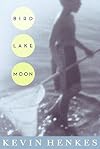
Bird Lake Moon
by Kevin Henkes
On This Page
Description
Twelve-year-old Mitch and his mother are spending the summer with his grandparents at Bird Lake after his parents separate, and ten-year-old Spencer and his family have returned to the lake where Spencer's little brother drowned long ago, and as the boys become friends and spend time together, each of them begins to heal.Tags
Recommendations








Member Reviews
Narrated by Oliver Wyman. Author Kevin Henkes has a lock on the inner emotional world of children. A quiet, inner-directed story. Unfortunately, the voices Wyman gave the adult women made them sound like ditzy girls.
Mitch Sinclair was not planning on spending all summer at his grandparents' little house on Bird Lake. Because his parents' divorce is underway, he and his mother are now doing just that, and it's not easy. Spencer Stone hasn't been to Bird Lake in years, not since his older brother Matty drowned there, but his mother is finally ready to try to go to the family vacation house there again. The Stone house is right next to Mitch's grandparents, and Mitch was hoping to have the place to himself... so when the Stones show up with their intact family and beloved dog, Mitch decides to try to scare them away by making it look like a ghost is haunting the place. Told in two voices, the reader sees that Mitch's attempts at scary stunts aren't show more perceived that way by Spencer, as everything he sees is colored by his brother's death. This is not an action-packed mystery; instead, it is an emotionally-driven story about two boys dealing with two different tragedies, and it will be valuable to use in discussions about how two people can see the same thing and understand two completely different things from it. 6th grade and up. show less
Children's Books Too Cool For School
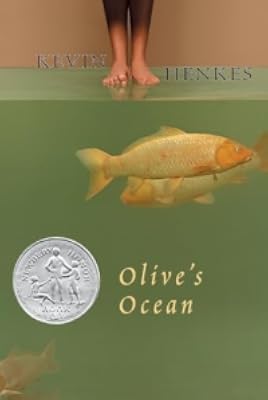
Bird Lake Moon is the newest novel-length offering from author Kevin Henkes -- an author usually associated with his fabulous picture books such as Lilly’s Purple Plastic Purse or Chrysanthemum . However, one of his other works for older kids, Olive’s Ocean did receive the Newbery Honor Award. I must admit that, although I am a huge fan of Henkes' picture book work, I am not at all familiar with his novels. So, I wasn’t sure what to expect with Bird Lake Moon.
Perhaps I am trying to stress here that I began reading this novel with few preconceived notions about Henkes’ novel-writing, and a largely positive attitude towards Henkes in general. However, I was sad to discover that the man who seems show more to communicate so brilliantly with pre-shcoolers failed me a little when it came to books for older readers.
Bird Lake Moon begins from the point of view of Mitch, a twelve year-old boy whose father has just left home. He and his mother are going out to his grandparents' house at Bird Lake for a little R&R, and when they arrive, Mitch can’t help but be a little curious about the abandoned house next door. He builds up fantasies around it, imagining him and his mother buying the house and living in it. Until one day some “intruders” (that is, the house’s owners) move in.
We then hear from Spencer, the ten year-old son of the “intruders.” Spencer is excited to be back at Bird Lake, although he was more or less too small to remember the last time they were there. That was the year his older brother, who would have been twelve this year, drowned. Ever since, his family has maintained the old Bird Lake property, but refused to go back. Now, they think, it may be time to heal.
Mitch initially treats Spencer like the “intruder” that he sees him as. And makes a vague attempt to make Spencer’s family think they are haunted (an attempt that, thanks to the death of Spencer’s brother, works a little too well for a while) before eventually meeting up with Spencer live and in the flesh. Not surprisingly, they become great friends, although Mitch himself is a little haunted by the tricks he played on Spencer before they met.
Let’s get the bad part over with. I felt like the storyline was a little nebulous. My favorite books will have a good, solid climax, and thorough resolution. This is one of the reasons I like children’s books, which tend to favor traditional narrative structures, since most people don’t want to throw something too experimental at little readers. However, Bird Lake Moon’s plot reminded me more of some of the novels for adults I’ve been reading lately. There was no strongly climactic moment, and the ending sort of tapered off.
The second issue is the subject matter. With its heavy focus on introspection and emotion, this simply isn’t going to be the book for your average 10 -12 year-old. While the main characters are boys, this is certainly not something to hand to those ever-evasive reluctant, male readers.
Now: The good. The writing is great -- incredibly skillful -- and I was really along for the ride with these boys. The sensory detail was wonderful. And while this may not be the book for the average reader, it might be a good choice for those dealing with divorce or death. Any child that really enjoys reading for its own sake will enjoy this book (although they may, like me, wish for a firmer ending).
All in all, I would recommend Bird Lake Moon for adults who don’t care what the age of a protagonist is, children who really love to read, or anyone who might need a good book on divorce or death. However, it just isn’t the book for the general population. show less
Bird Lake Moon is the newest novel-length offering from author Kevin Henkes -- an author usually associated with his fabulous picture books such as Lilly’s Purple Plastic Purse or Chrysanthemum . However, one of his other works for older kids, Olive’s Ocean did receive the Newbery Honor Award. I must admit that, although I am a huge fan of Henkes' picture book work, I am not at all familiar with his novels. So, I wasn’t sure what to expect with Bird Lake Moon.
Perhaps I am trying to stress here that I began reading this novel with few preconceived notions about Henkes’ novel-writing, and a largely positive attitude towards Henkes in general. However, I was sad to discover that the man who seems show more to communicate so brilliantly with pre-shcoolers failed me a little when it came to books for older readers.
Bird Lake Moon begins from the point of view of Mitch, a twelve year-old boy whose father has just left home. He and his mother are going out to his grandparents' house at Bird Lake for a little R&R, and when they arrive, Mitch can’t help but be a little curious about the abandoned house next door. He builds up fantasies around it, imagining him and his mother buying the house and living in it. Until one day some “intruders” (that is, the house’s owners) move in.
We then hear from Spencer, the ten year-old son of the “intruders.” Spencer is excited to be back at Bird Lake, although he was more or less too small to remember the last time they were there. That was the year his older brother, who would have been twelve this year, drowned. Ever since, his family has maintained the old Bird Lake property, but refused to go back. Now, they think, it may be time to heal.
Mitch initially treats Spencer like the “intruder” that he sees him as. And makes a vague attempt to make Spencer’s family think they are haunted (an attempt that, thanks to the death of Spencer’s brother, works a little too well for a while) before eventually meeting up with Spencer live and in the flesh. Not surprisingly, they become great friends, although Mitch himself is a little haunted by the tricks he played on Spencer before they met.
Let’s get the bad part over with. I felt like the storyline was a little nebulous. My favorite books will have a good, solid climax, and thorough resolution. This is one of the reasons I like children’s books, which tend to favor traditional narrative structures, since most people don’t want to throw something too experimental at little readers. However, Bird Lake Moon’s plot reminded me more of some of the novels for adults I’ve been reading lately. There was no strongly climactic moment, and the ending sort of tapered off.
The second issue is the subject matter. With its heavy focus on introspection and emotion, this simply isn’t going to be the book for your average 10 -12 year-old. While the main characters are boys, this is certainly not something to hand to those ever-evasive reluctant, male readers.
Now: The good. The writing is great -- incredibly skillful -- and I was really along for the ride with these boys. The sensory detail was wonderful. And while this may not be the book for the average reader, it might be a good choice for those dealing with divorce or death. Any child that really enjoys reading for its own sake will enjoy this book (although they may, like me, wish for a firmer ending).
All in all, I would recommend Bird Lake Moon for adults who don’t care what the age of a protagonist is, children who really love to read, or anyone who might need a good book on divorce or death. However, it just isn’t the book for the general population. show less
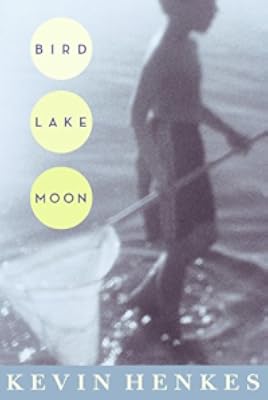
Darn the fuzzy, old-fashioned cover - no boy in the world is going to be attracted to it. And this is a fine boy book. Introspective and contemplative, it is true, but who says boys don't have feelings? Two families are staying by a lake. 12-year-old Mitch and his mom are staying with Mitch's grandparents because his father has left the family. 10-year-old Spencer and his family are back at the lake, 8 years after Spencer's older brother drowned one summer. This isn't so much a friendship story as it is the brief merging of these two thoughtful boys' lives during one important summer. What makes this book compelling is not the action but the way each boy thinks about the world and people around him.
Birk Lake Moon is the story of two boys and the summer they spent next door to each other at Bird Lake. Mitch Sinclair is living with his rather rigid, not much fun, grandparents while his mother recovers from the trauma of her husband (Mitch's father) having just walked out on them to take up life with a younger girl-friend. No one seems to catch on that Mitch is grieving also. Spencer Stone arrives at his family's lake house several days after Mitch. The Stones have owned the house for years, but have not returned for about 10 years since Mitch's little brother drowned there. Spencer's parents aren't sure they can handle the memory, but want to try. Spencer's little sister provides some delightful and typical little sister show more humor to the story.
The two boys meet, take a bit of time to decide whether to be friends, and discover that grief and loneliness is better handled with friends to help. It's a beautiful book, written with great insight into the emotions young people often try to handle without the help of adults who may be too busy handling their own problems. I think today's adults, both teen aged and older would enjoy this short but stunning novel. show less
The two boys meet, take a bit of time to decide whether to be friends, and discover that grief and loneliness is better handled with friends to help. It's a beautiful book, written with great insight into the emotions young people often try to handle without the help of adults who may be too busy handling their own problems. I think today's adults, both teen aged and older would enjoy this short but stunning novel. show less
Mitch and Spencer are two boys going through profound family issues one summer on a Wisconsin lake. Mitch’s parents are getting divorced, and his mom packs up and takes the 12-year-old to her parents’ house on Bird Lake for the summer. Intruding into Mitch’s world is 10-year old Spencer, his younger sister, Lolly, and their parents. They own the nearby house of which Mitch is quite fond and dreams about inhabiting.
IIt is painful for Spencer’s family to return to Bird Lake, as eight years earlier, the eldest son drowned there. The boys form a friendship, with each understandably slow to reveal his inner turmoil. The book delves into themes of friendship, honesty, and facing fears, and would be an accessible novel of realistic show more fiction for upper elementary grade students. It may be of particular interest to boys between the ages of 9 and 12, as the main characters grapple with contemporary issues in a believable manner. There are no references to technology or popular culture that date the story and distract from the book’s core of relating the personal struggles of the two boys. Mitch and Spencer are caring and thoughtful preteens, and their growth during their time at Bird Lake is conveyed with subtlety and reflection. The author marks time with lyrical descriptions of the nature surrounding the characters, which contributes to the contemplative tone. Target audience 4th-6th grade.
Henkes, K. (2008). Bird Lake moon. New York, NY: Greenwillow Books. show less
IIt is painful for Spencer’s family to return to Bird Lake, as eight years earlier, the eldest son drowned there. The boys form a friendship, with each understandably slow to reveal his inner turmoil. The book delves into themes of friendship, honesty, and facing fears, and would be an accessible novel of realistic show more fiction for upper elementary grade students. It may be of particular interest to boys between the ages of 9 and 12, as the main characters grapple with contemporary issues in a believable manner. There are no references to technology or popular culture that date the story and distract from the book’s core of relating the personal struggles of the two boys. Mitch and Spencer are caring and thoughtful preteens, and their growth during their time at Bird Lake is conveyed with subtlety and reflection. The author marks time with lyrical descriptions of the nature surrounding the characters, which contributes to the contemplative tone. Target audience 4th-6th grade.
Henkes, K. (2008). Bird Lake moon. New York, NY: Greenwillow Books. show less
A friend has convinced me to try my hand this year for the first time at children's literature; but I don't actually know anything about children's literature, so am starting the process among other ways by first reading a stack of existing books that have been recommended to me. Kevin Henkes' Bird Lake Moon was recommended as a good example of books for older grade-schoolers and middle-schoolers (so roughly ages 10 to 13) that deal with dark material in a gentle yet realistic way; it's almost 40,000 words total, on the heavy side of such books, and also contains an expansive vocabulary that will be a pleasant challenge for younger readers. It's the story of two boys who one summer move next to each other in the sleepy Wisconsin cottage show more community of Bird Lake; one has a set of parents who are going through a divorce, which is why they've temporarily moved in with his mother's cantankerous grandparents, while the other has a brother who drowned at Bird Lake almost a decade ago, with this being the traumatized family's first trip back.
Things I took away from this book, as far as my own struggle to become a better children's writer...
--Although really well done, I can see here why people recommend so much that character-oriented novels for kids be loaded up with a lot of extra drama and unique events, with this book many times coming off as what I imagine is too subtle for many kids, and therefore with only a limited potential audience (although of course with that audience intensely passionate about the book, precisely for these reasons). Also, to reference my own reading habits as a kid, this book many times feels not like the best of someone like Judy Blume (where the characters create and drive the situations being played out) but more like her second-tier work, minor books like Deenie and Iggie's House where it feels like first an issue was picked ("I think I'll write a book about desegregation in the suburbs") and only then were characters created and a plotline written. Although I want to reiterate that Henkes does a great job with the material he's chosen here, just like adult literature these kinds of stories need to feel natural and not forced, which Henkes teeters just on the edge of many times.
--And speaking of all this, I thought Henkes treads a very fine line here as far as how dark is too dark for kids in the 10-to-13 range; this is one of the issues I find fascinating as an author, in that I imagine many of my own future kid's books will be dark in tone as well, and I'm trying to learn exactly where the balance is for the pre-YA crowd. I really loved for example that one of our heroes, Mitch, is in typical divorced-kid fashion acting out just all the time, in ways that are sometimes surprisingly destructive for a person who's supposed to be our protagonist; for example, as part of his ongoing secret campaign to convince his new neighbors to leave again, in the desperate hope that his own family could move in next-door so that his mom and grandparents will stop fighting all the time, he actually unchains their dog and lets it run away while the family is gone for the afternoon, in what could've easily led to the dog's death or permanent disappearance in the real world. The book is full of moments like these, uncomfortably real details of just how dysfunctional people can get in the middle of a divorce or the grieving of a dead child, a polarizing element that I imagine young readers will either intensely love or hate.
--And finally, I thought this book did a particularly great job at examining the subtle relationship between kids at different ages, which I'm told is a topic that's really loved by many child readers at this age; ten-year-old Mitch admires his neighbor Spencer for being twelve, Spencer admires Mitch back for his above-average athletic skills, while both have a begrudging tolerance only for their fairytale-spouting, costume-wearing chatterbox grade-school siblings. And I also think that Henkes does a great job at examining the heavily flawed parents that are around these kids, and how their only so-so dealings with these family dramas end up creating new legitimate hassles sometimes for the kids themselves; just to cite one good example, how Stewart's mother after a few days realizes that the cloud of her first son's death is hanging just too heavily over the entire environment for her comfort, even though the entire rest of the family has quite intensely fallen in love with being there by then. This is such a subtle thing in children's literature, the question of just how much of adult personalities and adult weaknesses one should add to the story in the first place -- because obviously most kids are at least a little fascinated with adult behavior, and especially when they get a chance to glance at truly adult reactions that they suspect they're not supposed to be seeing, although ultimately most kids prefer that the books they read be primarily about other kids, and of the ways those kids live their lives when the adults aren't around. I have a lot more to learn about the various ways that authors deal with this subject, and is something I always keep a close eye on whenever reading yet another character-oriented middle-school drama. show less
Things I took away from this book, as far as my own struggle to become a better children's writer...
--Although really well done, I can see here why people recommend so much that character-oriented novels for kids be loaded up with a lot of extra drama and unique events, with this book many times coming off as what I imagine is too subtle for many kids, and therefore with only a limited potential audience (although of course with that audience intensely passionate about the book, precisely for these reasons). Also, to reference my own reading habits as a kid, this book many times feels not like the best of someone like Judy Blume (where the characters create and drive the situations being played out) but more like her second-tier work, minor books like Deenie and Iggie's House where it feels like first an issue was picked ("I think I'll write a book about desegregation in the suburbs") and only then were characters created and a plotline written. Although I want to reiterate that Henkes does a great job with the material he's chosen here, just like adult literature these kinds of stories need to feel natural and not forced, which Henkes teeters just on the edge of many times.
--And speaking of all this, I thought Henkes treads a very fine line here as far as how dark is too dark for kids in the 10-to-13 range; this is one of the issues I find fascinating as an author, in that I imagine many of my own future kid's books will be dark in tone as well, and I'm trying to learn exactly where the balance is for the pre-YA crowd. I really loved for example that one of our heroes, Mitch, is in typical divorced-kid fashion acting out just all the time, in ways that are sometimes surprisingly destructive for a person who's supposed to be our protagonist; for example, as part of his ongoing secret campaign to convince his new neighbors to leave again, in the desperate hope that his own family could move in next-door so that his mom and grandparents will stop fighting all the time, he actually unchains their dog and lets it run away while the family is gone for the afternoon, in what could've easily led to the dog's death or permanent disappearance in the real world. The book is full of moments like these, uncomfortably real details of just how dysfunctional people can get in the middle of a divorce or the grieving of a dead child, a polarizing element that I imagine young readers will either intensely love or hate.
--And finally, I thought this book did a particularly great job at examining the subtle relationship between kids at different ages, which I'm told is a topic that's really loved by many child readers at this age; ten-year-old Mitch admires his neighbor Spencer for being twelve, Spencer admires Mitch back for his above-average athletic skills, while both have a begrudging tolerance only for their fairytale-spouting, costume-wearing chatterbox grade-school siblings. And I also think that Henkes does a great job at examining the heavily flawed parents that are around these kids, and how their only so-so dealings with these family dramas end up creating new legitimate hassles sometimes for the kids themselves; just to cite one good example, how Stewart's mother after a few days realizes that the cloud of her first son's death is hanging just too heavily over the entire environment for her comfort, even though the entire rest of the family has quite intensely fallen in love with being there by then. This is such a subtle thing in children's literature, the question of just how much of adult personalities and adult weaknesses one should add to the story in the first place -- because obviously most kids are at least a little fascinated with adult behavior, and especially when they get a chance to glance at truly adult reactions that they suspect they're not supposed to be seeing, although ultimately most kids prefer that the books they read be primarily about other kids, and of the ways those kids live their lives when the adults aren't around. I have a lot more to learn about the various ways that authors deal with this subject, and is something I always keep a close eye on whenever reading yet another character-oriented middle-school drama. show less
Members
- Recently Added By
Author Information

101+ Works 75,819 Members
Kevin Henkes was born in Racine, Wis. in 1960 and graduated from the University of Wisconsin at Madison. One of four children in his family, Henkes grew up with aspirations of being an artist. As a junior in high school, one of Henkes's teachers awakened his interest in writing. Falling in love with both writing and drawing, Henkes realized that show more he could do both at the same time as a children's book author and illustrator. At the age of 19, Henkes went to New York City to get his first book, All Alone, published. Since that time, he has written and illustrated dozens of picture books including Chrysanthemum, Protecting Marie, and A Weekend with Wendell. A recurring character in several of Henkes's books is Lily, an outrageous, yet delightful, individualist. Lily finds herself the center of attention in the books Chester's Way, Julius, the Baby of the World, and Lily's Purple Plastic Purse. A Weekend With Wendell was named Children's Choice Book by the Children's Book Council in 1986. He recieved the Elizabeth Burr Award for Words of Stone in 1993. Owen was named a Caldicott Honor in 1994. The Year of Billy Miller was named a Newbery Honor book in 2014. (Bowker Author Biography) show less
Awards and Honors
Awards
Notable Lists
Common Knowledge
- First words
- Mitch Sinclair was slowly taking over the hosue, staking his claim. He had just finished carving his initials into the underside of the wooden porch railing, which was his boldest move so far.
- Quotations
- After taking a deep breath, Mitch flipped to a blank page in his notebook. It would be like jumping into the lake first thing in the morning.
Classifications
- Genres
- Kids, Fiction and Literature, Tween, Children's Books
- DDC/MDS
- 813.54 — Literature & rhetoric American literature in English American fiction in English 1900-1999 1945-1999
- LCC
- PZ7 .H389 .B — Language and Literature Fiction and juvenile belles lettres Fiction and juvenile belles lettres Juvenile belles lettres
- BISAC
Statistics
- Members
- 597
- Popularity
- 49,012
- Reviews
- 31
- Rating
- (3.25)
- Languages
- English
- Media
- Paper, Audiobook, Ebook
- ISBNs
- 19
- ASINs
- 2