On This Page
Description
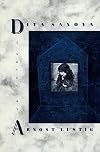
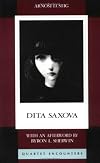
Dita Saxova is an eighteen-year-old concentration camp survivor trying to start a new life in postwar Prague. Living in a special hostel for orphans from the camps, too old to be cared for parentally, too young to be fully adult, too soaked in reality to harbor many illusions, Dita struggles to reconcile struggles to reconcile her unfathomable past with her enigmatic future. First published in Czech in 1962, then in English in 1979, Dita Saxova confirms Arnost Lustig's place as one of the show more masterful storytellers of the Holocaust period. show lessTags
Recommendations























Member Reviews
Dita Saxova is an eighteen-year-old concentration camp survivor trying to start a new life in postwar Prague. Living in a special hostel for orphans from the camps, too old to be cared for parentally, too young to be fully adult, too soaked in reality to harbor many illusions, Dita struggles to reconcile struggles to reconcile her unfathomable past with her enigmatic future. First published in Czech in 1962, then in English in 1979, Dita Saxova confirms Arnost Lustig's place as one of the masterful storytellers of the Holocaust period.
Nov 6, 2017Swedish
Ratings
Members
- Recently Added By
Author Information

41+ Works 872 Members
Arnost Lustig (December 21,1926 - February 26, 2011) was a renowned Czech Jewish author of novels, short stories, plays, and screenplays whose works have often involved the Holocaust. Lustig himself was a survivor of the Holocaust. He was born in Prague. As a young boy, he was sent in 1942 to the Theresienstadt concentration camp, from there he show more was later transported to the Auschwitz concentration camp, followed by time in the Buchenwald concentration camp. In 1945, he escaped from a train carrying him to the Dachau concentration camp. When he returned to Prague, he took part in the anti-Nazi uprising. After the war, he studied journalism at Charles University in Prague and then worked for a number of years at Radio Prague. Lustig later taught at the American University in Washington, D. C. His most renowned books are A Prayer For Katerina Horowitzowa (published and nominated for a National Book Award in 1974), Dita Saxová (1962, trans. 1979 as Dita Saxova), Night and Hope (1957, trans. 1985), and Lovely Green Eyes (2004). Lustig's short story selections included "Children of the Holocaust," "Indecent Dreams," and "Street of Lost Brothers." He was awarded an Emmy, a National Jewish Book Award, and the Karel Capek Award for Literary Achievement by President Valclav Havel. After his retirement from the American University in 2003, he became a full-time resident of Prague. In 2008, Lustig became the eighth recipient of the Franz Kafka Prize, and the third recipient of the Karel Capek Prize in 1996. Lustig died at age 84 in Prague on February 26, 2011, after suffering from Hodgkin lymphoma for five years. (Bowker Author Biography) show less
Some Editions
Awards and Honors
Awards
Notable Lists
Series

Common Knowledge
- Original title
- Dita Saxová
- Original publication date
- 1962 (original Czech) (original Czech); 1979 (American translation) (American translation); 1993 (rev. and expanded edition) (rev. and expanded edition)
- Important events
- Holocaust
- Related movies
- Dita Saxová (1968 | IMDb)
- First words
- Sometimes Dita Saxova dreamed she was naked, and other times, that she was going mad.
- Blurbers
- Skvorecky, Josef
Classifications
- Genres
- Fiction and Literature, General Fiction
- DDC/MDS
- 891.8 — Literature & rhetoric Asian Literature East Indo-European and Celtic literatures West and South Slavic languages (Bulgarian, Slovene, Polish, Czech, Slovak, Serbo-Croatian, and Macedonian)
- LCC
- PG5038 .L85 .D513 — Language and Literature Slavic languages and literatures. Baltic languages. Albanian language Slavic. Baltic. Albanian Slavic Czech
- BISAC
Statistics
- Members
- 50
- Popularity
- 602,367
- Reviews
- 1
- Rating
- (3.00)
- Languages
- Czech, English
- Media
- Paper
- ISBNs
- 8