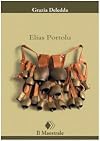
Elias Portolu
by Grazia Deledda
On This Page
Description
Winner of the 1926 Novel Prize for Literature After serving time in mainland Italy for a minor theft, Elias Portolu returns home to Nuoro, in rural Sardinia. Lonely and vulnerable after his prison exile, he falls in love with his brother's fiancée. But he finds himself trapped by social and religious strictures, his passion and guilt winding into a spiral of anguish and paralyzing indecision. For guidance he turns first to the village priest, who advises him to resist temptation; then he show more turns to the pagan "father of the woods," who recognizes the weakness of human will and urges him to declare his love before it is too late. show lessTags
Recommendations





















Member Reviews
The Sardinian novelist Grazia Deledda was the second female Nobel laureate in literature, in 1926. This simple little pastoral tragedy from 1903 was her third novel and the one that first brought her to popular attention.
It is a fairly straightforward tale of a young shepherd who returns to his family in Sardinia after a spell in jail on the continent and falls heavily in love with the girl that his brother is about to marry. As he evidently has a self-destructive urge as strong as any of Thomas Hardy's unhappy heroes, we have a pretty good idea that things aren't going to work out for the best, and they don't. But of course that's what we're paying for: the interesting thing to watch on the way is how Deledda plays with the show more interaction between the characters, the Sardinian landscape, and the almost overtly pagan religion of the islanders. There's a wonderful set-piece description of the annual pilgrimage to a mountain chapel to celebrate the festival of Santu Franziscu that clearly has only the most tenuous connection with any sort of Catholicism that would be recognised in Rome, and the hero's mother is forever doing divination ceremonies at her domestic altar.
So, it's a nice example of early twentieth-century pastoral quasi-realism, with the added benefit of Sardinian scenery, but I couldn't help feeling (even though it's a cliché to say this of any Italian story) that it would have worked better as an opera. Elias, in particular, is forever delivering apostrophes to the reader that are only a gnat's crochet away from being arias, and you just imagine the Shearers' Chorus... show less
It is a fairly straightforward tale of a young shepherd who returns to his family in Sardinia after a spell in jail on the continent and falls heavily in love with the girl that his brother is about to marry. As he evidently has a self-destructive urge as strong as any of Thomas Hardy's unhappy heroes, we have a pretty good idea that things aren't going to work out for the best, and they don't. But of course that's what we're paying for: the interesting thing to watch on the way is how Deledda plays with the show more interaction between the characters, the Sardinian landscape, and the almost overtly pagan religion of the islanders. There's a wonderful set-piece description of the annual pilgrimage to a mountain chapel to celebrate the festival of Santu Franziscu that clearly has only the most tenuous connection with any sort of Catholicism that would be recognised in Rome, and the hero's mother is forever doing divination ceremonies at her domestic altar.
So, it's a nice example of early twentieth-century pastoral quasi-realism, with the added benefit of Sardinian scenery, but I couldn't help feeling (even though it's a cliché to say this of any Italian story) that it would have worked better as an opera. Elias, in particular, is forever delivering apostrophes to the reader that are only a gnat's crochet away from being arias, and you just imagine the Shearers' Chorus... show less
"Aquile bisogna essere,non tordi"ripete spesso zio Portolu,vecchio pastore sardo,a suo figlio Elias che non riesce ad integrarsi pienamente nel mondo in cui vive. Siamo in Sardegna,terra della Deledda,agli inizi '900.Il giovane Elias torna a casa dopo un periodo passato in carcere che lo ha profondamente scosso.Medita di lasciare le brutte compagnie e di dedicarsi totalmente alla famiglia e al lavoro di pastore . Il suo animo verrà a essere turbato da una ragazza ,Maria Maddalena,promessa sposa del fratello. Elias è sconvolto da questo amore di cui prova vergogna ma dal quale non riesce a sottrarsi,è costantemente in preda al dubbio.Elias è diverso dagli altri uomini del racconto,pensa molto,torna sui suoi passi,non ha la fermezza show more del padre,non ha la saggezza di zio Martinu Monne,uomo solitario al quale spesso chiede consigli che poi disattende. Viene definito "uomo di cacio fresco"perchè è preda di un amore che non lo fa più vivere . è un libro toccante e profondo. è il primo romanzo della Deledda che leggo,mi ha dato l'impulso di conoscere meglio questa scrittrice. show less
Jul 27, 2011Italian
Melko tympeää sieluntuskan kuvausta. Raastavaa mustasukkaisuutta, vääriä valintoja ja niiden seurauksena katkeria kohtaloita. Ei tällaista kyllä olisi jaksanut yhtään enempää. Kyllä ennen vanhaan oli kamalaa.
Nov 7, 2022Finnish
Ratings
Members
- Recently Added By
Lists

Italian Literature
558 works; 43 members

Letteratura Sardegna
18 works; 1 member
Author Information

155+ Works 1,719 Members
Among the most honored women writers of modern Italy, Deledda wrote naturalistic or realistic novels, drawing upon her Sardinian background for material. Some critics hold, however, that in Deledda's formula often only the names of places and people serve to evoke a Sardinian atmosphere of strangeness. Her best works especially Elias Portolu show more (1903), Cenere (1904), and The Mother (1920) contain excellent portrayals of women. While her characters are complex, often dominated by an overwhelming sense of destiny and by nature's mythic powers, her narrative structures remain simple and classic. She was awarded the Nobel Prize for Literature in 1926. (Bowker Author Biography) show less
Some Editions
Awards and Honors
Awards
Series
Belongs to Publisher Series
Work Relationships
Is contained in
Common Knowledge
- Canonical title
- Elias Portolu
- Original publication date
- 1903
- People/Characters
- Elias Portolu; Maddalena
- Important places
- Sardinia, Italy
- First words
- Happy days were coming for the Portolu family of Nuoro.
- Original language
- Italiano
Classifications
- Genres
- Fiction and Literature, General Fiction
- DDC/MDS
- 853.8 — Literature & rhetoric Italian, Romanian & related literatures Italian fiction Later 19th century 1859–1900
- LCC
- PQ4811 .E6 .E513 — Language and Literature French, Italian, Spanish and Portuguese literatures Italian literature Individual authors, 1900-1960
- BISAC
Statistics
- Members
- 150
- Popularity
- 218,876
- Reviews
- 3
- Rating
- (3.53)
- Languages
- 9 — English, French, German, Galician, Italian, Portuguese (Portugal), Russian, Spanish, Swedish
- Media
- Paper, Ebook
- ISBNs
- 24
- ASINs
- 5