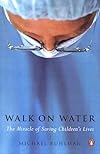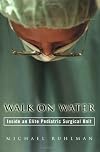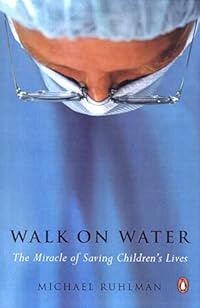
Walk on Water: The Miracle of Saving Children's Lives
by Michael Ruhlman
On This Page
Description
Described by one surgeon as "soul-crushing, diamond-making stress," surgery on congenital heart defects is arguably the most difficult of all surgical specialties. Drawing back the hospital curtain for a unique and captivating look at the extraordinary skill and dangerous politics of critical surgery in a pediatric heart center, Michael Ruhlman focuses on the world-renowned Cleveland Clinic, where a team of medical specialists--led by idiosyncratic virtuoso Dr. Roger Mee--work on the edge of show more disaster on a daily basis. Walk on Water offers a rare and dramatic glimpse into a world where the health of innocent children and the hopes of white-knuckled families rest in the hands of all-too-human doctors. show lessTags
Recommendations





























Member Recommendations
Member Reviews
A well written, beautiful book about the elite of the elite. Pediatric Heart Surgeons. Not one to stand aside and write from "simply objective" point of view, Michael Ruhlman interjects his feelings into the story and creates a book that is both beautiful and horrifying at the same time.
About pediatric heart surgeons. The author is interested in the question of how experts learn their crafts - his previous books were about a wooden boat builder and a master chef. Not surprisingly thhe answer seems to be practice, practice, practice, though it's a bit harder to get that practice when you're an aspiring surgeon than when you're a chef. If you screw up the bernaise sauce nobody dies. Probably. These doctors are operating on newborn hearts the size of a plum.
The author also discusses the question of why some babies with heart defects are referred to the top surgeon on the area while others get operated on by doctors without as much experience and less expertise. Hospitals insist they don't punish their doctors for show more referring out, but a few doctors say otherwise. It's a great question. Of course you want your child to be operated on by the top surgeon, but if you don't even know they work in a nearby hospital, you don't get that choice.
I also learned that "open heart surgery" isn't, as I'd always thought, surgery where they crack the chest and operate on the heart. It's when they literally cut the heart open in order to operate on valves, arteries, and veins. show less
The author also discusses the question of why some babies with heart defects are referred to the top surgeon on the area while others get operated on by doctors without as much experience and less expertise. Hospitals insist they don't punish their doctors for show more referring out, but a few doctors say otherwise. It's a great question. Of course you want your child to be operated on by the top surgeon, but if you don't even know they work in a nearby hospital, you don't get that choice.
I also learned that "open heart surgery" isn't, as I'd always thought, surgery where they crack the chest and operate on the heart. It's when they literally cut the heart open in order to operate on valves, arteries, and veins. show less
Author and journalist Michael Ruhlman's fascination with people at the top of their professions, who seek perfection in themselves and those around them, led a friend of his to refer him to Dr. Roger Mee, the head of pediatric cardiothoracic surgery at the Cleveland Clinic and one of the world's best heart surgeons. Ruhlman spent two months shadowing Dr. Mee, his colleagues and assistants in the OR and the PICU (pediatric intensive care unit), and the parents who entrusted him with the lives of their very sick children.
The children chronicled in Walk on Water are young infants born with complex congenital heart defects, who are gravely ill and have been referred to Dr. Mee in a last ditch effort to save their lives. Ruhlman observes and show more effectively describes the preoperative angst and despair of the parents, the drama during these babies' difficult surgeries, which are fraught with unforeseeable challenges and unexpected consequences, and the occasionally uncertain postoperative recovery of the sickest patients.
Ruhlman also attempts to understand and describe what makes Mee and other leading pediatric cardiac surgeons and heart centers as good as they are, and compares them to other surgeons and centers who have markedly higher perioperative and postoperative morbidity and mortality rates. He also gives the reader a history of pediatric cardiothoracic surgery, by depicting the leading surgeons and groundbreaking procedures that permitted the field to make tremendous advances over the past 75 years.
Unfortunately, the author is not as successful in these goals. He does portray Mee as a complex man, who is perceived by his peers as arrogant and difficult, but a man who beats up on himself and becomes depressed whenever he doesn't live up to his lofty standards, and looks forward to a time when his services are no longer required. He also paints a compelling portrait of Mike Fackelmann, the physician assistant and right hand man to Mee, whose presence in the OR is invaluable to the great surgeon. However, Ruhlman frequently gets caught up in the cowboy mentality of the all male enclave of cardiothoracic surgeons, whose descriptions of themselves and Mee as God like figures and star athletes were repetitive and often in poor taste, and detracted from the far more effective narratives of the main characters in the book. Ruhlman's lack of medical training is most apparent when he attempts to describe the surgical procedures, which made these sections boring and overly lengthy.
Walk on Water is an interesting but somewhat disappointing look into the field of pediatric cardiothoracic surgery and the career of one of its leading practitioners. The excellent narratives of those featured in this book are diminished by the author's lack of detailed medical knowledge of the pathophysiology of complex congenital heart defects and his tendency to repeat points that were previously covered. Ruhlman is to be commended for tackling a difficult topic, and I would marginally recommend this book for anyone who is interested in this field. show less
The children chronicled in Walk on Water are young infants born with complex congenital heart defects, who are gravely ill and have been referred to Dr. Mee in a last ditch effort to save their lives. Ruhlman observes and show more effectively describes the preoperative angst and despair of the parents, the drama during these babies' difficult surgeries, which are fraught with unforeseeable challenges and unexpected consequences, and the occasionally uncertain postoperative recovery of the sickest patients.
Ruhlman also attempts to understand and describe what makes Mee and other leading pediatric cardiac surgeons and heart centers as good as they are, and compares them to other surgeons and centers who have markedly higher perioperative and postoperative morbidity and mortality rates. He also gives the reader a history of pediatric cardiothoracic surgery, by depicting the leading surgeons and groundbreaking procedures that permitted the field to make tremendous advances over the past 75 years.
Unfortunately, the author is not as successful in these goals. He does portray Mee as a complex man, who is perceived by his peers as arrogant and difficult, but a man who beats up on himself and becomes depressed whenever he doesn't live up to his lofty standards, and looks forward to a time when his services are no longer required. He also paints a compelling portrait of Mike Fackelmann, the physician assistant and right hand man to Mee, whose presence in the OR is invaluable to the great surgeon. However, Ruhlman frequently gets caught up in the cowboy mentality of the all male enclave of cardiothoracic surgeons, whose descriptions of themselves and Mee as God like figures and star athletes were repetitive and often in poor taste, and detracted from the far more effective narratives of the main characters in the book. Ruhlman's lack of medical training is most apparent when he attempts to describe the surgical procedures, which made these sections boring and overly lengthy.
Walk on Water is an interesting but somewhat disappointing look into the field of pediatric cardiothoracic surgery and the career of one of its leading practitioners. The excellent narratives of those featured in this book are diminished by the author's lack of detailed medical knowledge of the pathophysiology of complex congenital heart defects and his tendency to repeat points that were previously covered. Ruhlman is to be commended for tackling a difficult topic, and I would marginally recommend this book for anyone who is interested in this field. show less
It took me an effort to get past the first chapter, which was a graphic and truly emotional (for me, anyway) description of things going wrong during the surgery of a tiny baby. Once I realized the author's intent was to educate, the book would not let go of me. The most fascinating point of the book is how our genetic traits can often force us into the life we lead.
.
.
Even though I didn't understand a lot of what was going on, I loved the first two-thirds of the book. I loved the stories about children who were sick and dying and needed heart surgery. I loved the stories about the doctors who worked on the children. Then the story switched to a history of heart surgery in the world and I grew less interested. By the time I got back to the stories of the children, I found myself much less interested in what was going to happen.
This is really a fantastic book. Ruhlman is a very good writer and grips you right from the beginning. I felt like he took a balanced view of this profession, which is amazing. I can't even imagine working as hard as these surgeons do, and the stress they must be under. Readers of general non-fiction, biography, and those who like to read about the professions of others will really enjoy this book.
Ratings
Members
- Recently Added By
Author Information

28+ Works 6,846 Members
Michael Ruhlman was born in 1963 in Cleveland and graduated Duke in 1985 with a BA in literature. His first book, Boy's Themselves (1996), revealed life at an all-boy day school. His second, the Making of a Chef came in 1997 and was re-released in 2009 in a new paperback edition. Michael's other published works include The Soul of a Chef (2000), show more Wooden Boats: In Pursuit of the Perfect Craft at an American Boatyard (2001), and Walk on Water (2003). He co-wrote The French Laundry Cookbook (1999) with Thomas Keller and A Return to Cooking (2002) with Eric Ripert, chef-owner of Le Bernardin. His latest works include Charcuterie: The Craft of Salting, Smoking and Curing (2011) and Salumi: The Craft of Italian Dry Curing (2012), both with Brian Polcyn. (Bowker Author Biography) show less
Awards and Honors
Awards
Common Knowledge
- Dedication
- For Addison and James
- First words
- "Stay away from that." Fackelmann says it to Mac the way he says most things in the O.R. - matter-of-factly but definitively.
- Last words
- (Click to show. Warning: May contain spoilers.)The next case will begin in a few hours.
Classifications
Statistics
- Members
- 142
- Popularity
- 223,140
- Reviews
- 6
- Rating
- (4.11)
- Languages
- English
- Media
- Paper, Ebook
- ISBNs
- 3
- ASINs
- 1