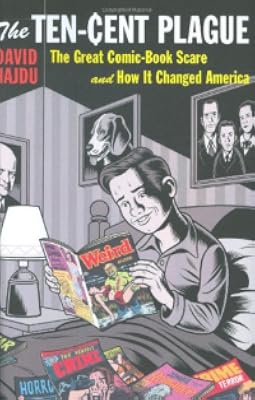
The Ten-Cent Plague: The Great Comic-Book Scare and How It Changed America
by David Hajdu
On This Page
Description
In the years between World War II and the emergence of television as a mass medium, American popular culture as we know it was first created--in the pulpy, boldly illustrated pages of comic books. No sooner had this new culture emerged than it was beaten down by church groups, community bluestockings, and a McCarthyish Congress--only to resurface with a crooked smile on its face in Mad magazine.-- From publisher description.Tags
Recommendations




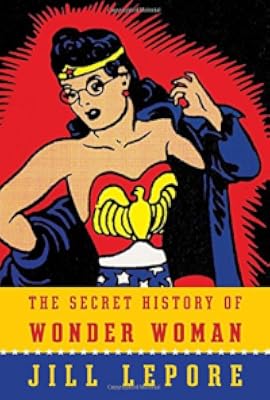
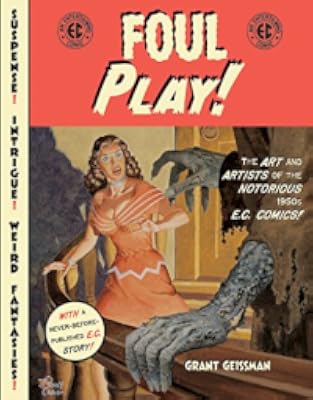
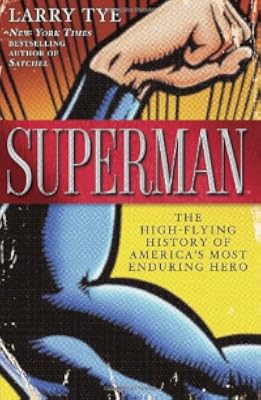
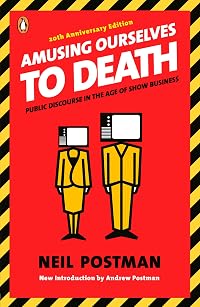





Member Recommendations
Member Reviews
Rating: 4* of five
The Book Description: In the years between World War II and the emergence of television as a mass medium, American popular culture as we know it was first created--in the pulpy, boldly illustrated pages of comic books. No sooner had this new culture emerged than it was beaten down by church groups, community bluestockings, and a McCarthyish Congress--only to resurface with a crooked smile on its face in Mad magazine.
The story of the rise and fall of those comic books has never been fully told--until The Ten-Cent Plague. David Hajdu's remarkable new book vividly opens up the lost world of comic books, its creativity, irreverence, and suspicion of authority.
When we picture the 1950s, we hear the sound of early rock and show more roll. The Ten-Cent Plague "shows how--years before music--comics brought on a clash between children and their parents, between prewar and postwar standards. Created by outsiders from the tenements, garish, shameless, and often shocking, comics spoke to young people and provided the guardians of mainstream culture with a big target. Parents, teachers, and complicit kids burned comics in public bonfires. Cities passed laws to outlaw comics. Congress took action with televised hearings that nearly destroyed the careers of hundreds of artists and writers.
The Ten-Cent Plague "radically revises common notions of popular culture, the generation gap, and the divide between "high" and "low" art. As he did with the lives of Billy Strayhorn and Duke Ellington (in "Lush Life") and Bob Dylan and his circle (in "Positively 4th Street"), Hajdu brings a place, a time, and a milieu unforgettably back to life.
My Review: Just read it. It's sixteen kinds of fascinating and a few more kinds of awesome.
Seriously. Just go get one and read it! Quit looking at reviews! Too much good stuff in here that anyone alive in this horrifying over-religioned right wing fucking nightmare country we've allowed to develop in our beloved USA should know about! Censorship and fear-mongering and lying sack-of-shit conservatives are not new developments...just more common than ever. show less
The Book Description: In the years between World War II and the emergence of television as a mass medium, American popular culture as we know it was first created--in the pulpy, boldly illustrated pages of comic books. No sooner had this new culture emerged than it was beaten down by church groups, community bluestockings, and a McCarthyish Congress--only to resurface with a crooked smile on its face in Mad magazine.
The story of the rise and fall of those comic books has never been fully told--until The Ten-Cent Plague. David Hajdu's remarkable new book vividly opens up the lost world of comic books, its creativity, irreverence, and suspicion of authority.
When we picture the 1950s, we hear the sound of early rock and show more roll. The Ten-Cent Plague "shows how--years before music--comics brought on a clash between children and their parents, between prewar and postwar standards. Created by outsiders from the tenements, garish, shameless, and often shocking, comics spoke to young people and provided the guardians of mainstream culture with a big target. Parents, teachers, and complicit kids burned comics in public bonfires. Cities passed laws to outlaw comics. Congress took action with televised hearings that nearly destroyed the careers of hundreds of artists and writers.
The Ten-Cent Plague "radically revises common notions of popular culture, the generation gap, and the divide between "high" and "low" art. As he did with the lives of Billy Strayhorn and Duke Ellington (in "Lush Life") and Bob Dylan and his circle (in "Positively 4th Street"), Hajdu brings a place, a time, and a milieu unforgettably back to life.
My Review: Just read it. It's sixteen kinds of fascinating and a few more kinds of awesome.
Seriously. Just go get one and read it! Quit looking at reviews! Too much good stuff in here that anyone alive in this horrifying over-religioned right wing fucking nightmare country we've allowed to develop in our beloved USA should know about! Censorship and fear-mongering and lying sack-of-shit conservatives are not new developments...just more common than ever. show less
In The Ten-Cent Plague: The Great Comic-Book Scare and How It Changed America, David Hajdu argues, "Though they were not traitors, the makers of crime, romance, and horror comics were propagandists of a sort, cultural insurgents. They expressed in their lurid panels, thereby helping to instill in their readers, a disregard for the niceties of proper society, a passion for wild ideas and fast action, a cynicism toward authority of all sorts, and a tolerance, if not an appetite, for images of prurience and violence. In short, the generation of comic-book creators whose work died with the Comics Code helped give birth to the popular culture of the postwar era" (pg. 330). Hajdu traces the moral panic from the medium's origin prior to World show more War II, through early objections during the war, and into the widespread condemnation that culminated in Fredric Wertham's Seduction of the Innocent and the Senate Subcommittee on Juvenile Delinquency. His sources include the comics themselves; interviews with comics writers, artists, and publishers; articles objecting to them in newspapers, magazines, and church bulletins; and the transcripts of the Senate committees that condemned them. While others have written similar histories, notably Amy Kiste Nyberg in Seal of Approval: The History of the Comics Code, Hajdu writes an all-encompassing cultural history that examines the Great Comic-Book Scare from nearly all angles while still remaining readable to a lay audience. show less
Whether you’re familiar with the great crusade against comic books in the 1950s, or whether you’ve never heard peep about it, The Ten Cent Plague gives a revealing and intriguing look at the cogs and wheels of social repression and incipient revolt.
It’s tempting to tut tut the mid-century panic over the “lurid violence” and “explicit content” of comic books; they seem positively quaint to our 21st Century eyes. But the forces that drove people to demonize an enemy within, and then destroy people’s livelihoods, goad children into (comic) book burning, and accuse individuals of Un-American activities and the destruction of our country’s morality, are just as relevant (and dangerous) today as they were sixty years show more ago.
Author Hajdu’s research is prodigious and his writing snappy, making Ten-Cent Plague both a thoughtful and enjoyable read. It’s a true morality tale, and reminds us we should be alert to the double meaning of “morality” and the need to always think for ourselves. show less
It’s tempting to tut tut the mid-century panic over the “lurid violence” and “explicit content” of comic books; they seem positively quaint to our 21st Century eyes. But the forces that drove people to demonize an enemy within, and then destroy people’s livelihoods, goad children into (comic) book burning, and accuse individuals of Un-American activities and the destruction of our country’s morality, are just as relevant (and dangerous) today as they were sixty years show more ago.
Author Hajdu’s research is prodigious and his writing snappy, making Ten-Cent Plague both a thoughtful and enjoyable read. It’s a true morality tale, and reminds us we should be alert to the double meaning of “morality” and the need to always think for ourselves. show less
I've read several accounts of the late-'40s, early-'50s turmoil surrounding comic books, but never has an author treated the topic with much depth or done much new research. As it happens, however, the story of how parents, teachers and politicians turned comic books into a scapegoat for juvenile delinquincy is far more complicated and harrowing than I ever imagined.
As David Hajdu tells it, Frederic Wertham's Seduction of the Innocent was only one volley in the war on comics. The principal focus of the book is on EC Comics, which was killed by the anti-comics movement at the peak of its creativity and innovation. However, Hajdu interweaves the his central tale with interviews with former children who burned comics in bonfires and comic show more book artists and writers who found themselves not just out of work but without any outlet for creative expression when the comics went bust.
In deft strokes, Hajdu paints his principal protagonists not as kin to the heroes they created, but as all-to-human beings who found themselves caught up in a maelstrom they could not counter and did not fully understand.
The book's greatest achievement is to go beyond the committee hearing-room and the comic book offices and into the communities out of which the anti-comics movement first arose. Hajdu interviewed many of the children who led or were affected by the anti-comic hysteria, to find out what happened and how they felt about it then and now.
This is a long-overdue account of a very important yet nearly forgotten episode in American history. For the hundreds of books on McCarthyism, there is now one on the smaller drama that unfolded in its wake. show less
As David Hajdu tells it, Frederic Wertham's Seduction of the Innocent was only one volley in the war on comics. The principal focus of the book is on EC Comics, which was killed by the anti-comics movement at the peak of its creativity and innovation. However, Hajdu interweaves the his central tale with interviews with former children who burned comics in bonfires and comic show more book artists and writers who found themselves not just out of work but without any outlet for creative expression when the comics went bust.
In deft strokes, Hajdu paints his principal protagonists not as kin to the heroes they created, but as all-to-human beings who found themselves caught up in a maelstrom they could not counter and did not fully understand.
The book's greatest achievement is to go beyond the committee hearing-room and the comic book offices and into the communities out of which the anti-comics movement first arose. Hajdu interviewed many of the children who led or were affected by the anti-comic hysteria, to find out what happened and how they felt about it then and now.
This is a long-overdue account of a very important yet nearly forgotten episode in American history. For the hundreds of books on McCarthyism, there is now one on the smaller drama that unfolded in its wake. show less
Definitely a resource for the comic book aficionado. The casual reader (that's me) will be nearly drowned in minutia - artists, writers, publishers, publishing houses - all were unfamiliar except the large survivors (DC was the only one I recognized). After the first chapter trying to keep it all straight, I just let the details wash over me and tried to appreciate the occasional bit of information, insight or social repercussion. I did learn a bit about how each parental generation has its axe to grind and its media to blame on their kids' behavior. Never taking the responsibility directly, instead the searchlight is shined on comic books, rock and roll, music videos, video games and the internet. The arguments for the degeneration of show more each successive wave of youth has not changed at all, only the medium to blame. show less
The Ten-Cent Plague is a history of the early days of comic books through the mid-1950s. But more than just a history, Hajdu also gives a history of the response of mainstream America to the comic books of the day, leading up Congressional hearings and the creation of an industry-wide censor organization.
The book itself was pretty well done, with what seems to be pretty thorough research. But for me, the most interesting thing was how much the response to comic books seemed like the reaction to other non-traditional culture both before and since. For instance, the furor over role-playing games in the 80's was similar, if not as extreme. I'm still thinking about what this means for us as a society, but the book does make the reader think.
The book itself was pretty well done, with what seems to be pretty thorough research. But for me, the most interesting thing was how much the response to comic books seemed like the reaction to other non-traditional culture both before and since. For instance, the furor over role-playing games in the 80's was similar, if not as extreme. I'm still thinking about what this means for us as a society, but the book does make the reader think.
I was never into the comics, but I still really enjoyed this book. The history of the rise pre-WWII of the comics and the lives of the artists and entrepeneurs is colorful and really drew me in. I really enjoyed the epilogue spotlight on a France-residing Robert Crumb
Members
- Recently Added By
Published Reviews
ThingScore 75
“The Ten-Cent Plague” is a worthy addition to the canon of comic-book literature: a super effort, if not a superduper one.
added by lquilter
Lists

Unshelved Book Clubs
579 works; 5 members

Used books to buy next
565 works; 1 member
Author Information

12+ Works 2,236 Members
David Hajdu is the author of the award-winning "Lush Life: A Biography of Billy Strayhorn" (FSG, 1996, North Point Press, 1997). Lately he has written for "The New York Times Magazine", "The New York Review of Books"; & "Vanity Fair". He lives in New York City. (Bowker Author Biography)
Some Editions
Awards and Honors
Awards
Work Relationships
Has as a commentary on the text
Common Knowledge
- Canonical title
- The Ten-Cent Plague: The Great Comic-Book Scare and How It Changed America
- Original publication date
- 2008-03
- People/Characters
- William Erwin "Will" Eisner; Jack Kirby (Jacob Kurtzberg); Bob Kane (Robert Kahn); Joe Kubert; William Gaines; Fredric Wertham (show all 66); Janice Valleau (Winkleman); Joseph Pulitzer; William Randolph Hearst; Winsor McKay; Gilbert Seldes; E. C. Segar; Milton Caniff; Malcolm Wheeler-Nicholson; Henry Donenfeld; Hal Foster; Sterling North; Lauretta Bender; Jules Feiffer; Busy Arnold; Charles Biro; J. Edgar Hoover; Herman Duker; Virginia Hubbell; Max Gaines (M. C. Gaines); John Francis Noll; Eugene V. Debs; William Moulton Marston; Robert E. Southard; Claude Pepper; Melvin Hyland Leeland; William Becker; William D. McLelland; William Gaines; Harry S. Toy; Anthony Comstock; Estes Kefauver; Stanley F. Reed; Lev Gleason; David Pace Wigramsky; David Mace; John Farrell; Paul Plocinski; Will H. Hays; Albert G. Feldstein; Francis J. Kafka; Victor Fox; Joe Simon; Bernard Krigstein; Jack Kamen; Stan Lee; Harvey Kurtzman; Alfred E. Neuman; Stanley P. Morse; Joseph F. Carlino; Will Elder; Gershon Legman; Reuel Denney; Ruth Lutwitzi; Peter Mauger; Jack Cole; Charles F. Murphy; Reuben C. Peterson; Irvin Kershner; Robert Crumb; E.C. Segar
- Important places
- New York, New York, USA
- Important events
- Senate Subcommittee on Juvenile Delinquency comic book hearings, 1954
- Dedication
- For Jake, Torie and Nate
- First words
- Sawgrass Village, a tidy development about twenty-five miles east of Jacksonville, Florida, is named for the wild marsh greenery that its turf lawns displaced.
- Blurbers
- Reese, Jennifer; Smith, Wendy; Rapkin, Mickey; Sintumuang, Kevin; Baker, R. C.; Price, Matthew
- Original language
- English
Classifications
- Genres
- Nonfiction, General Nonfiction, History, Literature Studies and Criticism, Graphic Novels & Comics
- DDC/MDS
- 302.232 — Society, government, & culture Social sciences, sociology & anthropology Mass Communication & Media Communication Media (Means of communication) Print media
- LCC
- PN6725 .H33 — Language and Literature Literature (General) Literature (General) Collections of general literature Comic books, strips, etc.
- BISAC
Statistics
- Members
- 912
- Popularity
- 29,327
- Reviews
- 28
- Rating
- (3.66)
- Languages
- English, Spanish
- Media
- Paper, Audiobook, Ebook
- ISBNs
- 13
- ASINs
- 6