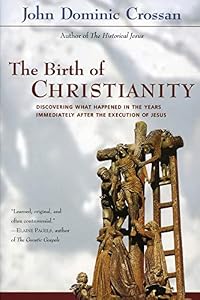
The Birth of Christianity : Discovering What Happened in the Years Immediately After the Execution of Jesus
by John Dominic Crossan
On This Page
Description
In this national bestseller, John Dominic Crossan, the world's leading expert on the historical Jesus, reveals how Christianity emerged in the period following Jesus' death. Taking an interdisciplinary approach, Crossan shines new light on the theological and cultural contexts from which the Christian church arose. He argues powerfully that Christianity would have happened with or without Paul and contends that Jesus' "resurrection" meant something vastly different for his early followers show more than it does for many traditional Christians today--what mattered was Christina origins finally illuminates the mysterious period that set Western religious history in its decisive course. show lessTags
Recommendations

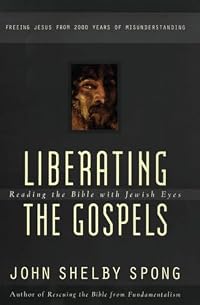
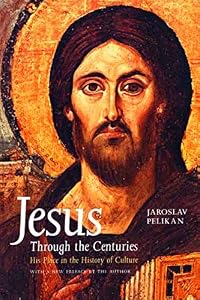
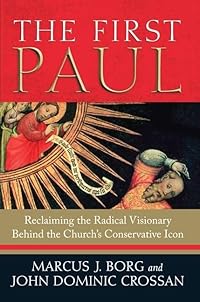
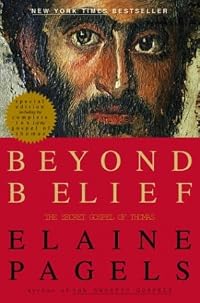
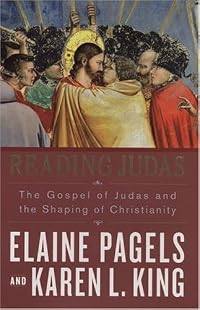
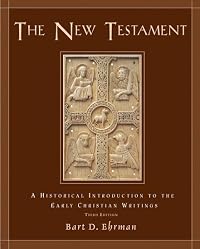
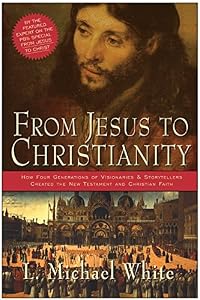
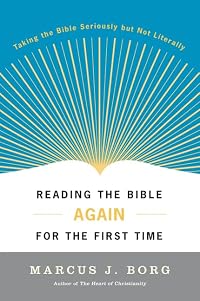
Member Recommendations

divinepeacelutheran My go-to version of the Bible. No additions or deletions. Easy to read.
Member Reviews
I've read many of Crossan's books, and although they can be dry, they do always provide something to sink your teeth into. He seems to write two kinds of books: Long, scholarly tomes, and short, interesting summaries. The Birth of Christianity is (unfortunately or fortunately, depending upon your purpose for reading) of the former type.
Crossan attempts in this book to initiate more scholarly research into the early years of Christianity, by which he means those years after Christ died but before the Gospels were published. Years 30-70 AD. His ideas are controversial--hey, every publication by every liberal Christian will be controversial--but they are well documented. In my opinion, too well documented. I don't think Crossan needs 641 show more pages to explain and support his research. He delves deeply, for example into the topic "memory and orality," to bolster his opinion about how poorly our memories operate and thus how unreliable oral transmission is.
Nevertheless, Crossan's picture of early Christianity and particularly his long discussion of various types of eschatology (apocalyptic, ascetical, ethical) are important to the understanding of the Jesus movement of the first century. He explains how different communities of Christians could share different eschatological ideas--and you don't have to think of eschatology as the end of the universe, but merely the end of an age and the dawning of a new kind of life--and develop very different brands of Christianity. Crossan traces the emphasis of early Christian communities into two traditions: Jesus' "life" and "death." The moral teachings of Jesus and the passion-resurrection tradition. Both, Crossan insists, are very early traditions; for example, he discusses the Common Meal Tradition. Is it a giving-sharing experience, or a eucharistic experience? From this merger of traditions grew the latter church.
I definitely recommend reading The Birth of Christianity and I think it will be an important foundation for continuing research into this era. I would not, however, insist that the casual read the entire book cover to cover. Perhaps he will one day publish an abbreviated version. :) show less
Crossan attempts in this book to initiate more scholarly research into the early years of Christianity, by which he means those years after Christ died but before the Gospels were published. Years 30-70 AD. His ideas are controversial--hey, every publication by every liberal Christian will be controversial--but they are well documented. In my opinion, too well documented. I don't think Crossan needs 641 show more pages to explain and support his research. He delves deeply, for example into the topic "memory and orality," to bolster his opinion about how poorly our memories operate and thus how unreliable oral transmission is.
Nevertheless, Crossan's picture of early Christianity and particularly his long discussion of various types of eschatology (apocalyptic, ascetical, ethical) are important to the understanding of the Jesus movement of the first century. He explains how different communities of Christians could share different eschatological ideas--and you don't have to think of eschatology as the end of the universe, but merely the end of an age and the dawning of a new kind of life--and develop very different brands of Christianity. Crossan traces the emphasis of early Christian communities into two traditions: Jesus' "life" and "death." The moral teachings of Jesus and the passion-resurrection tradition. Both, Crossan insists, are very early traditions; for example, he discusses the Common Meal Tradition. Is it a giving-sharing experience, or a eucharistic experience? From this merger of traditions grew the latter church.
I definitely recommend reading The Birth of Christianity and I think it will be an important foundation for continuing research into this era. I would not, however, insist that the casual read the entire book cover to cover. Perhaps he will one day publish an abbreviated version. :) show less
In this national bestseller, John Dominic Crossan, the world's leading expert on the historical Jesus, reveals how Christianity emerged in the period following Jesus' death. Taking an interdisciplinary approach, Crossan shines new light on the theological and cultural contexts from which the Christian church arose. He argues powerfully that Christianity would have happened with or without Paul and contends that Jesus' "resurrection" meant something vastly different for his early followers than it does for many traditional Christians today--what mattered was Christina origins finally illuminates the mysterious period that set Western religious history in its decisive course.
In this national bestseller, John Dominic Crossan, the world's leading expert on the historical Jesus, reveals how Christianity emerged in the period following Jesus' death. Taking an interdisciplinary approach, Crossan shines new light on the theological and cultural contexts from which the Christian church arose. He argues powerfully that Christianity would have happened with or without Paul and contends that Jesus' "resurrection" meant something vastly different for his early followers than it does for many traditional Christians today--what mattered was Christina origins finally illuminates the mysterious period that set Western religious history in its decisive course.
The author explores earliest Christianity immediately following the execution of Jesus. He establishes the contextual setting by a combination of anthropological, historical, and archaeological approaches. He identifies the textual sources by a literary analysis of the gospels, both inside and outside the New Testament challenging long-standing assumptions about the role of Paul and the meaning of resurrection to forge a new understanding of the birth of the Christian church.
Crossan's hypothesis is that Christianity arose out of the interaction of the historical Jesus and his first companions. It was not invented by Paul. This work draws on aspects of social anthropological theory to elucidate the thought processes and human relationships behind the extant sources.
This book attempts to reconstruct what Christianity was in the two decades between Jesus' death and Paul's ministry.
Recommended by Leonard Joy, February, 2014.
Members
- Recently Added By
Author Information

72+ Works 11,295 Members
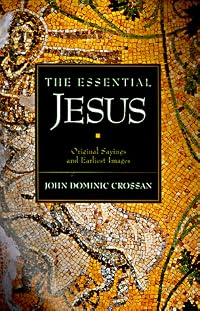
Considered by many to be the most learned scholar on the topic of Jesus Christ, John Dominic Crossan's adversaries question how he reconciles his Catholic faith with 20th century secular study. A former priest, Crossan is the author of The Essential Jesus: Original Sayings and Earliest Images, The Historical Jesus: The Life of a Mediterranean show more Jewish Peasant, Jesus: A Revolutionary Biography; The Birth of Christianity: Discovering What Happened in the Years Immediately After the Execution of Jesus, and The Cross That Spoke: The Origins of the Passion Narrative, among others. (Bowker Author Biography) show less
Common Knowledge
- Original publication date
- 1998
- People/Characters
- Jesus Christ; Saint Paul; Saint Mark; Saint Matthew
Classifications
Statistics
- Members
- 846
- Popularity
- 32,178
- Reviews
- 7
- Rating
- (3.65)
- Languages
- English, Portuguese, Spanish
- Media
- Paper, Ebook
- ISBNs
- 9
- ASINs
- 3